
View Our Recent Work:

Overview — If you’re searching for A-1 Fiberglass Repairs in Miami, you want a shop that does the job right the first time. A-1 Fiberglass Repairs is a local option for hull and gelcoat work, while Mazzamarine serves as a full-service alternative for yacht owners who need fiberglass repairs integrated with mechanical, carpentry, or refit work. Request an itemized estimate from either before authorizing any work.
Here’s what to know before you call:
- A-1 Fiberglass Repairs handles in-shop fiberglass and gelcoat work for boats and watercraft in the Miami area.
- Mazzamarine offers fiberglass upgrades and damage repair as part of a broader yacht service network, covering everything from structural laminate to custom paint and gelcoat.
- Both shops provide written estimates. Get one from each if the job is large.
- Quick patches that trap moisture are the single most common cause of repeat repairs. Insist on proper prep.
- Budget a contingency on any quote to cover unexpected costs. Hidden core damage is common once work begins.
Table of Contents
- What do professional fiberglass repair shops in Miami actually do?
- How a professional fiberglass repair is carried out, step by step
- What does fiberglass repair actually cost in Miami, and how long does it take?
- What warranties and trust signals should you ask for before signing?
- How do you choose the right fiberglass repair shop in Miami?
- Why Mazzamarine is a full-service option for fiberglass and yacht repairs in Miami
- Key Takeaways
- The repair that taught me to respect the prep
- Ready to get an estimate from Mazzamarine?
What do professional fiberglass repair shops in Miami actually do?
A good fiberglass repair company covers far more than patching a hole. Here’s what you should expect a qualified Miami shop to offer:
Core repair services:
- Gelcoat scratch, chip, and spider-crack repair with color matching
- Structural laminate repair for impacts, punctures, and stress fractures
- Transom and core replacement (wet or rotted core is extremely common in South Florida)
- Osmotic blister treatment: peel, dry, barrier coat
- Emergency hull patching for vessels that need to get back in the water
- Custom fiberglass fabrication (consoles, hatches, stringers)
Related services often bundled with hull work:
- Hull fairing and high-build primer
- Color-matched gelcoat spray and finish coats
- Epoxy barrier coats and bottom paint prep
- Teak and carpentry tie-ins when access panels are removed
Mobile vs. in-shop: Small cosmetic repairs and spot patches can sometimes be handled dockside. Structural work, transom replacement, blister treatment, and anything requiring extended drying time needs an in-shop environment with humidity control. If a shop offers to do a transom rebuild at your slip, that’s worth questioning.
How a professional fiberglass repair is carried out, step by step
The repair sequence matters as much as the materials. A shop cutting corners on prep is the fastest way to a repair that fails within a season.
- Inspection and damage assessment. The technician probes, taps, and moisture-meters the hull to map the full extent of damage, including hidden delamination or wet core beyond the visible area.
- Drying. Wet core or saturated laminate must dry before any laminate work begins. Rushing this step is the most common cause of repeat failures.
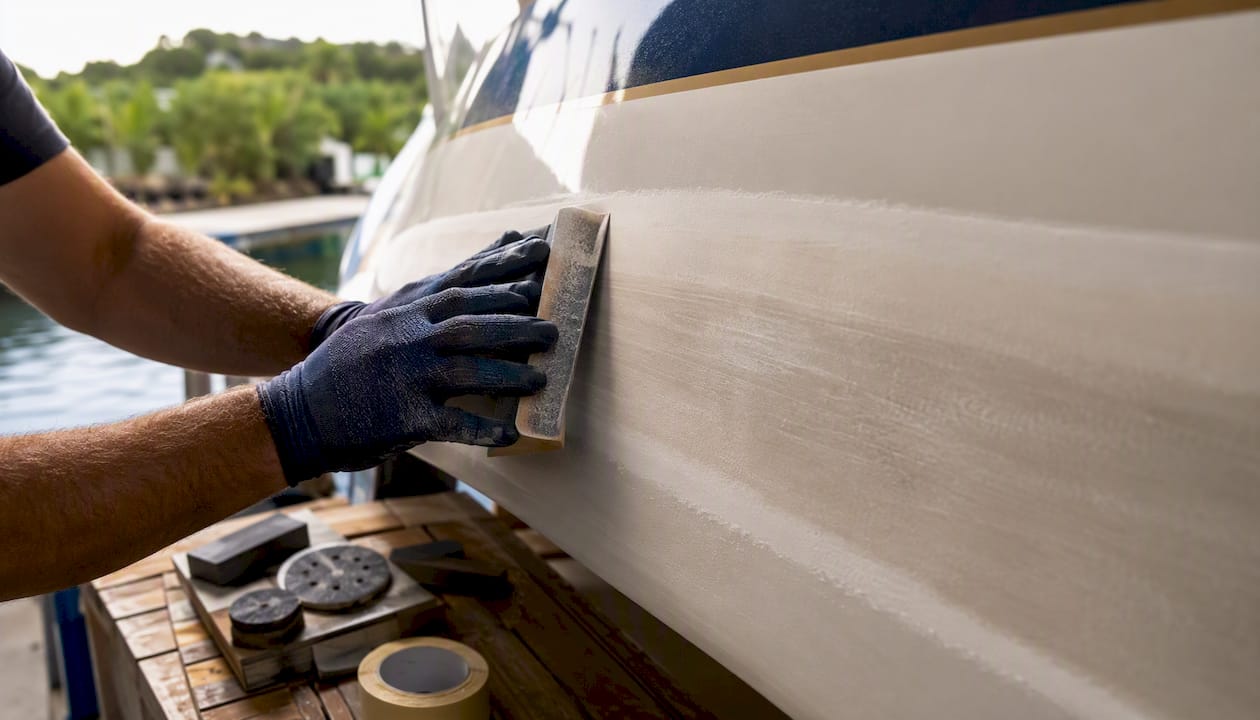
- Grinding to sound laminate. All damaged material is removed back to solid, dry fiberglass. The edges are tapered at roughly a 12:1 bevel ratio so the new laminate can spread load and approach original strength.
- Resin prime. For deep voids, experienced technicians brush clear epoxy resin into the depression 30–60 minutes before applying structural putty, reducing air entrapment and improving the mechanical bond.
- Laminate build-up. New cloth and resin are applied in staged wet-out passes. Epoxy resin is preferred for secondary bonds and structural repairs due to superior adhesion and lower shrinkage. Polyester still has a place for matching original production layups.
- Fairing. High-strength fiber-reinforced filler for structural areas; epoxy-based fairing compound for cosmetic surfaces. Products like 3M Marine High Strength Repair Filler are standard in professional shops for structural fill work.
- Gelcoat or paint finish. Color-matched gelcoat is applied, cured, wet-sanded through progressively finer grits, then compounded and polished.
- Sea trial or inspection sign-off. Any structural repair should be verified before the boat returns to service.
Pro Tip: Ask the shop to show you the grinding pattern before they fill. A proper 12:1 taper looks like a wide, shallow dish around the damage. A steep, narrow grind is a red flag that the repair will print through or delaminate under load.
What does fiberglass repair actually cost in Miami, and how long does it take?
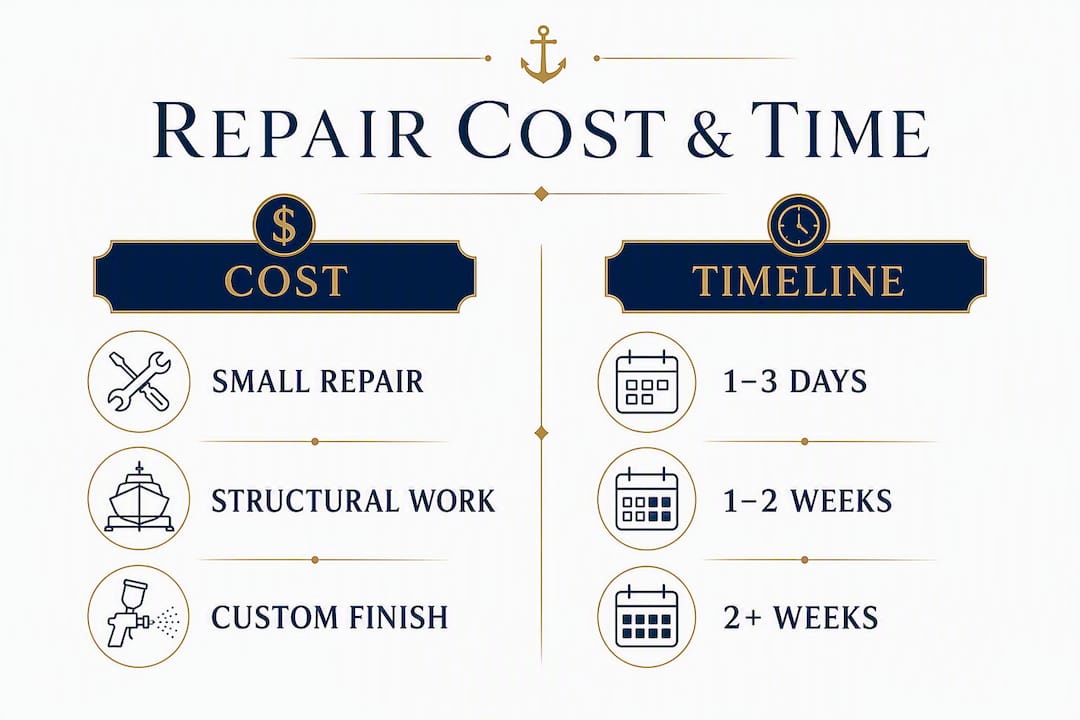
Costs vary widely. Small gelcoat or cosmetic repairs typically run in the low hundreds to $1,000. Moderate structural repairs often cost $3,000–$6,000, while a full transom replacement or major delamination can easily exceed $6,000. The honest answer is that no shop can give you a firm number until they’ve opened the repair and seen what’s underneath.
Primary cost drivers:
- Damage type: cosmetic gelcoat vs. structural laminate vs. core replacement
- Access difficulty (below waterline, enclosed spaces, stringers)
- Boat size and hull thickness
- Color-matching complexity
- Labor skill and shop overhead in South Florida
- Seasonality: peak boating season raises both cost and lead time
| Repair Type | Typical Professional Cost | Typical Timeline |
|---|---|---|
| Small gelcoat chip or scratch | — | 1–3 days |
| Medium gouge or spider cracks | — | 2–5 days |
| Deep structural gouge (1–2 sq ft) | — | 1–2 weeks |
| Transom repair (partial) | — | 2–4 weeks |
| Transom replacement (complete) | — | 3–6 weeks |
| Core replacement (per sq ft) | — | 1–3 weeks |
| Blister treatment (full hull) | — | 4–12 weeks |
Cost ranges sourced from Boatyards.com and Boat Genesis.
Always budget a 10–30% contingency on top of the quoted price. Hidden rot, delamination, or wet core is uncovered routinely once grinding begins. A shop that won’t discuss contingency upfront is one to be cautious about.
Scheduling tip: South Florida’s off-season (late fall through early spring) is the best time to schedule major work. Shops have more availability, and you may negotiate better pricing. Waiting until peak season means longer waits and less flexibility on scheduling. Consistent watercraft maintenance through the year also reduces the severity of repairs when they do come due.
What warranties and trust signals should you ask for before signing?
A shop confident in its work will hand you documentation without hesitation. Here’s what to request:
- Written, itemized estimate with each task and material listed separately
- Warranty terms in writing: labor warranty duration and what it covers vs. materials warranty
- Before/after photo portfolio of similar jobs (transom work, structural repairs, color-matched gelcoat)
- Years of documented experience with the specific repair type you need
- Client references or testimonials you can verify independently
- Industry affiliations or certifications where present
- Proof of insurance and proper disposal of hazardous waste (resins, solvents)
Color matching is one of the most revealing tests of a shop’s skill. Ask to see a finished job on a boat similar in age and color to yours. Gelcoat fades over time, and a shop that can’t demonstrate a clean color blend on an older hull may leave you with a visible patch.
How do you choose the right fiberglass repair shop in Miami?
The decision comes down to documented structural experience, honest pricing, and the right materials for your repair. Here’s a practical checklist:
Questions to ask at the estimate:
- What resin will you use, and why? (Epoxy for structural; polyester for matching original layup.)
- How do you diagnose hidden core damage before pricing the job?
- What is your contingency process if you find more damage once you open it?
- Can you show me before/after photos of a similar transom or structural repair?
- Do you provide a written warranty on labor? For how long?
- What filler do you use for structural vs. cosmetic work?
Red flags to avoid:
- Verbal-only quotes with no itemized breakdown
- Refusal to grind back to sound laminate (“we’ll just fill over it”)
- Reliance on quick-patch materials for structural work
- No portfolio, no references, no warranty language in writing
- Shop with no humidity or temperature controls for laminate work
Pro Tip: Epoxy over cured polyester is acceptable and often preferred for secondary repairs. Polyester over epoxy is unreliable and should be avoided. If a shop proposes polyester resin over an epoxy repair, that’s a materials red flag worth pushing back on.
Scheduling off-season also gives you more leverage to ask questions and compare shops without the pressure of peak-season demand.
Why Mazzamarine is a full-service option for fiberglass and yacht repairs in Miami
Mazzamarine provides comprehensive yacht repair and refit services across Florida, making it a realistic option for owners whose fiberglass damage is part of a larger picture. A hull repair that requires removing a fuel tank, accessing a stringer, or rebuilding a transom often pulls in mechanical and carpentry work simultaneously. Having one team coordinate all of it saves time and avoids the miscommunication that comes from juggling multiple contractors.
Relevant services Mazzamarine offers that directly support fiberglass repair projects:
- In-shop structural laminate and gelcoat repair and custom paint
- Transom and core work integrated with mechanical access
- Fiberglass blister and osmosis treatment specific to Florida’s warm-water conditions
- Custom fabrication, carpentry, and teak tie-ins when panels are opened
- Engine and mechanical coordination when structural access is required
- Full refit project management for larger vessels
Owners can request before/after portfolio examples and an itemized estimate directly from the Mazzamarine team before committing to any scope of work.
Key Takeaways
For Miami boat owners, the most durable fiberglass repairs start with complete removal of damaged material, proper drying, and a 12:1 bevel taper before any new laminate goes in.
| Point | Details |
|---|---|
| Prep determines durability | Grinding to sound laminate and a proper 12:1 bevel taper are non-negotiable for lasting repairs. |
| Budget a contingency | Add 10–30% above any quoted price to cover hidden rot, delamination, or wet core found once work begins. |
| Typical repair costs | Small gelcoat or cosmetic work generally ranges from the low hundreds up to $1,000, moderate structural repairs are commonly $3,000–$6,000, and major core or transom replacements typically exceed $6,000. |
| Get everything in writing | Itemized estimates, written warranty terms, and a before/after portfolio protect you before you sign. |
| Schedule off-season | Late fall through early spring brings shorter lead times and more shop flexibility in South Florida. |
| Mazzamarine for integrated work | Mazzamarine coordinates fiberglass, mechanical, and carpentry repairs under one team for larger yacht projects. |
The repair that taught me to respect the prep
The most expensive fiberglass repair is the one done twice. Time and again, the boats that come back with a failed patch share the same story: someone filled over damp laminate, skipped the taper, or used the wrong filler because the job looked small. Six months later, the patch has printed through, the core is wetter than before, and the repair scope has doubled.
What separates a lasting repair from a seasonal one is almost entirely in the preparation. The grinding, the drying, the bevel, the resin prime into deep voids — none of it is glamorous, and none of it shows in the finished gelcoat. But it’s exactly what you’re paying for when you hire a professional shop. A technician who rushes past prep to get to the gelcoat stage is costing you money in the long run, even if the initial invoice looks attractive.
When you’re evaluating shops, ask to see the repair before it’s filled. That moment, more than any portfolio photo, tells you everything about how a shop works.
Ready to get an estimate from Mazzamarine?
Mazzamarine’s network of Florida yacht specialists handles fiberglass repairs as part of a complete service offering, from a single gelcoat touch-up to a full transom rebuild with mechanical integration. For owners whose hull damage connects to deeper structural or mechanical issues, that coordination matters.

To get started, check the signs your yacht needs repair and gather a few basics before you call: photos of the damage, your boat’s length overall, a description of how the damage occurred, and a recent survey if you have one. Mobile assessment may be available for smaller jobs; larger projects are handled in-shop. Contact Mazzamarine to request an itemized estimate or schedule an inspection, and get your boat back on the water the right way.
Useful sources for further reading
- Fiberglass Boat Repair Guide — Boatyards.com: Complete breakdown of repair types, costs, and how to evaluate shops.
- Fiberglass Boat Repair Cost — Boat Genesis: Pricing ranges and cost factor explanations for common repairs.
- Expert Guide to Fiberglass Boat Hull Repair — Better Boat: Detailed prep and laminate guidance including bevel ratios and moisture management.
- WEST SYSTEM Fibreglass Manual: Authoritative technical reference on epoxy vs. polyester resin choices and laminate repair methods.
- Understanding Fiberglass Repair Costs — ATS Fiberglass: Seasonality and scheduling guidance for repair budgeting.
Bring printed references or links to your estimate appointment if you want the shop to comment on a specific method or product. A shop that welcomes that conversation is one worth trusting.
Recommended
Text or Call 954-330-9653 Schedule Appointment
Mazza Marine Yacht Services & Refit

Fiberglass Upgrades and Damage Repair

Premium Yacht Paint/ Faux Teak

Fishing: Custom Rods, Reels,Tackle

Electrical, Electronics and Navigation

Paint, Hull and Gelcoat

Teak Decks, Wood Cabinets, Carpentry

Canvas, Enclosures and Upholstery

Mechanical, Repower and Running Gear

Plumbing, Bilge and Thru-Hulls

Welding and Custom Fabrication

Interior Refit And Past Work
Get your yacht value Estimate
"*" indicates required fields