
View Our Recent Work:

Engine trouble on your yacht can turn a perfect day on the water into a stressful ordeal. Whether it’s sudden overheating, failure to start, or mysterious power loss, these problems demand quick, effective solutions. Florida yacht owners face unique challenges from saltwater corrosion and year-round operation that make engine reliability critical. This comprehensive guide walks you through systematic troubleshooting methods to diagnose and resolve common engine issues, helping you restore your vessel’s performance and avoid costly emergency repairs.
Table of Contents
- Key takeaways
- Understanding common boat engine problems
- Essential tools and preparation for troubleshooting your yacht engine
- Step-by-step boat engine troubleshooting process
- Common troubleshooting mistakes and how to avoid them
- Verifying successful repairs and maintaining engine reliability
- Explore expert yacht repair and maintenance services
- FAQ
Key Takeaways
| Point | Details |
|---|---|
| Systematic troubleshooting | Following a structured step by step method helps diagnose and fix engine problems efficiently on a yacht. |
| Early impeller check | Check the impeller health early because a failing impeller can cause overheating by blocking seawater flow. |
| Preventive maintenance | Regular inspections of cooling, electrical, and fuel systems prevent many failures and reduce downtime. |
| Tools and safety readiness | Assemble the right marine grade tools, spare parts, and safety gear before troubleshooting to speed diagnostics and protect crew. |
Understanding common boat engine problems
Florida yacht owners encounter specific engine issues that stem from harsh marine conditions and intensive use. Recognizing symptoms early makes the difference between a simple fix and major overhaul.
Overheating ranks among the most frequent problems, often caused by impeller damage from running dry. Your cooling system depends on a functioning impeller to circulate seawater through the heat exchanger. When this rubber component fails, engine temperatures spike dangerously within minutes. The telltale cooling water stream from your exhaust provides the quickest visual check for impeller health.
Starting failures typically trace to three culprits: dead batteries, corroded connections, or fuel delivery issues. Saltwater environments accelerate electrical corrosion, creating resistance that prevents adequate cranking power. Fuel problems range from contaminated diesel to clogged filters, both common in Florida’s humid climate where water accumulation in tanks breeds algae and bacteria.
Power loss during operation signals different concerns. Restricted fuel flow, failing injectors, or air intake blockages rob your engine of performance. Propeller damage or transmission issues can mimic engine problems, making systematic checks essential. Addressing fewer yacht machinery breakdowns starts with understanding these common failure patterns.
Common engine problem categories include:
- Cooling system failures from impeller damage, blocked raw water intake, or heat exchanger fouling
- Electrical issues including corroded terminals, failed starter solenoids, or alternator problems
- Fuel system troubles such as contaminated diesel, clogged filters, or air in fuel lines
- Mechanical wear affecting compression, valve timing, or bearing surfaces
Early identification prevents minor issues from escalating into catastrophic failures that leave you stranded or facing five-figure repair bills.
Essential tools and preparation for troubleshooting your yacht engine
Proper preparation separates efficient troubleshooting from frustrating trial and error. Gathering the right tools and information before starting saves hours of work.
Your basic toolkit should include standard wrenches, screwdrivers, and pliers sized for marine applications. Specialized tools make critical diagnostics possible: a multimeter tests electrical circuits and battery voltage, compression gauges measure cylinder health, and infrared thermometers identify hot spots without contact. Keep spare impellers, fuel filters, and oil filters aboard since these components fail predictably.
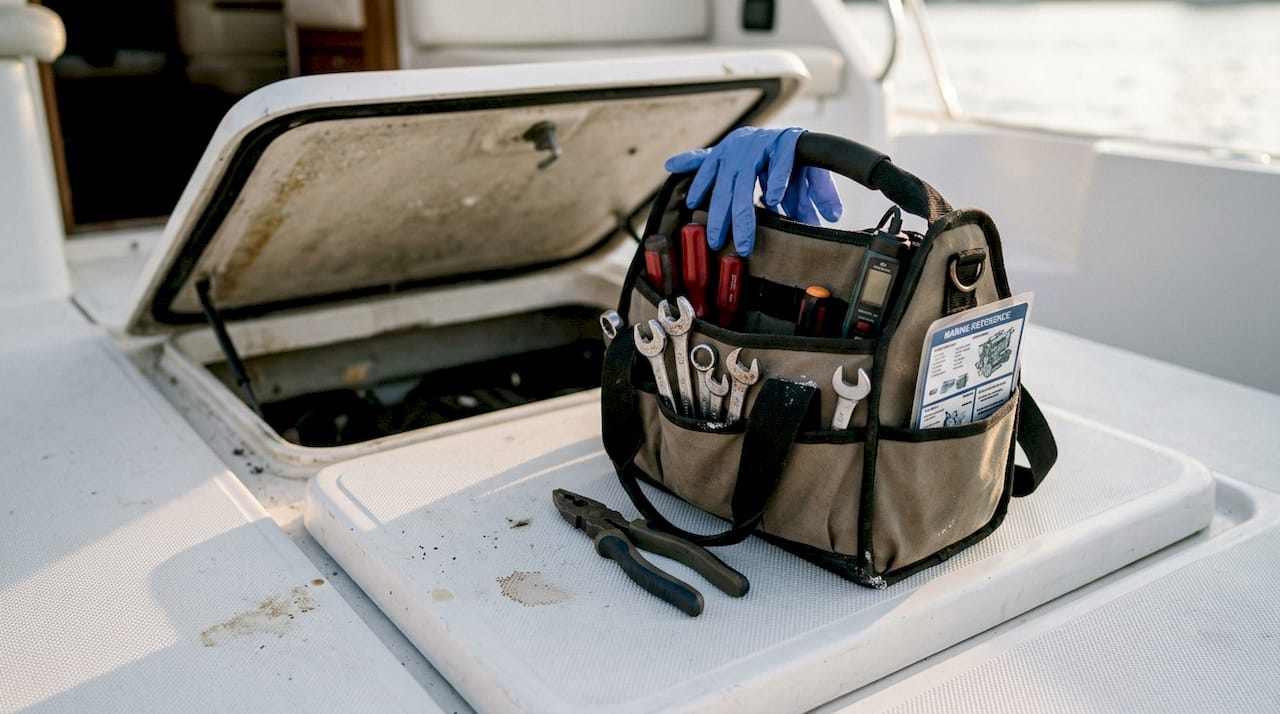
Safety equipment protects you during repairs. Nitrile gloves resist fuel and oil while providing grip in wet conditions. Safety glasses shield your eyes from spray when opening pressurized fuel lines or coolant systems. Fire extinguishers rated for engine compartments must be within reach, and proper ventilation prevents dangerous fume buildup in enclosed spaces.
Documentation guides effective troubleshooting. Your engine manual contains specifications, wiring diagrams, and maintenance schedules specific to your power plant. Service history reveals patterns like recurring problems or recent repairs that might relate to current issues. Taking photos before disassembly helps reassembly and documents conditions for insurance or warranty claims.
| Tool Category | Essential Items | Purpose |
|---|---|---|
| Hand Tools | Wrenches, sockets, screwdrivers | Component removal and adjustment |
| Diagnostic | Multimeter, compression tester | Electrical and mechanical testing |
| Consumables | Impellers, filters, fluids | Common replacement parts |
| Safety | Gloves, glasses, extinguisher | Personal protection |
Understanding your mechanical and running gear guide requirements helps identify which specialized tools your specific engine needs.
Pro Tip: Create a troubleshooting kit stored in your engine compartment with the most common failure parts and tools. When problems strike, you’ll have everything immediately accessible instead of searching while your engine overheats.
Step-by-step boat engine troubleshooting process
Systematic troubleshooting eliminates guesswork and speeds diagnosis. The binary search method tests system midpoints to quickly isolate faults.
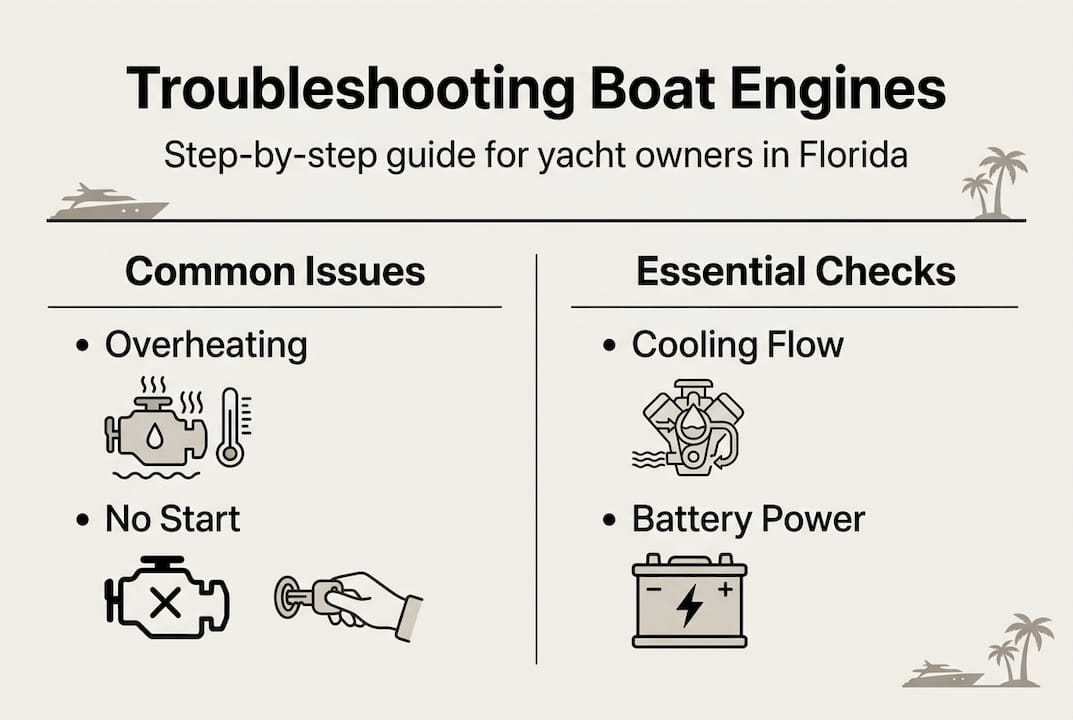
Systematic troubleshooting using the binary search method reduces the number of checks drastically by dividing possible causes in half with each test. Instead of checking every component sequentially, you test a central point in the system. If that test passes, you know the problem lies downstream; if it fails, the issue is upstream. This approach transforms a potentially exhaustive search into a focused investigation.
Follow this logical sequence for efficient diagnosis:
- Verify the obvious first: check fuel levels, battery switch position, and engine kill switch status before deeper investigation
- Assess cooling system health by observing telltale water flow strength and checking engine temperature immediately after starting
- Test electrical systems starting at the battery with voltage measurements, then work toward the starter and ignition
- Examine fuel delivery from tank to injectors, checking filters, lines, and pump operation for restrictions or contamination
- Inspect air intake pathways for blockages that restrict combustion airflow and reduce power output
- Monitor exhaust color and smell for clues about fuel mixture, oil consumption, or coolant leaks into cylinders
| System | Quick Check | Deep Diagnostic |
|---|---|---|
| Cooling | Telltale stream strength | Impeller inspection, heat exchanger pressure test |
| Electrical | Battery voltage at terminals | Circuit continuity, starter draw test |
| Fuel | Filter condition, water separator | Injector spray pattern, fuel pressure measurement |
| Mechanical | Unusual noises, vibration | Compression test, valve clearance check |
Your marine heavy machinery guide provides additional system-specific diagnostics for complex issues.
Pro Tip: Document each test result even when normal. This record helps identify patterns if problems recur and provides valuable information for professional mechanics if you need expert assistance. Note temperatures, pressures, and voltage readings with timestamps.
When testing reveals an issue, verify your diagnosis before ordering parts. A weak telltale stream might indicate impeller failure, but could also mean a blocked raw water intake screen. Remove the strainer basket and inspect for debris before assuming internal component damage. This confirmation step prevents unnecessary parts replacement and wasted time.
Common troubleshooting mistakes and how to avoid them
Even experienced yacht owners make errors that extend troubleshooting time and increase costs. Recognizing these pitfalls helps you avoid them.
Skipping systematic checks in favor of hunches wastes effort. You might suspect a bad fuel pump and replace it, only to discover the real problem was a clogged filter upstream. Always work methodically through systems rather than jumping to conclusions based on symptoms alone.
Ignoring cooling water flow represents a critical error. Running dry even briefly can destroy the impeller, and continuing to run an overheating engine causes head gasket failure, warped components, or seized pistons. The few seconds needed to verify strong telltale flow prevents thousands in damage.
Neglecting maintenance records leads to repeated mistakes. If you don’t document when you last changed the impeller, you might overlook it as a failure point when troubleshooting overheating. Conversely, knowing you replaced it recently directs attention to other cooling system components like the heat exchanger or thermostat.
Common troubleshooting errors include:
- Running the engine to test repairs without verifying cooling water flow first
- Replacing parts without confirming diagnosis through proper testing
- Overlooking simple causes like tripped breakers or closed seacocks before complex diagnostics
- Failing to check for multiple simultaneous problems after finding one issue
- Ignoring unusual sounds, smells, or vibrations as minor when they signal developing failures
Understanding sportfish boat maintenance tips helps prevent the issues that require troubleshooting in the first place.
Always verify telltale water jet strength before heavy engine use. This 10-second check prevents catastrophic overheating damage that can cost $15,000 or more in repairs. Make it as automatic as checking your oil level.
Another frequent mistake involves working without proper safety precautions. Fuel system work near ignition sources, operating engines in enclosed spaces without ventilation, or bypassing safety switches creates dangerous conditions. Your troubleshooting efforts should never compromise your safety or your vessel’s integrity.
Verifying successful repairs and maintaining engine reliability
Confirming your troubleshooting solved the problem prevents premature celebration followed by repeated failures. Proper verification and ongoing maintenance ensure lasting results.
Test your engine under realistic conditions that replicate when the problem occurred. If overheating happened during cruising speed, idling in the slip won’t reveal whether your impeller replacement truly fixed the issue. Run at normal operating RPM while monitoring temperature gauges and the telltale stream. Listen for unusual sounds and watch for smoke or vibration that might indicate remaining problems.
Verification steps for thorough confirmation:
- Start with a cold engine and observe the entire warmup cycle, checking that temperature rises normally then stabilizes
- Inspect all work areas for leaks, loose connections, or tools left behind that could cause new problems
- Run through your vessel’s normal operating range from idle to cruise speed, monitoring all gauges continuously
- Perform a final visual inspection of the engine compartment after shutdown, looking for fluid leaks or heat damage
- Document the repair with date, parts used, and any observations for future reference
Schedule preventive maintenance based on your verification results. If troubleshooting revealed worn components that haven’t failed yet, plan their replacement before they cause problems. Your yacht machinery maintenance guide provides interval recommendations for critical systems.
Create routine checklists that catch problems early. Before each outing, verify cooling water flow, check fluid levels, inspect belts for wear, and test electrical systems. These quick checks take minutes but prevent hours of troubleshooting later. After extended runs, inspect for leaks, unusual wear patterns, or developing issues while they’re still minor.
Pro Tip: Keep a detailed engine log noting hours, operating conditions, and any unusual observations. Patterns emerge over time that help predict failures before they occur. Note if your engine runs slightly hotter in certain conditions or uses more oil after hard running.
Consider professional inspections for complex systems. While you can handle many troubleshooting tasks, specialized equipment and expertise make certain diagnostics more effective. Welding and custom fabrication services address structural issues that affect engine mounts, exhaust systems, or cooling water plumbing beyond typical owner capabilities.
Explore expert yacht repair and maintenance services
While effective troubleshooting handles many engine issues, some problems demand professional expertise and specialized equipment. Knowing when to call experts prevents minor issues from becoming major failures.
Complex electrical diagnostics, fuel injection system repairs, and internal engine work require tools and training beyond most owners’ capabilities. Professional services provide precision testing that identifies intermittent problems or subtle failures missed by basic troubleshooting. When you’ve exhausted systematic checks without resolution, expert diagnosis saves time and prevents parts replacement guesswork.
Recognizing signs you need yacht repairs early connects you with specialists before catastrophic failures occur. Routine professional maintenance complements your troubleshooting efforts, catching developing issues during scheduled service. Experts familiar with Florida’s marine environment understand saltwater corrosion patterns, fuel contamination risks, and heat-related wear that affect local vessels.
Comprehensive yacht heavy machinery maintenance tips reduce breakdowns through preventive care. Professional services handle complex tasks like heat exchanger cleaning, injector testing, and precision alignment that extend engine life. Establishing relationships with trusted technicians means faster response when urgent problems arise.
Advanced systems benefit from specialist attention. Modern marine electrical work enhancements integrate navigation, monitoring, and control systems requiring expert installation and troubleshooting. Professional support ensures your vessel maintains peak reliability for Florida’s demanding boating conditions.
FAQ
How do I know if my boat engine impeller is failing?
Weak or absent water flow from your cooling system telltale indicates impeller damage or failure. Running dry even briefly destroys impellers, so check telltale stream strength before every engine start. Overheating accompanied by reduced water flow confirms impeller problems requiring immediate replacement to prevent engine damage.
What is the binary search method in boat engine troubleshooting?
The binary search troubleshooting method tests the middle of a system to halve possibilities with each check, reducing diagnostic time drastically. Instead of testing every component sequentially, you identify a midpoint and determine if the problem exists before or after that point. This systematic approach isolates faults faster than random checking, especially in complex fuel or electrical systems.
How often should I perform preventative maintenance on my yacht engine?
Perform preventative maintenance every 100 operating hours or at least every three to six months, whichever comes first, depending on usage intensity. Florida’s saltwater environment and year-round boating season demand more frequent attention than freshwater or seasonal use. Regular inspections catch developing problems early, extending engine life and reducing unexpected breakdowns. Consult your yacht machinery maintenance intervals for system-specific schedules.
Can I troubleshoot my yacht engine without professional help?
You can diagnose and resolve many common engine problems using systematic troubleshooting methods and basic tools. Issues like impeller replacement, filter changes, and electrical connection cleaning fall within typical owner capabilities. However, internal engine work, fuel injection repairs, and complex electrical diagnostics require professional expertise and specialized equipment for safe, effective resolution.
What should I do if my engine overheats during operation?
Immediately reduce throttle to idle and check your cooling water telltale stream strength. If flow is weak or absent, shut down the engine to prevent damage and investigate the cooling system starting with the raw water strainer and impeller. Never continue running an overheating engine, as even brief operation at excessive temperatures causes expensive damage to gaskets, heads, and internal components.
Recommended
Text or Call 954-330-9653 Schedule Appointment
Mazza Marine Yacht Services & Refit

Fiberglass Upgrades and Damage Repair

Premium Yacht Paint/ Faux Teak

Fishing: Custom Rods, Reels,Tackle

Electrical, Electronics and Navigation

Paint, Hull and Gelcoat

Teak Decks, Wood Cabinets, Carpentry

Canvas, Enclosures and Upholstery

Mechanical, Repower and Running Gear

Plumbing, Bilge and Thru-Hulls

Welding and Custom Fabrication

Interior Refit And Past Work
Get your yacht value Estimate
"*" indicates required fields