
View Our Recent Work:

Expect anywhere from $50 for a simple polish job to $5,000 or more for a full curved laminated windshield assembly, with most single-panel replacements landing between $200 and $1,200. The single biggest jump in price comes from curved, laminated glass paired with custom fabrication and hands-on labor. Before you commit to a repair or a full teardown, get two or three written quotes and have a shop check the frame for hidden structural damage, because that’s often where the real cost hides.
TL;DR:
- Larger or curved laminated windshields, especially those requiring custom molds or discontinued profiles, can cost between $1,500 and $5,000 or more.
- Acrylic or polycarbonate panels typically cost 30 to 50 percent less than laminated glass but may need replacement every five to eight years due to UV damage and scratching.
- Custom fabrication, frame condition, and installation complexity are major factors driving quote variations, with hidden costs often coming from corrosion, hardware issues, or mold creation.
- Repairing small chips or scratches is viable for minor surface damage, but cracks longer than a few inches or delamination demand full replacement to maintain safety and visibility.
- When requesting quotes, owners should specify glass type, panel size, shape, and installation needs, and obtain a detailed, itemized breakdown to compare options effectively.
Table of Contents
- What Does Boat Windshield Replacement Cost in Real Situations?
- Glass vs. Acrylic: What the Material Actually Costs You
- What Drives the Price on Your Installer’s Quote?
- Should You Repair It or Replace It?
- How Do You Get an Accurate Quote?
- What Mazza Marine Sees on Real Boats
- Where Mazza Marine Fits Into Your Windshield Project
- Sources
- FAQ
What Does Boat Windshield Replacement Cost in Real Situations?
The range on boat windshield replacement cost is wide because “windshield” covers everything from a flat piece of Plexiglas on a center console to a wraparound curved laminated assembly on a sportfish bridge. Matching your boat to the right bracket saves you from sticker shock and from underpaying an installer who then cuts corners.
Low end: polishing and small chip repair. If your windshield has surface scratches or a small edge chip, polishing or a minor patch typically runs $50 to $400. This works only on acrylic or polycarbonate that hasn’t cracked through, and it won’t restore optical clarity the way a fresh panel does. Deep gouges or spider cracks are past the point where polishing helps.
Mid-range: single panel replacement. Swapping one flat or gently curved panel, common on bay boats and older center consoles, usually costs $200 to $1,200. That figure covers material, basic frame prep, and a few hours of labor. Curvature, tint, and whether the glass ships as a stock size or needs cutting all push you toward the top of that range.
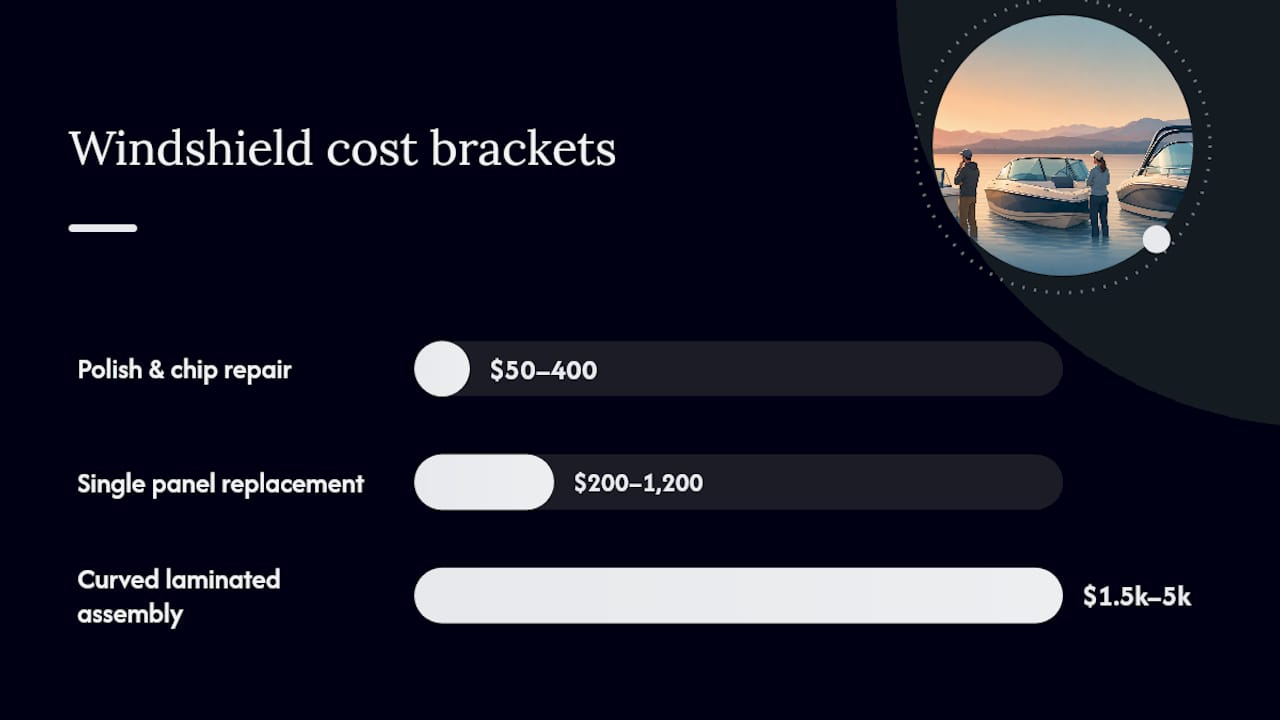
High end: full curved laminated assemblies. Wraparound windshields on express cruisers and sportfish boats, especially anything laminated for forward-facing impact resistance, commonly hit $1,500 to $5,000 or more. Custom molds, discontinued OEM shapes, and multi-piece frames drive this bracket, not the glass alone.
Forum threads back this up with real anecdotes. One owner reported paying a few hundred dollars for a single curved acrylic piece on a small runabout, while another described a several-thousand-dollar bill for a laminated glass assembly on a large convertible where the original manufacturer had gone out of business and the shop had to fabricate a new mold from scratch. That kind of variability isn’t random. It usually traces back to one of three things:
- Whether the original glass profile is still in production or has to be custom molded.
- The boat’s age and whether the manufacturer still supports parts for that hull.
- Local labor rates and whether the job requires a haul-out or mobile installation.
Glass vs. Acrylic: What the Material Actually Costs You
Acrylic and polycarbonate windshields typically cost 30 to 50 percent less upfront than laminated glass, which is exactly why so many production boats ship with them from the factory. But that upfront savings comes with tradeoffs that show up over years, not days.
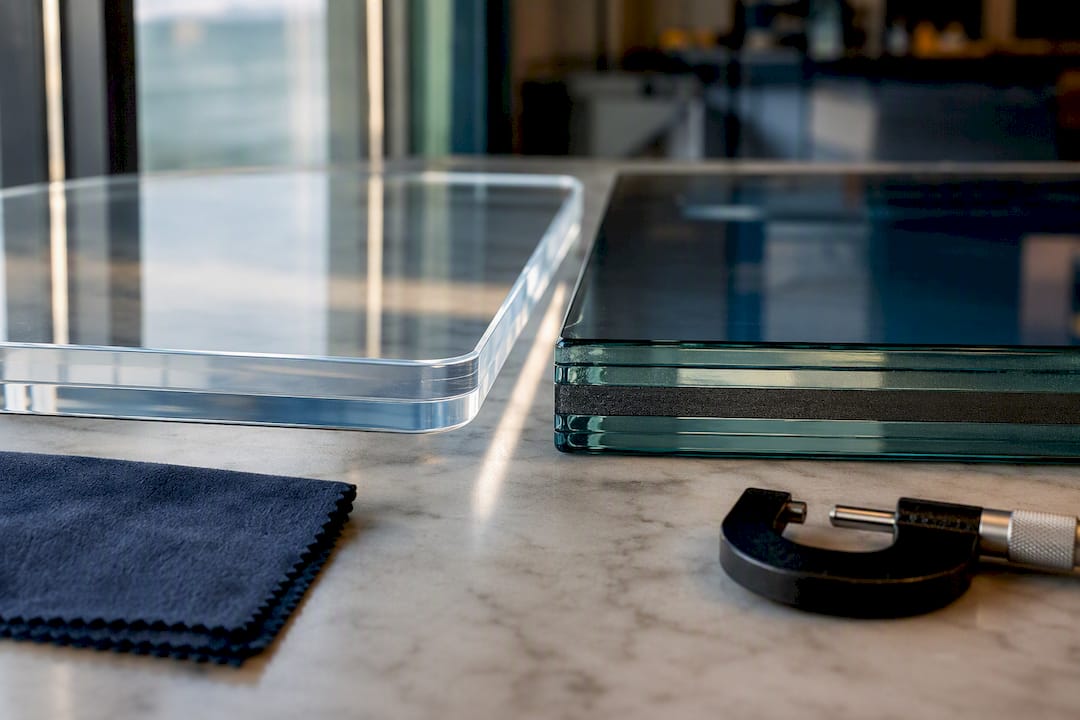
Laminated safety glass holds its optical clarity longer, resists scratching from wiper blades far better than acrylic, and is the preferred choice for forward-facing windscreens where wipers run constantly. Acrylic fogs, yellows, and scratches under UV exposure and salt spray faster than glass, which means you may be replacing it again in five to eight years instead of fifteen or more.
Where each material makes sense:
- Acrylic or polycarbonate: smaller boats, side panels, anywhere weight savings matter more than long-term optical performance.
- Tempered glass: a solid middle ground for smaller recreational boats where full laminated strength isn’t required.
- Laminated glass: larger vessels and any forward-facing windscreen, since it holds together after impact rather than shattering outward.
For bigger boats and anything facing the bow spray head-on, laminated glass is generally the safer, longer-lived choice, even though it costs more per panel. Choosing acrylic purely to save money now can actually raise your lifetime cost once you factor in earlier replacement and the labor to install it twice instead of once.
What Drives the Price on Your Installer’s Quote?
Once you’re past material choice, the line items on your quote come down to size, shape, and labor. Here’s roughly how those factors stack up:
- Window area and curvature. Larger panes need thicker glass to meet safety margins, and manufacturers calculate minimum thickness based on the window’s total area and location on the boat. A gently curved panel is manageable for most glass shops; a compound curve wrapping around a helm often requires a custom mold, which adds real cost.
- Frame and hardware condition. Corroded stainless frames, worn gaskets, or seized fasteners add labor hours before the new glass even goes in. This is the hidden cost most owners underestimate.
- Adhesive and cure time. High-strength marine adhesives like SikaFlex bond glass securely but require set cure times before the boat can go back in the water, which affects labor scheduling and shop turnaround.
- Labor location. Shop installs are usually cheaper than mobile service calls, and a haul-out adds its own fee on top of the glass work itself.
- Lead time for custom shapes. Discontinued profiles need a mold made before fabrication even starts, which can stretch a two-week job into six or eight.
Pro Tip: Ask your installer whether your boat’s windshield shape is still in production or needs a custom mold before you get a quote. That one question often explains a $1,000 swing between two bids on what looks like the same job.
Should You Repair It or Replace It?
Not every scratch or chip means a full teardown, but some damage should never wait. The trick is knowing which category you’re in.
Safe to repair:
- Light surface scratches that don’t affect the driver’s sightline.
- Small edge chips that haven’t spread into a crack.
Time to replace:
- Cracks longer than a few inches, especially anything running toward the frame.
- Delamination, where the laminated layers separate and cloud the glass.
- Corroded or pitted frame hardware that no longer holds the seal tight.
- Any visible fogging, warping, or loose seal that impairs forward visibility.
Delaying a needed replacement rarely saves money. A small crack that spreads in rough water can turn into water intrusion around the frame, and a compromised windshield at speed is a genuine safety hazard, not just a cosmetic one. If you need a stopgap before your appointment, marine-grade clear tape over a small chip can buy you a few weeks, but treat it as exactly that: a temporary patch, not a fix.
How Do You Get an Accurate Quote?
Comparing two written quotes side by side only works if both installers are pricing the same job. Ask each shop to itemize:
- Material spec, including thickness and whether it’s tempered or laminated.
- Whether the piece is stock-sized or requires custom fabrication.
- Adhesive type and expected cure time before you can use the boat.
- Labor hours, plus any travel or haul-out fees separate from the glass itself.
- Warranty terms covering both the material and the installation work.
Before you call around, take clear photos of the current windshield, note your boat’s make and model, and measure the opening if you can safely do so. That prep work alone often shaves a full quoting round trip off the process.
Pro Tip: Ask to see photos of a similar installation the shop has completed on the same boat model. A shop that hesitates to show proof of past work, or won’t confirm insurance coverage, is a red flag worth walking away from.
What Mazza Marine Sees on Real Boats
Corroded frames and discontinued glass profiles show up on nearly every windshield job we look at, and they’re rarely mentioned in the first phone call. What starts as “just replace the glass” often turns into frame welding, gelcoat touch-up around the new seal, and sometimes a canvas adjustment where the enclosure meets the new frame line. Shops that can only handle the glass end up sending you to two or three other vendors, and every handoff adds its own change order. Having welding, gelcoat, and canvas work under one roof is exactly why those surprise costs get caught before they blow up your budget instead of after.
Where Mazza Marine Fits Into Your Windshield Project
If you’ve read this far, you already know a windshield job rarely stays a windshield job. Mazza Marine handles the glass and enclosure work, but also the frame repair, fiberglass, and gelcoat finish that so often ride along with it, which means one point of contact instead of three separate vendors billing you separately for the same project. For owners tired of chasing down a glass shop, then a welder, then a gelcoat guy to fix the seam where they meet, that single-contact approach is the practical difference.

Custom glass enclosures and windscreen fabrication are part of our regular work across South Florida, alongside the frame welding and gelcoat matching that usually comes with it. If your boat’s windshield frame shows corrosion or the shape is long discontinued by the manufacturer, that’s a fabrication conversation worth having early, not after a shop tells you the glass alone won’t fix it.
To get a real number for your boat, send clear photos of the current windshield and frame, your boat’s make and model, and rough measurements if you have them, or ask to schedule an in-person inspection. Reach out through Mazzamarine to request an estimate and get a written breakdown before any work starts.
Sources
For deeper detail on frame prep and portlight work, see our guides on yacht window and portlight replacement, marine glass options, and gelcoat protection for finish work that often accompanies a windshield job.
- Glass vs. Clear-Plastic Windshields — Saltwater Sportsman
- Boat Windshield: Advanced Marine Glass for Safety, Visibility & Durability — TPRS Glass
- What is the difference between tempered and laminated glass for boats? — Framecomp
- Replacement Boat Windshield — The Plastics Guy
FAQ
What Type of Glass Is Best for a Boat Windshield?
Laminated safety glass is generally best for forward-facing windscreens because it holds together after impact and resists wiper scratching better than acrylic or polycarbonate, according to marine glass comparisons. Tempered glass works well as a lower-cost option on smaller recreational boats where full laminated strength isn’t essential.
How Expensive Is It to Replace a Boat Windshield?
Costs range from roughly $200 to $1,200 for a single flat or gently curved panel, up to $1,500 to $5,000 or more for a full curved laminated assembly requiring custom fabrication. The biggest driver is whether your boat’s glass shape is still in production or needs a new mold made.
Where Can I Find Aftermarket Boat Windshields?
Aftermarket acrylic replacements can be custom produced for discontinued glass shapes at a lower cost than OEM, though they’re often sold without installation and with limited or no warranty. Full-service marine repair shops can source or fabricate both glass and acrylic options and handle the frame work that goes with it.
Where Can I Find Replacement Boat Windscreens?
You have three main paths: the original boat manufacturer or dealer for OEM glass, specialty acrylic fabricators for discontinued shapes, and full-service marine repair shops that handle glass, frame, and finish work together. Mazza Marine covers custom glass and enclosure fabrication alongside the frame and gelcoat repair that windshield jobs frequently require.
Does a New Windshield Come With a Warranty?
Warranty terms vary by shop and should always be requested in writing before work starts, covering both the material and the installation labor separately. Ask specifically how long the workmanship guarantee lasts, since materials and labor often carry different warranty periods.
Recommended
Text or Call 954-330-9653 Schedule Appointment
Mazza Marine Yacht Services & Refit

Fiberglass Upgrades and Damage Repair

Premium Yacht Paint/ Faux Teak

Fishing: Custom Rods, Reels,Tackle

Electrical, Electronics and Navigation

Paint, Hull and Gelcoat

Teak Decks, Wood Cabinets, Carpentry

Canvas, Enclosures and Upholstery

Mechanical, Repower and Running Gear

Plumbing, Bilge and Thru-Hulls

Welding and Custom Fabrication

Interior Refit And Past Work
Get your yacht value Estimate
"*" indicates required fields