
View Our Recent Work:

Florida yacht owners often reach a point where routine maintenance is no longer enough to make their vessel stand out or perform how they want. The decision between a simple fix and a full-scale transformation can shape both resale value and daily enjoyment on the water. With a brokerage refit, you gain more than surface-level improvement—this comprehensive upgrade tackles every system and finish that matters. Discover how expert-guided refits deliver lasting results that match both your needs and the Florida market’s expectations.
Table of Contents
- Defining Brokerage Refit For Yachts
- Types Of Yacht Brokerage Refits
- Light Cosmetic Refits
- Moderate Refits With Systems Upgrades
- Full Structural And System Refits
- Step-By-Step Process With Experts
- Financial Factors And Owner Considerations
- Understanding Refit Costs
- Return On Investment
- Timing Your Refit
- Financing Options
- Mistakes Yacht Owners Should Avoid
Key Takeaways
| Point | Details |
|---|---|
| Understand Brokerage Refit Purpose | A brokerage refit refreshes a yacht to enhance appeal and market value, ensuring it meets buyer expectations. |
| Assess Your Yacht’s Condition | Begin with a professional evaluation to identify necessary upgrades and avoid unexpected costs. |
| Select a Qualified Team | Choose experienced vendors and facilities to ensure coordinated efforts and quality results throughout the project. |
| Consider Financial Implications | Plan for the costs and potential returns on investment from upgrades; not all improvements yield equal resale value. |
Defining Brokerage Refit for Yachts
A brokerage refit is a comprehensive upgrade and restoration process performed on a yacht before or after it’s listed for sale through a marine brokerage. Think of it as giving your vessel a professional makeover that increases both its appeal and market value.
Unlike routine maintenance, a brokerage refit addresses multiple systems and aesthetics simultaneously. It’s a strategic investment that transforms a yacht into a turnkey offering for potential buyers or enhances your own vessel’s performance and comfort.
What Sets Brokerage Refits Apart
Brokerage refits differ from standard repairs in scope and intentionality:
- Strategic timing: Completed before sale listings to maximize buyer interest and justifiable pricing
- Comprehensive approach: Addresses cosmetics, mechanics, electronics, and safety as one integrated project
- Market-focused: Each upgrade targets what Florida yacht buyers actually value and expect
- Professional coordination: A network of specialized vendors works in sequence, not isolation
Your vessel might have a few issues handled independently, or it might need a full transformation. A brokerage refit adapts to your yacht’s actual condition and your goals.
Core Components of a Brokerage Refit
Most comprehensive refits touch these critical areas:
Mechanical and Engine Work – Overhauls, replacements, or deep servicing of powerplants and propulsion systems that demonstrate reliability to buyers or ensure smooth operation for your own use.
Interior Refinishing – Upholstery replacement, cabinet refinishing, galley updates, and bathroom renovations that make below-deck spaces feel fresh and modern.

Exterior Restoration – Hull painting, gel coat customization and repairs, teak refinishing, and topside work that sharpens the yacht’s profile from the waterline up.
Electronics and Navigation – Updated systems for GPS, chartplotters, radar, and communication that meet current boater expectations and safety standards.
Canvas and Enclosures – New Biminis, dodgers, and glass enclosures that turn hot decks into cool lounges and improve weather protection.
A well-executed brokerage refit isn’t about cosmetic cover-ups—it’s about strategic improvements that address what buyers inspect and what owners depend on daily.
The scope varies dramatically. Some refits focus on high-visibility items like new cushions and fresh paint. Others involve engine replacements, complete rewiring, or structural repairs that take months and significant investment.
Pro tip: Start with a detailed assessment from experienced marine professionals who understand Florida’s resale market—knowing which upgrades deliver the strongest return prevents wasting budget on improvements that don’t move the needle.
Types of Yacht Brokerage Refits
Not every yacht needs the same work. Brokerage refits fall into distinct categories based on your vessel’s condition, age, and market goals. Understanding which type matches your situation helps you plan budgets and timelines realistically.
The scope ranges dramatically—from quick cosmetic updates to multi-system overhauls that transform aging vessels into modern performers. Your choice depends on what your yacht actually needs and what buyers or your own use demands.
Here’s a summary of the main types of brokerage yacht refits and their typical goals:
| Refit Type | Focus Areas | Ideal Scenario |
|---|---|---|
| Light Cosmetic | Aesthetics, fixtures, décor | Yacht’s structure and mechanics are solid |
| Moderate Systems | Interior, mechanical, electrical | Vessel needs reliability and modern features |
| Full Structural/Sys | Layout, engine, electrical, hull | Older yachts needing full transformation |
Light Cosmetic Refits
These focus on visual appeal without major structural or mechanical work.
- New upholstery and cushion covers that refresh cabin aesthetics
- Fresh paint on interior walls, trim, and cabin soles for a modern look
- Teak refinishing and brightwork restoration that restores warmth and character
- New fixtures like hardware, cabinet handles, and light covers
- Detailing of existing systems that are mechanically sound
Light refits work best when your yacht’s bones are solid but the interior feels dated. A fresh galley update or new canvas can dramatically improve perceived value without engineering complexity.
Moderate Refits with Systems Upgrades
These address cosmetics plus critical mechanical, electrical, and navigation improvements.
You’re looking at interior redesigns alongside mechanical overhauls. Think new cabinetry plus engine service, updated wiring, and modern electronics. Hull maintenance and repainting often accompany interior work to present a fully refreshed vessel.
This tier involves more coordination. Multiple vendor teams work in sequence—mechanical crews before interior, electricians alongside communications specialists. Budget increases substantially, but you’re delivering a yacht that runs reliably and feels contemporary.
Full Structural and System Refits
These are comprehensive overhauls addressing every major system simultaneously.
- Complete interior redesigns with new layouts, galley systems, and accommodations
- Engine and propulsion replacements or complete overhauls
- Full electrical system upgrades to modern standards
- Structural repairs addressing hull, deck, or interior framing
- Advanced technology integration including navigation, entertainment, and automation
Full refits can take six months to over a year depending on the yacht’s size and issues discovered during inspection. These are investments—but they can add hundreds of thousands in resale value for larger vessels.
The type of refit you choose should match your vessel’s actual condition and your realistic timeline, not what you think the market wants to hear.
Many Florida yacht owners start thinking they need a light cosmetic touch, then marine surveyors reveal hidden issues that push the project into moderate or full refit territory. That’s normal—and it’s why starting with an honest assessment saves money and frustration.
Pro tip: Have a marine surveyor assess your yacht before planning the refit scope; hidden structural, mechanical, or electrical problems discovered mid-project double costs and timelines, so knowing upfront lets you budget accurately.
Step-by-Step Process with Experts
A successful brokerage refit isn’t improvised. It follows a structured process that keeps costs predictable, timelines realistic, and quality consistent from start to finish. Working with experienced professionals at every stage makes the difference between a smooth project and a costly nightmare.
The process begins long before work touches your yacht. Planning, assessment, and coordination lay the groundwork for everything that follows.
Phase 1: Assessment and Planning
Start with a comprehensive evaluation of your vessel’s condition.
- Hire a marine surveyor to identify structural issues, mechanical problems, and system deficiencies
- Document existing systems, age, and remaining lifespan of major components
- Photograph current condition for baseline reference and insurance purposes
- Develop detailed specifications based on findings and your refit goals
This phase prevents surprises mid-project. A thorough works assessment and clear specifications establish fixed-price quotations and minimize exclusions that balloon budgets later.
Phase 2: Selecting Your Team
Choosing the right facility and vendors is critical to success. Select a shipyard or facility suited to your project’s scale and quality standards.
- Facility experience with your yacht’s type and size
- Vendor network for specialized work like electronics, engine service, and custom carpentry
- Communication style that matches your preferences for updates and transparency
- Insurance and liability coverage for work performed on your vessel
- Timeline capacity to avoid extended wait times between project phases
Mazza Marine’s network includes specialists across every refit discipline—mechanics, electricians, canvas experts, painters, and custom fabricators—all coordinated for efficient project flow.
Phase 3: Contract and Logistics
Detailed contract negotiation and scheduling coordination establish clear expectations and protect both owner and service providers.
You’ll finalize pricing, define scope boundaries, arrange insurance adjustments, and schedule work sequences. This prevents misunderstandings about what’s included and protects you if issues emerge.
Phase 4: Execution with Oversight
Onsite project management ensures alignment between shipyard crews, subcontractors, and your vision. Regular progress reviews and transparent reporting keep timelines and budgets on track.
Expect ongoing communication—weekly updates minimum, sometimes daily for complex phases. Quality control happens throughout, not just at final inspection.
A refit’s success depends on transparent communication between the owner, facility, and vendors at every stage—not just at the beginning and end.
Phase 5: Inspection and Delivery
Before your yacht leaves the facility, verify all work meets specifications. Walk the vessel with project managers, test systems, and document final condition with photographs.
Most reputable facilities conduct punch-list reviews where remaining minor items get addressed before delivery.
Pro tip: Stay involved throughout the project by visiting regularly and maintaining direct communication with project managers; owners who check in weekly catch issues early when fixes are cheaper than mid-project pivots.
Financial Factors and Owner Considerations
A brokerage refit requires upfront investment, but smart owners view it strategically. The cost structures, financing options, and resale value implications deserve careful thought before committing to the project.
Understanding the financial reality helps you make decisions that protect your investment rather than drain it.
Understanding Refit Costs
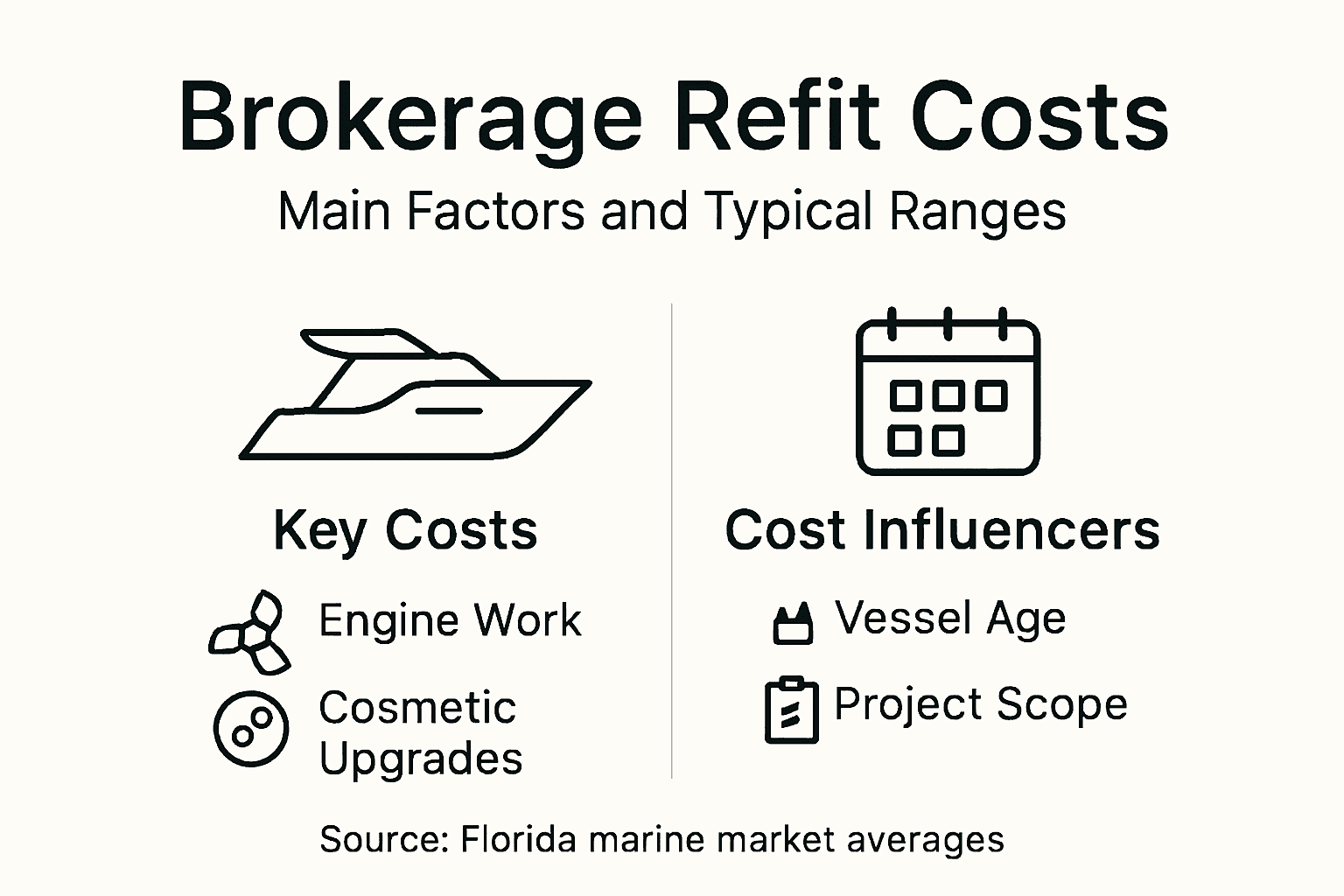
Refits typically cost between $500 to $2,500 per foot annually, depending on your yacht’s age, size, and condition. A 50-foot vessel might need $25,000 to $125,000 in work; larger yachts see proportionally higher expenses.
Three factors drive actual costs:
- Scope of work discovered during assessment—hidden structural damage, corroded wiring, or failed systems inflate budgets
- Material and labor rates in your region—Florida marine labor costs exceed many other states
- Vendor selection for specialty services like custom electronics or teak work
Most projects experience 10-15% contingency overruns when unexpected issues surface. Budget accordingly.
Return on Investment
Not every dollar spent on a refit returns at sale. However, strategic upgrades deliver strong returns.
High-return improvements:
- Engine overhauls or replacements (60-80% recovery)
- Modern navigation and safety electronics (50-70% recovery)
- Interior cosmetics and upholstery (40-60% recovery)
Lower-return upgrades:
- Luxury entertainment systems (20-40% recovery)
- Custom paint schemes matching owner preferences (0-30% recovery)
- Specialized modifications for niche uses
For brokerage sales, focus on broad-appeal improvements that solve mechanical issues and modernize aesthetics. Buyers pay for reliability and fresh appearance, not personalized customization.
Timing Your Refit
Before listing for sale: Refits attract buyers and justify premium pricing. A refreshed 45-footer sells faster at $950,000 than a tired 45-footer at $750,000.
For your own use: Spread refits across multiple seasons. Major engine work one year, interior updates the next. This spreads costs and lets you enjoy improvements.
Strategic refits add resale value when they solve problems and modernize systems—not when they reflect personal taste that won’t resonate with the next owner.
Financing Options
Consider these approaches to manage refit expenses:
- Cash reserves from yacht savings—simplest, no interest costs
- Marine loans against your yacht’s equity—typically 6-10% interest, 5-10 year terms
- Home equity lines if you own real estate—often lower rates than marine loans
- Deferred payment with facility—some shipyards offer financing during the refit period
Many Florida yacht owners finance 50-70% of refit costs, paying from boat sales proceeds or existing lines of credit.
Compare popular financing approaches for yacht refits below:
| Financing Method | Typical Cost Profile | Suitable For | Notes |
|---|---|---|---|
| Cash Reserves | No interest, upfront | Owners with savings | Fastest, most straightforward |
| Marine Loan | 6-10% interest, 5-10 yrs | Most yacht owners | Used boat as collateral |
| Home Equity Line | Lower interest rates | Owners with property | Separate from boat value |
| Refit Facility Plan | Deferred, flexible | Owners seeking convenience | May be limited to select shipyards |
Pro tip: Get fixed-price quotes from at least three vendors before financing decisions; comparing actual costs prevents overestimating what you need to borrow and saves thousands in interest expenses.
Mistakes Yacht Owners Should Avoid
Refits often go sideways because owners make predictable decisions that cost time and money. Understanding common pitfalls helps you navigate the process with confidence and protect your investment from preventable problems.
Most mistakes stem from unrealistic expectations, poor planning, or trying to save money in the wrong places.
Skipping Professional Assessment
The biggest mistake is starting a refit without understanding your yacht’s actual condition. Many owners assume they know what needs fixing, then discover hidden problems mid-project.
What happens: A $30,000 cosmetic refit suddenly becomes $80,000 when electricians find corroded wiring or mechanics discover engine bearing wear.
Always hire a marine surveyor before committing. Their $1,500-$3,000 assessment prevents far costlier surprises.
Underestimating Timeline and Contingencies
Yacht work takes longer than land-based projects. Weather delays, parts shipping, and discovered issues extend timelines unpredictably.
Owners who plan for 6 months should budget for 8-9 months. Projects waiting on custom parts or replacement components routinely slip schedules by months.
Choosing Vendors Solely by Price
The cheapest quote rarely delivers the best value. Low-ball pricing often reflects cutting corners on quality, sourcing inferior materials, or understaffing projects.
- Quality vendors charge fairly but deliver professional results that hold up
- Discount shops rush work, use lower-grade materials, and create warranty headaches
- Mid-range providers often offer the best balance of cost and reliability
Compare three detailed quotes, not just price. Ask for references and examine previous work.
Personalizing Too Much
Custom paint schemes, unusual upholstery patterns, and niche modifications appeal to you—but not to future buyers.
Recent market updates reflect shifting yacht buyer preferences toward timeless aesthetics and broad-appeal upgrades. Spend on engine reliability and modern systems, not personal taste.
Ignoring Insurance and Documentation
Failure to adjust insurance during refits leaves gaps in coverage. If damage occurs during work, gaps mean you absorb costs.
Also document everything. Photographs, invoices, warranties, and work logs protect you if issues emerge after delivery.
Mistakes in brokerage refits typically cost thousands to fix—or force you to accept lower resale prices because issues become evident to marine surveyors during buyer inspections.
Spreading Vendors Without Coordination
Hiring separate crews without a coordinating project manager creates chaos. Electricians need mechanical work finished first; painters wait on cabinet installation.
Disorganized sequencing delays projects 2-4 months and creates quality issues. Mazza Marine’s network advantage is coordinated vendor management—everyone knows the timeline and workflow.
Pro tip: Establish a fixed-price contract with clear scope boundaries before work begins; change orders mid-project multiply costs exponentially, so define exactly what’s included upfront to prevent budget creep.
Elevate Your Florida Yacht with Expert Brokerage Refit Services
Navigating the complex world of brokerage refits requires trusted partners who understand the unique challenges highlighted in the article. From managing comprehensive mechanical upgrades to interior refinishing and coordinating multiple vendors with precision, Mazza Marine is your one-stop solution. We address the key pain points of unexpected costs, timeline delays, and lacking seamless coordination through proven expertise and a deep network of Florida yacht specialists.
Discover how our Manually Add a Listing – Jason category connects you with expert vendors experienced in engine services, canvas and glass enclosures, and custom paint and gel coat that transform your vessel to maximize market appeal and resale value.
Ready to bridge the gap between your brokerage refit vision and reality? Visit Mazza Marine today to partner with industry professionals who deliver transparent communication, fixed-price contracts, and strategic upgrades that protect your investment. Start your journey toward smooth sailing and increased yacht value now by contacting us or browsing our expert vendor options online.
Frequently Asked Questions
What is a brokerage refit for yachts?
A brokerage refit is an extensive upgrade and restoration process performed on a yacht before or after it’s listed for sale. It aims to enhance the yacht’s appeal and market value by addressing multiple systems and aesthetics at once.
What are the core components of a brokerage refit?
Core components typically include mechanical and engine work, interior refinishing, exterior restoration, updates to electronics and navigation systems, and improvements to canvas and enclosures.
How do light cosmetic refits differ from full structural refits?
Light cosmetic refits focus on visual appeal, such as new upholstery and paint, without major mechanical changes. In contrast, full structural refits tackle comprehensive overhauls, including engine replacements and extensive system upgrades.
What factors influence the cost of a brokerage refit?
The cost of a brokerage refit can range from $500 to $2,500 per foot, influenced by the scope of work needed, labor rates in the region, and the selection of vendors for specialty services.
Text or Call 954-330-9653 Schedule Appointment
Mazza Marine Yacht Services & Refit

Fiberglass Upgrades and Damage Repair

Premium Yacht Paint/ Faux Teak

Fishing: Custom Rods, Reels,Tackle

Electrical, Electronics and Navigation

Paint, Hull and Gelcoat

Teak Decks, Wood Cabinets, Carpentry

Canvas, Enclosures and Upholstery

Mechanical, Repower and Running Gear

Plumbing, Bilge and Thru-Hulls

Welding and Custom Fabrication

Interior Refit And Past Work
Get your yacht value Estimate
"*" indicates required fields