
View Our Recent Work:

Custom glass enclosures are field-measured, tempered glass structures built to match the exact dimensions of your boat or yacht, replacing generic screen or canvas solutions with something far more permanent and refined. The industry term for these installations is marine glass enclosures, though “custom glass enclosures” captures exactly what sets them apart: nothing is off the shelf. They come in three primary styles, frameless, semi-frameless, and framed, each suited to different vessels, budgets, and aesthetic goals. For Florida boat owners dealing with salt air, tropical storms, and year-round sun, the right enclosure transforms a cockpit or flybridge from a seasonal space into a true all-weather sanctuary.
What are the main types of custom glass enclosures for boats?
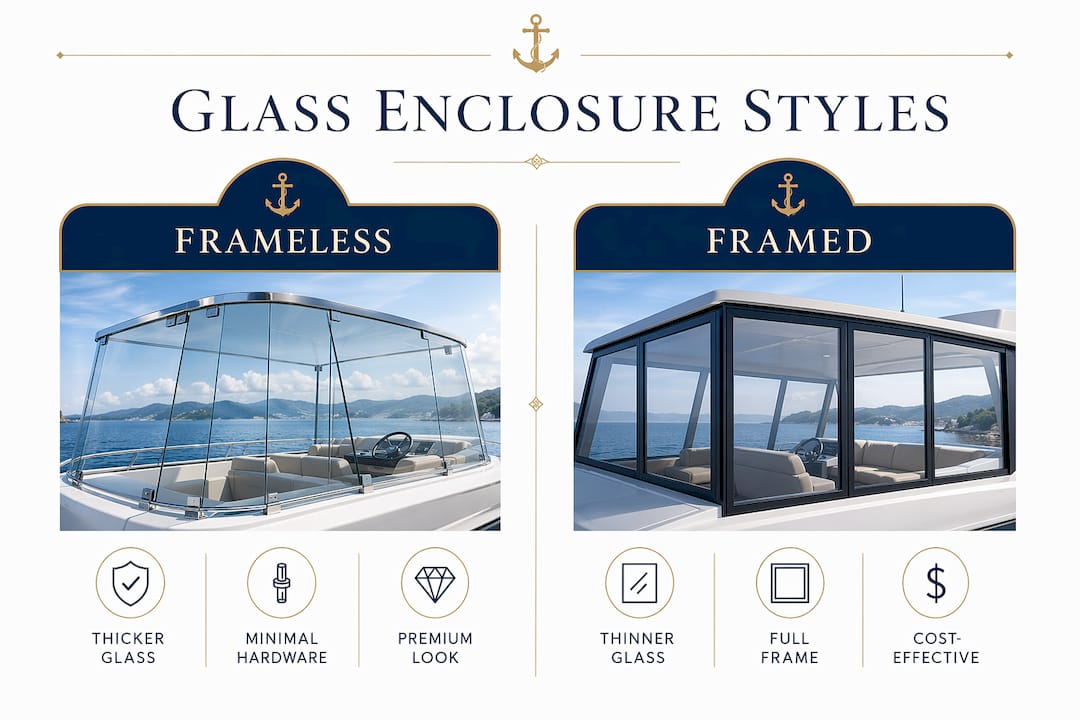
Understanding the types of glass enclosures available is the first step toward choosing the right fit for your vessel. Each style carries distinct trade-offs in glass thickness, hardware requirements, visual weight, and cost.
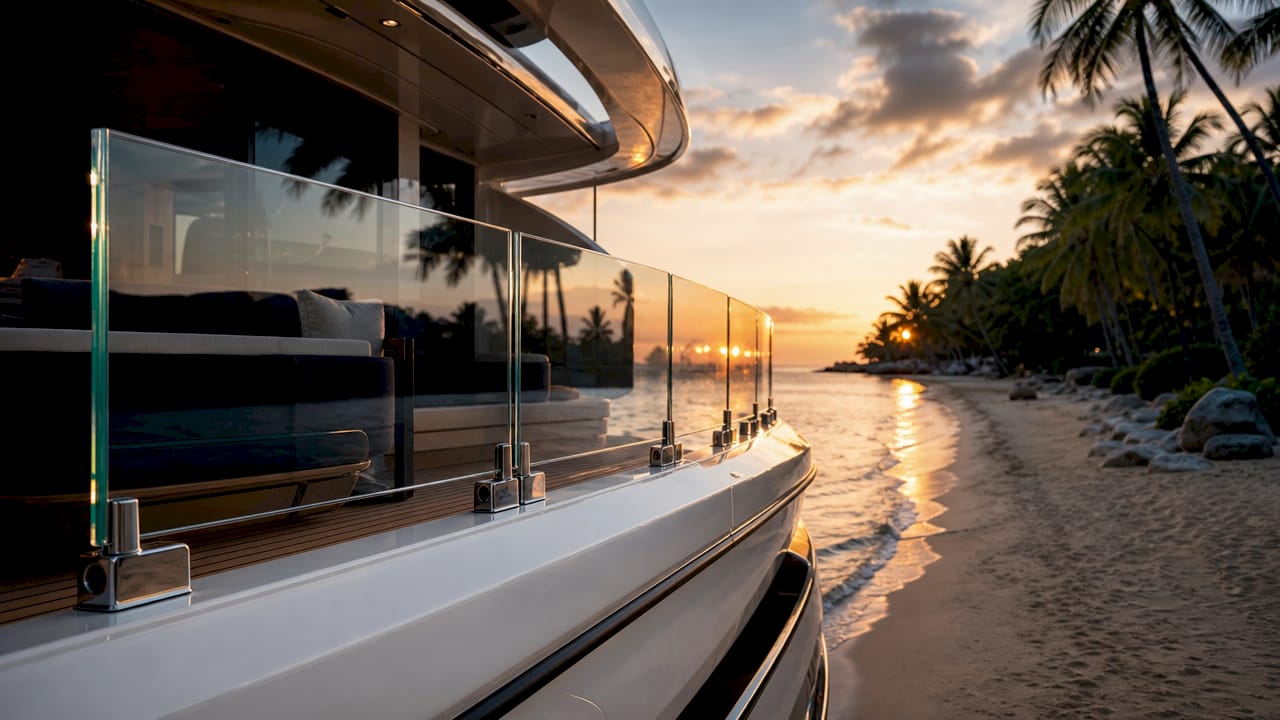
Frameless enclosures use thicker 3/8" or 1/2" tempered glass with minimal metal hardware, relying on the glass itself for structural integrity. The result is a clean, unobstructed sightline that suits high-end sportfishers and motoryachts where aesthetics matter as much as function. The hardware is typically polished or brushed stainless steel, which holds up well in coastal conditions.
Semi-frameless enclosures use thinner glass, typically 3/16" or 1/4", supported by partial aluminum framing at the top and bottom while leaving the vertical edges exposed. This approach balances the premium look of frameless with the structural support of a frame, making it a popular choice for mid-range refits.
Framed enclosures rely on a full aluminum or metal frame to hold thinner glass panels in place. They cost less to fabricate and install, and the frame provides additional rigidity in rough sea conditions. For working boats or vessels where budget is the primary concern, framed systems deliver solid performance without the premium price tag.
| Style | Glass Thickness | Frame Material | Best Use Case | Relative Cost |
|---|---|---|---|---|
| Frameless | 3/8" or 1/2" tempered | Minimal stainless hardware | Luxury yachts, sportfishers | Highest |
| Semi-frameless | 3/16" or 1/4" tempered | Partial aluminum frame | Mid-range refits | Moderate |
| Framed | 3/16" or 1/4" tempered | Full aluminum frame | Working boats, budget refits | Most affordable |
Pro Tip: If you are deciding between frameless and semi-frameless, ask your fabricator to show you both installed on a similar vessel before committing. The visual difference is significant in person, and most Florida owners who see frameless side by side with semi-frameless choose frameless without hesitation.
How do materials and fabrication affect marine glass enclosure durability?
The marine environment is unforgiving. Salt air, UV exposure, vibration underway, and wind loads at speed demand materials engineered specifically for these conditions, not adapted from residential construction.
For framing, 6063-T5 extruded aluminum alloy with a minimum wall thickness of 0.062 inches is the standard for marine applications. This alloy resists corrosion in coastal Florida far better than standard architectural aluminum, and the wall thickness provides the structural rigidity needed to handle vessel vibration and high-velocity wind loads at sea. Cutting corners on frame specification is one of the most common mistakes in budget marine enclosure projects.
The glass itself must be tempered safety glass, engineered to handle the dynamic stresses of a moving vessel. Beyond tempering, the choice of glass type matters considerably:
- Low-iron glass eliminates the green tint present in standard float glass, producing exceptional clarity that suits the open-water views Florida owners prize. Low-iron glass is the preferred choice for high-end yacht applications where visual quality is non-negotiable.
- Marine-grade seals prevent moisture infiltration and mold growth inside the enclosure. Standard residential silicone degrades rapidly in salt air; marine-grade seals and operable vents are required to manage trapped moisture in Florida’s humid climate.
- Hardware specification is equally critical. Standard residential hardware degrades within 6 to 12 months on a boat. Marine-grade hinges, clamps, and channels resist corrosion and maintain their finish through years of salt exposure.
Fabrication precision is where many projects succeed or fail. Field measurement errors are the primary cause of failures in custom enclosure projects, and changes after fabrication begins are expensive. A reputable fabricator will template your vessel directly, accounting for curves, irregular angles, and structural features unique to your hull design.
Pro Tip: Never approve a fabrication order based on drawings alone. Insist on a physical template of your vessel’s exact layout before glass is cut. The cost of a second site visit is trivial compared to the cost of remaking panels that do not fit.
What benefits do glass enclosures offer Florida boat owners?
The practical case for glass enclosure benefits on a Florida vessel is straightforward. Screen enclosures limit your usable season to roughly 8 to 9 months. Glass enclosures deliver 12 months of usability annually, because they block wind-driven rain, cold fronts, and the kind of sudden squalls that make an open cockpit miserable in January or August. That is three to four additional months of comfortable time on the water every year.
Beyond weather protection, the benefits stack up quickly:
- Noise reduction. Glass panels significantly dampen engine noise, wind roar, and dock noise, making conversations and onboard entertainment far more enjoyable.
- Pollen and debris protection. Florida’s spring pollen season is brutal on open boats. A glass enclosure keeps the cockpit and helm area clean between uses.
- Climate control integration. On larger yachts, a properly sealed glass enclosure allows air conditioning or heating to function efficiently in the enclosed space, something no screen system can support.
- Vessel value. Glass enclosures increase the appraised value of a vessel in the Florida marine market, a meaningful return on investment when you eventually sell or trade up.
Design consultants also note that glass enclosures contribute to psychological comfort by maintaining visual openness and avoiding the closed-in feeling that solid canvas creates. On a boat, that connection to the water and horizon is part of why you own the vessel in the first place.
What design options are available for custom yacht glass enclosures?
The design ideas for glass enclosures go well beyond simply choosing a frame style. Florida yacht owners have a wide palette of glass types, coatings, hardware finishes, and layout configurations to work with.
Glass type options:
- Clear tempered glass is the standard choice, offering maximum visibility and light transmission.
- Low-iron glass produces a noticeably crisper, more neutral view, particularly valuable on vessels with panoramic cockpit layouts.
- Tinted glass reduces glare and solar heat gain, useful on vessels that spend long hours at anchor in direct sun.
- Frosted or patterned glass provides privacy for specific panels, such as those adjacent to a helm station or sleeping area on a liveaboard.
- Rain glass features a subtle texture that diffuses light attractively and adds a design element without sacrificing too much clarity.
Coatings and treatments:
Factory-applied hydrophobic coatings bond permanently to the glass surface, causing water to bead and roll off rather than sheet across the panel. On a moving vessel in rain or spray, this dramatically improves visibility and reduces the water spotting that makes glass maintenance tedious. This is one upgrade that pays for itself quickly in Florida’s wet season.
Hardware finishes:
Marine environments demand hardware in brushed stainless steel, polished stainless, or powder-coated aluminum. Brushed stainless is the most forgiving in terms of showing fingerprints and minor corrosion, while polished stainless delivers a more formal, yacht-club aesthetic. For a deeper look at how marine glass choices affect both style and safety, the options are worth exploring with a specialist before finalizing your design.
Layout configurations:
Typical configurations include fixed panels with operable sliding or hinged sections for ventilation, full wrap-around enclosures for flybridge decks, and partial enclosures that protect the helm while leaving the aft cockpit open. The right configuration depends on how you use your vessel, whether that is offshore fishing, coastal cruising, or liveaboard life.
Key takeaways
Custom marine glass enclosures require precise field measurement, marine-grade materials, and a fabricator experienced with vessel-specific structural demands to deliver lasting performance and value.
| Point | Details |
|---|---|
| Three core styles | Frameless, semi-frameless, and framed enclosures differ in glass thickness, cost, and visual weight. |
| Material specification matters | Use 6063-T5 aluminum framing and marine-grade seals to resist Florida’s salt air and humidity. |
| Year-round usability | Glass enclosures extend comfortable onboard time to 12 months versus 8 to 9 months with screens. |
| Field measurement is non-negotiable | Fabrication errors are the leading cause of project failures; template the vessel before cutting glass. |
| Design options are extensive | Low-iron glass, hydrophobic coatings, tinted panels, and marine-grade hardware finishes all affect performance and aesthetics. |
Why I always tell Florida owners to invest in the fabricator, not just the glass
Here is something most articles on this topic will not tell you: the glass itself is rarely where custom enclosure projects go wrong. The glass is a commodity. What separates a beautiful, long-lasting marine enclosure from one that leaks, rattles, or corrodes within two seasons is the fabricator’s knowledge of marine conditions and their willingness to do a proper field template.
I have seen owners spend serious money on low-iron frameless glass, only to have it installed by a shop that used residential silicone and standard aluminum extrusions. Within 18 months, the seals were failing, the frames were showing white oxidation, and the whole project needed to be redone. That is not a glass problem. That is a fabricator problem.
In Florida specifically, the combination of salt air, UV intensity, and the dynamic stress of a vessel underway creates conditions that expose every shortcut. A fabricator who works primarily on residential shower enclosures does not have the same frame of reference as one who has templated and installed enclosures on sportfishers running offshore. Ask to see their marine work. Ask about their aluminum alloy specification. Ask how they handle ventilation to prevent moisture buildup inside the enclosure.
The other thing I would emphasize is maintenance. Even the best marine glass enclosure needs periodic attention. Rinse the glass and frames with fresh water after every offshore trip. Inspect seals annually and replace them at the first sign of cracking or separation. A small investment in seasonal care protects a significant investment in the enclosure itself.
— Jason
Ready to upgrade your yacht with a custom glass enclosure?
Mazzamarine connects Florida boat owners with vetted marine fabrication specialists who understand the specific demands of coastal vessels. Whether you are planning a full flybridge enclosure or a partial helm surround, the network behind Mazzamarine includes experts in marine-grade glass installation, custom framing, and yacht refit projects of every scale.

From the initial design consultation through field templating and final installation, Mazzamarine coordinates every step so you are not managing multiple vendors on your own. Mino, Luigi, and the broader Mazzamarine team bring the same passion for craftsmanship to glass enclosures that they bring to every aspect of vessel ownership. Reach out today to discuss your project and get a personalized estimate from a Florida marine specialist who knows your waters.
FAQ
What is the difference between frameless and framed glass enclosures on a boat?
Frameless enclosures use thicker 3/8" or 1/2" tempered glass with minimal hardware for a premium, unobstructed look. Framed enclosures use thinner glass supported by a full aluminum frame, which costs less and adds structural rigidity.
How long do custom marine glass enclosures last in Florida?
With marine-grade aluminum framing, proper seals, and regular fresh-water rinsing, a well-fabricated glass enclosure typically lasts 15 to 20 years in Florida’s coastal environment. Seal replacement every few years is the most common maintenance requirement.
Does a glass enclosure increase the value of my boat?
Glass enclosures can increase a vessel’s appraised value in the Florida marine market by improving both functionality and aesthetics, making the boat more attractive to buyers who want year-round usability.
What glass type is best for a yacht enclosure in Florida?
Low-iron tempered glass with a factory-applied hydrophobic coating is the top choice for Florida yachts. It delivers superior clarity without the green tint of standard glass and sheds water effectively in rain and spray conditions.
How do I maintain a custom glass enclosure on a saltwater vessel?
Rinse all glass panels and aluminum frames with fresh water after every offshore trip, inspect seals annually, and apply a marine-grade glass treatment every few months to preserve the hydrophobic coating and prevent salt buildup.
Recommended
Text or Call 954-330-9653 Schedule Appointment
Mazza Marine Yacht Services & Refit

Fiberglass Upgrades and Damage Repair

Premium Yacht Paint/ Faux Teak

Fishing: Custom Rods, Reels,Tackle

Electrical, Electronics and Navigation

Paint, Hull and Gelcoat

Teak Decks, Wood Cabinets, Carpentry

Canvas, Enclosures and Upholstery

Mechanical, Repower and Running Gear

Plumbing, Bilge and Thru-Hulls

Welding and Custom Fabrication

Interior Refit And Past Work
Get your yacht value Estimate
"*" indicates required fields