
View Our Recent Work:

Most Florida yacht owners have heard the term “engine overhaul” thrown around at the marina, but few could tell you exactly what it means. It gets used interchangeably with tune-up, service, and rebuild, which creates real confusion when your engine starts showing signs of trouble. The engine overhaul definition matters beyond semantics. Knowing what a true overhaul involves versus a routine service or a full rebuild is the difference between making a smart, cost-effective decision and spending tens of thousands of dollars unnecessarily. This guide covers the definition, process, types, and practical application for yacht engines in Florida waters.
Table of Contents
- Key Takeaways
- Engine overhaul definition for marine engines
- Types of engine overhauls
- Overhaul vs. rebuild vs. replacement
- The practical overhaul process for yacht engines
- When your yacht engine actually needs an overhaul
- My honest take after years with Florida engines
- Mazzamarine’s engine and mechanical expertise
- FAQ
Key Takeaways
| Point | Details |
|---|---|
| Overhaul is not routine maintenance | An engine overhaul is a full disassembly, inspection, and restoration process, not a standard service. |
| Two main overhaul types exist | In-frame and out-of-frame overhauls differ in scope; choosing the right one affects cost and downtime. |
| Overhaul vs. rebuild vs. replace | Each option carries different costs and lifespans; the 40% Rule helps guide your decision. |
| Timing is everything | Waiting too long for an overhaul risks safety hazards, engine failure at sea, and far costlier repairs. |
| Sea trials confirm success | Post-overhaul commissioning and staged sea trials are required to verify the engine’s true readiness. |
Engine overhaul definition for marine engines
A true engine overhaul is a thorough restoration process involving complete dismantling, inspection, cleaning, repair or replacement of worn parts, and reassembly to factory or approved marine standards. It is not an oil change. It is not a filter swap. It is not what happens at your annual service.
Think of it this way: routine maintenance keeps a healthy engine running. An overhaul restores an engine that has reached the limits of its useful service life back to operational condition. The mechanical overhaul meaning in a marine context is closer to a controlled resurrection than a checkup.
The engine overhaul process follows a disciplined sequence:
- Dismantling: The engine is fully disassembled, including removing the cylinder head, pistons, connecting rods, and crankshaft.
- Cleaning and decarbonizing: All surfaces are cleaned of carbon deposits, sludge, and scale, which is critical before any measurement begins.
- Inspection: Components are measured against manufacturer tolerances. Wear, scoring, and cracking are documented.
- Repair or replacement: Parts that fall outside specification are either reconditioned or replaced with marine-grade components.
- Reassembly: The engine is rebuilt following torque sequences, clearances, and sealing specifications.
- Testing and trials: The engine is commissioned through controlled starts and incremental load tests before returning to service.
The key distinction from routine inspections is that an overhaul resets internal components to meet manufacturer limits, not simply assesses their current condition. That is a fundamentally different operation.
Pro Tip: Keep a complete engine log for your yacht, including hours, oil analysis results, and any symptoms noticed underway. When the time comes to assess overhaul needs, that record becomes the most valuable document you own.
Types of engine overhauls
Understanding the types of engine overhauls helps you communicate clearly with your service provider and avoid paying for work your engine does not need, or worse, agreeing to a partial fix when a full teardown is warranted.
In-frame vs. out-of-frame
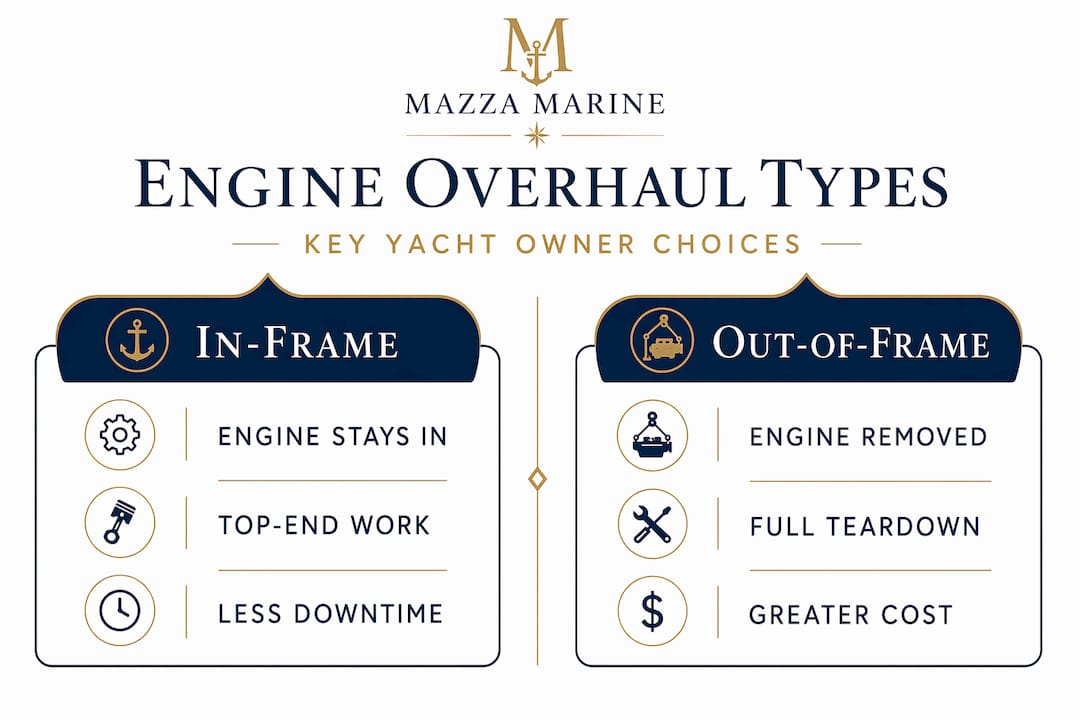
An in-frame overhaul is performed with the engine block remaining in the vessel. Technicians access the upper end of the engine, including cylinder heads, valves, injectors, and pistons, without removing the entire powerplant from the engine room. This works well for top-end issues like valve wear or cylinder head damage where the block itself is in acceptable condition.
An out-of-frame overhaul is a complete teardown. The engine is removed from the vessel, the block is fully disassembled, and every major component is inspected and measured. This is the appropriate approach when lower-end wear, crankshaft damage, or main bearing failure is involved.
Partial vs. major overhaul
| Overhaul Type | Scope | Typical Cost Range | Best For |
|---|---|---|---|
| Partial (in-frame) | Top-end components only | Lower cost and labor | Valve wear, head gasket, injector issues |
| Major (out-of-frame) | Full disassembly, all components | Higher cost and labor | Crankshaft wear, main bearing failure, block damage |
| Preventive/scheduled | Based on hours before failure | Moderate, planned cost | High-use engines at or near manufacturer intervals |
For Florida yacht captains running hard hours in warm saltwater conditions, out-of-frame overhauls are more common than in other regions. Heat accelerates wear on seals and bearings, and the salt air environment means corrosion finds its way into places you cannot see from above.
Pro Tip: Ask your technician specifically whether they recommend in-frame or out-of-frame before agreeing to any scope of work. If the answer is vague, get a second opinion. The distinction changes the entire cost profile and expected outcome.
Overhaul vs. rebuild vs. replacement
This is where confusion costs Florida yacht owners real money. The terms get blurred together constantly, but they describe very different interventions.
An engine overhaul repairs specific components that have worn beyond acceptable limits while retaining the original engine block and much of the internal hardware. Engine rebuild definition differs in that a rebuild replaces or refurbishes most internal parts. A rebuild extends engine lifespan more significantly but also costs considerably more and takes longer.
Engine replacement means pulling the worn powerplant entirely and installing a new, remanufactured, or used engine. This option makes sense when the block is cracked, the cost of rebuild approaches or exceeds the value of a replacement unit, or when the vessel is being upgraded for performance reasons.
Here is a practical comparison to guide your thinking:
- Overhaul repairs targeted components; lower cost; faster turnaround; best when core components are sound
- Rebuild replaces most internals; higher cost; longer shop time; best when widespread wear exists
- Replacement installs a different engine; highest cost potential; complete reliability reset; best for catastrophic failures or upgrades
The 40% Rule is a useful framework: if the cost of a rebuild or overhaul exceeds 40% of what a comparable replacement engine would cost, engine replacement often delivers better long-term value. This is especially relevant for older gasoline-powered sportfish and cruisers common in South Florida where replacement engines are readily available and parts for aging powerplants can be scarce.
The engine maintenance tips that seasoned Florida captains live by always include a hard look at this cost comparison before committing to any scope of work.
The practical overhaul process for yacht engines
Knowing the steps in the engine overhaul process protects you as an owner. You can ask the right questions, verify progress, and hold your service provider accountable.
- Initial assessment and documentation: Before any wrenches turn, a qualified technician performs compression tests, oil analysis, and a full visual inspection. This step establishes the baseline and justifies the scope of work.
- Teardown: The engine is systematically disassembled. Each component is tagged, photographed, and stored to preserve reassembly order. Skipping this discipline is a warning sign.
- Cleaning and decarbonizing: Disciplined cleaning and decarbonizing before any measurement is performed is non-negotiable. Carbon buildup distorts readings and masks surface damage.
- Measurement and repair decision: This is the most error-prone phase of any overhaul. Components must be measured against manufacturer specifications after cleaning, and decisions about repair versus replacement must be made with precision. Skimping here leads to leakage or compression failure during trials.
- Parts sourcing and machining: Approved marine-grade parts are sourced. Cylinder bores may be honed or rebored. Valve seats are ground. Crankshafts are measured for out-of-round.
- Reassembly: Torque sequences, bearing clearances, and gasket specifications are followed exactly. One wrong torque value on a head bolt can undo weeks of quality work.
- Commissioning and sea trials: Testing after overhaul follows a staged protocol: initial start at low RPM without load, incrementally increasing to full-load sea trials. This is not optional. It is how you confirm the overhaul actually worked.
For engine troubleshooting after major work, the Florida yacht engine guide covers the post-overhaul diagnostic steps in detail.
Pro Tip: Request written documentation of all measurements taken during the inspection phase. Any reputable shop will have this on record. If they cannot produce it, you have no way of knowing whether the overhaul was genuinely thorough or a cosmetic fix.
When your yacht engine actually needs an overhaul
Recognizing the right time for an overhaul is as important as understanding what an overhaul is. Florida’s heat, humidity, and heavy seasonal use create engine wear conditions that are different from freshwater or northern-climate boats.
Engines with heavy hours or symptoms like poor fuel economy, excessive smoke, or unusual noise should be evaluated for an overhaul before failure occurs. The key warning signs include:
- Noticeable drop in power output or cruising speed at normal throttle settings
- Increased fuel consumption without a change in usage patterns
- Blue or white smoke from the exhaust indicating oil burning or coolant leaks
- Unusual knocking, rattling, or vibration at various RPM ranges
- Oil pressure readings consistently below normal operating range
- Coolant temperature running higher than usual without obvious cause
Most marine diesel engines in regular use are evaluated for overhaul somewhere between 3,000 and 8,000 operating hours depending on manufacturer recommendations, maintenance history, and operating conditions. Gasoline yacht engines typically reach assessment thresholds sooner.
Delaying an overhaul once these signs appear is not a savings strategy. It is a risk multiplication strategy. An unplanned breakdown at sea off the Florida coast carries safety implications that go well beyond repair costs. Marine insurance policies may also scrutinize whether deferred maintenance contributed to a failure, which can complicate claims.
The yacht breakdown prevention guide shows how consistent overhaul scheduling, tracked against hours rather than calendar time, can reduce unplanned breakdowns by a measurable margin.
For commercial vessel operators, staying current with documentation requirements around overhaul records is also worth attention. Vessel documentation compliance has direct relevance to how overhaul and maintenance records are maintained and presented during inspections.
My honest take after years with Florida engines
I have seen a pattern repeat itself more times than I can count. A yacht owner hears the words “engine overhaul” and either panics and throws money at a full rebuild that was not necessary, or dismisses it as mechanic upselling and puts it off until the engine makes the decision for them at the worst possible moment.
What I have learned is that the engine overhaul definition is really a signal. It signals a lifecycle threshold, not a catastrophe. When an overhaul is timed correctly and scoped accurately, it is one of the most cost-effective things you can do for your vessel’s long-term reliability. The engines that come back from a properly executed overhaul with documented sea trials often perform better than they have in years.
Florida conditions are hard on engines. Hot ambient temperatures, saltwater air, and peak-season hours piling up fast mean that wear curves here are steeper than the manufacturer’s baseline assumes. I have found that owners who treat overhaul timing proactively, based on hours and oil analysis rather than waiting for symptoms, consistently spend less over a five-year period than those who wait.
The other thing I always tell yacht captains: the quality of your overhaul is entirely dependent on who does it. Measurements, cleaning standards, and commissioning discipline vary wildly between shops. Ask about their post-overhaul sea trial protocol before you hand over the keys. If they cannot walk you through it clearly, keep looking.
— Jason
Mazzamarine’s engine and mechanical expertise
Mazzamarine has built its reputation across Florida on one core belief: yacht ownership should feel like a privilege, not a source of constant worry. When it comes to engine and mechanical work, the Mazzamarine network connects you with experienced Florida technicians who understand the specific demands of marine diesel and gasoline engines operating in the Gulf Stream corridor.
Whether you are trying to determine if your engine needs an overhaul, comparing overhaul versus rebuild costs, or ready to schedule work, the team at Mazzamarine gives you straight answers and proper documentation at every step. Check out the Florida yacht repair signs guide to understand when your engine, and your vessel as a whole, is telling you it is time for professional attention. The mechanical refit overview is also worth reviewing if you are considering pairing an overhaul with broader performance upgrades.
FAQ
What is the engine overhaul definition in simple terms?
An engine overhaul is a complete disassembly, inspection, repair or replacement of worn components, and reassembly of an engine to restore it to manufacturer specifications. It goes well beyond routine maintenance and is considered a major lifecycle event for a vessel’s powerplant.
How is an engine overhaul different from an engine rebuild?
An overhaul targets and repairs specific worn components while retaining much of the original engine. A rebuild replaces most internal parts and is more extensive, more expensive, and more time-consuming than a standard overhaul.
How do I know when my yacht engine needs an overhaul?
Common indicators include power loss, increased fuel consumption, excessive smoke, unusual noise or vibration, and low oil pressure. Engines should also be evaluated based on operating hours according to manufacturer guidelines, regardless of symptom presence.
What are the main types of engine overhauls?
The two primary types are in-frame overhaul, which addresses top-end components without removing the engine, and out-of-frame overhaul, which involves a complete teardown of the engine block. Scope and cost differ significantly between the two.
Are sea trials required after a yacht engine overhaul?
Yes. Staged sea trials starting at low RPM without load and building to full-load operation are required to confirm that the overhaul was successful and the engine is ready for reliable service.
Recommended
Text or Call 954-330-9653 Schedule Appointment
Mazza Marine Yacht Services & Refit

Fiberglass Upgrades and Damage Repair

Premium Yacht Paint/ Faux Teak

Fishing: Custom Rods, Reels,Tackle

Electrical, Electronics and Navigation

Paint, Hull and Gelcoat

Teak Decks, Wood Cabinets, Carpentry

Canvas, Enclosures and Upholstery

Mechanical, Repower and Running Gear

Plumbing, Bilge and Thru-Hulls

Welding and Custom Fabrication

Interior Refit And Past Work
Get your yacht value Estimate
"*" indicates required fields