
View Our Recent Work:

First-time yacht buyer mistakes are defined as the avoidable errors that cost new owners thousands of dollars and years of frustration before they ever leave the dock. The most common pitfall is buying for the dream rather than the reality. Buyers fixate on a vessel’s beauty, size, and prestige while overlooking the full cost of ownership, the condition of mechanical systems, and whether the boat actually fits how they plan to use it. The good news is that every one of these errors is preventable with the right preparation, the right team, and a clear-eyed look at what yacht ownership truly demands.
What are the most common first-time yacht buyer mistakes?
The single biggest error new buyers make is purchasing a yacht that is too large for their experience level. A 60-foot motoryacht looks magnificent at the boat show, but it demands professional crew, a large slip, and a maintenance budget that shocks most first-timers. Complexity scales with size, and so does every bill that follows.
Underestimating total ownership costs ranks just as high. Most first-time buyers focus on the purchase price and treat everything else as a secondary concern. That mindset leads directly to financial strain within the first year.
Four mistakes appear consistently across first-time buyers:
- Skipping the independent survey. A pre-purchase survey is not optional. Buyers who waive it to speed up a deal routinely inherit hidden structural damage, failing electrical systems, or engines on the edge of failure.
- Emotional attachment before due diligence. Emotional attachment to a yacht before survey results are known leads buyers to rationalize serious defects rather than walk away.
- Ignoring depreciation. New yachts depreciate steeply in the first few years. Buyers who do not account for this end up underwater on financing when they want to sell or upgrade.
- Treating the broker as an adversary. A good broker is a filter, not a salesperson. Buyers who shut brokers out lose access to the most useful matching tool in the process.
Pro Tip: Never fall in love with a boat before the survey report is in your hands. Treat every vessel as a candidate, not a commitment, until the inspector signs off.
How to accurately assess the total cost of yacht ownership
The purchase price is the smallest number in yacht ownership. Annual operating costs run between 10% and 25% of the vessel’s purchase price every year, covering maintenance, fuel, insurance, berth fees, and depreciation. That means a $500,000 yacht carries $50,000 to $125,000 in annual costs before you cast off a single line.
Insurance alone deserves its own line in your budget. Insurance premiums generally range from 0.8% to 1.2% of the vessel’s value per year. On a $400,000 boat, that is $3,200 to $4,800 annually, and rates climb with the vessel’s age and your cruising range.
Here is a practical breakdown of what to budget by cost category:
| Cost Category | Typical Annual Range | Notes |
|---|---|---|
| Maintenance and repairs | 5%–10% of vessel value | Higher for older boats |
| Fuel | Varies by use | Diesel twins burn fast at cruise speed |
| Insurance | 0.8%–1.2% of vessel value | Rises with age and cruising area |
| Berth and dockage fees | $5,000–$30,000+ | Florida marina rates vary widely |
| Winter storage | $1,500–$8,000 | Applies to northern climates |
| Depreciation | Steepest in years 1–3 | New boats lose value fastest |
Unexpected repairs are the budget item that breaks new owners. An engine overhaul, a failing generator, or a compromised hull fitting can each run $10,000 to $30,000 without warning. Building a dedicated reserve fund of at least 5% of the vessel’s value is the standard practice among experienced owners who use a structured maintenance package to stay ahead of those costs.
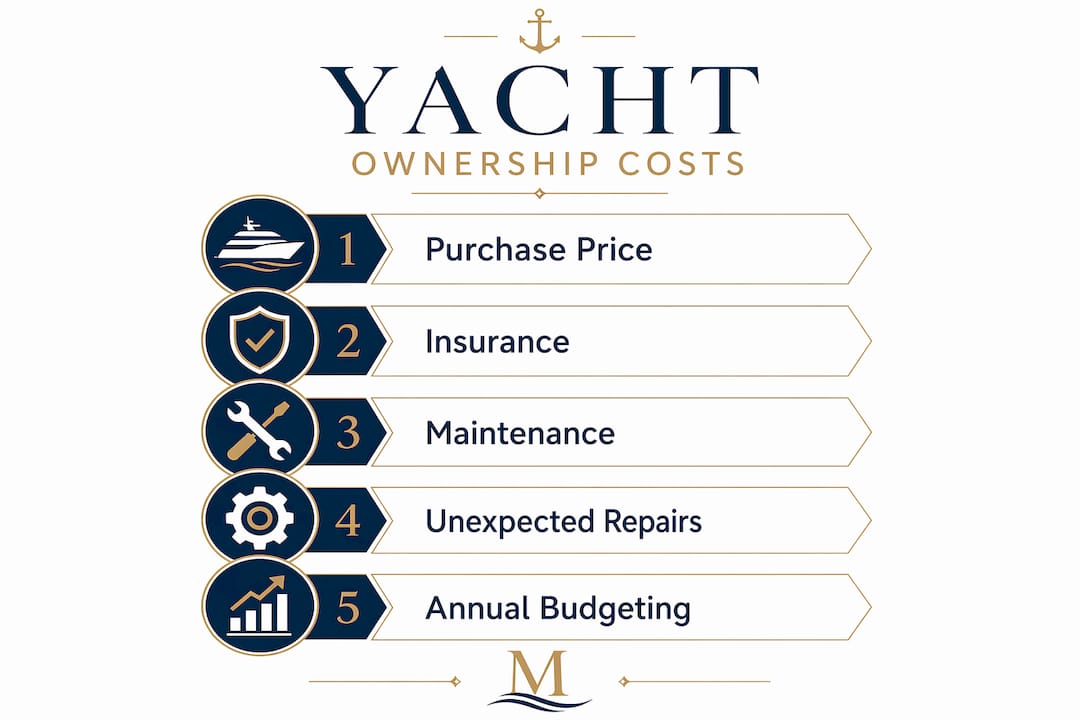
Pro Tip: Before you sign anything, build a 12-month ownership budget in a spreadsheet. Include every line item above. If the total number does not feel comfortable, the boat is too expensive for you right now.
Why is a pre-purchase survey non-negotiable?
A pre-purchase survey is the single most protective step in the entire buying process. Lenders and insurers require an independent professional survey to confirm vessel safety and value before they will finance or underwrite a policy. Even if you are paying cash, skipping this step is one of the most expensive first yacht purchase errors a buyer can make.
Here is what a thorough survey process looks like:
- Hire an accredited independent surveyor. Never use the seller’s surveyor. The conflict of interest is obvious, and the report will not protect you. Look for surveyors accredited by the Society of Accredited Marine Surveyors (SAMS) or the National Association of Marine Surveyors (NAMS).
- Expect a full day of inspection. A comprehensive survey takes 4–8 hours and produces a detailed 30–60 page report. It covers hull integrity, mechanical systems, electrical wiring, safety gear, and often includes a dedicated engine survey or oil analysis.
- Conduct a sea trial. The boat must run under load. A sea trial reveals engine performance, handling characteristics, vibration issues, and whether onboard systems work as advertised. Never accept a static inspection alone.
- Categorize the findings immediately. Survey reports should be sorted into three buckets: safety-critical issues that are non-negotiable, functional problems that are negotiation points, and cosmetic flaws you can accept. This framework keeps deals alive while protecting you from serious risk.
- Use the report to negotiate, not just to decide. Safety-critical findings justify a price reduction or a seller-funded repair before closing. Cosmetic issues rarely warrant walking away.
Understanding the role of a marine surveyor before you enter the process makes you a far more confident buyer. You will know what questions to ask and what findings to take seriously.
Pro Tip: Request an oil analysis on diesel engines as part of the survey. Lab results reveal internal wear that no visual inspection can catch, and they cost less than $100 per engine.
How to choose the right yacht size, type, and features
Matching the boat to your actual boating life is where most first-time buyers go wrong. They plan for the best-case scenario: long offshore passages, extended cruising, entertaining large groups. In reality, most yacht owners use their boats for day trips and weekend runs within 50 miles of their home port.
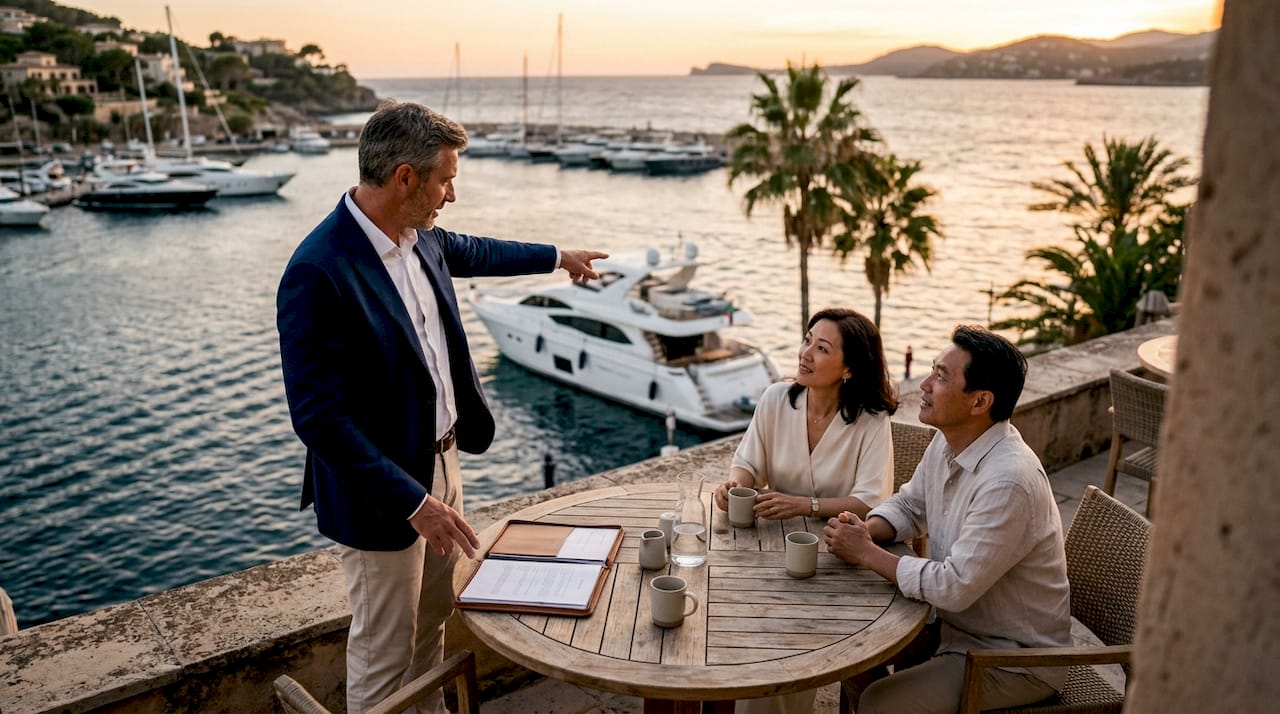
Buying a yacht 5–10 feet smaller than your initial plan often results in higher usage and less operational complexity. A 42-foot cruiser that you can handle with your partner is worth more to your life than a 55-foot vessel that requires a captain every time you leave the dock.
Use these criteria to align your choice with your real needs:
- Cruising profile. Day trips favor center consoles and express cruisers. Weekend runs call for a boat with comfortable sleeping quarters and a functional galley. Long-range plans require range, tankage, and stability.
- Experience level. Start with a vessel that matches your current skills, not the skills you hope to develop. You can always move up.
- Crew size. A boat you can single-hand or run with one crew member gives you far more spontaneous use than one that needs four people to operate safely.
- Feature fit. Avoid over-specifying for future scenarios. A full sportfish tower adds cost, weight, and complexity if you fish twice a year. Selecting features that match your use keeps the purchase price and operating costs in check.
Experienced buyers treat brokers as partners who match boat features to the buyer’s actual usage profile. A skilled broker who understands Florida yacht brokerage will steer you away from over-spec’d vessels and toward boats that fit your life today. That guidance is worth more than any amount of online research.
One more consideration: financing terms matter early. Longer financing terms of 10–20 years are common for newer yachts, while older vessels typically require larger down payments or shorter terms. Know your financing picture before you fall in love with a specific boat.
Key takeaways
Avoiding first-time yacht buyer mistakes requires realistic budgeting, an independent survey, and matching the vessel to your actual boating habits rather than your aspirations.
| Point | Details |
|---|---|
| Budget 10%–25% annually | Annual operating costs run 10%–25% of purchase price; plan for this before you buy. |
| Never skip the survey | An independent 4–8 hour survey with a 30–60 page report protects you from hidden defects. |
| Buy smaller than you think | A yacht 5–10 feet smaller than planned often delivers more use and less stress. |
| Categorize survey findings | Sort issues into safety-critical, functional, and cosmetic to negotiate without killing the deal. |
| Treat your broker as an ally | A good broker matches the boat to your real usage profile and saves you from costly over-spec. |
What I have learned watching buyers get it right and wrong
I have watched a lot of first-time buyers walk into this process with a number in their head and a dream in their heart. Both are fine starting points. The problem is when neither one gets tested against reality before the contract is signed.
The buyers who come out ahead share one trait: they build their team before they build their shortlist. A broker, an accredited surveyor, a marine lawyer, and a tax advisor. Successful first-time buyers assemble this group early, and it shows in every decision they make afterward.
The buyers who struggle almost always skipped the survey, bought too big, or both. I have seen a gorgeous 58-footer turn into a $90,000 repair project because the buyer waived the inspection to close fast. The seller was motivated, the deal felt urgent, and the buyer’s emotions made the call. The engine room told a different story.
My honest advice: start with a boat that is one size smaller than your gut says. Use it hard for a season. Learn what you actually need. Then move up with real data instead of wishful thinking. The sea rewards patience and punishes impulse buying more reliably than almost any other asset class.
— Jason
Mazzamarine: your first-call resource for new yacht owners
Buying the right boat is only the beginning. What happens in the first 12 months of ownership often determines whether the experience becomes a lifelong passion or a costly regret.

Mazzamarine supports Florida yacht owners at every stage after the purchase. From recognizing early repair warning signs to complete maintenance packages, engine work, electronics, and custom refits, Mazzamarine’s network of vetted Florida specialists keeps your vessel safe, reliable, and ready. Brothers Mino and Luigi built Mazzamarine on the belief that every owner deserves a trusted partner, not just a service call. Reach out today and start that relationship before your first problem finds you.
FAQ
What is the biggest first-time yacht buyer mistake?
Underestimating total ownership costs is the most damaging error. Annual operating expenses run 10%–25% of the purchase price, and buyers who focus only on the sale price face serious financial strain within the first year.
How much does a pre-purchase yacht survey cost?
Survey costs vary by vessel size and location, but the investment is minimal compared to the defects it can uncover. A thorough survey takes 4–8 hours and produces a 30–60 page report covering hull, mechanical, electrical, and safety systems.
Should I buy a new or used yacht as a first-time buyer?
Lightly used boats from 2–6 years old offer the best balance of cost and modern features. New yachts carry steep early depreciation, while older vessels may require larger down payments and carry higher maintenance risk.
How do I choose the right yacht size?
Buy 5–10 feet smaller than your initial instinct. A smaller, manageable vessel gets used more often and costs less to operate, which builds real experience faster than a large boat you rarely take out.
Do I need a broker to buy my first yacht?
A broker is not legally required, but experienced buyers treat brokers as partners who match vessel features to their actual usage profile. A skilled broker prevents over-specification and guides you away from vessels that look right but perform poorly for your needs.
Recommended
Text or Call 954-330-9653 Schedule Appointment
Mazza Marine Yacht Services & Refit

Fiberglass Upgrades and Damage Repair

Premium Yacht Paint/ Faux Teak

Fishing: Custom Rods, Reels,Tackle

Electrical, Electronics and Navigation

Paint, Hull and Gelcoat

Teak Decks, Wood Cabinets, Carpentry

Canvas, Enclosures and Upholstery

Mechanical, Repower and Running Gear

Plumbing, Bilge and Thru-Hulls

Welding and Custom Fabrication

Interior Refit And Past Work
Get your yacht value Estimate
"*" indicates required fields