
View Our Recent Work:

A glass enclosure is defined as a framed, glazed system installed on a vessel’s cockpit, flybridge, or helm station to protect occupants from wind, spray, and debris while preserving clear sightlines. For Florida boat owners, this glass enclosure guide covers everything from material selection and Florida Building Code compliance to installation workflows and saltwater maintenance routines. The stakes here are real. Florida’s wind-borne debris zones demand impact-resistant laminated glazing with certified PVB or SGP interlayers, and choosing the wrong product can leave your vessel unprotected during hurricane season and out of compliance with state code.
What glass enclosure options exist for Florida boat owners?
The two primary glazing categories you will encounter are tempered glass and laminated impact glass. Tempered glass is heat-treated for strength, but when it breaks, it shatters into small fragments. Laminated glass bonds two or more panes around a polyvinyl butyral (PVB) or SentryGlas Plus (SGP) interlayer, so the assembly holds together on impact. For Florida vessels, laminated impact assemblies are the practical standard because shutters are impractical on a moving boat and non-impact glass leaves you exposed in storm conditions.
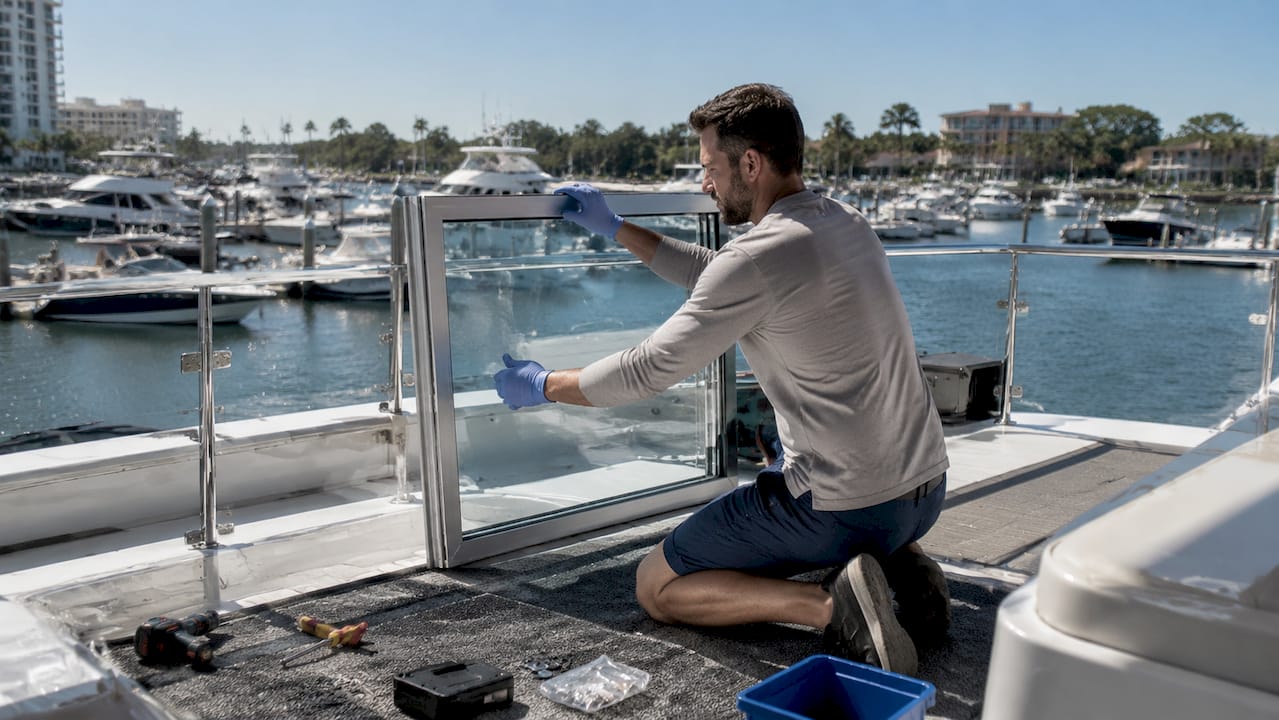
Insulating glass units (IGUs) combine two panes with an air or gas-filled cavity for thermal performance. They are more common in commercial architecture than in marine applications, where weight and profile matter. Single-pane laminated impact glass is the dominant choice for most Florida boat enclosures because it balances weight, clarity, and code compliance without the added bulk of an IGU.
Hardware selection is equally critical. Marine-grade 316 stainless steel fasteners and anodized aluminum or Kynar 500 PVDF-coated aluminum frames resist the corrosive salt environment that destroys standard galvanized or zinc-plated hardware within months. This is not a place to cut corners. A frame that corrodes compromises the seal integrity of the entire assembly.
| Glass type | Impact rating | Best use | Relative cost |
|---|---|---|---|
| Tempered single-pane | None | Inland, non-code zones | Low |
| Laminated PVB | Code-compliant impact | Most Florida vessels | Moderate |
| Laminated SGP | High-performance impact | Offshore and hurricane zones | Higher |
| Insulating glass unit | Varies by assembly | Enclosed cabins, thermal needs | Highest |
Pro Tip: Always request the Florida Product Approval number for any glass assembly before purchasing. This number confirms the product has passed TAS 201/202/203 large-missile impact testing and is legally compliant for your wind speed zone.
How to build and install a compliant glass enclosure on your boat
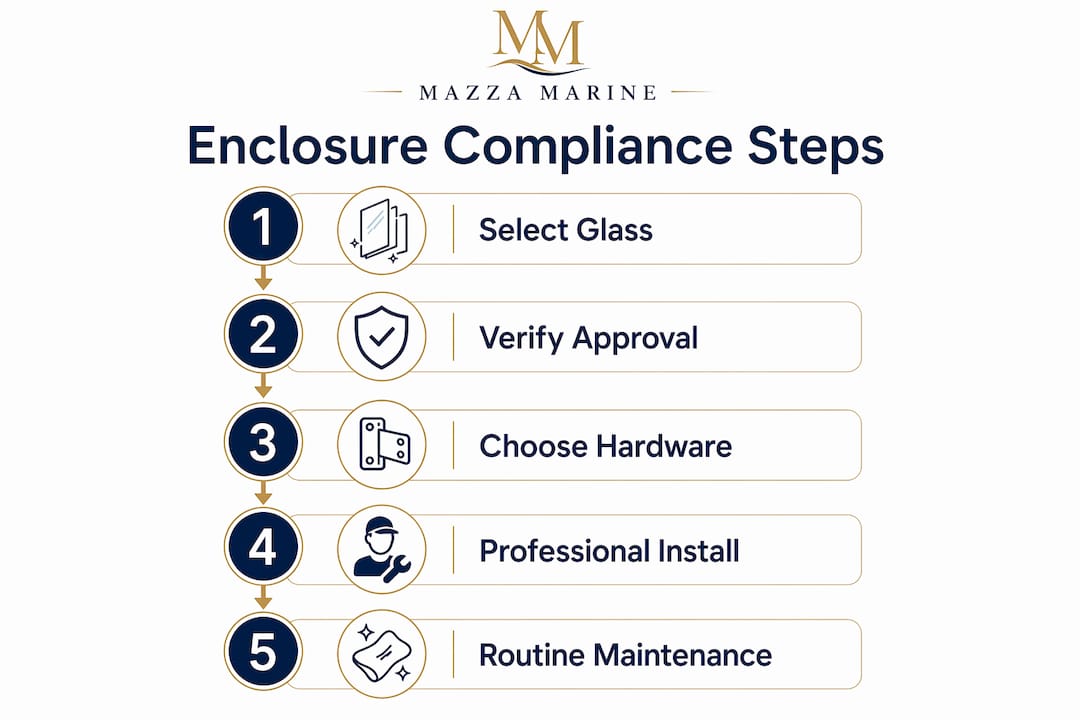
Planning a compliant installation requires more than measuring your helm station. Florida’s wind-borne debris regions are mapped by wind speed zones, and your vessel’s home port determines which exposure category applies. Here is the workflow that professional installers follow on Florida vessels.
-
Determine your wind speed zone and exposure category. Florida Building Code assigns wind speed requirements by county and coastal proximity. Confirm your vessel’s primary operating area and dock location to identify the correct design wind pressure for your enclosure.
-
Obtain engineering drawings and Florida Product Approval documentation. Every glass assembly installed in a wind-borne debris region requires a certified product approval number. The approved configuration specifies exact glass thickness, interlayer type, and approved mounting details. Deviating from the tested assembly, even with visually identical materials, invalidates the approval.
-
Prepare the framing substrate. Install marine-grade anodized aluminum or Kynar-coated aluminum framing, secured with 316 stainless steel fasteners. Verify that all framing members are plumb, level, and structurally sound before glass panels are fitted.
-
Fit glass panels with approved seals. Use only the sealant specified in the product approval documentation. Silicone formulations vary widely, and using an unapproved product can void the impact rating. Apply glazing tape and structural silicone per the manufacturer’s installation guide.
-
Add weatherproofing and flashing. The installation sequence calls for flashing at all frame-to-deck transitions to prevent water intrusion. On a vessel, this step also protects against spray and wave wash.
-
Inspect for gaps, seal failures, and hardware torque. Walk the entire perimeter of the installed enclosure. Check every fastener, every seal joint, and every glazing bead. A single compromised seal can allow water infiltration that damages the vessel’s interior and weakens the enclosure’s structural performance over time.
Pro Tip: Never substitute glass panels between different approved assemblies, even if the dimensions match. The certification is assembly-specific, meaning the glass, interlayer, frame, and sealant must all match the tested configuration exactly.
How to maintain and protect marine glass from Florida’s saltwater and UV
Florida’s coastal environment is relentless. Salt spray deposits microscopic crystals on glass surfaces, and if you clean those surfaces without rinsing first, those crystals act like embedded grit and scratch the glass permanently. Salt-driven abrasion and mineral etching at enclosure seams are the two most common causes of premature glass degradation on Florida vessels. The good news is that a consistent maintenance routine prevents both.
The core maintenance schedule looks like this:
- Daily: Rinse all glass surfaces with fresh water after every outing. This removes salt deposits before they crystallize and bond to the surface.
- Weekly: Wash with a pH-neutral, ammonia-free marine glass cleaner using a clean microfiber cloth. Ammonia-based household cleaners damage acrylic and vinyl enclosure panels and degrade protective coatings.
- Monthly: Apply a polymer or nano-ceramic sealant to create a hydrophobic barrier. This layer repels water, reduces salt adhesion, and slows UV degradation of the glass surface.
- Every 6 to 12 months: Schedule a professional inspection and polish to address any mineral etching, seal wear, or hardware corrosion before it becomes structural damage.
The distinction between time-based and event-based maintenance matters here. Many boat owners clean their glass only when it looks dirty. That approach misses the invisible salt and UV damage accumulating between visible soiling events. Treating maintenance as a fixed weekly and monthly schedule, rather than a reaction to visible grime, is what separates enclosures that last a decade from those that haze and pit within two years.
| Maintenance task | Frequency | Product type |
|---|---|---|
| Fresh water rinse | After every outing | Fresh water only |
| Full glass wash | Weekly | pH-neutral, ammonia-free marine cleaner |
| Sealant application | Monthly | Polymer or nano-ceramic marine sealant |
| Professional polish and inspection | Every 6 to 12 months | Professional-grade compound and sealant |
Pro Tip: When applying sealant, work in the shade and on a cool surface. Heat causes sealants to cure too quickly, leaving streaks and uneven coverage that reduce the protective barrier’s effectiveness.
What are the benefits of glass enclosures beyond basic weather protection?
Glass enclosures deliver advantages that canvas alternatives simply cannot match, and Florida boat owners who have made the switch rarely go back. The benefits extend well beyond keeping rain off the helm.
- Unobstructed visibility. Laminated glass provides crystal-clear sightlines in all directions, which matters enormously when you are threading through Miami’s Biscayne Bay or running offshore in variable conditions. Canvas panels distort and yellow over time; quality glass does not.
- Comfort and climate control. A properly sealed glass enclosure reduces wind noise, blocks spray, and creates a noticeably more comfortable helm environment. On a long offshore run, that comfort translates directly into reduced fatigue for the captain.
- Security and debris protection. Impact-rated laminated glass stops wind-borne debris during storms and deters opportunistic theft when the vessel is docked. Canvas can be cut; certified laminated glass cannot be breached without significant effort.
- Aesthetic appeal and resale value. A bespoke glass enclosure transforms the visual character of a vessel. Buyers in Florida’s competitive yacht market recognize quality glazing as a premium feature, and a well-maintained enclosure supports a stronger asking price at resale.
- Durability over canvas alternatives. Glass enclosures outperform canvas in longevity, UV resistance, and structural integrity. Canvas requires seasonal replacement and offers no impact protection. Glass, properly maintained, lasts the life of the vessel.
Key takeaways
A compliant, well-maintained glass enclosure built with laminated impact glass, marine-grade hardware, and a consistent saltwater care routine is the most durable and code-compliant protection system available for Florida vessels.
| Point | Details |
|---|---|
| Laminated impact glass is required | Florida Building Code mandates PVB or SGP interlayer assemblies with Florida Product Approval in wind-borne debris zones. |
| Hardware must be marine-grade | Use 316 stainless steel fasteners and anodized or Kynar-coated aluminum frames to prevent corrosion failure. |
| Rinse before you clean | Daily fresh water rinses remove salt crystals before they scratch glass during weekly cleaning. |
| Certification is assembly-specific | Substituting any component outside the approved configuration invalidates the impact rating and code compliance. |
| Maintenance must be time-based | Fixed daily, weekly, monthly, and biannual schedules prevent invisible UV and salt damage between visible soiling events. |
What I have learned after years of watching Florida enclosures fail and thrive
I have seen beautiful glass enclosures on Florida vessels reduced to hazy, pitted panels within three seasons, and I have seen others that still look factory-fresh after a decade of hard use. The difference is almost never the glass itself. It is the decisions made before and after installation.
The most common mistake I see is boat owners selecting glass based on price rather than Florida Product Approval status. A panel that looks identical to a certified assembly but lacks the correct interlayer thickness or approved mounting detail offers no real protection when a Category 3 storm pushes debris across your marina. That is not a hypothetical. It happens every hurricane season in Florida.
The second mistake is inconsistent maintenance. Salt does not announce itself. It accumulates quietly, etches into seals and frame joints, and by the time you notice the haze, the damage is already done. The boat owners I respect most treat their glass enclosure maintenance the way they treat engine oil changes: on a fixed schedule, without exception.
My honest advice is to work with local experts who know Florida’s specific wind speed zones and product approval requirements. The investment in a compliant, professionally installed enclosure pays back in safety, comfort, and resale value many times over. And if you are unsure whether your current enclosure meets code, get it inspected before the next hurricane season. Peace of mind on the water is worth every dollar.
— Jason
How Mazzamarine helps Florida boat owners with glass enclosures
Mazzamarine connects Florida yacht owners with a trusted network of specialists who handle glass enclosure installation, maintenance, and refurbishment from Miami to the Keys and beyond. Whether you need a new impact-rated enclosure fitted to your sportfish, a protective nano-ceramic coating applied to existing panels, or a full vessel maintenance assessment, Mazzamarine’s experts bring the knowledge and Florida-specific experience to get it right the first time.

Mazzamarine’s founders Mino and Luigi built their reputation on exactly this kind of bespoke, detail-oriented craftsmanship. Their network includes certified glazing specialists, marine hardware suppliers, and canvas and glass enclosure fabricators who understand Florida Building Code compliance inside and out. Reach out to Mazzamarine for a consultation and get your enclosure built, protected, and maintained to the standard your vessel deserves.
FAQ
What glass is required for boat enclosures in Florida?
Florida Building Code requires impact-resistant laminated safety glazing with PVB or SGP interlayers for exterior glazing in wind-borne debris regions. The glass assembly must carry a Florida Product Approval certification and pass TAS 201/202/203 large-missile impact testing.
How often should I clean my boat’s glass enclosure?
Rinse glass with fresh water after every outing, wash with a pH-neutral ammonia-free marine cleaner weekly, apply a polymer or nano-ceramic sealant monthly, and schedule a professional inspection and polish every 6 to 12 months.
Can I use household glass cleaner on my boat enclosure?
No. Ammonia-based household glass cleaners damage acrylic and vinyl enclosure panels and degrade protective coatings. Use only marine-safe, pH-neutral, ammonia-free products specifically formulated for boat enclosures.
What hardware should I use for a marine glass enclosure?
Use marine-grade 316 stainless steel fasteners and anodized aluminum or Kynar 500 PVDF-coated aluminum framing. Standard galvanized or zinc-plated hardware corrodes rapidly in Florida’s salt-laden coastal environment and is unsuitable for marine glass enclosures.
Does a glass enclosure add value to my boat?
Yes. Glass enclosures improve comfort, visibility, and security while outperforming canvas alternatives in durability and aesthetic appeal. Florida yacht buyers recognize quality impact-rated glazing as a premium feature that supports a stronger resale price.
Recommended
Text or Call 954-330-9653 Schedule Appointment
Mazza Marine Yacht Services & Refit

Fiberglass Upgrades and Damage Repair

Premium Yacht Paint/ Faux Teak

Fishing: Custom Rods, Reels,Tackle

Electrical, Electronics and Navigation

Paint, Hull and Gelcoat

Teak Decks, Wood Cabinets, Carpentry

Canvas, Enclosures and Upholstery

Mechanical, Repower and Running Gear

Plumbing, Bilge and Thru-Hulls

Welding and Custom Fabrication

Interior Refit And Past Work
Get your yacht value Estimate
"*" indicates required fields