
View Our Recent Work:

Florida’s sportfishing regulations shift faster than a tarpon cuts across a flat, and relying on last season’s printed guide or a buddy’s casual advice could land you with a serious citation. Rules vary not just by species but by specific body of water, and what’s legal on the Atlantic side may be restricted on the Gulf. Yacht owners and serious anglers face a real challenge: staying genuinely current, rigged correctly, and fishing smart. This guide cuts through the complexity so you can spend less time second-guessing and more time tight on the right fish.
Table of Contents
- Making sense of Florida sportfishing regulations
- Species-specific rules: What you need to know
- Smart techniques for targeting pelagics: Kite fishing and beyond
- Handling, safety, and local best practices for Florida sportfishing
- What experienced Florida anglers wish they knew sooner
- Upgrade your Florida sportfishing experience
- Frequently asked questions
Key Takeaways
| Point | Details |
|---|---|
| Check rules every trip | Florida fishing regulations change often and can vary by species and location, so always verify updates online. |
| Bag and gear limits matter | Know the specific bag, gear, and handling rules for each species to avoid costly violations. |
| Technique must match conditions | Choose fishing techniques and gear based on local wind, bait availability, and legal requirements for best success. |
| Safety and compliance go hand-in-hand | Proper handling, legal gear, and up-to-date safety equipment ensure safe and lawful sportfishing adventures. |
| Optimize your yacht | Upgrades and diligent maintenance maximize sportfishing performance and help meet compliance needs. |
Making sense of Florida sportfishing regulations
Florida’s regulatory framework is genuinely layered, and that complexity catches even experienced anglers off guard. You’re not just dealing with one uniform set of rules. You’re navigating species and area-specific regulations that split freshwater from saltwater, and Gulf from Atlantic, with Florida’s Administrative Code sitting as the final legal authority over all of it.
The printed fishing guides you pick up at a bait shop or download in January may already be out of date by March. That’s not an exaggeration. Regulations can change mid-season in response to stock assessments or emergency management orders. The guides themselves acknowledge this openly, directing anglers to verify current rules via FLRules.org and MyFWC before every trip. That’s the gold standard for staying legal.
Here’s how to think about your compliance resources:
- Florida Administrative Code: The binding legal authority. When in doubt, this is the source that holds up in court.
- MyFWC (myfwc.com): The Florida Fish and Wildlife Conservation Commission’s official portal for updated rules, license requirements, and species-specific guidance.
- FLRules.org: The official state rules website where regulatory changes are published and searchable.
- eRegulations guides: Structured, readable summaries for freshwater and saltwater anglers, but always framed as informational rather than legally binding.
Treat regulation guidance as “how to fish legally,” not just “what to fish.” As Florida’s own freshwater fishing guides note, the information can change between publications, and anglers must verify current rules through official channels.
| Regulation category | Where to verify | Update frequency |
|---|---|---|
| Saltwater bag and size limits | MyFWC and FLRules.org | Can change annually or mid-season |
| Freshwater regulations | FLRules.org | Typically July 1 through June 30 cycle |
| Species-specific seasons | FWC species pages | Varies by species and management plan |
| Gulf vs. Atlantic distinctions | eRegulations and MyFWC | Area-specific, check both |
Before you even load the cooler, your yacht safety checklist and regulatory prep should happen together. Compliance is part of being a well-managed vessel. And if you want a full-picture overview of what responsible ownership looks like, the yacht management guide at Mazza Marine covers the whole picture.
Pro Tip: Set a recurring calendar reminder two weeks before any planned sportfishing trip. Visit MyFWC and FLRules.org specifically for the species and waters you’re targeting. A five-minute check can save you a five-hundred dollar fine.
Species-specific rules: What you need to know
Once you understand the regulatory structure, the next step is digging into the species you’re actually chasing. Florida’s saltwater is home to some of the most prized game fish in the world, and each one comes with its own rulebook. Bag and gear rules vary significantly between pelagic species like mahi-mahi, wahoo, and sailfish versus nearshore coastal species like snook, redfish, and grouper.
Here’s a quick breakdown of the critical differences:
- Pelagics (mahi-mahi, wahoo, cobia, sailfish): Generally have higher bag limits and broader seasonal access, though billfish carry strict no-sale rules and highly recommended release practices.
- Coastal species (snook, redfish, spotted seatrout): Subject to seasonal closures, slot size limits, and regional bag limit variations. Snook, for instance, have different regulations on the Gulf vs. Atlantic coasts.
- Reef fish (grouper, snapper): Often governed by both state and federal rules, particularly once you’re outside three nautical miles. NOAA regulations can layer on top of FWC rules.
Tarpon deserve special attention because they stand apart from every other species in Florida. FWC designates tarpon as a primarily catch-and-release fishery. If you want to harvest a tarpon, you need a tarpon tag, and the threshold is fish over 40 inches. That tag is not easy to obtain, and the rules around it are strict.
Tarpon handling rules are equally serious. Fish over 40 inches must remain in the water, except for brief, documented record-pursuit situations. That means no lifting a large tarpon onto the gunwale for a hero shot. The fish stays wet. This isn’t just best practice; it’s the law.
Boca Grande Pass deserves its own paragraph. This stretch of water on the southwest Gulf coast is one of the most famous tarpon fisheries in the world, and FWC has put specific gear and method restrictions in place there. During the April through June season, no more than three lines per vessel may be deployed inside the pass. Breakaway gear is prohibited. Gear with weights that hang below the hook when vertically suspended is also banned. These rules exist because tarpon congregate in enormous numbers in the pass, and unregulated pressure on that aggregation could be devastating.
| Species type | Bag limit example | Season restrictions | Special handling notes |
|---|---|---|---|
| Mahi-mahi (pelagic) | 10 per person/60 per vessel | Open year-round | No specific handling rules |
| Tarpon | Catch-and-release only (tag for harvest) | Year-round, special rules April to June in Boca Grande | Must remain in water over 40 inches |
| Snook (coastal) | 1 per person (Gulf zone) | Closed seasons vary by region | Slot limit applies |
| Red grouper (reef) | 3 per person | Seasonal closures apply | Federal rules may also apply offshore |
When you’re planning your sportfishing maintenance strategy, tie it directly to your trip calendar. A properly maintained vessel keeps you legal, safe, and ready to work any fishery on your schedule.
Pro Tip: Before any inshore trip, confirm the specific coastal regulations for your target county. Snook rules near Charlotte Harbor differ from those near Miami, and that distinction matters.
Smart techniques for targeting pelagics: Kite fishing and beyond
Regulations set the framework. Technique is where the real craft lives. Florida yacht owners targeting pelagics have a toolkit of methods available, and among the most effective, and most satisfying to master, is kite fishing.
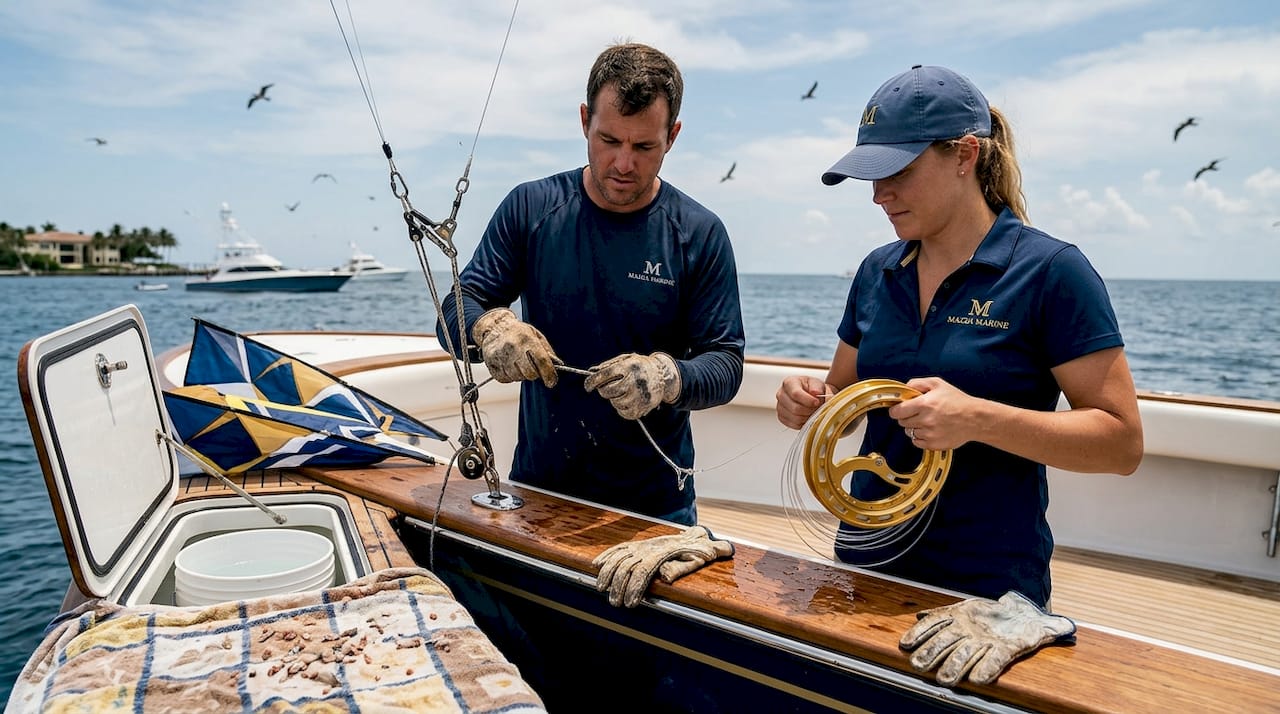
Kite fishing works by suspending live bait just below the surface using a fishing kite flown from the boat. The kite holds the line at an angle, keeping bait alive and dancing in the strike zone without the shadow or pressure of a boat directly overhead. Sailfish, swordfish, and mahi-mahi regularly lose their minds over a well-presented goggle-eye worked this way.
What makes kite fishing so compelling is the precision it allows. You can see the bait. You can see the strike. And when a sailfish comes up lit on that surface bait, it is one of the most visually spectacular moments in all of offshore fishing.
Here’s a step-by-step approach to setting up a successful kite fishing spread:
- Assess the wind. You need 8 to 20 knots of steady breeze for most kite setups. Light-wind and heavy-wind kites expand your range, but consistent wind is the foundation.
- Source quality live bait. Goggle-eyes (bigeye scad) and blue runners are the standard. Fresh-caught pilchards work well when other options aren’t available.
- Rig the kite properly. Use a dedicated kite rod and electric reel if possible. The kite line and the fishing line are separate. A clip release connects them and drops the bait into the zone.
- Position your baits at different depths. A standard spread includes a short, mid, and long kite bait, staggered to cover the water column just beneath the surface.
- Watch for pressure from other boats. On popular grounds like the Miami edge or the Palm Beach blue water, boat traffic affects presentation. Adjust your drift to avoid tangles and maximize bait action.
Beyond kite fishing, Florida pelagic anglers rely on trolling ballyhoo rigged on skirted lures, flat-lining live baits off the stern, and deep-dropping for tilefish and swordfish. Technique selection always bends to practical conditions, and a well-equipped sportfish vessel gives you the flexibility to adapt.
“The angler who can read the conditions and change approach midday will always outfish the one locked into a single method.”
Pro Tip: Goggle-eyes and blue runners are your first choice for kite baits. They swim hard, stay lively in the clip, and trigger the most aggressive surface strikes. Keep a cast net on deck and know the local bait patches for your area.
If your yacht is due for a sportfish refit, focus early attention on your outrigger systems and livewells. Kite fishing and live-bait spreads depend entirely on bait condition, and a well-designed livewell is the foundation of that system.
Handling, safety, and local best practices for Florida sportfishing
Strong technique and a thorough understanding of regulations still need one more layer to be complete: proper handling. This is where many anglers, even experienced ones, create unnecessary risk, both for the fish and for their own legal standing.
FWC’s tarpon regulations are the clearest example of how handling and compliance intersect. Tarpon over 40 inches must stay in the water. No exceptions outside of a narrowly defined record-pursuit protocol. Boca Grande Pass adds further restrictions during April through June: no more than three lines per vessel are allowed, breakaway gear is prohibited, and any gear with weights hanging below the hook when vertically suspended is banned. These are specific, enforceable rules that have nothing to do with bag limits and everything to do with how you fish.
Here are the most common compliance and safety pitfalls to watch for on any Florida sportfishing trip:
- Incorrect gear for restricted areas: Jig rigs and bottom-fishing weights that are perfectly legal elsewhere may violate Boca Grande Pass rules during tarpon season.
- Improper fish handling for documentation: Taking a large tarpon out of the water for a photo, even briefly, is a violation. Use underwater camera techniques or boat-side shots instead.
- Expired or missing licenses: Florida requires a saltwater fishing license for anyone not exempt. Yacht owners often overlook crew or guests who need their own license.
- No up-to-date regulation printout on board: FWC officers appreciate anglers who can show they’ve done their homework. Keep a current screenshot or printout of the relevant species regulations accessible.
- Missing or improperly stored safety gear: Separate from fishing regulations entirely, your vessel’s safety equipment must meet USCG and FWC standards before you leave the dock.
Before any offshore trip, review your yacht safety equipment alongside your fishing regulation prep. These are equally non-negotiable standards for a responsible, well-run vessel.
Pro Tip: Check gear and handling guidance the night before departure, not the morning of. Last-minute rule checks while the crew is rigging creates confusion. Build the regulation review into your pre-trip routine.
What experienced Florida anglers wish they knew sooner
Here’s something we’ve observed working with Florida yacht owners over many years: the anglers who fish legally and successfully are not necessarily the ones who know the most regulations by heart. They’re the ones who have developed a disciplined habit of checking before every trip, no matter how many times they’ve fished the same water.
Printed guides are a starting point, not a rulebook. The anglers who trust a physical booklet they picked up a year ago are the ones who get caught off guard when a closure is issued or a bag limit gets revised. The regulations governing Florida sportfishing are not static. They respond to real biological data, and that means they change when conditions change.
The deeper lesson here is about understanding the why behind the rules. Tarpon catch-and-release requirements and the strict gear restrictions in Boca Grande Pass weren’t created arbitrarily. They exist because tarpon are a long-lived, slow-maturing species that aggregates in predictable locations, making them especially vulnerable to pressure. When you understand that context, the rules stop feeling like obstacles and start feeling like a shared investment in the fishery you love.
Location and technique planning also need to happen together. A trip to Boca Grande in May demands a completely different gear list and method approach than a blue-water run out of Miami. Too many anglers plan the destination and the technique separately, then show up with the wrong setup. The smarter approach is to tie your boat management planning directly to trip-specific regulation research so everything is aligned before you cast off.
The most experienced anglers we know check the rules online before every single trip. Not because they’re afraid of violations. Because they respect the resource and take their craft seriously.
Upgrade your Florida sportfishing experience
Great fishing starts with a great boat, and a great boat is never truly finished.

At Mazza Marine, we’ve built lasting relationships with Florida yacht owners who understand that performance and preparedness go hand in hand. Whether you’re looking to run a cleaner kite spread with upgraded outriggers, improve your bait-keeping systems, or bring your entire vessel up to peak condition, our team is ready to help. Explore our sportfish upgrade steps for a structured approach to improving your offshore performance. If your boat has been showing signs of wear, our yacht repair guide helps you catch issues early. And for a full-picture view of ownership, the boat management guide is your starting point. Call us and let’s talk about your next season on the water.
Frequently asked questions
How often do Florida sportfishing regulations change?
Florida sportfishing regulations can change annually and sometimes mid-season; always verify the latest rules with MyFWC and FLRules.org before heading out.
What are the main differences between Gulf and Atlantic sportfishing rules in Florida?
Regulations vary by location, species, and gear, as Florida’s rules are area-specific with bag limits, size limits, and closed seasons that may differ between Gulf and Atlantic waters.
Are there special rules for tarpon fishing in Florida?
Yes, tarpon is a catch-and-release fishery with strict handling requirements, gear restrictions in Boca Grande Pass, and line deployment limits during April through June.
Which fishing techniques work best for Florida pelagics?
Kite fishing is highly effective for pelagics because it suspends live bait near the surface with wind assistance, triggering aggressive strikes from sailfish and mahi-mahi.
How can yacht owners ensure their trips comply with Florida fishing laws?
Yacht owners should check the latest FWC and FLRules regulations before every trip, prepare permissible gear, and follow special location-specific rules for target species and waters.
Recommended
Text or Call 954-330-9653 Schedule Appointment
Mazza Marine Yacht Services & Refit

Fiberglass Upgrades and Damage Repair

Premium Yacht Paint/ Faux Teak

Fishing: Custom Rods, Reels,Tackle

Electrical, Electronics and Navigation

Paint, Hull and Gelcoat

Teak Decks, Wood Cabinets, Carpentry

Canvas, Enclosures and Upholstery

Mechanical, Repower and Running Gear

Plumbing, Bilge and Thru-Hulls

Welding and Custom Fabrication

Interior Refit And Past Work
Get your yacht value Estimate
"*" indicates required fields