
View Our Recent Work:

A small chip fixed at home costs $10 to $75 in materials, a shop-repaired scratch or ding runs $75 to $400, and a full hull respray lands between $2,500 and $12,000 or more depending on boat size. Fix minor surface chips yourself if you’re comfortable with a two-part filler kit; hand anything near the waterline, anything structural, or anything on a highly visible topside panel to a professional. The ranges below break down exactly why the gap between those numbers is so wide.
TL;DR:
- Repairing small chips yourself is cost-effective and feasible if the chip is under an inch, but larger or structural damage requires professional spray application.
- Labor costs, including prep and color matching, account for most of the repair price, with hourly rates between $75 and $150 affecting total expenses significantly.
- Full hull resprays can range from $6,000 to over $12,000 depending on size, color, and fairing needs, which is a major cost jump from minor surface fixes.
- Hidden damage or moisture behind gelcoat drastically increases costs, turning simple cosmetic repairs into structural rebuilds that can cost thousands.
- Getting a detailed, written scope of work is essential to avoid surprises, as low quotes often exclude underlying repairs or structural assessments.
Table of Contents
- How Much Does Gelcoat Repair Cost by Damage Type?
- What Drives the Cost of a Gelcoat Repair?
- Should You Repair Gelcoat Yourself or Hire a Pro?
- How Long Does a Gelcoat Repair Take?
- How Do You Get an Accurate Gelcoat Repair Estimate?
- What Actually Escalates Gelcoat Repair Costs on Real Boats
- Why the Cheapest Estimate Is Often the Most Expensive One
- Get a Straight Answer on Your Gelcoat Repair Cost
- Sources
- FAQ
How Much Does Gelcoat Repair Cost by Damage Type?
Gelcoat repair cost scales almost entirely with size, depth, and visibility. A pinhead chip on a swim platform and a spiderweb of stress cracks across the transom are both “gelcoat damage” but belong in completely different budget categories.
Small chips under an inch. These are the dings from a dock line snapping tight or a cooler corner catching the rail. A shop typically charges $75 to $150 to fill, sand, and buff one out. If you’re doing it yourself, a small tube of color-matched filler and some wet-sanding paper covers it for well under $50.
Medium gouges and patches up to a square foot. Once damage crosses the one-inch mark or involves a gouge deep enough to expose the underlying laminate, you’re looking at more prep work: grinding out the damaged material, building the patch in layers, then color matching and buffing. Shops commonly price this range at $150 to $400, and mid-size repairs across various guides tend to cluster around $500 to $1,200 once labor hours stack up.
Larger repairs spanning 2 to 5 square feet. At this size, brushing on filler stops being practical. Most shops switch to spraying, which means masking off the surrounding area, mixing catalyzed gelcoat, and running a compressor and gun. Industry pricing puts larger structural or cosmetic repairs at $300 to $1,000 or more, with the top end driven by how much fairing and blending the surrounding panel needs.
Full resprays, priced by size or square footage. A complete gelcoat refinish is really a paint job for fiberglass. Cost roundups show full resprays ranging broadly from $2,500 up to $12,000-plus, and a midsize boat refinish often lands in the $6,000 to $9,000 neighborhood once you factor masking, multiple coats, and cure time. Per-square-foot pricing gives you a faster gut check than a flat quote when you’re comparing a partial hull section against a full topside job.
Two quick scenarios illustrate the spread:
- A 25-foot runabout with a fist-sized gouge near the swim platform, spot-repaired and buffed to match: expect somewhere in the $200 to $500 range.
- A 30-foot cruiser with sun-faded, chalky gelcoat across the entire hull, requiring a full respray: budget $5,000 to $9,000, more if the color requires custom tinting or the hull needs fairing first.
The jump between those two examples isn’t really about square footage. It’s about whether the job stays a repair or becomes a refinish, and that decision point is where most owners get surprised by a quote.
What Drives the Cost of a Gelcoat Repair?
Labor is the real cost driver, not material. Gelcoat resin itself is inexpensive. A quart of a product like TotalBoat Thixo Gelcoat runs roughly $45 to $55, enough for several small repairs. What you’re actually paying for in a professional quote is time: prep, application, cure monitoring, and finish work.
Prep work eats the clock. Sanding down to a feathered edge, fairing a gouge so it doesn’t telegraph through the new gelcoat, and sometimes rebuilding fiberglass layers underneath all happen before a drop of color goes on. A repair that looks like “twenty minutes of filler” on the surface can involve two or three hours of grinding and shaping first.
Color matching is the hidden expense nobody budgets for. Gelcoat yellows with UV exposure over years, so a patch mixed to the original manufacturer code often looks wrong next to sun-faded hull around it. Pros commonly test small tint adjustments, sometimes as subtle as a touch of yellow oxide, across a few sample patches until they find a close visual match, then blend that patch into the surrounding panel rather than trying to nail an exact single-spot match. That blending step adds labor hours a simple “fill and sand” estimate won’t include.
Hourly rates and hidden triggers. Marine gelcoat labor commonly runs somewhere between $75 and $150 an hour depending on region and shop overhead. A few conditions push a quote sharply higher:
- Moisture penetration behind the gelcoat, which often means the laminate underneath has to be dried out and rebuilt before any cosmetic work starts
- Core or structural laminate damage discovered once a technician opens up the area
- Spray application requirements, since spray jobs demand more masking, ventilation, and equipment amortization than a brushed patch
Neglected small chips are the classic setup for that first trigger. Once water gets past cracked gelcoat and into the laminate, repair costs can escalate from a few hundred dollars to several thousand as the job shifts from cosmetic to structural. Build a contingency line into any estimate, especially on older hulls or boats that have sat outside for years.
Should You Repair Gelcoat Yourself or Hire a Pro?
The honest answer depends on where the damage sits and how visible it is, not just how big it is. A quarter-sized chip on the swim platform is a different decision than a crack running along the waterline.
DIY makes sense when the repair is small, isolated, and forgiving of minor imperfection:
- Gather materials first. A basic kit, filler, matching gelcoat paste, wet-sand paper in a few grits, and buffing compound, typically runs $10 to $75 depending on how much surface area you’re covering.
- Budget real time, not just a Saturday afternoon. Most small chip repairs take two to four hours once you count prep, cure wait, sanding, and buffing. Rushing the cure step is the single most common reason a DIY patch looks obvious later.
- Set expectations honestly. A careful DIY repair on a single small chip in a low-visibility spot can look nearly invisible. A DIY patch on a large gouge, a curved surface, or a spot near strong sunlight fade will almost always show a slight color or texture difference up close.
Professional repair earns its higher price on jobs where adhesion, structural integrity, or visible color matching matter. A shop brings spray equipment for smoother finishes, experience blending faded gelcoat, and often a workmanship warranty that a DIY repair simply doesn’t come with.
The real risk with DIY isn’t wasted money. It’s trapped moisture under a patch that looks fine for a season and then bubbles, or a mismatch so visible it forces a bigger repair later. Both turn a $30 fix into a $300 do-over.
Pro Tip: Before buying a DIY kit, check whether the surface is actually gelcoat or a painted topcoat. Applying gelcoat filler over a painted hull almost never adheres correctly, and you’ll be sanding it back off within weeks.
How Long Does a Gelcoat Repair Take?
Turnaround depends heavily on scope and the weather, not just the size of the damage. A small chip repair at a shop often turns around same-day or next-day, since it’s mostly sanding, filling, and buffing in one sitting. Medium patches involving fiberglass work or multiple gelcoat layers typically need two to four days, largely because each layer has to cure before the next step.
Full resprays are the longest jobs on the schedule, often stretching one to two weeks once you factor masking, multiple coats, cure time between coats, and final buffing. Humid Florida summers can extend cure windows further, since gelcoat needs stable temperature and low humidity to set without staying tacky.
Temperature and humidity aren’t a minor footnote here. Technical guidance for products like Evercoat Premium Gel-Kote specifies ambient temperature ranges and recommends a PVA mold release barrier to prevent a soft, tacky surface from incomplete cure. Skip that step, or apply in cooler, damper conditions, and you can end up redoing a repair that looked finished a day earlier.
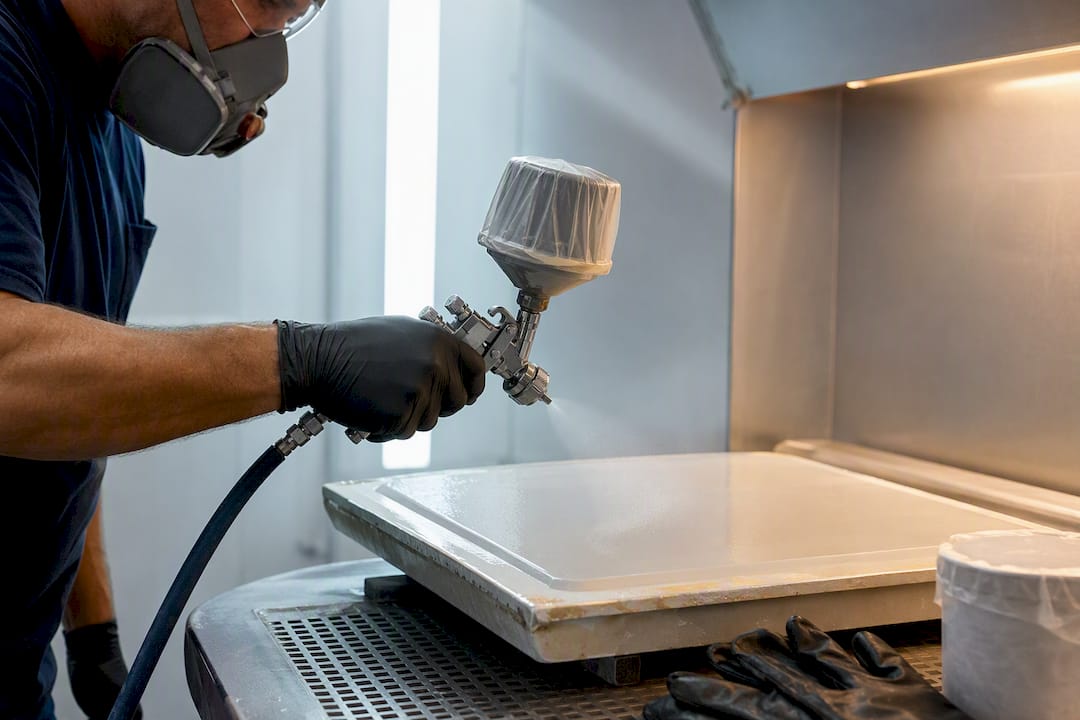
Mobile repair services can save a haul-out if the damage is small and accessible at the dock, trading some equipment limitations for convenience. In-shop repair usually wins on larger jobs, since spray booths and climate control shorten the odds of a rework.
How Do You Get an Accurate Gelcoat Repair Estimate?
A vague quote is how a $300 job turns into an $800 surprise. Before you accept any estimate, ask the shop these questions directly:
- What exactly is included in the scope: filler only, or fiberglass work underneath too?
- What materials and how many coats will be applied?
- How will color matching be handled: test patches, panel blending, or a single-shot match?
- Is there a workmanship warranty, and what does it cover if the patch fails or discolors?
- Is there a contingency line item if hidden moisture or laminate damage turns up mid-repair?
A reasonable written estimate should break down as labor hours times an hourly rate, materials as a separate line, a color-match fee if blending is required, and a contingency allowance, usually a percentage, for anything found once the old gelcoat comes off.
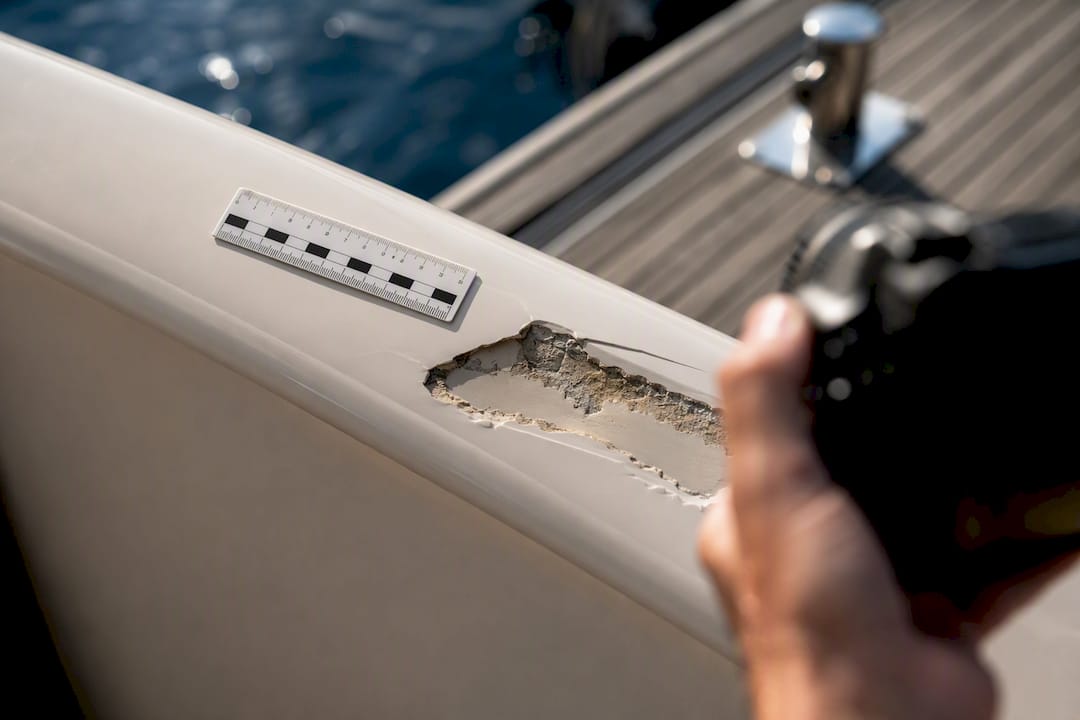
If you’re requesting a quote remotely, photograph the damage in natural daylight from a few angles, include a wide shot for context and a close-up with a coin or ruler for scale, and describe when the damage appeared and whether it’s near the waterline. That level of detail is often the difference between a rough phone estimate and a number you can actually plan around.
What Actually Escalates Gelcoat Repair Costs on Real Boats
Small chips rarely stay small if they’re ignored near a hull seam or below the rub rail. A hairline crack that looks cosmetic in June can let moisture work into the laminate by August, and what would have been a $150 patch becomes a laminate repair running into the thousands once delamination sets in.
Color matching is the other place estimates go sideways. Gelcoat that’s spent five summers under Florida sun rarely matches a fresh mix straight from the formula code, which is why blending across a wider panel, not just the damaged spot, is usually the only way to avoid a visible patch line.
What separates a repair that holds up from one that needs redoing in a year usually comes down to who’s doing the work and how the shop is structured. Ask any shop whether the gelcoat, fiberglass, and paint work are handled in-house or farmed out to subcontractors, whether one project manager is tracking the job start to finish, and whether the repair carries a documented workmanship guarantee. Those three answers tell you more about the outcome than the quote total does.
Why the Cheapest Estimate Is Often the Most Expensive One
Every boat owner wants the number at the bottom of the quote to be small. But the research behind this guide points to a less comfortable truth: the lowest bid on a gelcoat repair is frequently the one missing a line item, not the one with the best price.
Conventional advice tells owners to compare total dollar figures side by side. That’s backwards. Compare scope first. A $250 quote that skips fiberglass inspection underneath a crack isn’t cheaper than a $400 quote that includes it, it’s just deferring a cost you haven’t seen yet.
The DIY question gets oversimplified too. It’s not really about skill level. It’s about location and visibility. A hidden chip on a swim platform is a perfectly reasonable weekend project. A crack near the waterline is a different category of decision entirely, regardless of how confident you feel with a sanding block.
If you take one thing from the numbers above, let it be this: get the scope in writing before you compare prices. The dollar figure means nothing without it.
— Jason
Get a Straight Answer on Your Gelcoat Repair Cost
This company skips the guesswork that comes with shopping multiple subcontractors for one gelcoat job. Every trade, from color matching and spray work to the fiberglass repair underneath a stubborn crack, is handled cohesively with a single project manager tracking the job, so you’re not chasing separate vendors for a repair that touches both cosmetic and structural work.

That matters most when a “simple” chip turns out to need laminate attention, which is exactly the scenario that blows up DIY budgets and subcontractor timelines alike. Mazzamarine’s Paint, Hull and Gelcoat team handles the color-blending and structural assessment together, backed by a documented workmanship guarantee, so the estimate you get up front is the number you actually pay.
When you request a quote, send clear daylight photos of the damage, note whether it’s near the waterline, and mention when you first noticed it. That’s enough for the team to scope the job accurately before you ever haul out. If the damage turns out deeper than expected, the Fiberglass Upgrades and Damage Repair crew is already on the same project, not a separate call away.
Sources
- Evercoat Premium GEL-KOTE technical data sheet
- Gelcoat repair guide (Boatyards blog)
- Gelcoat Repair Cost Guide for U.S. Buyers – Current Cost
- Gelcoat repair on fiberglass boats — Nautical Soundings
FAQ
Can You Put New Gelcoat Over Old Gelcoat?
Yes, gelcoat can generally be applied over existing cured gelcoat without priming, but surface prep and identifying the existing coating matter since painted surfaces need different prep entirely.
Why Is Gelcoat Repair So Expensive?
Labor, not material, drives most of the cost. Prep work like sanding and fairing, plus the time-consuming process of color matching faded gelcoat through test patches and blending, accounts for far more of the bill than the resin itself.
How Hard Is It to Repair Gelcoat Yourself?
Small, isolated chips are manageable for most owners with a basic kit costing $10 to $75 and a few hours of patient work. Larger gouges, curved surfaces, or anything requiring color blending are much harder to get looking invisible without professional tools and experience.
Are Gelcoat Cracks Bad?
Small surface cracks are mostly cosmetic at first, but left untreated they let moisture reach the laminate underneath, which can turn a low-cost cosmetic fix into a structural repair costing thousands. Addressing cracks early, especially near the waterline, is far cheaper than waiting.
Recommended
Text or Call 954-330-9653 Schedule Appointment
Mazza Marine Yacht Services & Refit

Fiberglass Upgrades and Damage Repair

Premium Yacht Paint/ Faux Teak

Fishing: Custom Rods, Reels,Tackle

Electrical, Electronics and Navigation

Paint, Hull and Gelcoat

Teak Decks, Wood Cabinets, Carpentry

Canvas, Enclosures and Upholstery

Mechanical, Repower and Running Gear

Plumbing, Bilge and Thru-Hulls

Welding and Custom Fabrication

Interior Refit And Past Work
Get your yacht value Estimate
"*" indicates required fields