
View Our Recent Work:

A basic inspection runs a few hundred dollars, cleaning services generally cost several hundred to around a thousand dollars, repairs vary in cost based on parts needed, and full replacement can be significantly more depending on size and material. Corrosion severe enough to require new plates, haul-out logistics, and emergency rush fees push most jobs to the top of these bands. If you’re seeing rising coolant temps or salt crystals near the end caps, schedule an inspection now. Otherwise, plan on preventive service every two to three years.
TL;DR:
- Repairs and full replacements can cost from a few hundred to over $8,000, depending on size, material, and the extent of corrosion.
- A pressure test only indicates whether the exchanger is leaking now, not how much material remains before failure.
- Titanium heat exchangers resist corrosion best but have the highest initial cost, while stainless and cupronickel options suit lower-hour or moderate saltwater use.
- Scheduling inspections every two to three years prevents costly emergency repairs caused by corrosion spreading past the plates and end caps.
- Getting an itemized quote, including pressure test results and photos, helps ensure a fair price and better planning for repairs or replacements.
Table of Contents
- What Drives Heat Exchanger Service Cost?
- What Symptoms Mean You Need Service?
- Which Materials Save Money Over Time?
- How Long Does Service Actually Take?
- How Do You Choose a Reliable Service Provider?
- Overview
- Get a Real Quote on Your Heat Exchanger
- Sources
- FAQ
What Drives Heat Exchanger Service Cost?
Every quote you get for a heat exchanger service cost breaks down into five buckets: diagnostics, cleaning, repair, replacement, and logistics. Understanding how a shop assembles those numbers is the fastest way to spot a fair price and a padded one.
Inspection and diagnostic fees typically run $150 to $400 and should include a visual check, a pressure test, and photo documentation. Some shops add borescope inspection of internal tubes or plates for an extra $50 to $150. That’s not optional theater. It’s the only way to see corrosion pitting before it becomes a leak.
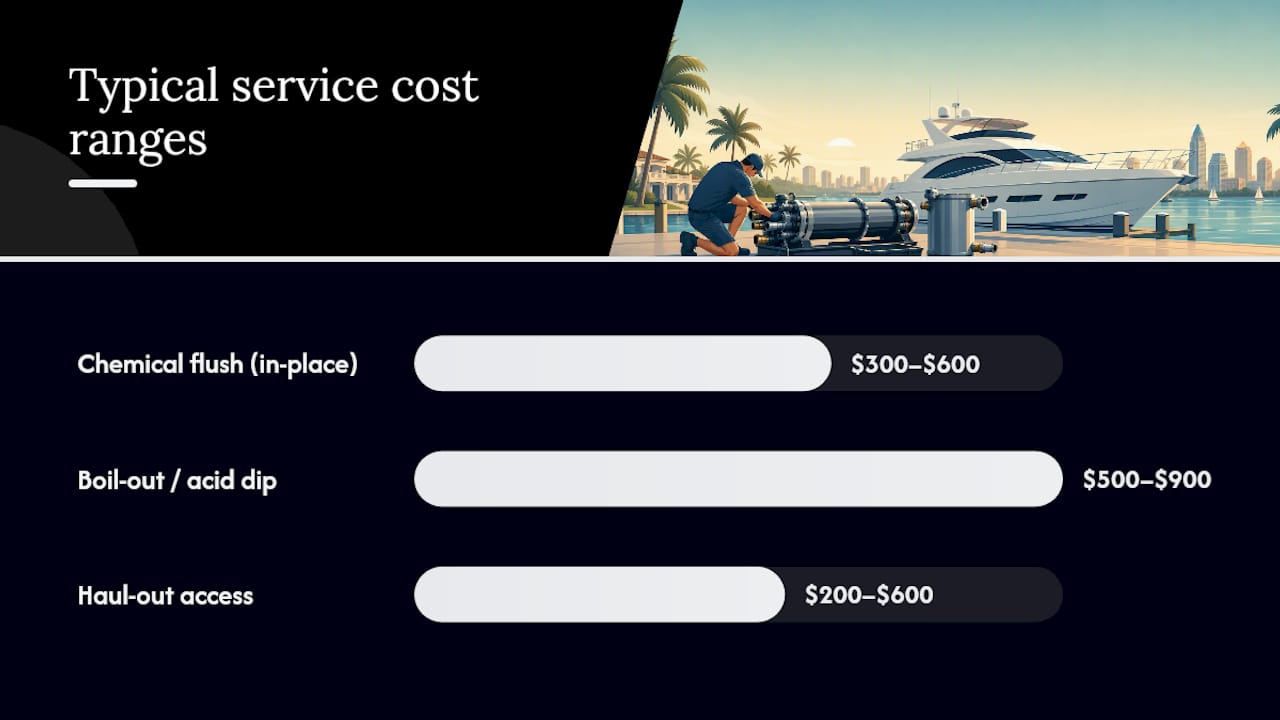
Cleaning costs split into two categories. An in-place chemical flush, where the exchanger stays mounted and solution is circulated through the core, typically runs $300 to $600. A mechanical boil-out or acid dip, which requires pulling the unit and soaking it in a heated bath to strip scale and salt buildup, typically runs $500 to $900 once labor and disposal are factored in.
Repair itemization matters more than any single number. Gasket replacement on a standard plate exchanger might cost $200 to $500 in parts and labor. Plate reconditioning, which includes replating and pressure-retesting individual plates, ranges from $600 to $1,800 depending on plate count. Tube plug or patch repairs on shell-and-tube units run cheaper, often $300 to $700, but they’re a stopgap, not a fix.
Replacement is where model size and material really move the needle. A midsize raw-water exchanger for a 40 to 60-foot yacht typically lands between $1,500 and $4,000 installed. Larger sportfish and motoryacht units, especially titanium or oversized core packages, can exceed $8,000 once labor hours and haul-out fees are added.
- Haul-out access alone can add $200 to $600 depending on yard rates and slip location.
- Freight on replacement plate packs or full cores often runs $100 to $400, more if expedited.
- Loaner plate programs, like the tiered options Alfa Laval offers through its reconditioning service, can cut downtime but usually carry a rental or freight surcharge worth weighing against emergency premiums.
What Symptoms Mean You Need Service?
Your engine’s temperature gauge tells the story before anything else does. Rising coolant temp under load, an overheating alarm that clears at idle, or reduced raw-water flow at the strainer are the three earliest warning signs. Salt crystals crusted around the end caps are a dead giveaway that a gasket has started weeping.
A technician doing a proper inspection will typically:
- Remove the end caps or run a borescope through the access ports.
- Pressure test the core to check for active leaks.
- Inspect gaskets for weep marks, salt buildup, or compression damage.
- Check zinc anodes for wear patterns that hint at galvanic corrosion.
- Examine tube or plate surfaces for pitting, thinning, or scale.
Here’s the part most owners get wrong: a passed pressure test only proves the exchanger doesn’t leak right now. It says nothing about how much material is left before the next failure. Grano-Heat’s technical review of marine plate exchanger maintenance makes this point directly: pressure testing is diagnostic, not predictive. Salt crystals or weeping at the end caps mean the gasket has already failed and the unit needs disassembly, not a temporary tighten.
Pro Tip: Ask your technician for the pressure-test number in PSI and the manufacturer’s minimum threshold, not just a “pass” or “fail.” That single data point tells you how much margin you actually have left.
Which Materials Save Money Over Time?
Upfront price and lifetime cost rarely point the same direction with heat exchangers, and picking the cheap option today is often the expensive choice over a five-year ownership window.
- Cupronickel cores are the budget entry point and hold up reasonably well in moderate saltwater use, but they show pitting sooner in high-salinity or high-heat-cycle environments.
- Stainless steel plates resist scale better than cupronickel and cost moderately more, making them a solid middle ground for boats that run 100 to 150 hours a season.
- Titanium carries the highest sticker price, sometimes double a stainless equivalent, but it resists corrosion dramatically better in aggressive saltwater. Industry commentary on marine cooling systems consistently points to titanium’s lower long-term operating cost despite the higher initial outlay, particularly for vessels running heavy seasonal charters or full-time saltwater duty.
If your boat sits in a slip most of the year and runs occasionally, cupronickel or stainless will likely serve you fine. If you’re running a sportfish boat 200-plus hours a season in South Florida heat, the math shifts toward titanium fast.
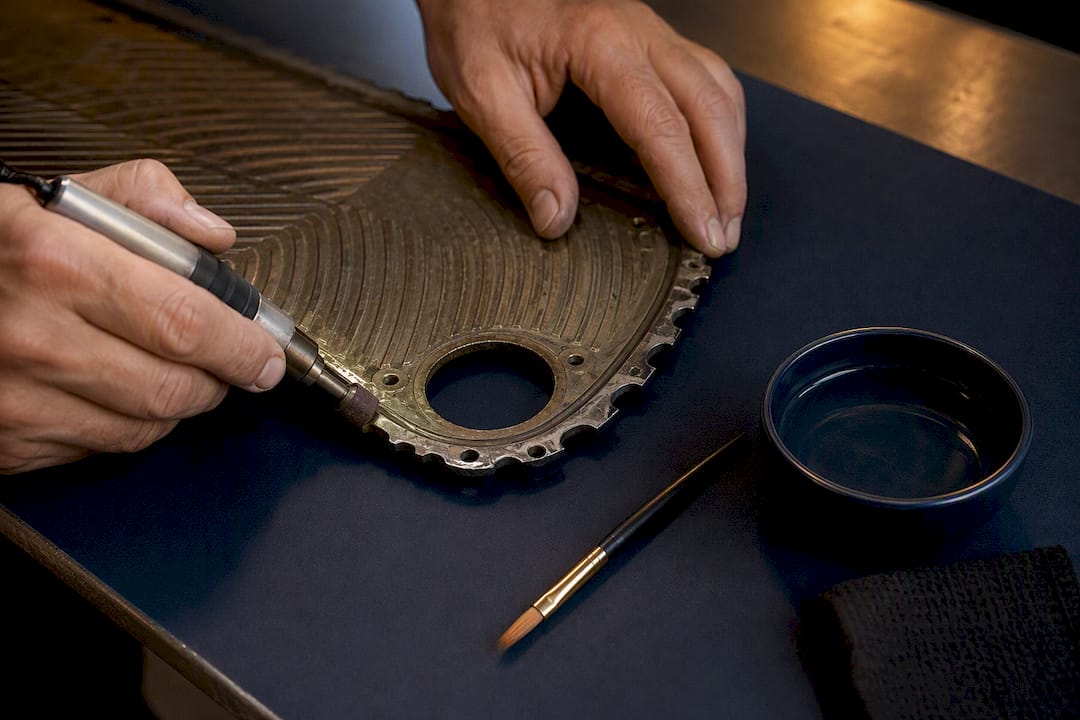
When remanufacturing beats replacement: reconditioning, which includes replating existing plates and applying protective coatings, often costs less than full replacement and can extend service life meaningfully. It’s worth asking for a remanufacture quote before you commit to buying new, especially if the core structure tests sound and only the plates show wear.
How Long Does Service Actually Take?
Downtime depends entirely on which of three tiers your job falls into.
- Same-day work: in-place chemical cleanings, zinc anode swaps, and basic pressure testing. Most boats are back in the water within hours, and field data on clogging severity confirms light-to-moderate fouling clears in a single service visit.
- Medium jobs: boil-out cleaning, gasket replacement, or minor plate repairs following a pressure test. Expect one to three days in the yard, largely driven by labor scheduling rather than parts availability.
- Major jobs: full core or plate-pack replacement, or a complete remanufacture. These can stretch one to three weeks once freight lead time on replacement parts is factored in.
Planning ahead changes this timeline more than anything else. Yards that pre-arrange loaner plate packs, or order replacement cores before the old one fully fails, routinely cut downtime by days. Scheduled preventive revisions consistently cost less and disrupt operations less than emergency corrective work, which is the single strongest argument for booking your two-to-three-year service before symptoms force your hand.
How Do You Choose a Reliable Service Provider?
A trustworthy shop makes its process visible. A shop that hides it usually has something to hide.
- Request an itemized quote, not a lump sum. You want diagnostic fee, parts, and labor broken out separately.
- Ask for pressure-test numbers and photos of the disassembled core, not just a verbal “it looks fine.”
- Confirm whether plate reconditioning happens in-house or gets shipped to a third party, since that affects both turnaround and price.
- Ask if the shop can access a loaner plate program or expedited freight if a full replacement turns out to be necessary.
- Watch for red flags: a single flat price quoted before any inspection, reluctance to show you the test data, or vague language about “cleaning” with no specifics on method.
A smart budgeting habit borrowed from experienced captains: ask your shop for three numbers upfront, a diagnostic fee, a conservative repair estimate assuming parts are salvageable, and a worst-case replacement figure. That range lets you set aside reserve funds instead of getting blindsided.
Pro Tip: If a technician recommends replacing rather than repairing an oil or transmission cooler, don’t push back too hard. Because an internal failure risks contaminating your oil system with seawater, most shops treat these components as scheduled-replacement items rather than run-to-failure ones.
If your exchanger fails mid-charter or mid-trip, an emergency repair service built for fast turnaround matters more than the lowest bid.
Overview
Jason has watched enough of these jobs come through the yard to notice a pattern: the surprise overhauls almost always cost two to three times what a scheduled two-year service would have run, mostly because corrosion had already spread past the plates and into the end caps by the time someone noticed the overheating alarm. The delta between “we caught it early” and “the boat limped in on one engine” is rarely subtle.
What tends to keep costs predictable is coordination. When mechanical, welding, and fabrication trades work under one roof instead of getting handed between subcontractors, change orders shrink and quotes stay closer to the original number. A transparent quote should tell you exactly what was inspected, what it will cost to fix versus replace, and why.
Case studies, certifications, and client references specific to heat exchanger work will be added here.
— Jason
Get a Real Quote on Your Heat Exchanger
Some Florida yard operators run in-house mechanical teams for this kind of work, which can mean heat exchanger inspection, cleaning, repair, or replacement doesn’t get bounced between different subcontractors before a straight answer is given. That matters most when logistics get complicated: coordinating loaner plate access, freight timing, and haul-out scheduling under one project manager keeps your quote accurate and your downtime shorter than a piecemeal approach usually delivers.
Before you call, gather your engine make and model, the exchanger’s model or serial number if it’s visible, a description of the symptoms you’ve noticed, and a few photos of the end caps or any visible corrosion. That handful of details lets a technician give you a realistic estimate instead of a guess. Mazzamarine’s mechanical, repower, and running gear team handles everything from a routine inspection to a full core replacement, backed by a documented workmanship guarantee and fixed pricing you can actually plan around. Reach out through Mazzamarine to schedule an inspection before your next haul-out window closes.
Sources
- Operation and maintenance of plate heat exchangers in marine cooling systems — key challenges and solutions
- Alfa Laval — reconditioning and repair services for GPHE
- Marine engine heat exchanger clogging symptoms
- When is heat exchanger overhaul necessary in marine installations?
FAQ
How much does a heat exchanger service cost on average?
Inspections run $150 to $400, cleaning falls between $300 and $900, and repairs typically land between $200 and $1,800 depending on parts needed. Full replacement ranges from $1,500 to over $8,000 based on size, material, and labor hours.
How often should a marine heat exchanger be serviced?
Most manufacturers and trade sources recommend service every two to three years, with heavier saltwater use or year-round operation shortening that interval. Boats that sit idle for long stretches can sometimes stretch the interval, but symptoms like rising coolant temp override the calendar.
Does a passed pressure test mean my heat exchanger is fine?
No. A pressure test only confirms the unit isn’t leaking at the moment of testing. It does not measure remaining plate or tube thickness, so a passing result today doesn’t guarantee reliability next season.
Is it cheaper to repair or replace a heat exchanger?
Repair and reconditioning are usually cheaper when the core structure is sound and only plates, gaskets, or zincs need attention. Once corrosion reaches the end caps or core body, replacement often becomes the safer and more cost-effective long-term choice.
Can Mazzamarine handle heat exchanger inspection and replacement?
Yes. Mazzamarine’s in-house mechanical and repower team handles inspection, cleaning, repair, and replacement for Florida yacht owners, with fixed pricing and a documented workmanship guarantee. Current pricing details are available by requesting a quote directly through the site.
Recommended
Text or Call 954-330-9653 Schedule Appointment
Mazza Marine Yacht Services & Refit

Fiberglass Upgrades and Damage Repair

Premium Yacht Paint/ Faux Teak

Fishing: Custom Rods, Reels,Tackle

Electrical, Electronics and Navigation

Paint, Hull and Gelcoat

Teak Decks, Wood Cabinets, Carpentry

Canvas, Enclosures and Upholstery

Mechanical, Repower and Running Gear

Plumbing, Bilge and Thru-Hulls

Welding and Custom Fabrication

Interior Refit And Past Work
Get your yacht value Estimate
"*" indicates required fields