
View Our Recent Work:

Upgrading a yacht means more than adding power or new décor. Florida owners and sportfish enthusiasts face unique decisions when adapting vessels to suit their lifestyle and waters. Customization blends skill, vision, and knowledge of what is possible within top-tier facilities across the United States. With the right approach, you can transform your yacht’s performance and comfort, steering every upgrade to match your personal standards for both reliability and luxury.
Table of Contents
- Step 1: Assess Yacht Needs And Desired Upgrades
- Step 2: Select Vendors And Materials For Customization
- Step 3: Execute Interior And Exterior Modifications
- Step 4: Verify Enhancements And Ensure Quality
Quick Summary
| Key Point | Explanation |
|---|---|
| 1. Assess Yacht Needs Thoroughly | Understand your yacht’s current condition and your specific needs before planning upgrades. |
| 2. Choose Qualified Vendors | Vet vendors based on expertise, credentials, and previous work to ensure quality outcomes. |
| 3. Prioritize Effective Modifications | Execute upgrades in a logical order to maintain coherence and maximize overall improvements. |
| 4. Verify Quality of Enhancements | Conduct thorough inspections to ensure all work meets specifications and performs as expected. |
| 5. Document Everything for Reference | Keep records of specifications and warranties to protect your investment long-term. |
Step 1: Assess yacht needs and desired upgrades
Before spending a dollar on upgrades, you need clarity on what your yacht actually needs and what you want it to become. This assessment phase separates smart investments from expensive mistakes that don’t align with your boating lifestyle.
Start by defining your primary use case. Are you running offshore tournaments, cruising Florida’s coastal waterways, or entertaining clients at the dock? Your intended use dictates everything from engine upgrades to interior comfort levels.
Evaluate your current yacht’s condition honestly:
- Mechanical systems: Check engine hours, fuel efficiency, and reliability during recent trips
- Hull and structure: Look for corrosion, cracks, or areas needing reinforcement
- Electrical and navigation: Assess whether your systems are outdated or performing well
- Interior comfort: Consider layout, cabin space, and luxury amenities you’re missing
- Exterior appearance: Note fading gel coat, worn canvas, or aesthetic improvements needed
Understanding U.S. shipbuilding and repair facility capabilities helps you identify what upgrades are actually feasible within available resources. Different facilities specialize in different vessel types and modifications, so knowing what’s possible informs your customization goals.
Next, prioritize upgrades by impact and budget. A performance-focused owner might prioritize engine tuning and hull optimization, while a luxury-oriented owner might invest in cabin refits and entertainment systems first. List your wants versus needs—needs keep your yacht running safely, while wants enhance the experience.
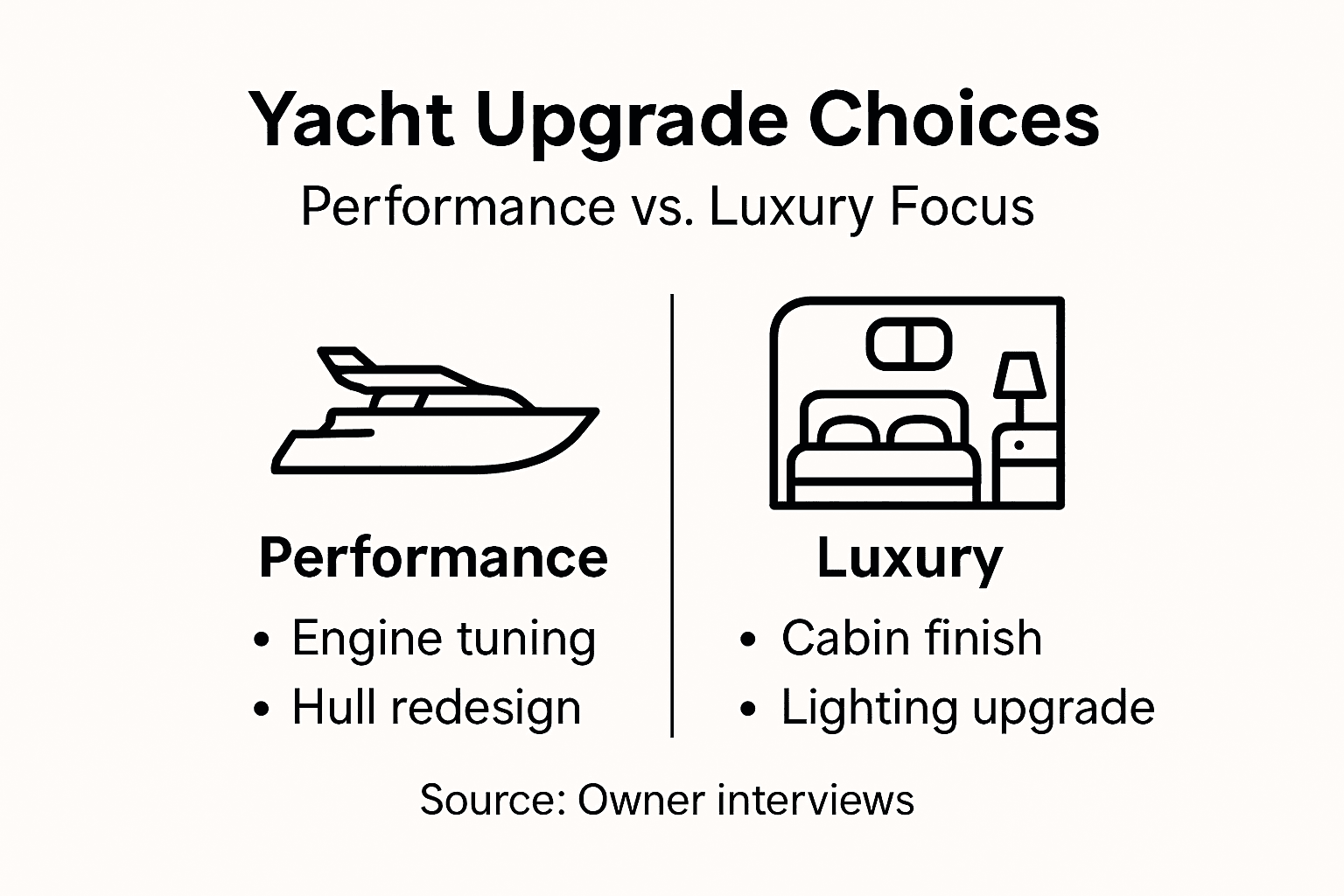
Consider how upgrades work together. New electronics deserve a upgraded electrical system to support them. A faster hull benefits from modern navigation equipment. Strategic upgrades compound their value rather than acting in isolation.
Here’s a comparison of priorities for different yacht owner types:
| Owner Type | Primary Upgrade Focus | Key Benefit |
|---|---|---|
| Performance-focused | Engine/hull optimization | Enhanced speed/handling |
| Luxury-oriented | Cabin/entertainment refits | Improved comfort/style |
| Reliability-driven | Mechanical/electrical systems | Lower breakdown risk |
| Aesthetic-focused | Exterior finishes/upgrades | Modern visual appeal |
Your assessment reveals not just what needs fixing, but what transforms your yacht into the vessel you actually want to own.
Pro tip: Document your yacht’s current specs, service history, and any performance issues before consulting with experts—this groundwork accelerates the customization process and helps your team prioritize recommendations that match your goals and budget.
Step 2: Select vendors and materials for customization
Choosing the right vendors and materials makes or breaks your yacht customization project. The wrong choice leads to delays, inferior results, and wasted money. The right choice delivers quality work that lasts and performs.
Start by vetting vendor credentials and experience. Look for specialists who understand your specific yacht type and upgrade category. A shop excellent at engine work may lack expertise in luxury interior design, and vice versa.
Check these vendor qualifications:
- Certifications and memberships: Verify they hold relevant industry certifications
- Project portfolio: Review completed yachts similar to yours
- Warranty offerings: Understand what they guarantee on parts and labor
- Timeline reliability: Ask references about meeting schedules
- Equipment and facilities: Confirm they have proper tools for your project scope
Referencing NMMA certified manufacturers gives you access to vendors meeting stringent quality standards across the United States. This certification indicates they’ve met rigorous requirements for materials, craftsmanship, and compliance.
Materials matter as much as vendors. Quality components perform better and last longer than budget alternatives. When selecting materials, ensure they align with industry safety and construction standards that govern yacht customization and protect your investment.
Request material specifications in writing. Ask vendors to detail what brands they’re using, why those choices suit your yacht, and how they compare to alternatives. Transparency here prevents surprises later.
Get multiple quotes from qualified vendors, but don’t choose based on price alone. A bid 20 percent lower than others often indicates corners being cut. Compare scope of work, material quality, and warranty terms alongside cost.
Investing in certified vendors and premium materials today prevents costly failures and disappointment tomorrow.
Pro tip: Ask each vendor for references from recent yacht customizations similar to yours, then actually contact those owners and ask about quality, timeline adherence, and whether they’d hire that vendor again.
Step 3: Execute interior and exterior modifications
This is where vision becomes reality. Executing modifications requires careful planning, clear communication with your vendors, and attention to how each change affects the whole yacht. One misstep ripples through your project timeline and budget.
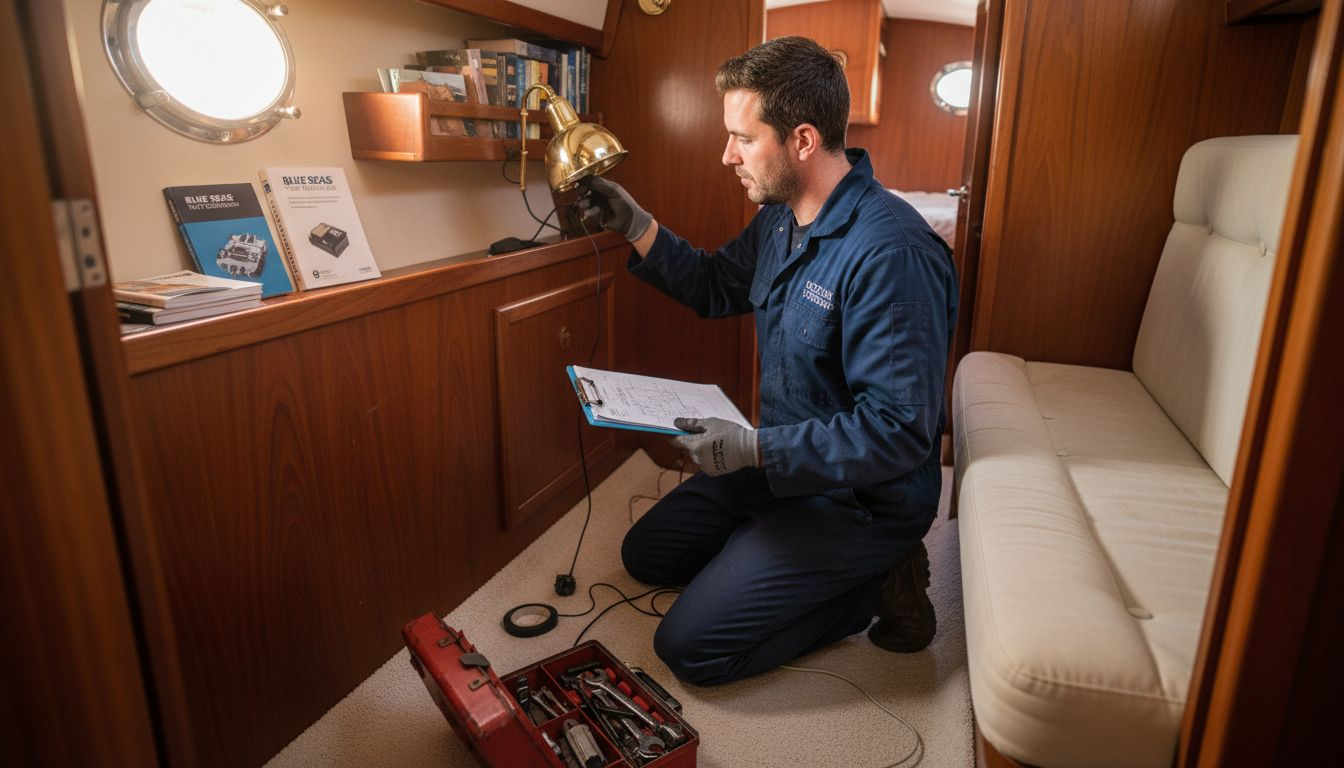
Start with a detailed project schedule that sequences work logically. Exterior work often happens before interior work to avoid damaging new finishes. Structural modifications come before cosmetic ones. Your vendors should coordinate timing so work flows smoothly without conflicts.
Exterior modifications typically include:
- Hull refinishing: Custom paint, gel coat repairs, or complete repainting
- Structural upgrades: Reinforcements, thru-hull modifications, or new hardware installation
- Canvas and enclosures: Biminis, dodgers, or full-cabin enclosures for shade and weather protection
- Hardware upgrades: Rails, cleats, and fittings that balance function with aesthetics
Understanding yacht design principles for hull geometry and materials helps you make informed decisions about structural changes and how they affect performance and stability. Smart modifications enhance rather than compromise how your yacht handles.
Interior work transforms living spaces. Cabin layouts, upholstery, cabinetry, and lighting create the atmosphere you want. Quality materials resist salt spray and moisture better than budget alternatives in harsh marine environments.
Compliance matters throughout execution. Ensure modifications meet regulatory standards for yacht safety and construction required by your boating region. Non-compliant work creates liability and resale problems.
Maintain transparent communication with your team. Weekly check-ins catch problems early. Request photos of work in progress. Verify materials match specifications before installation.
Successful execution balances ambition with precision, transforming your yacht without compromising its seaworthiness.
Pro tip: Create a punch list during final inspections documenting any incomplete or substandard work, then require vendors to address items before final payment to prevent disputes and ensure quality standards are met.
Step 4: Verify enhancements and ensure quality
Before you hand over final payment, verify that every enhancement meets your specifications and performs as promised. This inspection phase protects your investment and ensures your customized yacht delivers the performance and luxury you paid for.
Start with a thorough walk-through comparing completed work against your original specifications. Bring the written scope of work document your vendor provided. Check each item systematically, noting any discrepancies or incomplete work.
Key verification points include:
- Mechanical systems: Test engines, generators, and all propulsion components under load
- Electrical systems: Verify all new circuits function properly and integrate with existing systems
- Interior finishes: Inspect upholstery, cabinetry, paint, and lighting for quality and durability
- Exterior condition: Check paint finish, gel coat repairs, and hardware installation for precision
- Safety equipment: Confirm all safety systems are installed and operational
Ensuring modifications comply with marine equipment and component certification standards gives you confidence that installed upgrades meet recognized quality benchmarks. Certified components perform reliably in demanding marine conditions.
Request documentation for all installed equipment. Manufacturers’ warranties, installation certifications, and compliance documentation protect you long-term. Keep these records organized for future reference and resale.
Test everything operational before accepting work. Run the engines, test electronics, operate hatches and doors, verify lighting circuits. Problems caught now are fixed under warranty rather than at your expense later.
Below is a summary of key quality checks after customization:
| Inspection Area | Why It Matters | What to Look For |
|---|---|---|
| Mechanical Systems | Ensures reliable operation | Smooth engine/generator tests |
| Electrical Systems | Prevents malfunctions | Circuit integration, no faults |
| Interior Finishes | Confirms craftsmanship | Uniform seams, durable surfaces |
| Safety Equipment | Meets legal requirements | Functional and up-to-date gear |
Compare the yacht to your original vision. Does it feel right? Does it perform as expected? Trust your instincts about whether the customization achieved your goals.
Verifying that modifications comply with federal maritime safety standards and regulations ensures your yacht meets legal requirements and maintains insurability. Non-compliant modifications create serious liability exposure.
Quality verification protects your investment and ensures your customized yacht delivers years of performance and enjoyment.
Pro tip: Have a professional marine surveyor conduct an independent inspection before final payment, especially on major modifications, to catch issues vendors might overlook and ensure objective quality assessment.
Elevate Your Yacht’s Performance and Luxury with Expert Support from Mazza Marine
Customizing your yacht for peak performance and ultimate luxury demands precise upgrades, from engine tuning to elegant interiors. If your challenge is navigating the complex choices of mechanical enhancements, material quality, and design execution you need trusted partners who understand every detail. Mazza Marine’s skilled Florida yacht experts offer comprehensive solutions including sportfish upgrades, interior refits, custom paint and gel coat services, and advanced navigation system installations.
Discover peace of mind as our team guides you through seamless yacht customization with premium materials and certified craftsmanship. Avoid costly mistakes and elevate your boating experience today by starting with a consultation at Mazza Marine. Don’t wait to transform your vision into reality. Reach out now to connect with experts who will keep your yacht running safely and looking stunning for years to come.
Frequently Asked Questions
How can I assess my yacht’s current needs before customization?
To assess your yacht’s current needs, evaluate the mechanical systems, hull condition, electrical setups, interior comfort, and exterior appearance. Conduct a thorough inspection to identify any areas that require repair or improvement, which will guide you in prioritizing your upgrades.
What key upgrades should I consider for enhancing performance on my yacht?
For performance enhancement, consider focusing on engine optimization, hull refinishing, and electrical system upgrades. Identify areas that will improve speed and handling, and prioritize these upgrades to enhance your yacht’s overall performance.
How do I select the right vendors for yacht customization?
Choose vendors based on their experience and specialization in yacht modifications. Review their portfolios, qualifications, and warranty offerings, ensuring they have a proven track record for the specific upgrades you plan to undertake.
What steps should I take to execute modifications without delays?
To execute modifications efficiently, create a detailed project schedule that sequences tasks logically. Communicate clearly with your vendors and check for any potential conflicts in timing to ensure the work flows smoothly.
How can I verify that my yacht’s enhancements meet quality standards?
Verify enhancements by conducting a thorough walk-through and comparing completed work against your original specifications. Check mechanical systems, electrical setups, and interior finishes to ensure everything meets the agreed-upon quality and performance standards.
What documents should I request after completing customization?
After customization, request documentation for all installed equipment, including warranties and compliance certifications. Keeping these records organized will protect your investment and ensure you have proof of the quality of your modifications.
Recommended
Text or Call 954-330-9653 Schedule Appointment
Mazza Marine Yacht Services & Refit

Fiberglass Upgrades and Damage Repair

Premium Yacht Paint/ Faux Teak

Fishing: Custom Rods, Reels,Tackle

Electrical, Electronics and Navigation

Paint, Hull and Gelcoat

Teak Decks, Wood Cabinets, Carpentry

Canvas, Enclosures and Upholstery

Mechanical, Repower and Running Gear

Plumbing, Bilge and Thru-Hulls

Welding and Custom Fabrication

Interior Refit And Past Work
Get your yacht value Estimate
"*" indicates required fields