
View Our Recent Work:

TL;DR:
- Consistent maintenance using approved products significantly extends yacht paint life in Florida’s harsh climate.
- Avoid abrasive products, household cleaners, and waxing on premium paints like Awlgrip or LPU.
- Regular rinsing, gentle cleaning, and seasonal sealing protect against salt, UV damage, and biological growth.
Florida’s sun, salt air, and humidity are relentless. A premium paint job that looked flawless at launch can start chalking, fading, or peeling within a single season if you skip the right maintenance steps. That’s a frustrating and costly reality for yacht owners who invest thousands in their vessel’s finish. The good news: with the correct products, a consistent routine, and a clear understanding of your paint type, you can protect that investment and keep your yacht turning heads at the marina for years. This guide walks you through everything from tools and prep to troubleshooting and seasonal sealing.
Table of Contents
- What you need: Tools, products, and preparation
- Step-by-step: Routine cleaning and care for marine paint
- Troubleshooting and common mistakes
- Advanced protection: Seasonal sealing and professional interventions
- Why most yacht paint maintenance advice falls short (and what matters most)
- Get expert support for flawless yacht paint in Florida
- Frequently asked questions
Key Takeaways
| Point | Details |
|---|---|
| Gentle cleaning is crucial | Weekly gentle washing and fresh water rinses preserve marine paint in Florida’s climate. |
| Skip generic waxes | Never use car wax on Awlgrip or LPU paints—stick to manufacturer-approved sealers. |
| Avoid harsh abrasives | Abrasive compounding and harsh chemicals can permanently damage your yacht’s finish. |
| Seasonal sealing matters | Applying a polymer sealer every season maximizes paint longevity and shine. |
| Know when to call a pro | Professional help is essential when facing major paint damage or deep scratches. |
What you need: Tools, products, and preparation
With practical benefits in mind, let’s start with what you’ll need to get the job done right.
Before you touch your hull, you need to know what paint you’re working with. Premium marine topside paints like Awlgrip and LPU (linear polyurethane) are engineered for durability and gloss retention, but they require specialty care. Using the wrong products on these finishes is one of the most common and expensive mistakes yacht owners make. As Awlgrip guidelines confirm, for Awlgrip or LPU topside paints, use gentle washing and manufacturer-approved polymer sealers, and avoid aggressive compounding or waxing to prevent damage.
Here’s what to gather before you start:
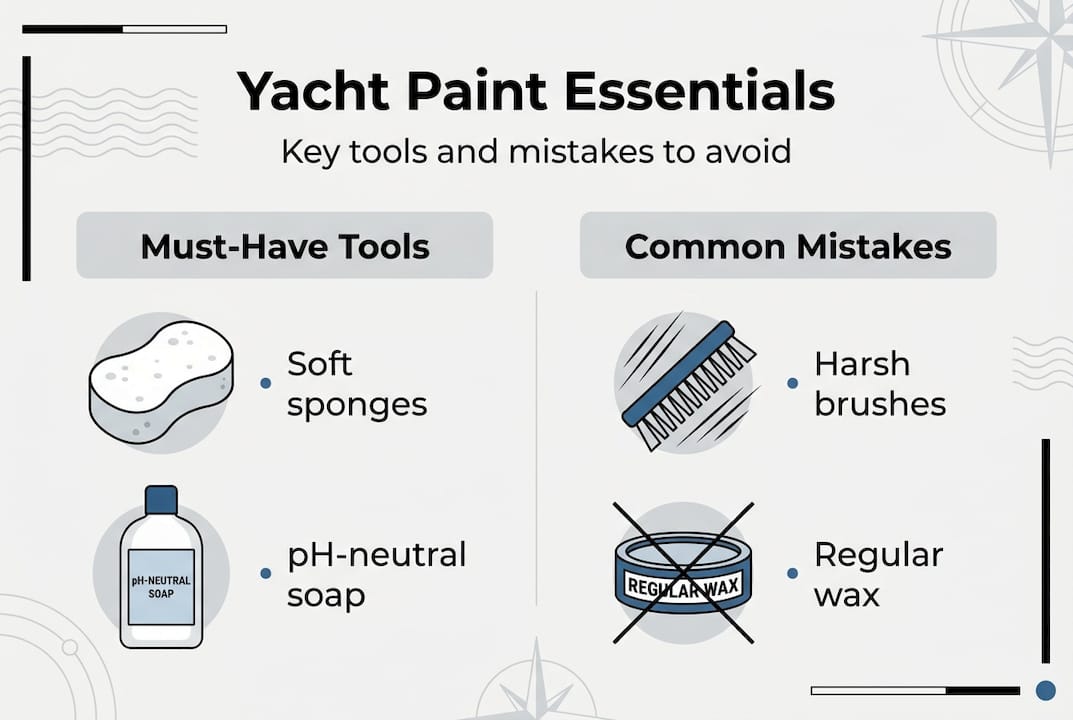
- Wash tools: Non-scratch wash pads, soft bristle brushes, and two buckets (one for soap, one for rinsing)
- Cleaning products: pH-neutral marine soap and manufacturer-approved polymer sealers
- PPE: Chemical-resistant gloves and safety eyewear
- Workspace essentials: A shaded dock or covered slip, dry weather conditions, and non-slip dock shoes
Setting up your workspace properly matters as much as the products you choose. Direct Florida sunlight can cause soap and cleaners to dry too fast on the hull, leaving streaks or residue that are hard to remove without abrasion. Always work in the shade and choose a calm, dry day.
| Supply category | Recommended choice | What to avoid |
|---|---|---|
| Soap | pH-neutral marine formula | Dish soap or kitchen cleaners |
| Polish/sealer | Manufacturer-approved polymer | Standard car wax or abrasive compounds |
| Wash pad | Non-scratch marine pad | Scotch-Brite or abrasive sponges |
| Brush | Soft natural bristle | Stiff nylon or wire brushes |
For premium yacht paint systems, always pull out the manufacturer’s maintenance guide before applying any product. What works on a gelcoat finish can destroy an LPU topcoat. You’ll find more specific guidance on paint, hull and gelcoat tips for Florida vessels.
Pro Tip: Store your marine soap and polymer sealer out of direct sunlight between uses. Heat degrades the formulas faster than you’d expect, especially in Florida summers.
Step-by-step: Routine cleaning and care for marine paint
Now that you’re set up with the right products and workspace, it’s time to follow an effective maintenance routine.
Consistency is everything in Florida’s climate. Salt, UV rays, and biological growth work around the clock. Proper routine cleaning can extend paint life by up to 3 years in harsh coastal environments. That’s not a minor benefit. That’s thousands of dollars in deferred repainting costs.
Here’s the routine that works:
- Rinse first. Use a gentle freshwater hose-down from bow to stern before applying any soap. This lifts loose salt and debris so you’re not grinding it into the finish.
- Wash with marine soap. Apply pH-neutral soap with a soft wash pad using straight, overlapping strokes. Avoid circular scrubbing, which can create swirl marks.
- Brush tight areas. Use a soft bristle brush around hardware, rails, and trim where pads can’t reach cleanly.
- Rinse thoroughly. Work top to bottom, making sure no soap residue remains. Dried soap leaves a dull film.
- Dry gently. Use a clean chamois or microfiber cloth. Air drying in Florida’s humidity can leave water spots, especially on dark finishes.
- Apply polymer sealer seasonally. Follow manufacturer instructions for your specific paint system.
For frequency, clean weekly during active boating season and at least bi-weekly during the off-season. Florida’s year-round humidity means biological growth like algae and mildew doesn’t take a break. Knowing when to repaint your yacht versus when cleaning is enough is a key skill for any owner.
For sportfish paint maintenance tips, the same gentle principles apply but with extra attention to the hull bottom where spray and wake create constant abrasion.
Pro Tip: Rinse your yacht with fresh water after every single saltwater outing, even quick day trips. Salt crystals left to dry on the surface act like fine sandpaper every time you wipe the hull.
Troubleshooting and common mistakes
Even with the best routine, mistakes can happen. Let’s make sure you avoid the critical ones.
The most damaging errors usually come from good intentions. Owners want a brilliant shine, so they reach for products that promise fast results. Those shortcuts often strip the topcoat or void the paint warranty entirely.
Watch out for these common mistakes:
- Using kitchen or household cleaners. These are too alkaline for marine paint and strip protective coatings fast.
- Ignoring salt deposits. Salt left on the surface attracts moisture and accelerates oxidation, the chalky, faded look that signals paint breakdown.
- Using electric buffers incorrectly. High-speed buffers generate heat and friction that can burn through LPU and Awlgrip topcoats in seconds.
- Applying standard car wax. It feels like protection but actually traps moisture and interferes with the paint’s designed breathability.
Warning: Never wax Awlgrip or LPU paint or use abrasive polishes on these surfaces. You risk voiding the manufacturer’s warranty and dramatically shortening the paint’s lifespan. As marine paint experts confirm, avoiding aggressive compounding or waxing is essential to protecting these premium surfaces.
Spotting problems early saves money. Chalking looks like a powdery, faded surface and signals UV breakdown. Streaking after washing usually means soap residue or incompatible product buildup. Light surface oxidation can sometimes be addressed with a manufacturer-approved cleaner, but anything deeper needs professional evaluation.
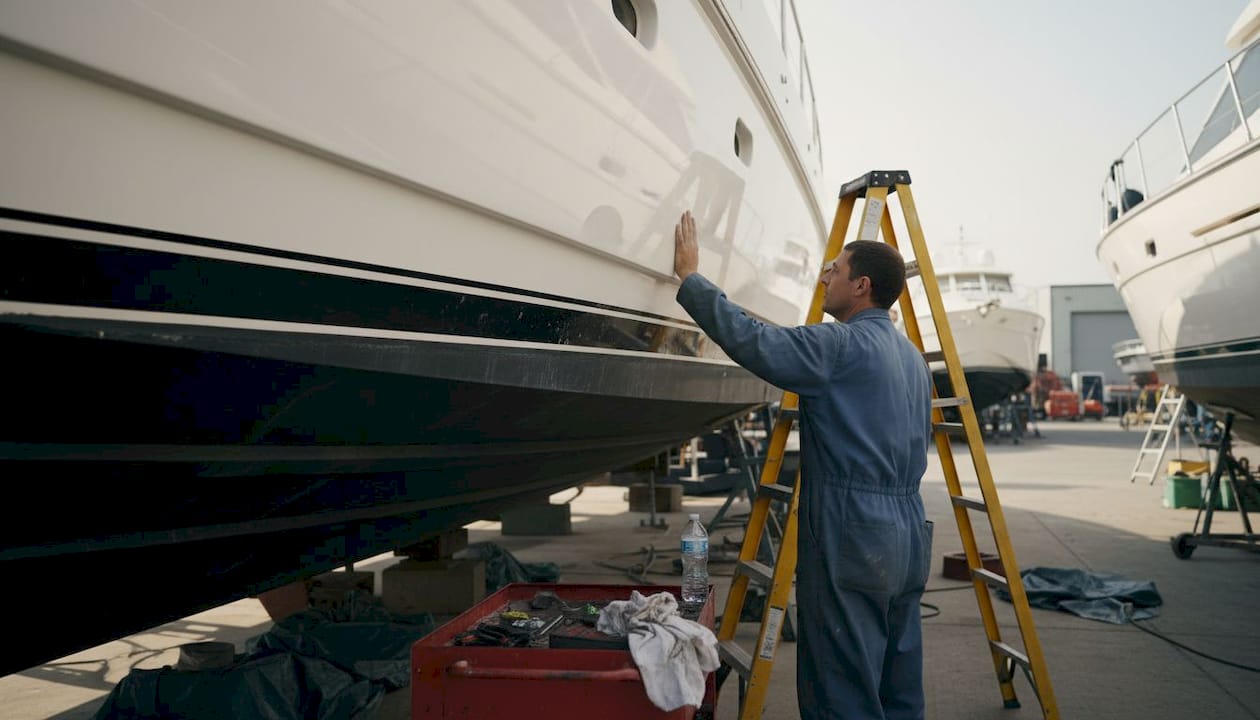
Aggressive compounding may be justifiable on older, non-LPU or non-Awlgrip paints that have already lost their topcoat integrity. But for any premium finish, gentle is always the right call. For questions about how mechanical maintenance for paint longevity connects to your overall vessel care plan, it’s worth reading up before your next haul-out.
Advanced protection: Seasonal sealing and professional interventions
If you’re ready to take your paint protection further, here’s how to keep your yacht at its absolute best.
Polymer sealers are not the same as wax. Traditional wax sits on top of the paint and breaks down quickly under UV exposure and salt spray. A quality polymer sealer bonds at a molecular level with the topcoat, creating a harder, more durable barrier that repels water, UV rays, and contaminants. For Awlgrip and LPU paints, manufacturer-approved polymer sealers are the only recommended protective treatment.
| Feature | Polymer sealer | Standard wax |
|---|---|---|
| Longevity | 6 to 12 months | 4 to 8 weeks |
| UV protection | High | Moderate |
| LPU/Awlgrip compatible | Yes | No |
| Application ease | Moderate | Easy |
| Cost per application | Higher | Lower |
Apply polymer sealer at least once per season, ideally twice in Florida’s high-UV environment. Here’s a simple self-application process:
- Wash and dry the hull completely.
- Apply the sealer in small sections using a foam applicator pad.
- Allow to haze per the product’s instructions (usually 5 to 10 minutes).
- Buff off gently with a clean microfiber cloth.
- Inspect for even coverage and repeat on any missed areas.
Know when to call in the pros. If you see severe oxidation covering large sections of the hull, localized peeling around hardware or waterline areas, or deep scratches that expose primer, those are red flags for professional repair. Touch-ups handle small isolated damage. Widespread issues usually mean a full recoat is more cost-effective long-term. Explore advanced marine paint care options to understand what a professional assessment covers.
Why most yacht paint maintenance advice falls short (and what matters most)
Here’s something we see consistently: yacht owners spend more money fixing damage from bad advice than they ever would have spent on proper maintenance from the start.
Most generic online guides treat marine paint like car paint. They recommend waxing, buffing, and compounding as universal solutions. For standard gelcoat, some of that applies. For Awlgrip or LPU systems, it’s a recipe for a ruined finish. The chemistry is completely different, and the tolerance for abrasion is far lower.
The deeper lesson is this: consistency with the right products always outperforms expensive quick fixes applied incorrectly. We’ve seen owners strip a two-year-old LPU topcoat in a single afternoon with the wrong buffer and the wrong compound. That’s not a recoverable situation without a full repaint.
Following manufacturer-specific guidance and building a simple weekly rinse habit protects more value than any premium treatment applied once a year. For perspective on what quality marine craftsmanship insights look like in practice, the difference between a well-maintained yacht and a neglected one is almost always routine, not product.
Get expert support for flawless yacht paint in Florida
Armed with expert strategies, you might want a trusted partner for top-tier results.
At Mazzamarine, we connect Florida yacht owners with specialists who understand exactly what your paint system needs, whether that’s a precision polymer seal, a localized touch-up, or a full custom recoat. Our network covers marine paint and gelcoat services across Florida, with vendors who work with premium systems like Awlgrip and LPU every day.
Not sure if your current finish needs a professional eye? Our guide on when to call a paint expert walks you through the key warning signs. Mino and Luigi built Mazzamarine on the principle that every yacht owner deserves bespoke, expert guidance, not generic advice. Reach out today and let’s protect your investment the right way.
Frequently asked questions
How often should I clean my yacht’s marine paint surfaces?
Clean marine paint weekly during the boating season and at least bi-weekly during the off-season. Florida’s salt air and humidity accelerate buildup, so routine cleaning is essential for preserving paint life in this climate.
Can I use regular car wax on Awlgrip or LPU marine paints?
No. Use only manufacturer-approved polymer sealers on these finishes. Conventional wax can dull, damage, or trap moisture in premium marine topcoats, shortening their lifespan significantly.
What’s the safest way to remove salt from marine paint?
Rinse gently with fresh water after every outing before salt crystals dry and bond to the surface. Freshwater rinses are the single most effective daily habit for protecting marine paint in Florida.
How do I know if my boat’s paint needs professional attention?
Extensive chalking, peeling near hardware or the waterline, or deep scratches that reach the primer all signal it’s time to call a pro. Major paint issues addressed early cost far less than a full repaint down the line.
Recommended
Text or Call 954-330-9653 Schedule Appointment
Mazza Marine Yacht Services & Refit

Fiberglass Upgrades and Damage Repair

Premium Yacht Paint/ Faux Teak

Fishing: Custom Rods, Reels,Tackle

Electrical, Electronics and Navigation

Paint, Hull and Gelcoat

Teak Decks, Wood Cabinets, Carpentry

Canvas, Enclosures and Upholstery

Mechanical, Repower and Running Gear

Plumbing, Bilge and Thru-Hulls

Welding and Custom Fabrication

Interior Refit And Past Work
Get your yacht value Estimate
"*" indicates required fields