
View Our Recent Work:

Repairing yacht awnings is achievable for any dedicated owner who uses marine-grade adhesives, UV-resistant thread, and the right preparation techniques. The industry standard for a durable patch repair calls for a 2–3 inch overlap, a 24–48 hour cure, and bonded polyester or PTFE thread rated for UV exposure. Awnings on Florida yachts face relentless sun, salt spray, and humidity, which accelerates fabric degradation faster than in most other climates. Understanding your fabric type, frame condition, and the correct repair sequence is what separates a fix that lasts one season from one that lasts five. Mazzamarine’s network of Florida canvas specialists informed much of the practical guidance you will find here.
What tools and materials do you need to repair yacht awnings?
The right materials make or break a canvas repair. Marine-grade adhesives, UV-resistant thread, and quality patch fabric are non-negotiable for any repair that needs to survive open-water conditions.
| Material | Type | Purpose |
|---|---|---|
| Marine adhesive | Contact cement or seam sealer | Bonds patch to canvas; fills small pinholes |
| UV-resistant thread | Bonded polyester or PTFE (Tenara) | Sewing seams and patch edges |
| Patch fabric | Sunbrella or matching canvas | Covers tears and worn areas |
| Canvas cleaner | Mild soap or marine-specific cleaner | Prepares surface before adhesive application |
| Sewing needles | Size 16–18 for hand sewing | Penetrates heavy marine canvas cleanly |
| Seam ripper | Standard tool | Removes failed stitching before restitching |
PTFE thread like Tenara significantly outlasts the canvas itself, making it the premium choice for owners who want a semi-permanent repair. Bonded polyester thread lasts 3–5 years under UV exposure before restitching is needed, and it remains the standard choice for recreational yacht canvas work. The cost difference between the two is real, so weigh how long you plan to keep the current canvas before committing.
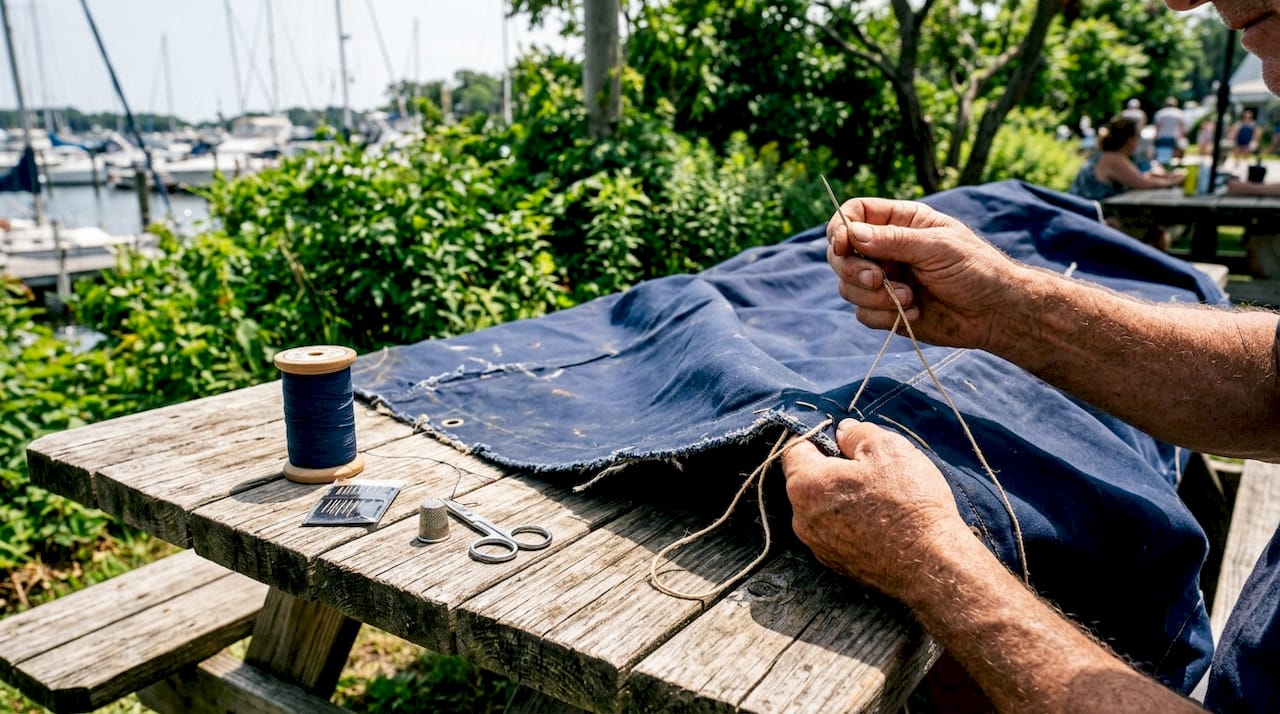
Repair kits designed for DIY owners typically bundle contact cement, a small roll of patch fabric, and bonded polyester thread. They are a solid starting point, but serious owners should supplement with a dedicated marine sewing machine for seam repairs longer than six inches.
Pro Tip: Store bonded polyester thread in a sealed bag away from direct sunlight. UV exposure degrades thread on the spool before it ever reaches the canvas, shortening its effective lifespan.
How do you patch and sew a torn yacht awning step by step?
Preparation is the most underrated part of any canvas repair. Rushing this phase causes patches to peel and seams to fail within weeks.
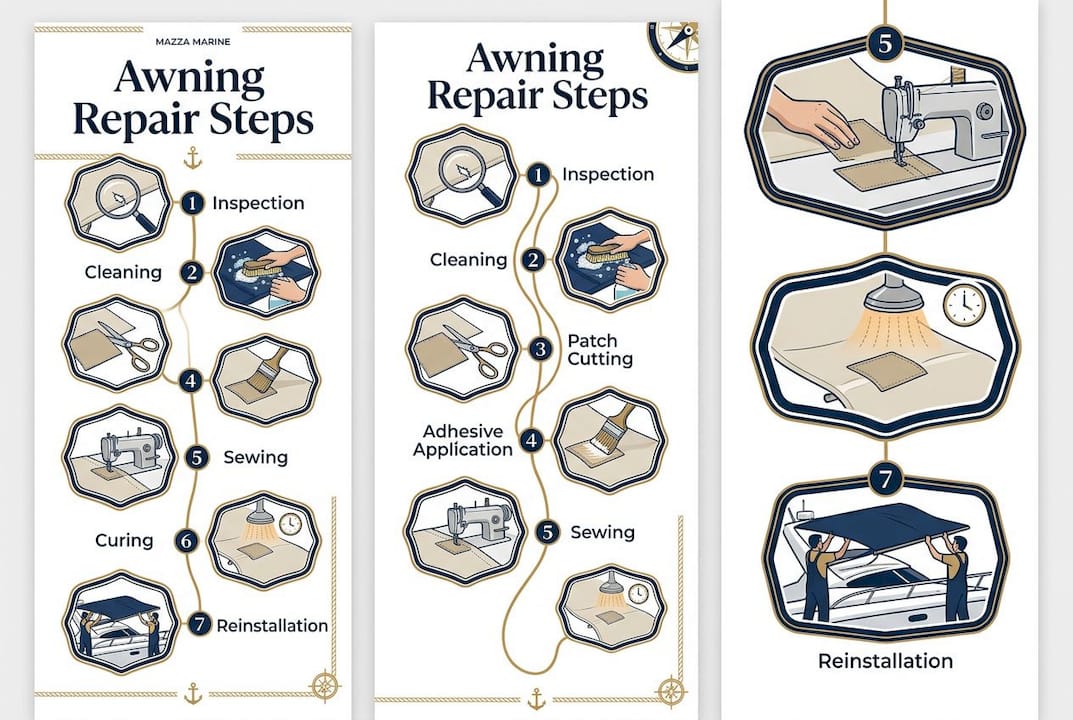
- Remove the canvas from the frame. Indoor repairs produce stronger patch bonds and cleaner seam lines than on-boat fixes. Lay the canvas flat on a clean, dry surface.
- Clean the damaged area. Use mild soap and lukewarm water with a soft brush. Rinse thoroughly and allow the fabric to dry completely. Any moisture under a patch will prevent adhesion.
- Trim loose threads and frayed edges. Use sharp scissors to cut away any material that is not fully attached. Frayed edges under a patch create air pockets that cause lifting.
- Cut your patch to size. The patch must extend at least 2–3 inches beyond the tear on all sides. Round the corners of the patch to prevent peeling at the edges.
- Apply marine adhesive to both surfaces. Coat the underside of the patch and the canvas around the tear. Allow a tack time of 5–10 minutes before pressing the surfaces together.
- Press and cure. Apply firm, even pressure across the entire patch. Allow the repair to cure for 24–48 hours before reinstalling or exposing the canvas to water. A proper cure produces 90–95% of the original fabric strength.
- Sew the patch perimeter. Use a double-stitch or zigzag pattern with UV-resistant thread. Sewing locks the patch in place and prevents the adhesive edge from peeling under wind load.
- Reinforce seam repairs separately. Failed seams need the old stitching removed with a seam ripper before restitching. Sewing over failed thread adds bulk without adding strength.
The most common mistake owners make is repairing canvas while it is still on the frame. Tension in the fabric distorts the patch alignment and stresses the adhesive bond before it cures. A flat, stable surface is the single biggest factor in repair quality.
Pro Tip: When sewing heavy canvas by hand, use a sailor’s palm and a waxed needle. The wax reduces friction through thick fabric and protects your hand from the force needed to drive the needle cleanly.
How do you maintain and restore yacht awning fabric after repair?
A repaired awning needs ongoing care to stay watertight and UV-resistant. The repair itself is only as durable as the fabric surrounding it.
- Clean with mild soap and lukewarm water. Harsh cleaners and pressure washers strip water-repellent finishes and damage the weave of marine fabrics like Sunbrella. A soft brush and gentle soap handle the vast majority of cleaning needs.
- Reapply waterproofing after every cleaning. Star Brite Waterproofing restores water repellency to canvas after cleaning or minor repairs, covering 400–500 square feet per gallon. Restored repellency prevents rot, mildew, and staining from taking hold.
- Inspect for UV and salt damage every 90 days. Florida sun degrades canvas faster than most owners expect. Look for chalky or brittle areas, fading along seam lines, and any spots where the fabric feels thin or papery.
- Protect frame hardware during cleaning. Cover snap studs, zipper tracks, and metal fittings with a light coat of corrosion inhibitor before washing. Salt water trapped around hardware accelerates oxidation and causes canvas attachment points to fail.
- Know when to replace rather than repair. Patches and tapes serve as temporary fixes, but brittle fabric, failing seams across multiple panels, or fabric detaching from its edges signals that professional restitching or full replacement is the only durable solution. A patch on brittle fabric shifts stress onto the surrounding aged material and accelerates the next failure.
For a deeper look at how UV exposure affects canvas over time, the yacht canvas care guide from Mazzamarine covers restitching intervals and long-term preservation in detail.
Why does frame condition determine repair success?
Frame and hardware inspection must happen before any fabric repair. A perfectly patched canvas fitted onto a warped or corroded frame will fail prematurely, regardless of how well the repair was executed.
Frame issues cause canvas misfit, which creates uneven tension across the repaired area and accelerates wear at seams and attachment points. Catching frame problems first saves you from repeating the same repair six months later.
Frame inspection checklist:
- Check all metal tubing for corrosion, dents, or bends that alter the frame profile
- Inspect snap studs for oxidation, looseness, or missing hardware
- Examine zipper tracks for warping, broken teeth, or salt buildup
- Test all attachment points by applying light hand pressure to confirm they hold firm
- Look for any welds or joints that show cracking or separation
Once the frame passes inspection, clean all metal surfaces with a marine-grade metal cleaner before reinstalling canvas. Oxidized hardware tears canvas at contact points over time.
Pro Tip: When refitting canvas after repair, fit the fabric loosely first at all attachment points and work side to side rather than front to back. This lets the pattern settle naturally and prevents overstressing seams and zippers during installation. For guidance on whether your frame warrants a full canvas replacement, the marine canvas and enclosures guide covers patch versus replacement decisions for Florida yachts.
Before storing canvas materials ahead of any repair or reinstallation, proper fabric storage prevents UV damage and distortion. The boat wrap storage guide explains how to preserve marine fabrics before installation, which applies directly to awning canvas waiting for repair.
Key Takeaways
Successful yacht awning repair depends on marine-grade materials, proper surface preparation, frame inspection, and a full 24–48 hour cure before the canvas returns to service.
| Point | Details |
|---|---|
| Patch size and cure time | Cut patches 2–3 inches beyond the tear and allow 24–48 hours to cure for full bond strength. |
| Thread choice matters | Bonded polyester thread lasts 3–5 years; PTFE thread outlasts the canvas for a semi-permanent fix. |
| Repair indoors | Removing canvas to a flat, dry surface produces stronger bonds and cleaner seam lines than on-boat repairs. |
| Inspect the frame first | Corroded or warped frames cause fresh canvas repairs to fail prematurely regardless of patch quality. |
| Gentle cleaning only | Mild soap and soft brushes preserve water-repellent finishes; pressure washers and harsh cleaners cause irreversible damage. |
What years of awning repairs actually taught me
The honest truth about DIY canvas repair is that most owners underestimate preparation and overestimate adhesive. I have seen beautifully cut patches peel off within a week because the owner skipped the drying step or applied the adhesive in direct sunlight where it skinned over before the patch made contact. The chemistry only works when the surface is clean, dry, and given time to bond.
The other thing I would tell any owner is to invest in PTFE thread the first time you resew a major seam. The cost difference feels significant upfront, but bonded polyester thread on a primary seam in Florida sun means you are back at the sewing machine in three years. PTFE thread is genuinely a one-time job on a canvas that is otherwise in good shape.
Seasonal timing matters more than most guides admit. The best window for canvas repairs in Florida is late fall, after hurricane season and before the winter charter rush. The humidity drops, the UV index is lower during curing, and you have time to do the job properly rather than rushing a patch before a weekend trip.
One more thing worth saying directly: if your canvas is brittle, do not patch it. Brittle fabric around a patch tears faster than the original damage would have spread. At that point, a full replacement is the more economical choice over two or three seasons. Knowing when to stop repairing and start replacing is the mark of an experienced owner.
— Jason
Mazzamarine’s canvas and repair services for Florida yacht owners
Mazzamarine works with a trusted network of Florida canvas specialists who handle everything from single-panel patch repairs to full awning replacements on vessels of all sizes.

When a repair goes beyond a simple patch, or when frame damage requires professional fabrication, Mazzamarine connects you with the right expert quickly. The team understands Florida’s specific conditions, from Miami’s salt air to the UV intensity that shortens canvas life faster than anywhere else in the country. For owners who want a full picture of what professional service covers in 2026, the marine repair service guide outlines current offerings, pricing structures, and what to expect from a professional canvas job. Reach out to Mazzamarine and get matched with a canvas specialist who knows your boat type.
FAQ
What is the correct patch size for a yacht awning tear?
The patch must extend at least 2–3 inches beyond the tear on all sides. Round the corners to prevent edge peeling under wind load.
How long does a marine adhesive patch take to cure?
A proper marine adhesive patch requires 24–48 hours of cure time before the canvas should be reinstalled or exposed to water.
What thread is best for sewing yacht canvas repairs?
PTFE thread like Tenara outlasts the canvas itself and is ideal for permanent seam repairs. Bonded polyester thread lasts 3–5 years and is the standard choice for recreational canvas work.
Can you repair a yacht awning while it is still on the frame?
Removing the canvas to a dry, flat indoor surface produces significantly stronger repairs. On-frame repairs introduce tension and misalignment that weaken both adhesive bonds and sewn seams.
When should you replace a yacht awning instead of repairing it?
Replace the awning when the fabric is brittle, seams are failing across multiple panels, or patches are no longer holding. Patching brittle canvas shifts stress onto surrounding aged fabric and accelerates the next failure.
Recommended
Text or Call 954-330-9653 Schedule Appointment
Mazza Marine Yacht Services & Refit

Fiberglass Upgrades and Damage Repair

Premium Yacht Paint/ Faux Teak

Fishing: Custom Rods, Reels,Tackle

Electrical, Electronics and Navigation

Paint, Hull and Gelcoat

Teak Decks, Wood Cabinets, Carpentry

Canvas, Enclosures and Upholstery

Mechanical, Repower and Running Gear

Plumbing, Bilge and Thru-Hulls

Welding and Custom Fabrication

Interior Refit And Past Work
Get your yacht value Estimate
"*" indicates required fields