
View Our Recent Work:

Overview: The single most effective move for hurricane prep of your boat in Florida is getting it out of the water entirely and onto high, secure ground before a storm arrives. When that’s not possible, doubling all dock lines, rigging cross-spring lines high on pilings, and setting multiple anchors with at least 10:1 scope are the next best defenses. Everything else, from stripping canvas to charging batteries, builds on that foundation.
Table of Contents
- The first steps every Florida boat owner should take before a hurricane
- How to prepare your boat step by step before a Florida storm
- Legal and insurance considerations you can’t afford to skip
- Mazzamarine’s seasonal compliance checklist for Florida yacht owners
- Key priorities to carry into every hurricane season
- What to do after the storm: inspecting your boat for damage
- Mazzamarine is ready when your boat needs expert attention after a storm
- Key Takeaways
The first steps every Florida boat owner should take before a hurricane
The FWC and U.S. Coast Guard are unambiguous: removal from the water is the gold standard of hurricane boat protection. Trailerable vessels should be parked on high ground, well away from trees and power lines, with tires blocked and the tongue jack secured so the boat can’t bounce. If the boat must stay in the water, these are the non-negotiables:
- Double all dock lines and rig crossing spring lines fore and aft
- Attach lines high on pilings to allow for tidal surge and rise
- Set multiple anchors with at least 10:1 scope suited to the bottom type
- Add chafe protection at every contact point where lines meet cleats or chocks
- Remove all canvas, biminis, cushions, and loose gear to cut wind load
- Seal all hatches and vents to prevent water intrusion that can overwhelm bilge pumps
- Charge batteries fully to keep automatic bilge pumps running through the storm
Never leave the boat on davits or a hydro-lift. Storm surge can exceed the maximum lift height, and rainfall accumulating in the hull can collapse the structure entirely.
How to prepare your boat step by step before a Florida storm
Good preparation starts weeks before a named storm appears on the radar, not 24 hours out. By then, haul-out slots at Florida marinas fill fast, and the roads you planned to use may already be flooding.
Hauling out and storing on land
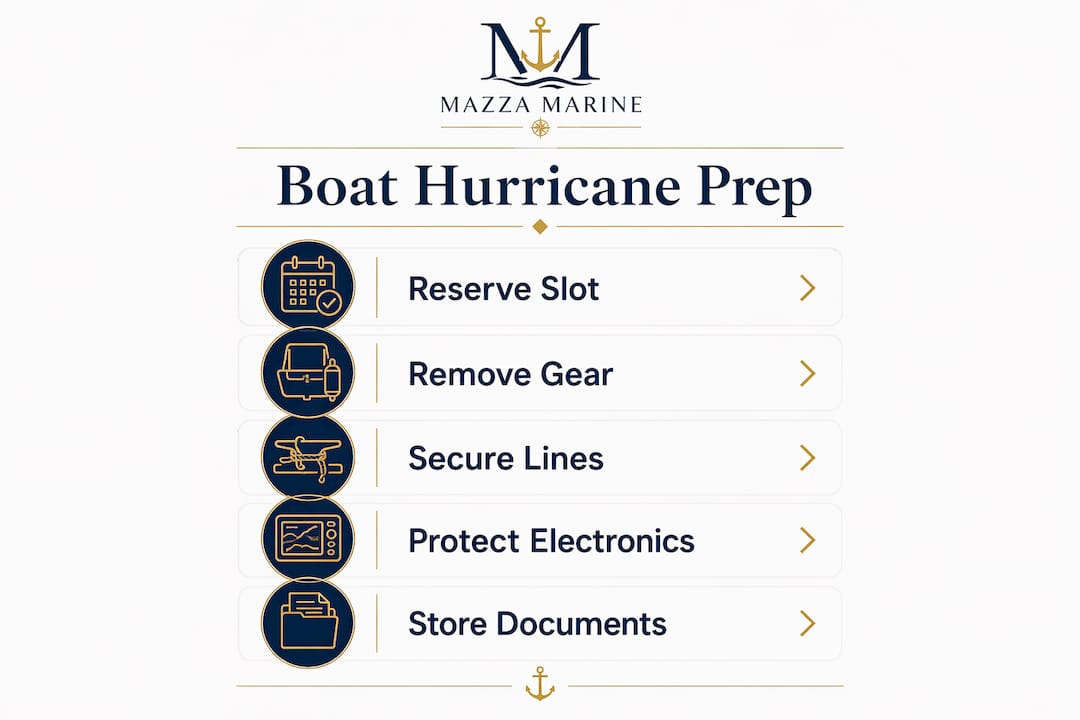
Vessel haul-out logistics require advance planning. Call your marina early in the season to reserve a spot on the hard. Once ashore, the boat should sit on high ground away from surge-prone areas, secured with heavy nylon lines to fixed objects from all four sides. Avoid tying to trees; a falling tree takes the boat with it.
Securing boats that must remain in the water
For larger vessels that can’t be trailered, a true “hurricane hole” well up a protected river or inland canal offers the best odds. If you’re staying in a marina berth, dock line preparation demands serious attention:
- Use extra-long spring lines led well forward and well aft to accommodate extreme tidal rise
- Double every line; for boats over 30 feet, 5/8-inch or 3/4-inch heavy nylon is the right choice
- Inspect cleats, winches, and chocks for adequate backing plates before you trust them with storm loads
- Apply chafe gear at every point where a line contacts a hard surface
- Install fenders to protect the boat from rubbing against neighboring boats that may break loose
Windage and gear removal
Wind load is often what tears a boat free, not the water itself. Strip the bimini, dodger, sails, outriggers, antennas, and deck chairs. Lash down anything that can’t be removed: tillers, wheels, and booms. Removing canvas and loose gear before a storm is one of the highest-return actions you can take per hour of effort.
Electronics and engine protection
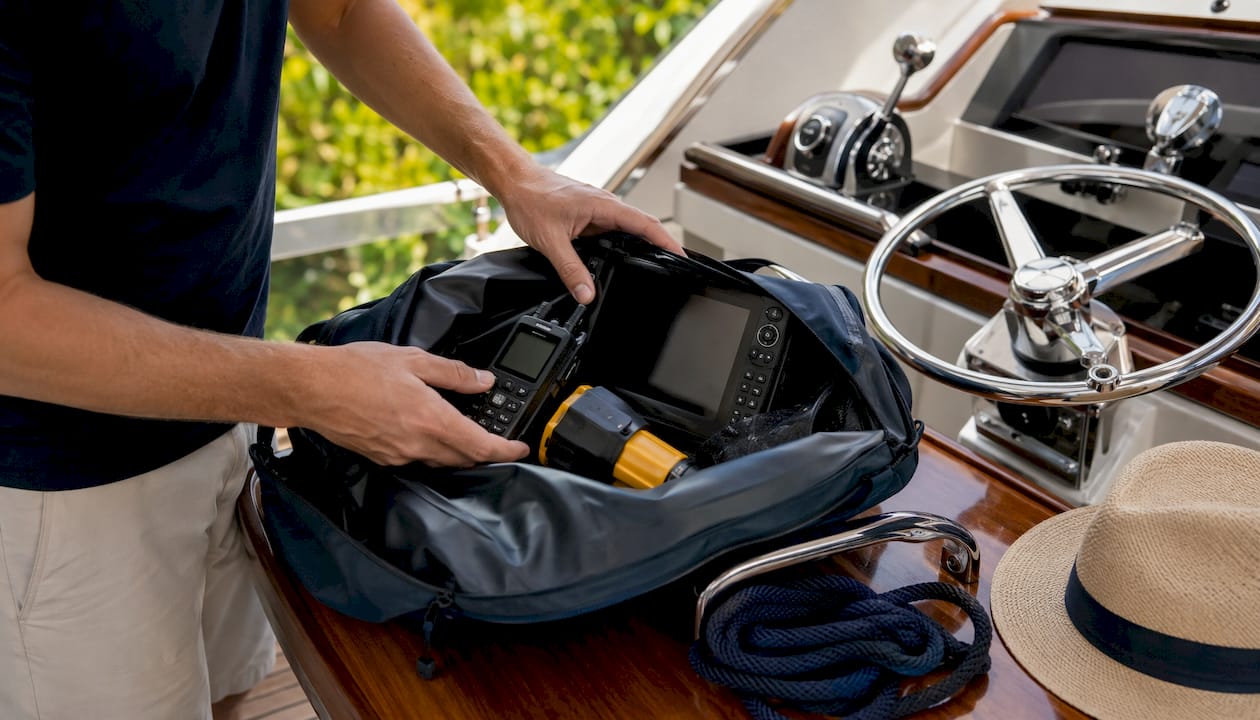
Remove portable electronics: chartplotters, VHF radios, and portable EPIRBs. Even boats that survive structurally are often written off due to water-damaged electronics. Close every through-hull you can, including air-conditioning and head intakes, leaving only bilge discharge open. Test each bilge pump and its float switch individually. Shore power will likely fail, so the battery bank needs to carry the load alone.
Practicing your plan
Failing to rehearse a hurricane plan is one of the most common reasons boats are lost. Some roads flood before a storm makes landfall, cutting off your intended route. Time the move to your safe storage location during a calm period so you know exactly how long it takes and where the obstacles are.
Pro Tip: Set a personal trigger point, such as 72 hours before projected landfall, and commit to executing your full plan at that moment. Waiting for certainty costs you the haul-out slot and the calm roads.
Legal and insurance considerations you can’t afford to skip
Many Florida boat owners discover their marina’s hurricane plan only when a storm is already named. That’s too late. Marina lease agreements often contain specific clauses dictating what vessel owners must do before a storm, and failure to comply can void your insurance coverage or expose you to liability for damage your boat causes to others.
- Review your lease or storage agreement now, before June, and note every hurricane-related obligation
- Verify that your policy covers named storms; this protection is often a separate rider, and insurers will not add it once a storm is named
- Understand the liability split between you and the marina for damage that occurs during a declared storm event
- Prepare a document packet kept off the boat: insurance policies, vessel registration, Hull Identification Number (HIN), and recent photos of the vessel from all angles
- Label all removable gear (paddleboards, kayaks, life jackets) with your phone number for recovery after the storm
Keeping vital documents off the vessel supports insurance claims and property recovery when boats are moved or damaged beyond recognition.
Pro Tip: Store your document packet in a waterproof bag at a relative’s home or a safe deposit box inland. A photo of your boat taken the week before a storm is worth more than any written description when filing a claim.
Mazzamarine’s seasonal compliance checklist for Florida yacht owners
Florida’s hurricane season runs June 1 through November 30. The spring maintenance checklist should be completed by late May at the latest. Use this table as your annual benchmark:
| Task | Timing | Notes |
|---|---|---|
| Inspect and replace dock lines | April–May | Replace lines showing fraying, stiffness, or UV damage |
| Schedule haul-out reservation | March–April | Slots fill fast; book before season opens |
| Test bilge pumps and float switches | May | Test each pump individually under load |
| Inspect cleats, chocks, and backing plates | May | Inadequate backing plates fail under storm loads |
| Review and update insurance policy | April | Confirm named-storm rider is active |
| Remove and store canvas, biminis | At 72-hour watch | Strip before the storm arrives |
| Charge and test battery bank | At 72-hour watch | Backup battery recommended for bilge redundancy |
| Compile and store document packet off-vessel | May | Include HIN, photos, registration, insurance |
| Inspect rigging, hardware, and electrical systems | May | Address corrosion, chafe points, and loose connections |
The US Coast Guard urges mariners to monitor VHF-FM channel 16 and be ready to move when Port Condition Yankee is announced, which triggers drawbridge closures that can trap vessels in exposed locations.
Key priorities to carry into every hurricane season
Getting your boat out of the water and onto high, secure ground remains the single most reliable way to protect it from a Florida hurricane. When that’s not an option, the combination of doubled lines, proper anchoring scope, chafe protection, and stripped windage gives your vessel the best chance in the water.
- Prioritize haul-out and inland storage above all other measures
- Double all lines and use 10:1 anchor scope for boats that must stay in the water
- Strip canvas, biminis, and loose gear to reduce wind load before the storm arrives
- Review marina contracts and insurance policies before June 1 each year
- Store your document packet (insurance, registration, photos) off the boat in a safe inland location
- Rehearse your full prep plan at least once before the season peaks, timing the move and noting road conditions
- Execute your plan at your predetermined trigger point, not when the storm is already named
What to do after the storm: inspecting your boat for damage
Once authorities clear access to the marina or storage area, resist the urge to rush aboard. Obtain a reentry decal from your local law enforcement office if the area was evacuated; access will be restricted for safety and security reasons.
Begin the inspection from the dock or shore before stepping aboard. Look for visible hull damage, listing, or flooding. Check that the boat hasn’t risen over or dropped onto pilings during surge. Once aboard, inspect the bilge first: standing water, fuel smell, or a running bilge pump signals a through-hull or hose failure that needs immediate attention.
Work through the vessel systematically: hull integrity, through-hulls and hose connections, electrical systems, engine compartment for water intrusion, rigging and standing hardware, and finally the interior. Photograph every item of damage before touching anything. Your insurer will need that documentation, and the photos you took before the storm give you a clean baseline for comparison.
If the engine took on water or the electrical system was submerged, do not attempt to start either without a professional assessment. Water in a diesel or gasoline engine causes hydrolocking, and salt water in wiring corrodes connections in ways that create fire risks weeks later.
Mazzamarine is ready when your boat needs expert attention after a storm

After a hurricane passes, the real work begins. Mazzamarine’s network of Florida yacht experts covers every repair and restoration need that follows a storm: urgent structural repairs, engine and mechanical assessment, nav and electronics replacement, custom canvas and enclosures, and complete marine repair services for vessels of every size. Brothers Mino and Luigi built Mazzamarine on a genuine passion for the sea and years of hands-on Florida experience, which means you get honest advice and trusted vendor connections, not a sales pitch.
Whether your vessel needs a post-storm inspection, a full mechanical systems review, or a complete refit to bring it back to its best, Mazzamarine handles every aspect of ownership so you don’t have to coordinate a dozen contractors alone. Reach out to the Mazzamarine team today to get your vessel assessed and back on the water.
Key Takeaways
Removing your boat from the water and storing it on high, secure ground is the single most effective hurricane prep action a Florida boat owner can take.
| Point | Details |
|---|---|
| Haul out first | Securing the boat on high ground away from surge zones offers the best protection available. |
| Double lines and anchor scope | Boats remaining in water need doubled lines, cross-spring rigging, and at least 10:1 anchor scope. |
| Strip windage early | Removing canvas, biminis, and loose gear at the 72-hour mark cuts the wind load that breaks boats free. |
| Documents off the boat | Store insurance policies, registration, HIN, and photos at a safe inland location before the season opens. |
| Mazzamarine post-storm support | Mazzamarine provides urgent repairs, mechanical assessment, and full restoration services for Florida yacht owners after hurricane damage. |
Recommended
Text or Call 954-330-9653 Schedule Appointment
Mazza Marine Yacht Services & Refit

Fiberglass Upgrades and Damage Repair

Premium Yacht Paint/ Faux Teak

Fishing: Custom Rods, Reels,Tackle

Electrical, Electronics and Navigation

Paint, Hull and Gelcoat

Teak Decks, Wood Cabinets, Carpentry

Canvas, Enclosures and Upholstery

Mechanical, Repower and Running Gear

Plumbing, Bilge and Thru-Hulls

Welding and Custom Fabrication

Interior Refit And Past Work
Get your yacht value Estimate
"*" indicates required fields