
View Our Recent Work:

Liveaboard boat laws in Florida are defined as the combined set of state statutes, local ordinances, and marina policies that govern the residential use of vessels in Florida waters. The Florida Fish and Wildlife Conservation Commission (FWC), local municipalities, and individual marina operators each hold authority over different aspects of how and where you can legally live aboard. Anchoring permits, mooring restrictions, sewage compliance, and zoning rules all apply simultaneously. Violating any one layer can result in fines, citations, or vessel removal. Understanding how these rules interact is the first step toward a legal and peaceful life on the water.
What are the liveaboard boat laws in Florida?
Florida defines a live-aboard vessel under Florida Statute 327.02(23) as any vessel used as a residence that lacks effective propulsion for navigation. That classification matters because it triggers a separate set of sewage, mooring, and permit requirements that do not apply to recreational vessels. A boat you use for weekend fishing is treated very differently from one where you sleep, cook, and receive mail.
The FWC administers the Long-Term Anchoring Permit (LTAP), which is required for vessels anchoring 14 or more days within any 30-day period. The permit is free and valid for one year. That low barrier to entry makes non-compliance hard to justify, yet citations for missing LTAPs remain common.
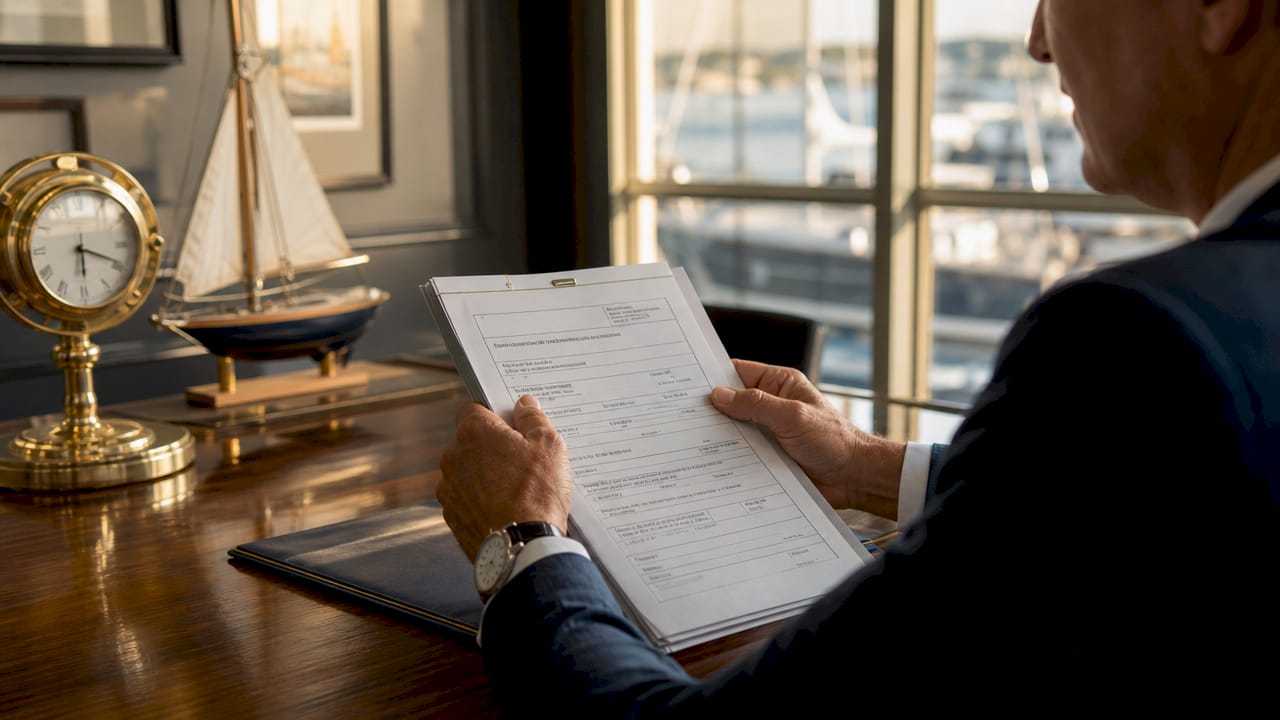
A key detail many boaters miss: if your vessel moves more than one nautical mile from its registered anchoring location, you must update the LTAP immediately. Failing to do so is one of the most frequent compliance pitfalls Florida liveaboards face.
Starting june 1, 2026, a new anchoring limitation law restricts boaters to 45 consecutive days in designated zones before they must leave for at least 24 hours. Fort Pierce Inlet is one of the actively enforced zones, with signage and regular patrols. This change directly affects anyone using a single anchorage as a permanent home base.
Florida also requires liveaboard vessels to carry functioning marine sanitation devices (MSDs). Sewage discharge into state waters is prohibited, and sanitation records documenting pump-outs must be kept for one year. Inspectors can and do request those records during enforcement checks.
- Obtain your free LTAP through the FWC online portal before anchoring for 14+ days
- Update the permit any time your vessel relocates more than one nautical mile
- Carry a functioning MSD and keep pump-out records for 12 months
- Know whether your anchorage falls within a designated anchoring limitation area
- Renew the LTAP annually without exception
Pro Tip: Set a calendar reminder 30 days before your LTAP expiration date. A lapsed permit carries the same penalty as having no permit at all.
How do local ordinances and marina policies affect liveaboard boating?
State law sets the floor, but local governments and marinas often set a much lower ceiling. Local governments can prohibit liveaboard vessels entirely outside approved marina mooring fields or docks. Palm Beach is the clearest example: the town restricts liveaboard activity to approved marinas and bans extended anchoring or residential vessel use anywhere else in its waters.
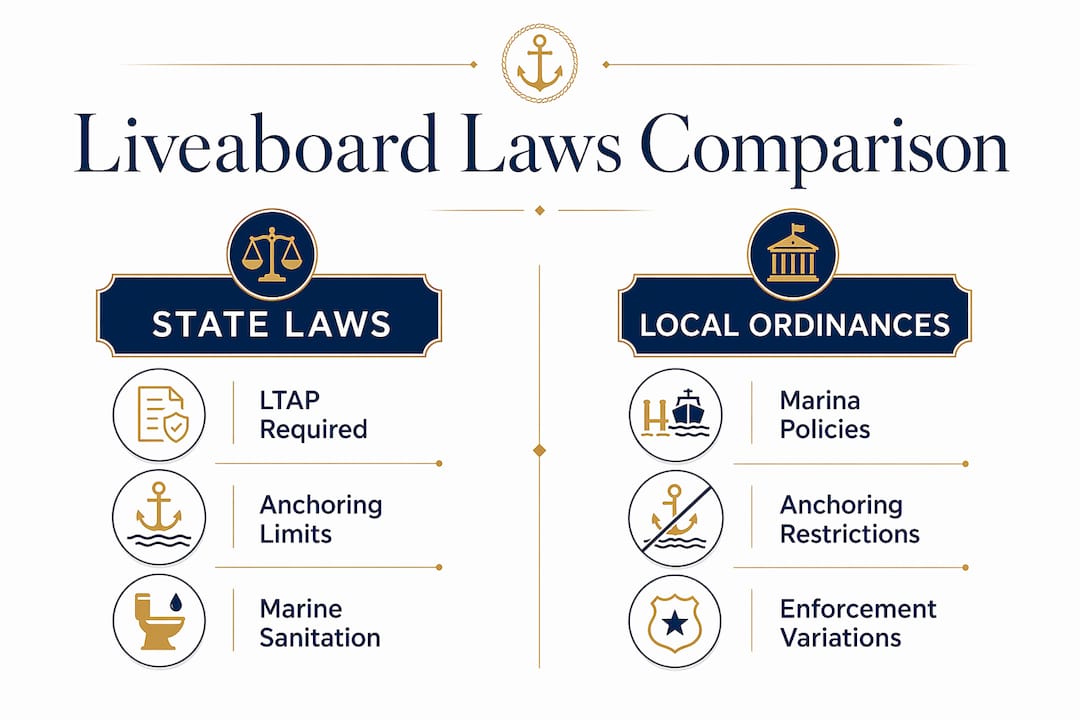
That gap between state permission and local prohibition catches many boaters off guard. You can hold a valid LTAP from the FWC and still be in violation of a local ordinance. State compliance does not override municipal rules. You need to check both layers before dropping anchor anywhere you plan to stay long-term.
Marina policies add a third layer. Many marinas impose caps on the number of liveaboard slips they offer, charge premium fees above standard slip rates, and include contract clauses that can restrict liveaboard use even when state law would otherwise allow it. A marina contract is a legal document. Read every clause before signing.
Here is the practical sequence for choosing a legal liveaboard location in Florida:
- Identify your target anchorage or marina and check whether it falls within a designated anchoring limitation area under the 2026 law.
- Contact the local municipality or county to confirm whether liveaboard vessels are permitted in that specific zone.
- If choosing a marina, request the full liveaboard policy in writing before committing to a slip.
- Verify the marina’s MSD pump-out facilities are accessible and operational.
- Confirm your vessel’s classification under Florida Statute 327.02(23) to understand which rules apply to you specifically.
Pro Tip: Call the harbormaster before you arrive. A five-minute conversation can save you from a citation on day one.
What are the penalties for violating Florida liveaboard regulations?
Florida marine violations are civil, not criminal, but the financial consequences escalate quickly. The fine structure for anchoring violations starts at $100 for a first offense and rises to $500 for repeat violations. Sewage discharge carries a flat $250 penalty per incident.
| Violation | First Offense | Repeat Offense |
|---|---|---|
| Anchoring without LTAP | $100 | Up to $500 |
| Sewage discharge | $250 | $250+ escalating |
| Expired registration | Citation issued | Escalating fines |
| Unpermitted mooring | Citation and removal | Criminal charges possible |
Three citations within 24 months can trigger vessel removal proceedings. That is not a theoretical outcome. Palm Beach authorities have actively prosecuted owners for illegal moorings, treating unpermitted mooring structures as navigational hazards and, in some cases, as litter under Florida law. Criminal charges for fraud have also been filed in connection with unauthorized mooring installations.
“Unpermitted mooring systems are considered litter in Florida waters, leading to potential criminal charges and vessel removal.” — Florida enforcement authorities, Palm Beach
The legal classification of your vessel also affects your exposure. Under the Lozman Supreme Court test, a structure qualifies as a vessel only if it is practically designed for transportation. A floating home that cannot move under its own power may be classified differently, which changes which statutes apply and which courts have jurisdiction. Getting that classification wrong from the start creates compounding legal risk.
What practical steps can Florida residents take to legally live aboard?
Legal liveaboard life in Florida is genuinely achievable. The rules are detailed, but they are not impossible to follow. The key is building a compliance routine before you anchor, not after a citation arrives.
A solid boat management plan covers most of the bases. Start with your vessel’s legal classification, confirm your LTAP status, and map out the local ordinances for every area you plan to use as a home base. Treat compliance as part of your regular maintenance schedule, not a one-time task.
- LTAP registration: Apply through the FWC portal before your 14th anchoring day in any 30-day window. Keep a printed copy aboard.
- Local ordinance research: Search the municipal code for your target city or county. Look specifically for terms like “liveaboard,” “anchoring limitation,” and “mooring permit.”
- Marina contract review: Ask for the liveaboard policy addendum before signing. Confirm whether the marina’s liveaboard cap has open slots.
- MSD maintenance: Schedule pump-outs regularly and log each one with the date, location, and facility name. Keep those records for 12 months minimum.
- Vessel registration: Florida requires all motorized vessels to be registered with the Florida Department of Highway Safety and Motor Vehicles (DHSMV). Expired registration is a citable offense even if your LTAP is current.
- Annual permit renewal: Mark your LTAP renewal date on your calendar. A lapsed permit resets your compliance status to zero.
Checking the Florida yacht safety checklist for 2026 is a practical way to cross-reference your vessel against current state and local requirements. Safety compliance and legal compliance overlap more than most boaters realize.
Key Takeaways
Florida liveaboard compliance requires a valid LTAP, local ordinance research, functioning marine sanitation devices, and current vessel registration before anchoring long-term.
| Point | Details |
|---|---|
| LTAP is mandatory | Any vessel anchoring 14+ days in 30 requires a free FWC Long-Term Anchoring Permit. |
| Local rules override state permits | Palm Beach and other municipalities can ban liveaboards even where state law permits anchoring. |
| Penalties escalate fast | Anchoring fines start at $100 and reach $500; three citations in 24 months can trigger vessel removal. |
| Sanitation records are required | Pump-out logs must be kept for one year and are subject to inspection. |
| Marina contracts carry legal weight | Liveaboard caps and contract clauses can restrict your rights beyond what state law requires. |
What I’ve learned watching Florida liveaboard enforcement tighten
The shift I’ve noticed over the past few years is real. Enforcement in Florida waters is no longer occasional. Municipalities like Palm Beach have moved from issuing warnings to prosecuting owners, and the 2026 anchoring limitation law signals that the state is following the same direction. The days of quietly anchoring indefinitely in a favorite spot are over in most populated areas.
What surprises most new liveaboards is how little the state permit protects them at the local level. I’ve spoken with boaters who held valid LTAPs and still received citations from local marine patrol because the municipality had its own ordinance on the books. The FWC permit is necessary but not sufficient. You need to do the local homework every single time you choose a new location.
The other thing worth saying plainly: vessel condition matters for compliance. A boat with a broken MSD, failing plumbing, or outdated navigation equipment is not just a safety risk. It is a compliance liability. Inspectors notice. Keeping your vessel in good mechanical shape is the most underrated part of staying legal as a liveaboard. The marine lighting and compliance requirements alone catch people off guard during routine checks.
My honest advice is to treat liveaboard compliance the way you treat engine maintenance. Do it on a schedule, document everything, and never assume last year’s research still applies. Florida marine zoning laws and local ordinances change. Stay current, stay visible with your marina manager, and build a relationship with local authorities before you need one.
— Jason
Mazzamarine: keeping your liveaboard vessel ready for 2026
Living aboard a vessel in Florida means your boat is your home, and your home needs to work perfectly every day. A failing marine sanitation system, outdated navigation equipment, or neglected plumbing can turn a compliance issue into a citation overnight.
Mazzamarine’s network of Florida yacht experts covers urgent repairs, complete maintenance packages, plumbing, nav and electronics upgrades, and full refits. Whether your vessel needs a quick fix or a thorough overhaul, the team at Mazzamarine brings the same passion for craftsmanship that Mino and Luigi built the company on. Check the 2026 marine repair guide to see what your vessel may need this season, or review the signs you need yacht repairs before your next inspection.
FAQ
What is the Long-Term Anchoring Permit in Florida?
The Long-Term Anchoring Permit (LTAP) is a free, annual permit required by the FWC for any vessel anchoring 14 or more days within a 30-day period. It must be updated if the vessel moves more than one nautical mile from its registered location.
Can I legally live aboard a boat anywhere in Florida?
No. State law allows liveaboard vessels with a valid LTAP, but local municipalities like Palm Beach can and do prohibit liveaboard activity outside approved marinas or mooring fields.
How long can I anchor in one spot under the 2026 Florida law?
Starting june 1, 2026, boaters in designated anchoring limitation areas cannot anchor more than 45 consecutive days without leaving for at least 24 hours. Fort Pierce Inlet is one of the actively enforced zones.
What are the fines for liveaboard violations in Florida?
Anchoring without a permit starts at a $100 fine and escalates to $500 for repeat offenses. Sewage discharge carries a $250 penalty. Three citations within 24 months can result in vessel removal.
Do marina contracts override Florida state liveaboard laws?
Marina contracts are legally binding and can restrict liveaboard use beyond what state law requires. A marina can cap the number of liveaboard slips and prohibit residential use in its contract even if the FWC permits anchoring in that area.
Recommended
Text or Call 954-330-9653 Schedule Appointment
Mazza Marine Yacht Services & Refit

Fiberglass Upgrades and Damage Repair

Premium Yacht Paint/ Faux Teak

Fishing: Custom Rods, Reels,Tackle

Electrical, Electronics and Navigation

Paint, Hull and Gelcoat

Teak Decks, Wood Cabinets, Carpentry

Canvas, Enclosures and Upholstery

Mechanical, Repower and Running Gear

Plumbing, Bilge and Thru-Hulls

Welding and Custom Fabrication

Interior Refit And Past Work
Get your yacht value Estimate
"*" indicates required fields