
View Our Recent Work:

Custom marine aluminum fabrication builds and repairs the parts that keep a boat running and looking sharp: hulls, fuel tanks, t-tops, railings, casting platforms, and thru-hull assemblies. Hire a dedicated fabrication shop when the job involves structural welding, tank pressure ratings, or anything load-bearing; a smaller repair outfit can usually handle cosmetic patches. Before signing anything, confirm two things: the alloy specified for the job and the welding procedures the shop actually follows.
TL;DR:
- Choose alloy 5083 for load-bearing structural components to ensure long-lasting strength in saltwater conditions.
- Request certification records, weld photos, and nondestructive testing reports to verify quality and safety before project acceptance.
- Be aware that custom tank lead times depend heavily on whether it’s a first build or a repeat design, ranging from two to three weeks or faster.
- Prevent galvanic corrosion by isolating dissimilar metals with non-metallic gaskets and using sacrificial anodes tailored to your hull.
- Prioritize shops with proper documentation, dedicated aluminum tooling, and a full project scope management approach over appearance-focused cosmetic quality.
Table of Contents
- What Marine Aluminum Fabrication Shops Actually Do
- Which Aluminum Alloys Work Best for Marine Projects?
- What Welding Process Should Your Fabricator Use?
- Why Does Galvanic Corrosion Threaten Aluminum Boats?
- How Do You Scope a Project and Choose the Right Fabricator?
- Why Mazza Marine for Your Fabrication Project
- What Inspection Standards Confirm Quality Aluminum Welds?
- How Should You Maintain Fabricated Aluminum Components?
- An Owner-First Take on Aluminum Fabrication
- Get a Custom Aluminum Fabrication Estimate From Mazza Marine
- Sources
What Marine Aluminum Fabrication Shops Actually Do
A capable fabrication shop covers the full arc of a project, from CAD drawings to a finished, coated part bolted onto your boat. Most shops handle design and modeling, plate cutting (often CNC plasma or waterjet), plate rolling for curved hull sections, forming, TIG and MIG welding, machining, and final finishing. That range matters because a shop that only welds, without design or forming capability, will bounce your project to a subcontractor, adding time and cost you never see itemized.
The deliverables you’ll typically commission include:
- Custom fuel and water tanks built to your hull’s exact cavity dimensions
- T-tops and hardtops, including tower and outrigger mounts for sportfish upgrades
- Railings, ladders, and casting platforms
- Hull modifications, transom extensions, and structural repairs
- Thru-hull fittings and reinforced mounting plates for heavy equipment
Lead times vary sharply between a one-off prototype and a repeat production run. A custom tank built from scratch might take two to three weeks once drawings are approved, while a shop that has built the same platform design a dozen times can turn it around faster because the jigs and cut files already exist. Ask upfront whether your project is a first article or a repeat build, because that answer drives your timeline more than anything else.
Before accepting delivery, request weld photos documenting each joint, pressure or vacuum tests for any tank, and nondestructive testing (dye penetrant or ultrasonic) on structural welds where failure would be dangerous. A shop that hesitates to provide these isn’t the one you want holding your fuel.
Which Aluminum Alloys Work Best for Marine Projects?
Alloy choice determines whether your part lasts fifteen years or fails at the weld seam in three. The 5xxx series, magnesium based, is the marine standard for one reason: it resists saltwater corrosion and retains most of its strength after welding. Within that family, 5083 is specified for high-load welded structural components because it holds onto roughly 300 MPa of tensile strength even through the heat of welding, while 5052 runs a lower 210 to 260 MPa and is better suited to formed sheet metal like fairings or lighter panels.
The 6xxx series, most commonly 6061, machines and extrudes beautifully, which is why it shows up in railings, hardware, and non-structural fittings. Its tradeoff: welding creates a heat-affected zone where strength drops noticeably, so design calculations should assume reduced strength in the HAZ for any load-bearing 6061 weld.
Here’s a rule of thumb worth writing down:
- 5083 for welded structural hulls and load-bearing frames
- 5052 for formed sheet panels, fairings, and lighter enclosures
- 6061 for machined fittings, extrusions, and hardware that won’t carry primary structural load
Statistic to remember: Aluminum construction can cut structural weight by 55 to 67 percent compared to steel, which is exactly why sportfish builders and commercial operators keep specifying it despite the higher material cost per pound. Avoid 2000 series and 7000 series alloys for marine hardware entirely. Both are common in aerospace, but their alloying elements make them poor performers in chloride-heavy environments.
What Welding Process Should Your Fabricator Use?
Two processes handle the overwhelming majority of marine aluminum joining, and knowing which one fits your project helps you sanity-check a quote. GMAW, commonly called MIG, is the workhorse for production welding. It’s faster and handles thicker material efficiently, which is why GMAW is used for the majority of joining in welded aluminum hulls. GTAW, or TIG, trades speed for control and shows up wherever precision matters more than throughput: thin-gauge panels, intricate fittings, and cosmetic welds that will stay visible on a finished console or railing.
For thick plate work, low-distortion needs, or large platform builds, some shops now offer friction stir welding or laser welding. These advanced methods reduce weld-induced deformation and residual stress, a real advantage on big structural sections where warping from conventional welding heat can throw off tolerances.
None of this matters if the shop skips the paperwork. A qualified fabricator works from a documented Welding Procedure Specification (WPS) backed by a Procedure Qualification Record (PQR), uses welders certified to that specific procedure, and selects filler metal matched to the base alloy family. Distortion control, through sequencing, fixturing, and heat management, separates a straight hull panel from one that needs re-forming.
- Ask for the shop’s WPS and welder certification records before work begins
- Request a test weld or coupon sample if you’ve never worked with the shop
- Review inspection reports and photos from a comparable prior project
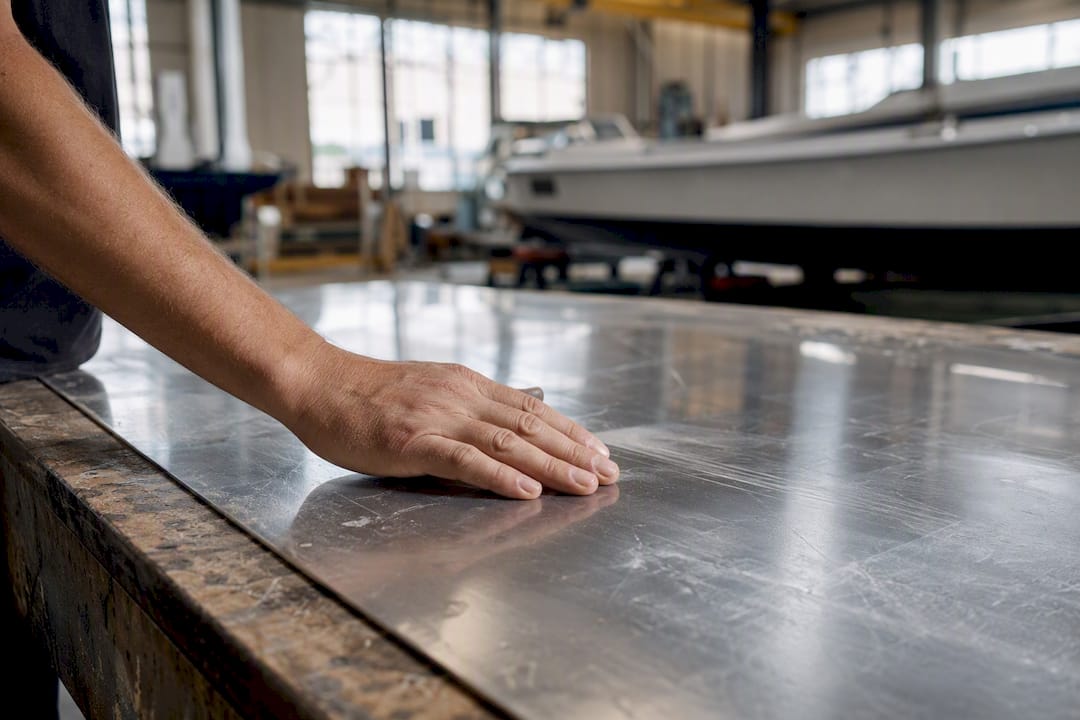
Pro Tip: Ask to see a finished project similar to yours in person, not just photos. Run your hand along the weld seam. A properly sequenced weld looks clean and consistent; a rushed one shows heat discoloration and uneven bead spacing you can actually feel.
For a deeper look at qualification standards and inspection practices, Mazza Marine’s welding guide breaks down what proper documentation should include.
Why Does Galvanic Corrosion Threaten Aluminum Boats?
Aluminum sits low on the galvanic scale, which means almost any other metal on your boat wants to corrode it. Copper, brass, and bronze are the worst offenders. Galvanic potential runs significantly higher when aluminum contacts copper or brass than when it contacts stainless steel, so a bronze thru-hull bolted directly to an aluminum hull is a corrosion problem waiting to happen.
Practical prevention comes down to four moves:
- Insert non-metallic gaskets or isolating washers between dissimilar metals
- Seal fastener penetrations with marine-grade sealant to block electrolyte contact
- Use insulated or coated fasteners wherever aluminum meets another metal
- Apply sacrificial anodes or a cathodic protection system sized to your hull
Shop practices matter just as much as design. Stray iron particles from shared grinding wheels or steel tooling embed in aluminum surfaces and trigger localized corrosion once the boat hits saltwater. A shop worth hiring keeps dedicated aluminum work areas and tooling, separate from anything used on steel.
How Do You Scope a Project and Choose the Right Fabricator?
Walking into a quote conversation prepared saves you weeks of back-and-forth and protects you from underbid jobs that fall apart mid-project. Gather these before you call anyone:
- Drawings or sketches, even rough ones, with rough dimensions
- Load criteria: what the part needs to support and under what conditions
- Mounting details for where the piece attaches to the existing hull or deck
- Access and transport constraints, especially for larger platforms or tanks
Once you’re talking to fabricators, ask direct questions: What alloy do you spec for this application, and why? Can you show me a WPS and PQR for this type of joint? Are your welders certified to that procedure? How do you pressure test tanks? What’s your realistic lead time, and are you insured for a job this size?
Cost drivers break down predictably: plate thickness and total weld length usually dominate, followed by finishing (anodizing costs more than a simple coating) and any testing you require, like NDT or pressure certification. Timelines for custom work commonly run two to six weeks depending on complexity and the shop’s backlog.
Pro Tip: A fabricator who can’t produce a written warranty or won’t specify acceptance testing in the contract is telling you something. Get both in writing before a deposit changes hands.
Watch for red flags: no fixed shop address, reluctance to share past project photos, and vague answers about welder certification. Your contract should specify warranty terms, acceptance tests, and a firm delivery window, not just a price.
Why Mazza Marine for Your Fabrication Project
Mazza Marine’s welding and custom fabrication work spans exactly the territory covered above: custom tanks, thru-hulls, structural repairs, and full refits, built for Florida’s saltwater conditions rather than a generic catalog spec. Brothers Mino and Luigi grew up around boats in Italy before building a network of vetted Florida yacht specialists, and that network is what lets Mazza Marine coordinate fabrication alongside paint, electrical, and mechanical work under one point of contact instead of three separate vendors.
Owners typically come away with a hull repair, custom tank, or platform build that matches their original spec and passes the pressure and weld checks outlined earlier in this guide. The practical next step is simple: request a site visit or estimate, and Mazza Marine’s team will scope the alloy, welding approach, and timeline specific to your boat.
What Inspection Standards Confirm Quality Aluminum Welds?
Quality assurance in marine aluminum fabrication isn’t a single checklist item. It’s a chain of verification that starts before the first weld and continues after installation. Reputable shops follow welding codes that govern welder qualification, procedure documentation, and acceptance criteria, most commonly referencing AWS standards for structural aluminum welding.
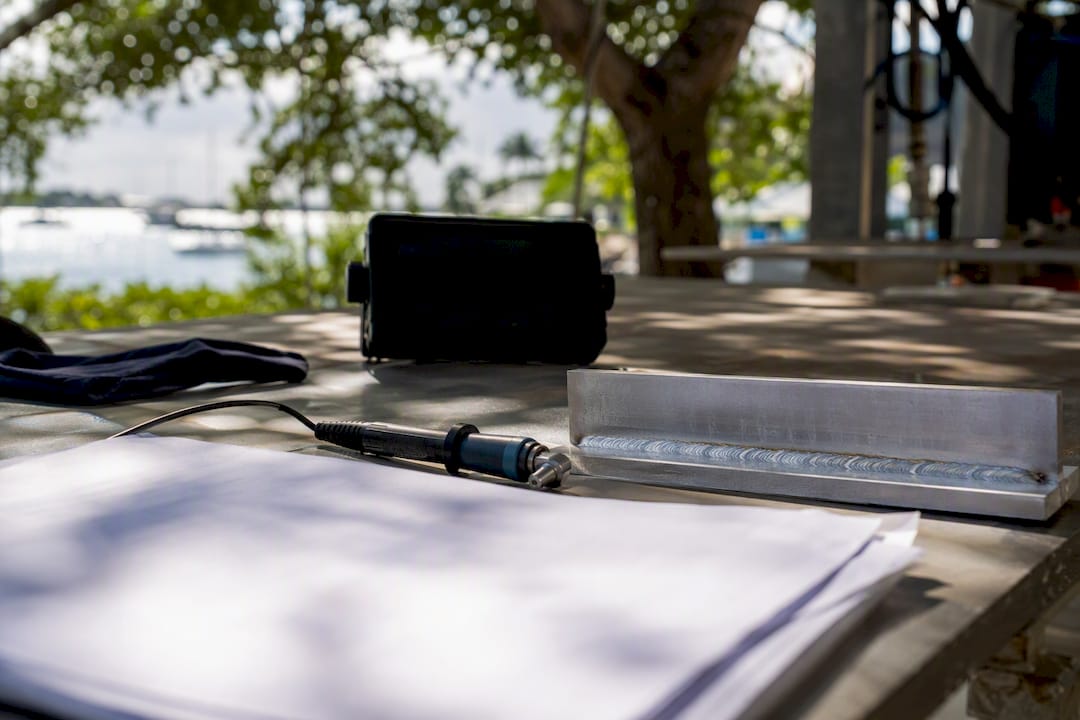
Visual inspection catches the obvious problems first: undercut, porosity, incomplete fusion, and inconsistent bead profile. A trained eye or a certified welding inspector (CWI) can flag most defects this way, but visual checks alone won’t catch subsurface flaws.
That’s where nondestructive testing (NDT) comes in. Dye penetrant testing reveals surface-breaking cracks invisible to the naked eye. Ultrasonic testing checks weld integrity deeper in the material, which matters most on structural joints and pressure-bearing tanks where a hidden flaw could fail under load. Radiographic testing, while less common in small-shop marine work, sometimes gets specified on critical structural welds for commercial vessels.
For tanks specifically, pressure or vacuum testing confirms the weld seams hold under the conditions the tank will actually face at sea, not just at rest in the shop. Ask for a written test report, not a verbal assurance.
Documentation ties it together. A shop that maintains WPS and PQR records, welder certification logs, and inspection reports for every job isn’t doing extra paperwork for show. That paper trail is what protects you if a weld fails under warranty and you need to establish what procedure was actually followed.
How Should You Maintain Fabricated Aluminum Components?
Fabricated aluminum parts need less babying than teak, but neglect still catches up with them faster than most owners expect. Rinse welded joints and fittings with fresh water after every saltwater trip, paying particular attention to crevices around railings and tank mounts where salt crystals accumulate and hold moisture against the metal.
Inspect anodes on a quarterly basis, more often if your boat sits in a marina with stray electrical current from nearby vessels. A sacrificial anode that’s more than half consumed needs replacing before it stops doing its job. Check isolating gaskets and fasteners near dissimilar metal connections annually. Sealant breaks down under UV and vibration, and once it fails, galvanic corrosion gets a direct path.
Watch welded seams for white, powdery oxidation, which usually signals surface corrosion rather than structural failure, but should still get cleaned and re-coated before it spreads. Pitting or discoloration concentrated at one specific joint, rather than spread evenly, often points to a galvanic issue at that connection rather than general wear.
Reapply protective coatings on schedule rather than waiting for visible failure; using a marine ceramic coating can greatly enhance corrosion protection and longevity of your aluminum parts. Anodized and powder-coated surfaces both degrade under sun and salt exposure over years, and a fresh coat is far cheaper than fixing a corroded fitting after the fact. If a coating starts chalking or peeling, that’s your signal to act before the bare metal beneath it starts pitting.
An Owner-First Take on Aluminum Fabrication
The advice most owners get is backwards: shop for the lowest quote first, then worry about alloy and welding quality later. Flip that order. A cheap 6061 weld on a load-bearing frame will cost you more in five years than paying for 5083 and a documented WPS upfront ever would.
The most overrated factor in this whole process is finish quality. A gorgeous bead pattern looks great in a photo, but it tells you nothing about whether the welder followed a qualified procedure or matched filler metal correctly. Cosmetic polish is the easiest thing to fake and the least useful thing to judge a shop by.
What actually predicts a good outcome is paperwork and cross-contamination discipline. A shop that keeps aluminum tooling separate from steel work and hands you a PQR without being asked is a shop that treats corrosion and weld integrity as a process, not an afterthought. Prioritize that over a shiny quote or a slick portfolio photo every time.
— Jason
Get a Custom Aluminum Fabrication Estimate From Mazza Marine
Mazza Marine handles the entire fabrication arc under one roof: design, alloy selection, welding, thru-hull installation, and finish work, so you’re not coordinating three separate vendors for one hull repair or custom tank build. That end-to-end management is the real advantage over piecing a project together yourself across a welder, a coatings shop, and a separate installer, each with their own schedule and their own excuses when something slips.

Whether you’re planning a structural hull modification, a custom fuel tank, or a full sportfish platform build, the team can scope your alloy and welding approach on-site rather than guessing from photos over email. Start with a marine repair estimate and get a realistic timeline and cost breakdown before you commit to anything.
Sources
- 5000 series aluminum properties: 5052 and 5083 (MarineAlu)
- 5052 vs 6061 vs 5083 Aluminum for Marine Hardware | PW Marine OEM
- Recent advances in aluminum welding for marine structures (MDPI review, 2024)
- Aluminium vs steel (BoatDesign forum thread)
Recommended
Text or Call 954-330-9653 Schedule Appointment
Mazza Marine Yacht Services & Refit

Fiberglass Upgrades and Damage Repair

Premium Yacht Paint/ Faux Teak

Fishing: Custom Rods, Reels,Tackle

Electrical, Electronics and Navigation

Paint, Hull and Gelcoat

Teak Decks, Wood Cabinets, Carpentry

Canvas, Enclosures and Upholstery

Mechanical, Repower and Running Gear

Plumbing, Bilge and Thru-Hulls

Welding and Custom Fabrication

Interior Refit And Past Work
Get your yacht value Estimate
"*" indicates required fields