
View Our Recent Work:

Overview: If your vessel needs electrical work, hire an ABYC-certified marine electrician — not a general contractor, not a residential electrician. The salt air, vibration, and humidity aboard a yacht create failure conditions that standard household wiring simply wasn’t built to survive. For Florida owners, Mazzamarine connects you with ABYC-aligned technicians who follow standards E-11 and E-2, bring documented commissioning protocols, and know the difference between a bonding fault and a corroded terminal. Before the tech arrives, pull your system diagrams, maintenance logs, and battery specs. That preparation alone can cut diagnostic time significantly.
Key Takeaways
Qualified, ABYC-aligned marine electricians are the only professionals equipped to safely install, repair, and commission electrical systems on vessels operating in salt-water environments.
| Point | Details |
|---|---|
| Hire ABYC-certified technicians | Verify certificate numbers and confirm familiarity with E-11, E-2, and E-10 before any work begins. |
| Prepare your documentation | Maintenance logs and wiring diagrams can cut diagnostic time from a full day to an hour. |
| Separate diagnostic from repair costs | A line-item quote protects you if the diagnosis reveals a simpler fix than originally scoped. |
| Insist on marine-grade materials | Tinned copper conductors and marine-rated connectors resist salt-air oxidation; non-marine parts void insurance coverage. |
| Mazzamarine for Florida owners | ABYC-aligned technicians, mobile response, documented commissioning, and full-refit capability across Florida. |
Table of Contents
- What do marine electricians actually do on your vessel?
- Common electrical faults that need a specialist’s hands
- What certifications should you verify before hiring?
- How a professional job runs from first call to commissioning
- What to expect from emergency and mobile repair services
- How much does marine electrical work cost, and how long does it take?
- How to choose a marine electrician: checklist and red flags
- Why marine-grade wiring and ABYC standards protect your investment
- Insurance and warranty coverage for marine electrical work
- Safety considerations when hiring a boat electrician
- Where do marine electricians typically work in the United States?
- A word from the field: what a maintenance log actually saves you
- Mazzamarine: Florida’s trusted marine electrical service partner
- Sources
What do marine electricians actually do on your vessel?
A marine electrician specializes in installing, maintaining, and repairing every electrical system aboard a vessel, from basic lighting circuits to full AC/DC distribution networks and integrated navigation electronics. The scope goes well beyond swapping a breaker. These technicians handle fault diagnosis, load testing, corrosion assessment, and commissioning tasks critical to vessel electrical system reliability.
Here’s a practical breakdown of what you’d hire them for:
- Power generation and charging: Battery bank design and installation, alternator wiring, shore-power connections, inverter/charger integration, and generator commissioning
- Distribution systems: DC panels, AC panels, circuit breakers, bus bars, and wire runs throughout the vessel
- Marine electronics integration: Navigation systems, radar, AIS, VHF, chartplotters, and autopilot wiring — see nav electronics integration for deeper context
- Corrosion and bonding: Galvanic isolators, cathodic protection wiring, bonding system inspections, and stray-current testing
- Shore and dock work: Shore-power pedestal wiring, marina electrical connections, and thru-hull electrical services
- Routine and emergency work: Annual inspections, LED lighting retrofits, fault diagnosis, and emergency shore-power repairs
| Service Category | Typical Scope |
|---|---|
| Power generation | Inspection, repair, upgrade, commissioning |
| Distribution | Inspection, repair, panel replacement |
| Electronics | Integration, upgrade, commissioning |
| Shore/dock work | Repair, installation, verification |
Common electrical faults that need a specialist’s hands
Marine electricians must use corrosion-resistant materials and follow marine-specific installation practices because salt, vibration, and humidity accelerate failures in ways that can masquerade as unrelated problems. Knowing the symptom-to-cause pattern helps you brief the technician accurately and avoid paying for unnecessary parts.
- Flickering or intermittent lights: Usually loose connections, corroded terminals, or an inverter output fault. Don’t assume a bulb problem.
- Battery not holding charge: Points to a failing charger controller, a weak alternator, or a battery cell that’s past its cycle life. A load test confirms which.
- Shore power tripping GFI breakers: Often a loose neutral at the pedestal, a wiring fault in the shore-power inlet, or a ground-fault in an onboard appliance.
- Visible corrosion on fittings or through-hulls: A strong signal of stray current or a bonding system failure. Left unchecked, this eats through bronze hardware faster than most owners expect.
- Inverter/charger faults or error codes: Can stem from firmware issues, incorrect settings, or a grounding problem. Replacing the unit without diagnosing the root cause often means the replacement fails too.
Diagnostic time is frequently the largest cost driver on any electrical job because integrated systems require circuit-by-circuit isolation testing. Arrive prepared: bring your maintenance logs, recent repair records, wiring diagrams, battery specs, and photos of your panels and label plates.
What certifications should you verify before hiring?
The critical differentiator for qualified boat electricians is adherence to ABYC standards rather than the NEC (National Electrical Code), which governs residential and commercial buildings but doesn’t address marine-specific failure modes like vibration fatigue and salt-air oxidation.
Ask for these credentials specifically:
- ABYC Marine Electrical Technician or Certified Advisor designation with a certificate number you can verify
- Familiarity with E-11 (AC and DC electrical systems on boats), E-2 (cathodic protection), E-10 (storage batteries), and A-31/A-32 (battery chargers and inverters)
- Documented test protocols: voltage-drop tests, insulation resistance (megger) tests, and continuity checks on completed work
- Proof of maritime-specific liability insurance and written warranty terms covering both workmanship and parts
- References or case studies from vessels of similar size and complexity to yours
Pro Tip: ABYC recertifies technicians every five years, so ask for the certification date alongside the certificate number. A credential issued a decade ago with no renewal is a yellow flag.
The ABYC Marine Electrical Certification course covers grounding and bonding, DC and AC systems, batteries, inverters, and the full suite of relevant standards including E-11, E-2, E-10, A-31, A-32, E-13, and E-30. A technician who has passed the proctored exam has demonstrated tested competence, not just field time.
How a professional job runs from first call to commissioning
A well-run marine electrical service follows a clear sequence. Here’s what to expect:
- Initial intake: You describe symptoms, share maintenance logs, and provide system diagrams. The tech reviews vessel type, age, and known history before arriving.
- Onboard inspection and diagnostic testing: Meter readings, load tests, insulation resistance tests, and visual inspection of panels, terminals, and wire runs.
- Written scope and quote: Line-item parts, labor hours, and diagnostic fees listed separately. Permit requirements for dock or shore-power work are flagged here.
- Scheduled execution with milestone dates: For multi-day jobs, you receive a timeline with clear checkpoints.
- Installation and secure terminations: All conductors terminated with marine-rated connectors, properly supported and labeled.
- Commissioning and load testing: Voltage-drop tests, polarity checks, bonding verification, shore-power pedestal confirmation, and full system commissioning under load.
- Handover documentation: A written commissioning report, updated wiring diagrams, and recommended follow-up intervals.
A quote that bundles diagnostic and repair labor into a single flat fee is a red flag. Separating them protects you if the diagnostic reveals a simpler fix than originally scoped.
What to expect from emergency and mobile repair services
Not every electrical fault waits for a convenient Monday morning. Dead batteries, shore-power failures, generator outages at anchor, and navigation-electronics failures mid-passage all demand fast response. Here’s what qualified mobile marine electrical services typically offer:
- On-dock diagnostics and temporary repairs for battery, shore-power, and panel faults
- At-anchor response for critical navigation or safety-system failures
- Generator fault diagnosis and interim fixes pending shop work
- Inboard fire-risk assessment when wiring smells, breakers trip repeatedly, or insulation shows heat damage
Full repairs sometimes require haul-out or shop access, particularly for below-waterline wiring or major panel replacements. A good technician tells you upfront which repairs are field-viable and which aren’t.
Pro Tip: Keep a short emergency file on your phone: battery serial numbers, inverter model and firmware version, a photo of your shore-power pedestal label, and your marina’s electrical contact. A technician who arrives with that information already in hand can often diagnose and fix in a single visit instead of two.
How much does marine electrical work cost, and how long does it take?
Hard dollar figures vary too widely by vessel and region to quote reliably, but the cost drivers and timelines are consistent. CareerExplorer reports that marine electricians earn salaries that vary widely depending on factors like experience and location, which gives you a sense of the labor market behind your service quote.
The main factors that move the price:
- Diagnostic time: Often the single largest line item on complex jobs because integrated systems require isolation testing circuit by circuit
- Vessel size and access: A 65-foot sportfish with a full engine room is a different proposition than a 32-foot center console
- Parts: Marine-grade tinned wire, marine-rated connectors, and quality circuit breakers cost more than residential equivalents, and correctly so
- Travel and haul-out fees: Marina-side work avoids lift costs; below-waterline or major panel work may not
| Job Type | Typical Timeline | Primary Cost Drivers |
|---|---|---|
| Emergency diagnostic | Hours | Diagnostic labor, travel |
| Shore-power repair | Same day to 2 days | Parts, diagnostic labor |
| Inverter/charging system install | 1–3 days | Parts, commissioning time |
| Full AC/DC rewire | Days to weeks | Vessel size, wire runs, panels |
How to choose a marine electrician: checklist and red flags
The hiring checklist
- Verify ABYC Marine Electrical Technician credentials and certificate number
- Ask for a sample commissioning report from a comparable vessel
- Confirm maritime-specific liability insurance and written warranty terms
- Request a line-item quote that separates diagnostic fees from repair labor
- Check references or case studies for vessels of similar class and complexity
Questions worth asking directly
- Do you follow ABYC E-11 and E-2 on every job?
- Can you provide your standard commissioning checklist before we start?
- How do you test for stray current and galvanic corrosion?
- What wire and connector brands do you specify, and why?
Red flags to walk away from
- Reluctance to show certification numbers or insurance documents
- Flat-rate quotes with no diagnostic line item
- Insistence on non-marine-grade wire or generic automotive connectors
- No written testing or commissioning procedure offered
Why marine-grade wiring and ABYC standards protect your investment
Tinned copper conductors are the technical baseline for marine wiring, and the distinction from untinned copper matters more than most owners realize. Untinned copper oxidizes rapidly in salt air, increasing resistance, generating heat, and eventually failing at terminations. Tinned conductors resist that oxidation, which is why ABYC standards and the ABYC Marine Electrical Certification curriculum treat them as a requirement, not a preference.
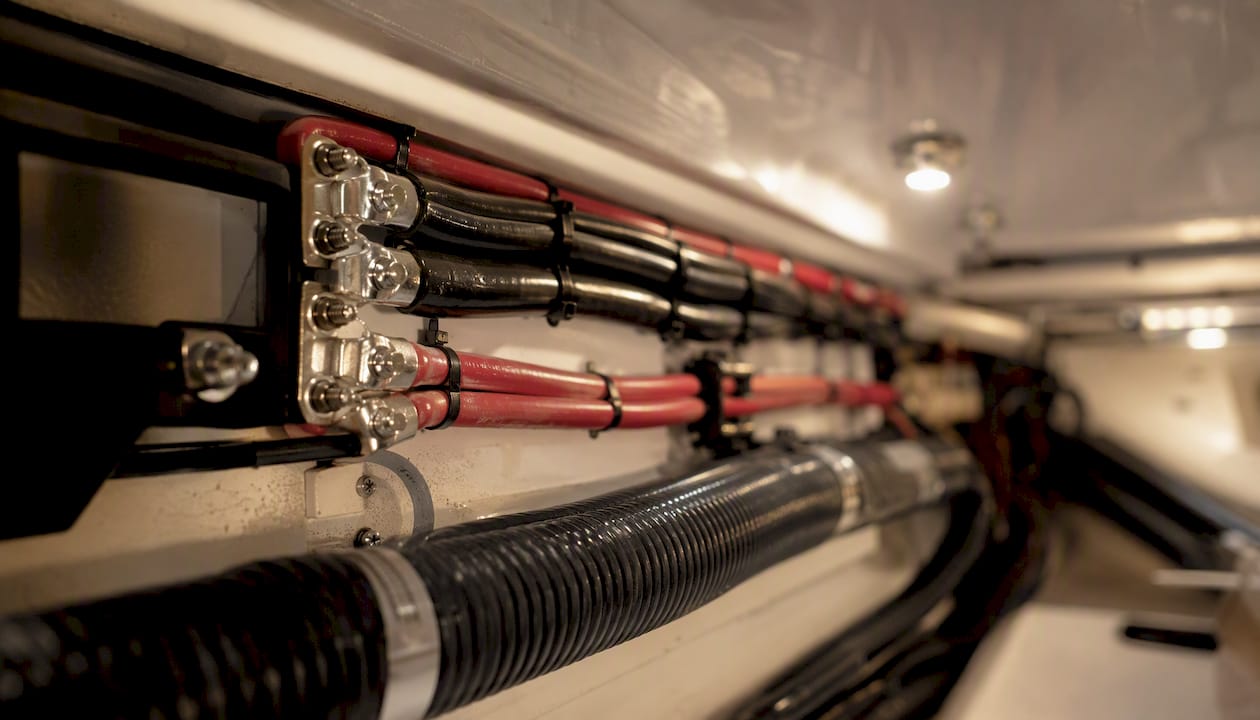
Bonding and cathodic protection are equally critical. A properly bonded vessel connects all underwater metal components to a common ground, which, combined with a galvanic isolator on the shore-power connection, limits the electrochemical reactions that eat through propeller shafts, through-hulls, and rudder hardware. Stray current from a faulty bilge pump circuit or a neighboring vessel at the marina can accelerate that corrosion dramatically, and the symptom often looks like a wiring fault rather than a corrosion problem.
Owner-action checklist for annual electrical health:
- Schedule an insulation resistance (megger) test on all circuits
- Visually inspect all accessible terminals for green or white oxidation
- Confirm bonding continuity at through-hulls and underwater metals
- Update your maintenance log with dates, readings, and any replaced components
- Review your galvanic isolator for continuity and replace if it shows signs of failure
Pro Tip: Photograph every terminal block and label plate after any service visit. Those photos become your baseline for the next technician and are often required by insurers when filing a claim for electrical damage.
For owners planning LED lighting retrofits, the same ABYC-compliant approach applies: tinned wire, marine-rated connectors, and a commissioning check after installation.
Insurance and warranty coverage for marine electrical work
Marine insurance policies typically require that electrical work be performed by a qualified technician and that the work meets recognized standards. ABYC compliance is the standard most underwriters reference. Work performed by an uncertified technician using non-marine-grade materials can void coverage for fire or electrical damage, which is a risk no owner should accept.
On the warranty side, ask for two separate guarantees: one on workmanship (the installation itself) and one on parts (manufacturer warranty passed through to you). A reputable technician provides both in writing before the job starts. Workmanship warranties typically cover the labor and terminations; parts warranties follow the manufacturer’s terms for the specific component.
Safety considerations when hiring a boat electrician
Marine electrical faults are a leading cause of vessel fires. The combination of fuel vapor, confined spaces, and high-amperage DC systems makes a poorly terminated connection far more dangerous aboard a yacht than in a residential setting. A few non-negotiable safety points:
Verify that the technician performs a gas-vapor check before any work near the engine room or fuel systems. Confirm that all new wire runs are properly supported and protected from chafe, particularly where they pass through bulkheads. Shore-power connections must be polarity-tested and GFI-verified before the vessel is left unattended. Any work near the battery bank requires proper fusing within 18 inches of the positive terminal, per ABYC E-11.
For owners researching yacht safety standards across commercial and private operations, the underlying electrical requirements are consistent: certified technicians, marine-grade materials, and documented commissioning.
Where do marine electricians typically work in the United States?
Marine electricians concentrate where the boats are. The highest-density service areas in the U.S. include South Florida (Miami, Fort Lauderdale, the Keys), the Gulf Coast (Tampa, Sarasota, Naples), the Chesapeake Bay region, the Pacific Northwest (Seattle, Puget Sound), and Southern California (San Diego, Newport Beach, Marina del Rey).
Florida stands out for sheer volume. The combination of year-round boating, a large sportfish and yacht charter fleet, and a dense marina infrastructure means demand for qualified marine electrical services in South Florida stays high throughout the year. Salt exposure in some regions is particularly aggressive, making adherence to ABYC-standard corrosion control both best practice and highly advisable for reliability and safety.
For owners outside these hubs, mobile technicians often travel to less-served marinas, though travel fees apply and complex work may still require trailering or motoring to a service yard.
A word from the field: what a maintenance log actually saves you
There’s a moment every experienced technician knows well. You arrive at a 58-foot sportfish, the owner says “the batteries keep dying,” and the first question is: when were they last load-tested? Half the time, nobody knows. The other half, there’s a log. When there’s a log, you’re diagnosing in an hour. Without one, you’re testing every circuit from scratch.
That’s not a complaint. It’s just the reality of how integrated these systems are. A single corroded terminal on a charging circuit can look like a battery failure, an alternator fault, or an inverter problem depending on where you start. The maintenance log tells you where to start. It also tells you what was replaced, what was tested, and what the readings were last season, which is worth more than any amount of visual inspection.
If you’re in Florida and you’re not sure whether your vessel’s electrical systems are up to standard, the right move is a professional inspection before something fails at the worst possible moment.
Mazzamarine: Florida’s trusted marine electrical service partner
Florida yacht owners deserve more than a technician who shows up with a multimeter and a guess. Mazzamarine connects you with ABYC-aligned marine electricians who bring documented commissioning protocols, marine-grade materials, and the kind of multi-discipline refit experience that comes from working on everything from 30-foot center consoles to 80-foot sportfish.

The difference is in the details: tinned-copper wiring, written warranties on workmanship and parts, mobile response across Florida’s marinas, and a network of specialists who handle electrical work as part of broader yacht maintenance packages when your vessel needs more than a single-trade visit. Whether you need an emergency diagnostic, a full AC/DC rewire, or an electronics integration ahead of a season, the process starts with one call.
Contact Mazzamarine for an inspection and quote. Review the marine repair service guide to understand what a full-service visit covers, or check the Florida yacht maintenance schedule to plan your next electrical service around the season.
Sources
- Certification Program – The American Boat & Yacht Council
- Marine Electrician | CareerExplorer
- What Is a Marine Electrician? | Tulsa Welding School
Recommended
Text or Call 954-330-9653 Schedule Appointment
Mazza Marine Yacht Services & Refit

Fiberglass Upgrades and Damage Repair

Premium Yacht Paint/ Faux Teak

Fishing: Custom Rods, Reels,Tackle

Electrical, Electronics and Navigation

Paint, Hull and Gelcoat

Teak Decks, Wood Cabinets, Carpentry

Canvas, Enclosures and Upholstery

Mechanical, Repower and Running Gear

Plumbing, Bilge and Thru-Hulls

Welding and Custom Fabrication

Interior Refit And Past Work
Get your yacht value Estimate
"*" indicates required fields