
View Our Recent Work:

Florida yacht owners face a question that comes up constantly: is that faded, chalky hull surface a gelcoat problem, a paint problem, or something else entirely? The confusion between gelcoat and marine paint is understandable, because both protect your hull and affect how your boat looks on the water. But treating them as interchangeable can lead to costly repair failures, bonding issues, and finishes that deteriorate far faster than they should. Understanding the real differences between these two systems is the foundation of smart, long-term yacht care in Florida’s punishing marine environment.
Table of Contents
- What is gelcoat and marine paint? Defining the basics
- Application and repair methods: Step-by-step comparison
- Maintenance burdens: What Florida owners need to know
- Compatibility and expert nuances: When to choose gelcoat or paint
- Our take: What most Florida yacht owners get wrong about gelcoat vs. paint
- Enhance and protect your yacht with expert help
- Frequently asked questions
Key Takeaways
| Point | Details |
|---|---|
| Gelcoat protects and shines | Factory gelcoat provides durable gloss and original protection—properly maintained, it lasts longer in Florida conditions. |
| Painting offers customization | Marine paint lets you refresh appearance and make easier spot corrections, as long as the surface is properly prepped. |
| Surface prep is critical | Thorough cleaning, sanding, and priming directly impact the outcome and longevity of any finish. |
| Choose based on goals | Match your coating decision to your desired mix of aesthetics, hassle, and long-term maintenance burden. |
| Expert advice avoids mistakes | Local Florida pros help select, repair, and maintain the right system for your specific needs, preventing costly errors. |
What is gelcoat and marine paint? Defining the basics
Before you can make the right decision for your yacht, you need to know exactly what each system is and what job it performs. These are not simply two versions of the same thing.
Gelcoat is the factory-applied fiberglass surface layer that protects the underlying fiberglass laminate and provides your hull’s signature gloss. It is a pigmented resin layer, typically polyester-based, applied during manufacturing inside the mold before the fiberglass layers are laid down. This means gelcoat is not simply a coating sitting on top of your hull. It is chemically bonded to the structure itself. Gelcoat is typically between 15 and 25 mils thick and acts as a moisture barrier, color layer, and UV shield all at once.
Marine paint, on the other hand, is an aftermarket topcoat that you or your crew applies after the boat leaves the factory. It is chosen specifically for color versatility, gloss enhancement, and an additional layer of protection. Paint systems vary widely: linear polyurethane paints (like Awlgrip or similar two-part systems) are favored for their durability and high gloss, while single-part alkyd enamels are more forgiving for DIY application. Explore marine paint systems to understand which formula suits your yacht’s needs before committing to a product.
Here is a quick breakdown of what sets each system apart:
- Gelcoat is applied at the factory, bonded directly to fiberglass, and forms the structural color surface of the hull.
- Marine paint is applied over existing surfaces as a protective and aesthetic topcoat.
- Gelcoat requires catalyzing with MEKP (methyl ethyl ketone peroxide) during repairs; paint uses its own hardener or drying chemistry.
- Paint offers more color and finish options; gelcoat is typically limited to your original or matched factory color.
- Gelcoat can be polished back to a high gloss if the surface is intact; paint must be re-applied if it loses its finish.
Remember: Choosing between restoring your gelcoat or switching to a paint system is not just a cosmetic decision. It affects how you maintain your yacht, how long your finish lasts, and how much skilled labor you will need over the years. Consult gelcoat protection tips before starting any surface work.
Application and repair methods: Step-by-step comparison
Understanding how each system is applied and repaired is where many Florida yacht owners gain real clarity. The processes are fundamentally different, and mixing up the approaches leads to some of the most common and frustrating finish failures.
Gelcoat repair process
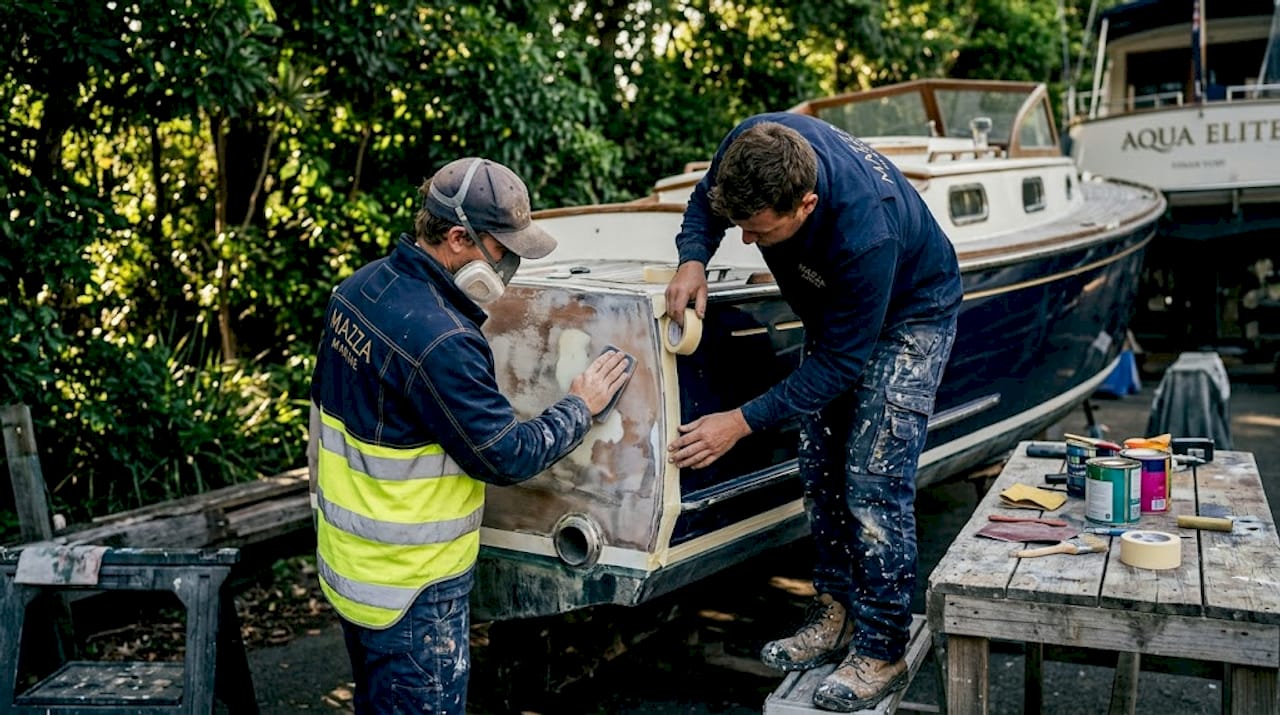
Gelcoat repair and restoration is resin-cure based: you clean the damaged area, sand and taper the edges of the damage, mix catalyzed gelcoat to the correct ratio, apply it to slightly overfill the repair, allow full cure, then sand progressively through grits and wet-buff to blend seamlessly with the surrounding surface. The chemistry relies on the resin cross-linking and bonding to the existing gelcoat substrate.
Here is a step-by-step view of the gelcoat repair process:
- Clean the area thoroughly to remove wax, oils, salt residue, and contamination.
- Sand the damage to taper the edges and create a clean bonding surface, usually starting at 80 to 120 grit.
- Mix catalyzed gelcoat carefully, matching color if needed, at the correct MEKP ratio (typically 1.5 to 2%).
- Apply the gelcoat and slightly overfill the repair to account for shrinkage during cure.
- Cover with PVA film to exclude air, which can inhibit surface cure on polyester gelcoat.
- Allow full cure before sanding back with progressive grits (220, 400, 600, 800, 1500, 2000).
- Compound and polish to restore the gloss and blend the repair into surrounding areas.
Marine paint application process
Painting over gelcoat is surface-prep and adhesion-system driven. The surface must be completely dry, free of dust, wax, and contamination, and properly primed before paint is applied. Professionals strongly recommend using a primer that is specifically compatible with both the gelcoat substrate and the chosen topcoat system. Skipping compatible priming is one of the top causes of paint delamination.
| Factor | Gelcoat repair | Marine paint application |
|---|---|---|
| Chemistry | Resin-cure (polyester) | Adhesion-system (primer + topcoat) |
| Surface prep requirement | High | Very high |
| Color matching | Critical, mix-specific | Broad color availability |
| DIY-friendly? | Moderate skill required | Low to moderate, product-dependent |
| Cure time | 2 to 6 hours before sanding | 24 to 72 hours depending on system |
| Finish quality | Polish to factory gloss | High gloss with two-part systems |
Pro Tip: Always consult the product compatibility chart for your specific paint or gelcoat system before purchasing materials. Mixing incompatible products, like applying a polyurethane topcoat over an oil-based primer, can cause wrinkling, fish-eyes, or full delamination. When in doubt, review your gelcoat repair steps or the yacht painting process with a qualified marine coatings professional.
Maintenance burdens: What Florida owners need to know
Here in Florida, maintenance is not optional. The combination of relentless UV exposure, saltwater, high humidity, and frequent dew cycles puts every coating system under real stress. Knowing how each system behaves over time helps you plan smarter and budget realistically.
Gelcoat maintenance realities:
- Intact gelcoat requires less frequent recoating than paint, making it a lower-frequency but higher-quality upkeep system.
- Routine waxing every three to six months is the best defense against UV degradation and oxidation.
- Light oxidation can be polished out; heavy oxidation requires machine compounding or professional restoration.
- Impact chips and crazing require careful color-matched repairs to avoid visible mismatches.
- Once gelcoat is too thin from repeated compounding, restoration becomes difficult and paint is often the next logical step.
Marine paint maintenance realities:
- Paint surfaces are generally easier to touch up in small areas without the color-match complexity of gelcoat mixing.
- However, paint may require more routine cleaning and polishing to maintain its gloss, particularly under Florida’s UV and salt conditions.
- Two-part linear polyurethane paints (the premium standard for yacht topsides) are hard and durable but difficult to spot-repair without visible edges.
- Single-part enamels are more touch-up friendly but tend to chalk and fade faster.
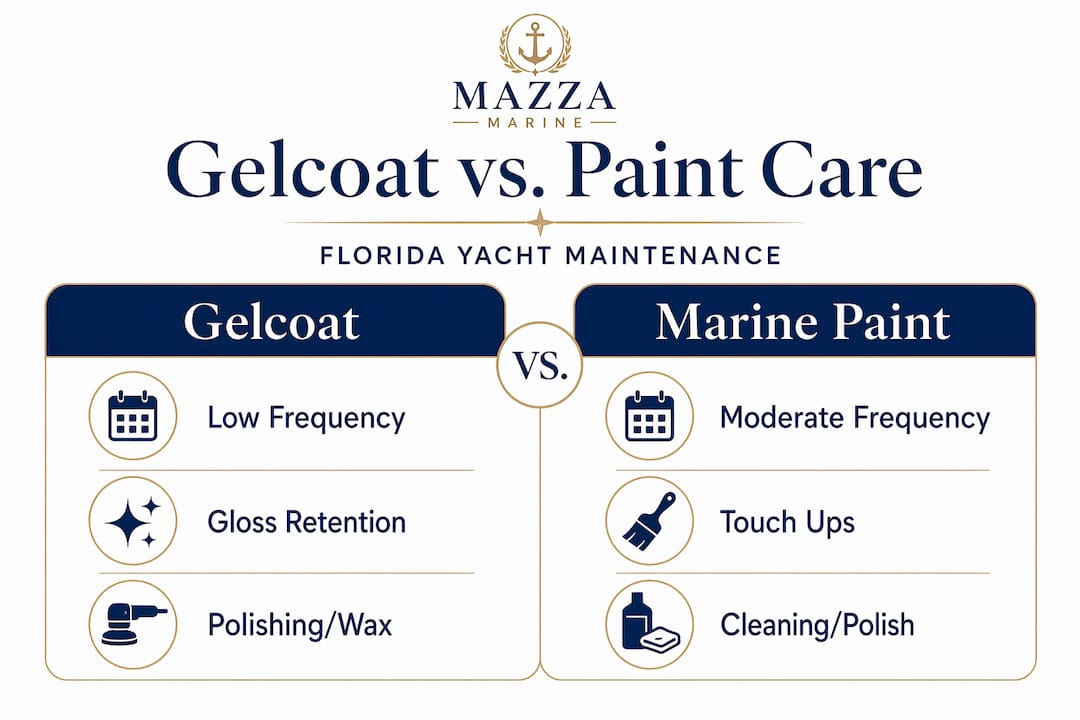
| Maintenance factor | Gelcoat | Marine paint |
|---|---|---|
| Recoating frequency | Low (polishing, waxing) | Moderate to high (topside repaint every 3 to 7 years) |
| Touch-up ease | Moderate (color match critical) | Easier for single-part; harder for two-part |
| UV/salt sensitivity | High (chalks and oxidizes) | High (fades and chalks) |
| Professional cost per service | Moderate | Moderate to high |
| Long-term durability | Excellent if maintained | Excellent with correct system |
Florida’s climate accelerates deterioration for both systems, but correct surface prep before applying any new coating layer is what separates a finish that lasts five years from one that lasts two. That point cannot be overstated. It is also worth noting that exterior maintenance best practices apply to marine coatings in ways you might not expect. Smart exterior maintenance in South Florida shares the same logic: protect the surface before it degrades rather than chasing repairs after the damage is done. Review your marine paint maintenance schedule regularly, and keep a log of what was applied and when. Explore current marine painting tips for Florida-specific guidance that accounts for seasonal exposure patterns.
Compatibility and expert nuances: When to choose gelcoat or paint
This is where the conversation gets more technical, and where making the wrong call can cost you a full re-spray. Gelcoat and marine paint are not just different products. They operate on different chemical platforms, and those platforms do not always cooperate.
Key compatibility rules every Florida yacht owner should know:
- Gelcoat repair and repainting are not interchangeable chemistries. Attempting to apply gelcoat over epoxy systems, for example, will almost certainly lead to adhesion failure because polyester gelcoat does not bond reliably to cured epoxy.
- Applying gelcoat over painted surfaces creates a high risk of delamination. Gelcoat needs raw fiberglass or properly prepped original gelcoat to bond.
- If your hull has been previously painted, you are committed to a paint system going forward unless you want to mechanically strip everything back to bare fiberglass.
- Paint systems applied over heavily oxidized gelcoat require specific etching primers or adhesion promoters, or the paint will simply peel away.
- Heavily oxidized or faded gelcoat may benefit from a restoration attempt first: professional polishing and compounding can sometimes bring back acceptable gloss and delay the need for a full repaint.
When to choose gelcoat restoration:
- Surface is intact with light to moderate oxidation.
- Original color is still acceptable or can be matched.
- You prefer the original factory finish and the associated low-maintenance polishing cycle.
- The hull has never been painted over.
When to choose marine paint:
- Gelcoat is severely oxidized, crazed, or too thin from previous compounding.
- You want a color change or a custom finish that gelcoat cannot achieve.
- The hull has existing paint and re-painting is the only logical continuation.
- You want the flexibility and control of a modern topcoat system on a refit project.
Pro Tip: If you are unsure whether your hull surface is raw gelcoat or has been previously painted, test a small inconspicuous area by applying acetone on a white rag. Gelcoat will not transfer color; paint will. This quick test can save you from a very expensive compatibility mistake. Explore paint and gelcoat compatibility resources and weigh the custom paint advantages available to Florida yacht owners before committing to a system.
Our take: What most Florida yacht owners get wrong about gelcoat vs. paint
After years of working alongside skilled craftsmen, vendors, and yacht owners across Florida, we have noticed a pattern. Most owners focus heavily on which product to choose and not nearly enough on the conditions and habits that determine whether that product succeeds.
Florida is relentless. The UV index here averages significantly higher than in northern states, and the combination of salt air, heat, and overnight dew creates a cycle that attacks finishes from multiple directions simultaneously. We see owners invest in premium two-part paint systems and then skip routine waxing because the new paint “looks great.” Six months later, the surface is already showing stress. Great products still demand great habits.
The other big misconception we encounter is around surface preparation. Surface prep is not a step you rush through to get to the “real work.” It is the real work. More finish failures trace back to inadequate prep than to product quality. Skipping dewaxing, not letting surfaces fully dry after washing, or sanding too aggressively through a thin gelcoat layer all set the project up for premature failure. Whether you are doing a spot repair or a full topside repaint, allocate more time than you think you need for prep.
We also see owners underestimate cure cycles. Florida heat can feel like it speeds up cure, but humidity plays a competing role. Following the manufacturer’s cure window guidance is not conservative caution; it is the difference between a finish that lasts and one that traps solvents beneath the surface. Read the gelcoat repair wisdom we have gathered from hands-on Florida experience.
Finally, no single system is universally best. A sportfish running offshore every weekend has different demands than a motor yacht moored in a marina slip. Your choice of gelcoat restoration versus marine paint should reflect your actual use patterns, maintenance schedule, and long-term goals. Talk to people who know Florida yachts. The right finish is the one you can maintain consistently, not just the one that looks best in the catalog.
Enhance and protect your yacht with expert help
Navigating the world of gelcoat and marine paint is far more manageable when you have the right team behind you. Mazza Marine connects Florida yacht owners with a trusted network of skilled professionals who specialize in exactly these decisions.
Whether you need a spot gelcoat repair on a sportfish or a full topside paint job on a motor yacht, our partners handle paint and gelcoat services with the attention to detail that Florida conditions demand. We help you choose the right system, match the right products, and build a schedule to maintain marine paint for years to come. Mino and Luigi built Mazza Marine on the belief that yacht ownership should be a source of pride and joy, not frustration. Let us take the confusion out of your next coating decision and help you keep your yacht looking like the floating piece of craftsmanship it truly is.
Frequently asked questions
Can you apply gelcoat over marine paint?
No, gelcoat will not bond reliably to painted surfaces and will likely fail; gelcoat is best applied only over raw fiberglass or properly prepped original gelcoat.
Is marine paint easier to maintain than gelcoat for Florida yachts?
Paint may be easier to touch up in small areas, but it can demand more frequent cleaning and polishing to hold its gloss compared to intact, well-maintained gelcoat under Florida sun and salt.
How do I decide between gelcoat restoration and paint for an oxidized surface?
Start with professional polishing and restoration; if the oxidation is too widespread or the gelcoat is too thin, painting with correct priming is the more practical and durable choice.
What’s the biggest maintenance mistake Florida yacht owners make?
Skipping or rushing surface prep: inadequate cleaning, dewaxing, and drying before any coating application is the top cause of failure for both gelcoat repairs and paint systems in Florida.
Which coating lasts longer in Florida climates: gelcoat or marine paint?
Intact gelcoat typically requires fewer touch-ups and recoating cycles than paint, but severe UV and salt exposure will challenge both systems, making regular maintenance the real variable in long-term durability.
Recommended
Text or Call 954-330-9653 Schedule Appointment
Mazza Marine Yacht Services & Refit

Fiberglass Upgrades and Damage Repair

Premium Yacht Paint/ Faux Teak

Fishing: Custom Rods, Reels,Tackle

Electrical, Electronics and Navigation

Paint, Hull and Gelcoat

Teak Decks, Wood Cabinets, Carpentry

Canvas, Enclosures and Upholstery

Mechanical, Repower and Running Gear

Plumbing, Bilge and Thru-Hulls

Welding and Custom Fabrication

Interior Refit And Past Work
Get your yacht value Estimate
"*" indicates required fields