
View Our Recent Work:

Marine repair is the coordinated set of mechanical, electrical, structural, and underwater services required to maintain, restore, and protect a vessel’s safety and performance. Whether you own a 35-foot sportfish in Miami or a 70-foot motor yacht docked in Fort Lauderdale, understanding what professional boat repair services actually cover, and when to call them in, is the difference between a minor fix and a catastrophic failure at sea. The industry term for this discipline is vessel maintenance and repair, though “marine repair” is the phrase most owners use when searching for help. This guide covers what’s included in a typical service scope, how preventive routines extend your boat’s life, and what specialized techniques are available when drydocking isn’t practical.
What services are typically included in marine repair?
Marine repair in 2026 covers end-to-end scopes: engine strip-down and diagnostics, electrical system upgrades, hydraulic troubleshooting, certified load testing, welding and fabrication, and underwater inspections. That breadth surprises many first-time yacht owners who expect a simple oil change and nothing more. In practice, a single service visit often touches four or five interconnected systems.
The most common service bundles from professional boat repair services include:
- Engine diagnostics and overhaul: Fault diagnosis, injector testing, turbocharger inspection, and cooling system checks
- Electrical and electronics: Wiring audits, NMEA 2000 network troubleshooting, battery bank testing, and marine electronics troubleshooting for chartplotters and VHF systems
- Hydraulic systems: Steering ram inspection, trim tab cylinder servicing, and fluid replacement
- Structural and fabrication work: Custom welding, thru-hull fitting replacement, and fiberglass repair for boat hull repairs
- Underwater services: Anode replacement, propeller inspection, and hull cleaning performed in-water
Preventive maintenance contracts from providers like Safety Link Marine Services include diagnostic evaluations, lubrication and cooling system servicing, and scheduled HVAC maintenance. These contracts are worth considering if your vessel logs significant hours each season, because they lock in priority scheduling and spare parts sourcing before a breakdown forces your hand.
Repairs can happen in three environments: afloat at your slip, alongside a service dock, or in drydock. Each setting has different cost and access implications, which is why repair location planning is part of any professional service scope. Choosing the right environment upfront saves time and avoids secondary damage from moving a vessel that isn’t ready to move.
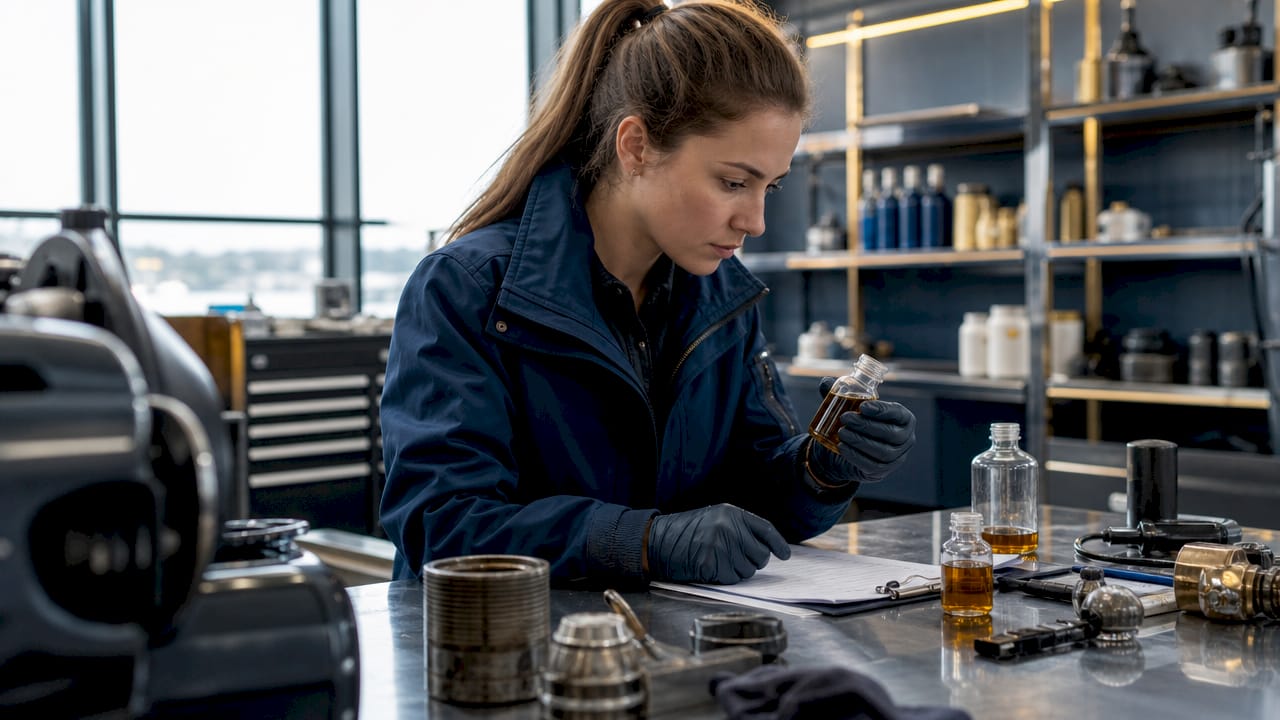
Pro Tip: When requesting a quote for boat repair services, ask the yard or technician to specify which repairs require drydocking and which can be completed afloat. You may save a haulout fee on work that is perfectly safe to do in the water.
How can preventive maintenance reduce repairs and extend boat lifespan?
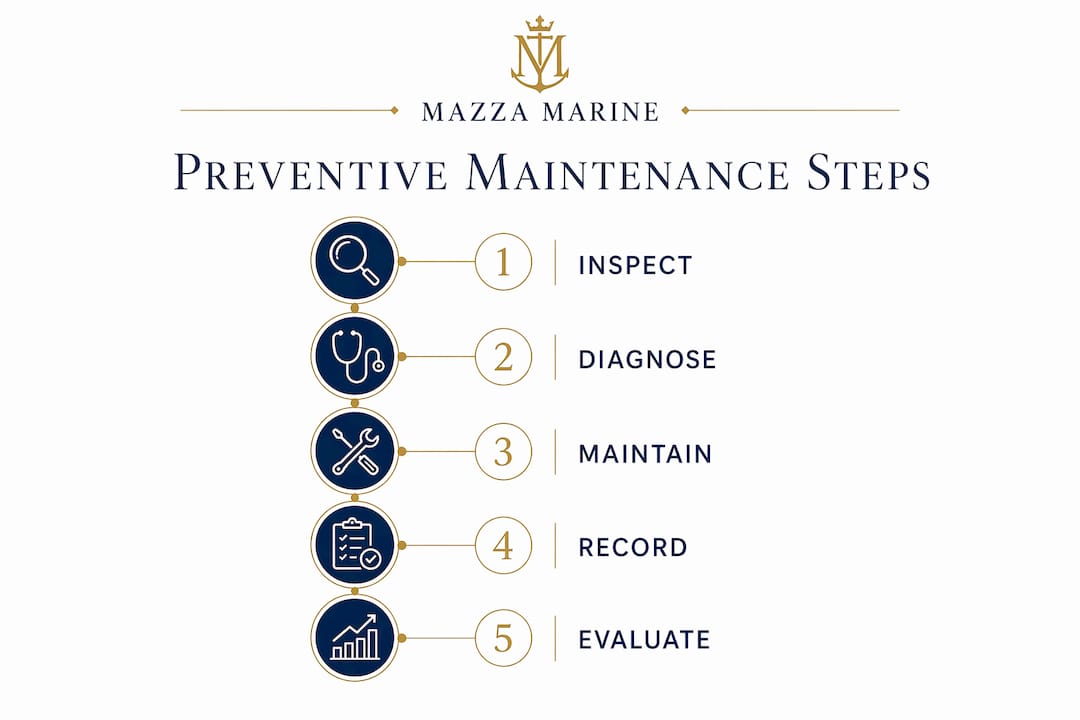
Preventive maintenance is the single most cost-effective investment a boat owner makes. A vessel that receives consistent, scheduled attention costs far less to operate over a decade than one that only sees a technician after something breaks. The logic is simple: catching a failing impeller during a routine service costs a fraction of what you pay after an overheated engine destroys a heat exchanger.
Marine engine maintenance scheduling in 2026 uses a hybrid approach that blends fixed time intervals, running-hour milestones, and condition-based monitoring. A practical schedule for a diesel-powered yacht looks like this:
- Every 100 hours or annually: Change engine oil and filters, inspect belts and hoses, check raw-water impeller, test all alarms and gauges
- Every 250 hours or annually: Service the fuel system, inspect injectors, flush and refill coolant, check pencil anodes in the heat exchanger
- Every 500 hours or 2.5 years: Intermediate survey of major mechanical systems, inspect shaft seals and cutlass bearings, test safety equipment
- Every 5 years: Special survey covering structural integrity, electrical panel inspection, and full engine assessment
Annual cooling system inspections with particular attention to pencil anode condition are pivotal in distinguishing a controllable repair from a major component replacement. A corroded anode costs a few dollars. A corroded heat exchanger costs several thousand. That gap is why West Marine and most yacht repair specialists treat anode checks as non-negotiable.
Condition-based monitoring adds a second layer of protection. Oil sampling, vibration analysis, and infrared thermal scanning of electrical panels catch faults that scheduled intervals alone would miss. For marine mechanical systems like HVAC and hydraulics, thermal imaging often reveals a failing pump weeks before it shows any outward symptom.
Pro Tip: Log every running hour in a dedicated maintenance logbook, not just a phone note. When you sell the vessel or bring in a new technician, that paper trail is worth real money in trust and negotiated service rates.
What specialized underwater repair techniques are available?
Underwater repair is a legitimate alternative to drydocking for a defined set of tasks, and it is far more capable than most owners realize. Underwater ship repair covers sea-chest blanking, wet and dry welding, anode retrofits, hull patching, propeller and rudder repairs, thruster seal replacement, and scrubber system work, all performed by commercial divers or remotely operated vehicles.
The practical advantages are significant:
- Reduced downtime: A vessel stays operational or at anchor rather than waiting weeks for a haulout slot
- Lower cost: Avoiding a travel lift, blocking, and yard fees can cut the total repair bill by 30 to 50 percent on suitable jobs
- Flexibility: Repairs can happen at anchorage, at a marina berth, or offshore in calm conditions
The tradeoff is scope. Underwater repair techniques work well for anode replacement, propeller removal, hull zinc installation, and minor hull patching. They are not appropriate for keel work, major structural repairs, or anything requiring a dry, controlled environment for curing or welding above the waterline.
| Repair Type | Best Environment |
|---|---|
| Anode replacement | In-water, at anchor or berth |
| Propeller removal and inspection | In-water, calm conditions |
| Hull patching (minor) | In-water, with diver access |
| Keel repair or replacement | Drydock only |
| Full bottom paint application | Drydock only |
| Shaft seal replacement | In-water possible, drydock preferred |
Safety is the primary logistical consideration. Commercial underwater repair work requires certified divers, proper surface support, and clear visibility. For yacht owners, the practical takeaway is straightforward: ask your service provider whether a specific repair qualifies for in-water execution before you commit to a haulout.
How do marine wastewater systems affect compliance and repair costs?
Marine sanitation devices, the industry term for onboard toilet and holding tank systems, are regulated under U.S. federal law and carry real consequences when they fail inspection. Marine sanitation devices must be properly certified, operable, and secured to comply with No-Discharge Zone regulations enforced by the U.S. Coast Guard and state agencies. Compliance failures most often stem from operability issues rather than missing paperwork.
The three classifications matter for maintenance planning:
- Type I: Treats and discharges waste; requires flow-through device to be functional and certified
- Type II: Higher-treatment discharge system; requires regular inspection of treatment components
- Type III: Holding tank only; requires physical securing of all overboard discharge valves in No-Discharge Zones
Routine pump-outs and component checks prevent regulatory violations and the expensive repairs that follow neglect. For Type III systems, physically securing the Y-valve with a lock or zip tie is a legal requirement in many Florida waters, not just a suggestion.
Joker valves and other marine toilet components have defined replacement schedules. Treating them as consumables and swapping them seasonally costs far less than a failed pump or a cracked hose discovered during a Coast Guard boarding. Pre-winter procedures should include flushing the system with fresh water, pumping out the holding tank, and inspecting all hose connections for softness or odor.
What practical tips help with marine engine troubleshooting and repair planning?
Effective marine engine troubleshooting starts before you call a technician. The information you gather at the helm tells a trained professional more than a cold inspection ever could.
- Trust your alarms and gauges. Simple alarm checks post-purchase can prevent severe diesel engine failures. If a temperature alarm activates and you ignore it for ten minutes, you may turn a $200 thermostat replacement into a $4,000 head gasket job.
- Log running hours consistently. Hourmeters are the foundation of any engine maintenance schedule. Without accurate hour tracking, you are guessing at service intervals rather than managing them.
- Describe symptoms precisely. Note when the problem occurs (cold start, under load, at idle), what the gauges read, and any sounds or smells. This shortens diagnostic time and reduces labor costs.
- Plan repair timing around vessel availability. Coordinate with your marina and service provider to schedule work during low-use periods. Rushing a repair because you have a trip booked in three days leads to shortcuts.
- Build a relationship with qualified yacht repair specialists. A technician who knows your vessel’s history catches anomalies faster and prioritizes your calls. That relationship has real financial value over the life of the boat.
Pro Tip: Take photos of every system before a repair begins and after it is completed. This creates a visual maintenance record that is invaluable when troubleshooting future issues or transferring ownership.
Key takeaways
Proactive marine repair, combining scheduled intervals with condition-based monitoring and qualified specialists, is the most reliable way to protect vessel safety, performance, and long-term value.
| Point | Details |
|---|---|
| Repair scope is broad | Professional marine repair covers engines, electrical, hydraulics, hull, and underwater systems in a single coordinated program. |
| Preventive maintenance pays off | Hybrid scheduling using running hours, alarms, and planned inspections prevents costly failures and extends engine life. |
| Underwater repair saves money | In-water techniques for anodes, propellers, and minor hull work can cut repair costs significantly compared to drydocking. |
| Compliance requires maintenance | Marine sanitation devices must be operable and secured; neglected components lead to regulatory violations and expensive fixes. |
| Relationships matter | Working with trusted yacht repair specialists who know your vessel’s history reduces diagnostic time and improves repair outcomes. |
What I’ve learned after years of watching owners get this wrong
Most boat owners treat marine repair the way people treat dental work. They avoid it until something hurts, then they’re shocked by the bill. I’ve seen owners skip a $150 impeller replacement and end up with a $6,000 engine overhaul. The math never works in their favor.
The other misconception I encounter constantly is the belief that scheduled maintenance and condition-based monitoring are interchangeable. They are not. Scheduled intervals tell you when to look. Condition monitoring tells you what to look for. A diesel engine running on a clean oil sample and steady vibration readings at the 400-hour mark may not need a full service yet. One showing elevated metal particles in an oil sample at 200 hours absolutely does. Combining both approaches, as outlined in the engine maintenance scheduling framework, is the only way to avoid both over-servicing and catastrophic under-servicing.
The owners who spend the least on repairs over a ten-year period are not the ones with the newest boats. They are the ones with the best records, the most consistent service relationships, and the discipline to act on early warning signs. That discipline is a skill, and it is worth developing before your first serious breakdown, not after.
— Jason
How Mazzamarine keeps your vessel in peak condition

Mazzamarine brings together a trusted network of Florida yacht repair specialists covering everything from urgent engine work to full interior refits. Whether you need signs you need yacht repairs identified before a season starts or a complete mechanical overhaul for a long-range passage, Mazzamarine coordinates the right vendors, the right timing, and the right scope for your specific vessel. Brothers Mino and Luigi built this network on decades of hands-on experience and genuine passion for the sea. From marine engine maintenance and custom welding to nav systems and canvas enclosures, Mazzamarine handles every aspect of boat ownership so you can focus on the water. Explore maintenance packages for your boat or contact the team directly for a personalized repair plan.
FAQ
What does marine repair typically include?
Marine repair covers mechanical, electrical, structural, and underwater services including engine diagnostics, hull repairs, hydraulic troubleshooting, welding, and marine electronics troubleshooting. Professional service scopes also include certified load testing and underwater inspections.
How often should I schedule marine engine maintenance?
Most marine diesel engines require service every 100 hours or annually for oil and filters, with more thorough inspections at 250 and 500-hour intervals. Maintenance scheduling blends fixed intervals with condition-based monitoring for the most reliable results.
When is underwater repair a better option than drydocking?
Underwater repair is the better choice for anode replacement, propeller removal, and minor hull patching when the vessel is afloat and conditions allow safe diver access. Underwater techniques reduce downtime and eliminate haulout costs for tasks that do not require a dry environment.
What are the compliance requirements for marine sanitation devices?
Marine sanitation devices must be certified, operable, and properly secured to comply with No-Discharge Zone regulations enforced by the U.S. Coast Guard. Routine pump-outs and component inspections are the most effective way to stay compliant and avoid costly violations.
How do I find reliable marine services near me in Florida?
The most reliable approach is to work with a network-based provider like Mazzamarine that maintains vetted relationships with Florida yacht repair specialists across multiple disciplines. Consistent service relationships with technicians who know your vessel’s history reduce diagnostic time and improve the quality of every repair.
Recommended
Text or Call 954-330-9653 Schedule Appointment
Mazza Marine Yacht Services & Refit

Fiberglass Upgrades and Damage Repair

Premium Yacht Paint/ Faux Teak

Fishing: Custom Rods, Reels,Tackle

Electrical, Electronics and Navigation

Paint, Hull and Gelcoat

Teak Decks, Wood Cabinets, Carpentry

Canvas, Enclosures and Upholstery

Mechanical, Repower and Running Gear

Plumbing, Bilge and Thru-Hulls

Welding and Custom Fabrication

Interior Refit And Past Work
Get your yacht value Estimate
"*" indicates required fields