
View Our Recent Work:

Overview: Smith is a Trident-built sailing superyacht launched in 1995, measuring 34.93 m LOA as reported by Boat International, with exterior design by Winch Design, interiors by David Easton, and naval architecture by Ted Hood. If you’re researching this vessel or looking for brokerage support, Smith Yacht Sales in Hingham, MA is the primary contact point, and Boat International’s superyacht directory carries the most complete published specs.
At a glance, here’s what defines this yacht:
- Builder: Trident (1995)
- LOA: ~34.93 m (Boat International) / 34.75 m (SuperYachtTimes)
- Naval architect: Ted Hood
- Exterior design: Winch Design
- Interior design: David Easton
- Propulsion: Lugger engines
- Reported top speed: 14 knots; cruising speed 11 knots
- Listing verification: Boat International, SuperYachtTimes, YachtWorld, and Smith Yacht Sales directly
Table of Contents
- What are the core specs of the Smith yacht?
- Who designed and built the Smith yacht?
- How do the engines and performance hold up?
- What is the ownership and sales history of the Smith yacht?
- Where can you find photos and video of the Smith yacht?
- What yachts are similar to the Smith for comparison?
- How do you verify a Smith yacht listing and complete due diligence?
- Key Takeaways
- What buyers often miss on yachts like the Smith
- Mazzamarine can help you assess, refit, and protect your investment
- Useful sources for verifying the Smith yacht
What are the core specs of the Smith yacht?
The table below draws from two primary superyacht directories. Where values differ, both are shown so you can weigh them against survey measurements.
| Specification | Value | Source |
|---|---|---|
| LOA (primary) | 34.93 m | Boat International |
| LOA (alternate) | 34.75 m | SuperYachtTimes |
| Builder | Trident | Both directories |
| Launch year | 1995 | Both directories |
| Naval architect | Ted Hood | Directory records |
| Exterior designer | Winch Design | Directory records |
| Interior designer | David Easton | Directory records |
| Engine make | Lugger | Boat International |
| Top speed | 14 knots | Boat International |
| Cruising speed | 11 knots | Boat International |
| Gross tonnage (GT) | Not publicly listed | — |
| Fuel capacity | Not publicly listed | — |
A note on the conflicting LOA figures: an 18 cm discrepancy between directory entries is common for yachts of this era. Measurement methodology varies — some directories measure to the bowsprit tip, others to the hull. The definitive figure comes from the vessel’s official documentation and a physical survey, not a directory entry. Use the 34.93 m figure from Boat International as your working reference, and confirm against the SuperYachtTimes listing when cross-checking.
Who designed and built the Smith yacht?
Four names define this vessel’s pedigree, and each one carries real weight in the superyacht world.
Trident built Smith in 1995. Trident was a British yard known for high-quality custom sailing yachts, typically working in GRP (glass-reinforced plastic) composite construction with solid laminate or foam-cored panels depending on the section. Hulls from this era warrant close attention to osmotic blistering and delamination, particularly below the waterline — a survey focus area that any buyer should prioritize.
Ted Hood served as naval architect. Hood is a legendary figure in American sailing, best known for founding Hood Sailmakers and designing a series of respected offshore cruising and racing yachts. His involvement signals a hull designed for genuine bluewater performance, not just coastal aesthetics.
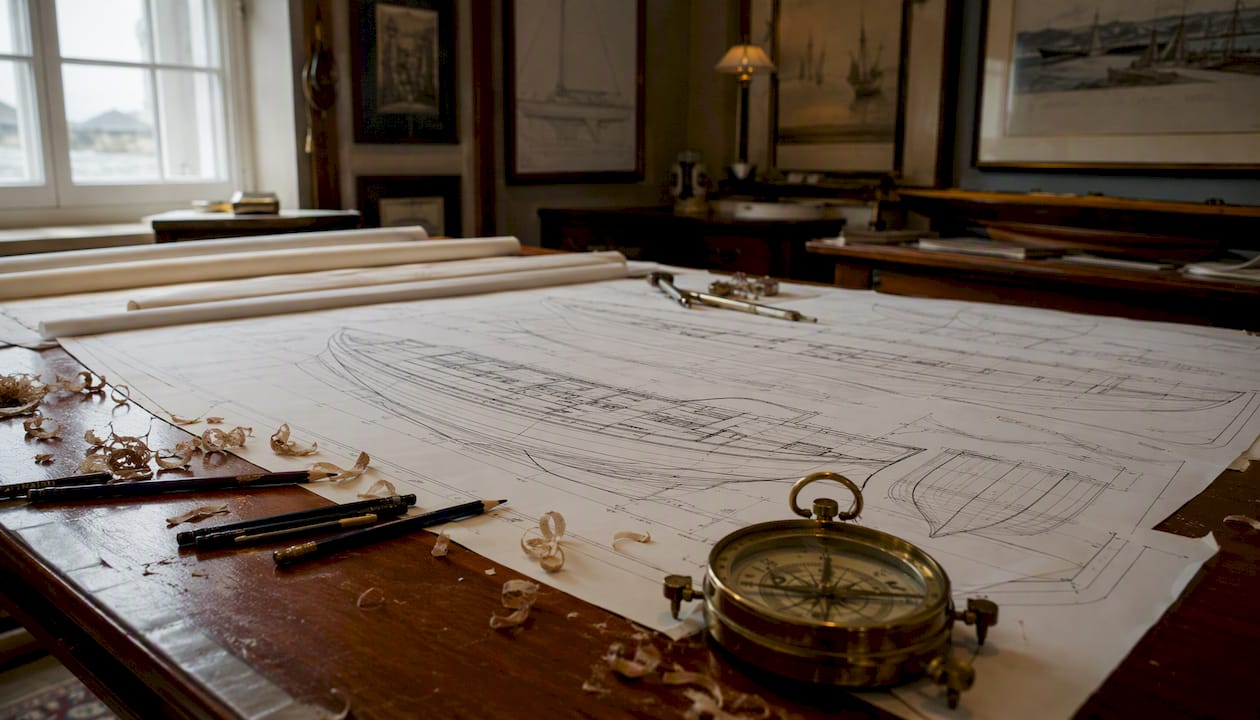
Winch Design handled the exterior. The London-based studio has shaped some of the most recognizable superyacht profiles of the past three decades, and their work on Smith reflects the clean, purposeful lines that defined serious sailing yachts of the mid-1990s.
David Easton created the interior. Easton is a New York-based interior designer with a reputation for classical American elegance, bringing a warmth and refinement to the saloon and cabins that sets Smith apart from purely utilitarian offshore builds.
For hull and gelcoat work on a 1990s composite sailing yacht, the material history matters as much as the current condition. Trident’s build quality was strong, but three decades of UV exposure and seasonal haul-outs leave their mark on any GRP hull.
How do the engines and performance hold up?
Smith runs Lugger engines, a brand with a solid reputation in the commercial and superyacht market for reliability and parts availability. Lugger (a division of Northern Lights) builds marinized versions of John Deere diesels, which means service infrastructure in the U.S. is genuinely accessible — a practical advantage for an owner based stateside.
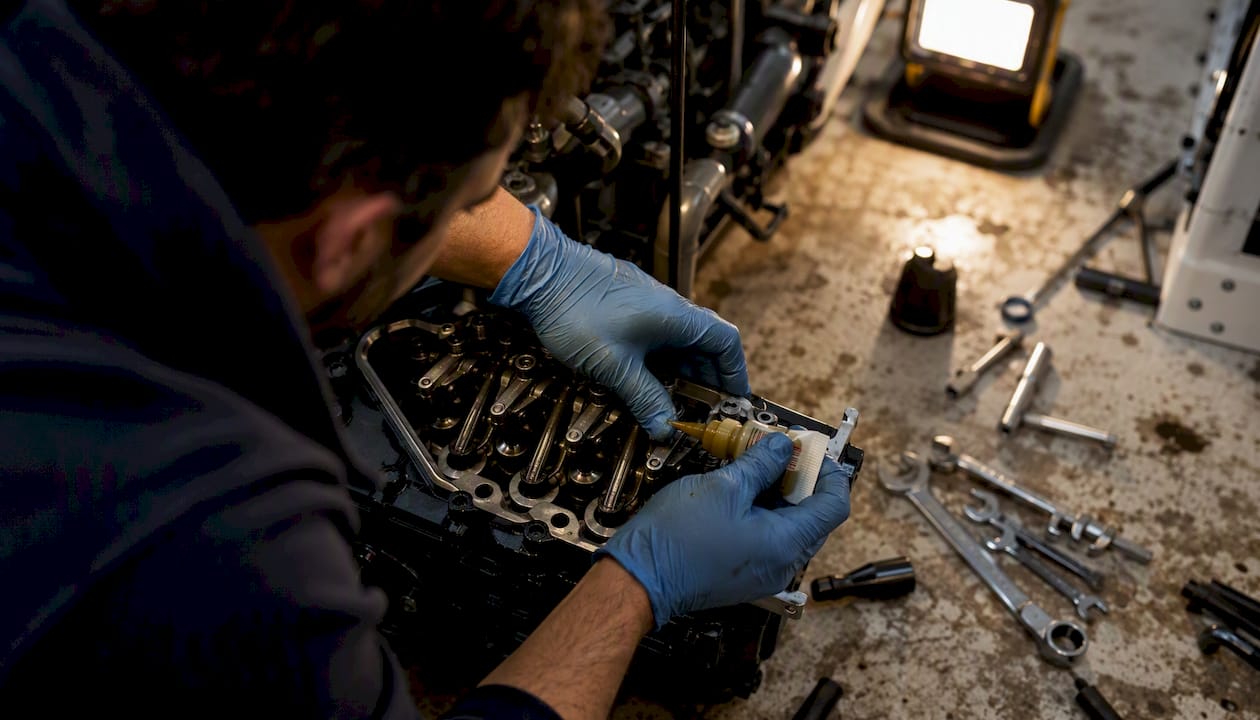
Reported performance figures from Boat International put top speed at 14 knots and cruising speed at 11 knots. For a 34.93 m sailing yacht of this displacement, those numbers are consistent with a well-powered auxiliary setup.
Before any sea trial, a thorough mechanical inspection should cover:
- Engine hours and service records (Lugger engines are durable, but a 30-year-old motor with incomplete logs is a negotiating point)
- Raw-water pump condition and impeller replacement history
- Shaft seal and cutlass bearing wear
- Genset output and load-bank test results
- Fuel tank integrity, including inspection for microbial contamination in diesel
- Coolant system condition, especially heat exchanger fouling common in aging marine diesels
Pro Tip: On 1990s-era superyachts, vibration at cruising RPM is often the first sign of coupling misalignment or a worn cutlass bearing — not engine trouble. Ask the surveyor to run a vibration check at multiple RPM bands during the sea trial, and compare it against the engine mounts’ rated service life. This one check has saved buyers from expensive post-purchase surprises more than once.
For owners considering a mechanical repower or running gear service, Mazzamarine’s Florida network covers Lugger-compatible engine work and propulsion system inspections.
What is the ownership and sales history of the Smith yacht?
Named ownership history for Smith is not publicly documented in the major superyacht directories. This is common for privately registered sailing yachts, particularly those that have changed hands through private treaty rather than public auction.
To confirm current listing status, check these sources in order:
- Boat International: the most complete published spec sheet; check the “for sale” flag and any broker contact listed
- SuperYachtTimes: useful for cross-referencing the alternate LOA and any recent sale or ownership notes
- YachtWorld broker profile: Smith Yacht Sales’ active inventory appears here; check for current listings and contact details
- YachtEye: aggregates listings and gallery appearances across multiple platforms
- Smith Yacht Sales directly: the Hingham office at 24 Shipyard Drive, Suite 204 is the most direct route to confirming listing status and arranging a showing
Smith Yacht Sales is a certified brokerage specializing in motoryachts and power vessels up to 100 ft. General Manager J. Eric Smith holds CPYB credentials and led the Yacht Brokers Association of America from 2023 to 2025 — a meaningful trust signal when you’re validating a listing of this scale. The brokerage also maintains a Facebook presence where recent listings and photos occasionally appear, worth checking alongside the formal directories.
When validating any broker-listed sale, confirm: a signed purchase agreement, escrow through a recognized marine escrow provider, and survey holdback provisions that protect the buyer if defects emerge post-inspection.
Where can you find photos and video of the Smith yacht?
The best image galleries for Smith are spread across four platforms:
- Boat International — and SuperYachtTimes both carry directory-level photo sets, typically exterior shots and select interior images
- YachtEye aggregates gallery appearances and cross-listings, making it useful for tracking how the vessel has been presented across different sales cycles
- Smith Yacht Sales’ own gallery — and their social channels (Facebook) occasionally feature listing photography that is more current than directory archives
When reviewing photos, train your eye on a few specific details. Gelcoat delamination shows as a chalky or bubbled surface, especially along the waterline and around deck hardware. Teak deck wear appears as thin planks with visible caulking gaps or darkened seams. Rust staining around stanchion bases and chainplates is a red flag for fastener corrosion beneath the deck surface — a repair that can escalate quickly on a 30-year-old sailing yacht.
Pro Tip: Social media posts from marinas, crew, or previous owners often carry embedded EXIF data or timestamped captions that give you a soft verification of when the yacht was last in active use and where it was located. Cross-reference those timestamps with any “recently serviced” claims in the listing. A yacht photographed in a refit yard two years ago and listed as “survey-ready” today deserves a closer look at what work was actually completed.
What yachts are similar to the Smith for comparison?
If you’re using Smith as a benchmark for price or condition, these vessels offer useful reference points by builder, era, or naval architect:
- Other Trident builds from the 1990s: — Trident produced a limited number of custom sailing yachts in the 34–40 m range during this period. Searching Boat International and SuperYachtTimes by builder name surfaces comparable hulls with published sale prices.
YachtEye is particularly useful for side-by-side gallery comparisons. Boat International’s sold-price data, where available, gives the clearest market signal for what a 34–35 m custom sailing yacht from a respected British yard commands today.
Comparing similar yachts before making an offer does two things: it anchors your price expectations to real market data, and it gives you a refit scope baseline so you’re not surprised when the survey comes back with a list of deferred maintenance items.
How do you verify a Smith yacht listing and complete due diligence?
This is where buyers either protect themselves or leave money on the table. For a 1990s superyacht in the U.S. market, the due diligence process has a clear sequence.
Step 1: Documentation review
- Obtain the vessel’s USCG documentation number (if U.S.-flagged) or flag-state registration certificate
- Request the current Certificate of Documentation from the U.S. Coast Guard National Vessel Documentation Center
- Confirm there are no recorded liens or mortgages on the hull
Step 2: Lien and encumbrance search
- Run a UCC search in the state where the vessel is documented or primarily kept
- Confirm the seller’s legal authority to transfer title
- Review the yacht bill of sale structure before signing anything
Step 3: Survey and sea trial
- Hire an independent SAMS (Society of Accredited Marine Surveyors) or NAMS (National Association of Marine Surveyors) certified surveyor with specific experience in sailing superyachts
- The survey scope for a 1990s composite hull should include: hull osmosis testing, rig inspection, chainplate condition, through-hull fittings, engine room systems, and electrical panel age
- Sea trial at multiple RPM bands, including full throttle, to surface any vibration or mechanical anomalies
Step 4: Class and registry verification
- If the vessel carries a class notation (Lloyd’s, Bureau Veritas, DNV), request the current class certificate and survey records directly from the classification society
- Lapsed class is a negotiating point, not a dealbreaker, but it affects insurance and financing options
Step 5: Broker verification
- Confirm the listing broker’s credentials before proceeding
Pro Tip: Check whether your broker holds CPYB (Certified Professional Yacht Broker) designation and is a current member of IYBA or YBAA. Both associations maintain member directories you can search online in under two minutes. A broker who is current with both signals they’re operating under a code of ethics and have access to standardized purchase agreements — details that matter when you’re moving seven figures.
Key Takeaways
Smith is a 1995 Trident-built sailing superyacht with a Ted Hood hull, Winch Design exterior, and David Easton interior — a genuinely distinguished combination that rewards careful due diligence before any purchase decision.
| Point | Details |
|---|---|
| Vessel identity | Trident-built sailing superyacht, launched 1995, LOA ~34.93 m per Boat International |
| Design pedigree | Naval architecture by Ted Hood; exterior by Winch Design; interior by David Easton |
| Performance figures | Lugger engines; 14 knots top speed, 11 knots cruising per Boat International |
| Verification steps | Confirm listing via Boat International, SuperYachtTimes, YachtWorld, and Smith Yacht Sales directly |
| Mazzamarine services | Mazzamarine supports buyers and sellers with mechanical inspection, hull work, interior refit, and brokerage-adjacent services in Florida |
What buyers often miss on yachts like the Smith
Thirty-year-old sailing superyachts have a way of looking better in photos than they do on a survey report. That’s not a criticism of any particular vessel — it’s just the reality of composite construction, aging systems, and the maintenance cycles that owners either kept up with or quietly deferred.
The pattern that shows up most often on 1990s-era sailing yachts in this size range is chainplate corrosion paired with deck core moisture. Neither issue is visible in a gallery photo. Both can be expensive. Chainplates on a sailing yacht of Smith’s rig size carry enormous loads, and when the bedding compound fails, water tracks straight into the deck core. By the time a surveyor finds soft spots, the repair scope has usually grown beyond what the buyer anticipated.
The other thing buyers consistently underestimate is the cost of bringing aging electrical systems up to current ABYC standards. A 1995 superyacht may have a 12V/24V/240V hybrid panel that was state-of-the-art at launch and is now a liability for insurance underwriters. Budgeting for a full electrical audit as part of the purchase negotiation is not pessimism — it’s how experienced buyers protect their offer price.
The good news is that Trident’s build quality was genuinely high, and Ted Hood’s hull designs age well when maintained. A vessel like Smith with a clean survey and documented service history is a rare find. The work is in verifying that the history is real.
Mazzamarine can help you assess, refit, and protect your investment
Buying or selling a 34 m sailing superyacht is not a transaction you want to navigate without experienced hands on deck. Mazzamarine brings Florida’s most connected network of yacht service specialists to every stage of the process, from pre-purchase inspection coordination to full refit planning and execution.

For buyers evaluating a vessel like Smith, Mazzamarine can coordinate hull and gelcoat assessment, mechanical system inspection, interior refit scoping, and running gear evaluation through its Florida partner network. For sellers, the same network supports pre-listing condition work that protects your asking price. Whether you’ve just received a survey report full of deferred maintenance items or are trying to understand what a refit will realistically cost before making an offer, Mazzamarine’s team is the practical next step. Contact Mazzamarine at mazzamarine.com to schedule a no-obligation consultation with Mino, Luigi, or their Florida specialist network.
Useful sources for verifying the Smith yacht
| Source | What it covers | How to use it |
|---|---|---|
| Boat International | Primary spec sheet, performance figures, builder/designer credits | First stop for spec verification and for-sale status |
| SuperYachtTimes | Alternate LOA (34.75 m), ownership notes | Cross-check measurements and sale history |
| YachtWorld / Smith Yacht Sales | Active broker inventory and contact details | Confirm current listings and request a showing |
| YachtEye | Aggregated listings, gallery images, cross-platform appearances | Compare images across sales cycles |
| Smith Yacht Sales | Certified brokerage, buying/selling/delivery services | Primary contact for listing verification |
| IYBA | Broker membership and ethics standards | Verify broker credentials before signing |
| YBAA | Regional broker association, member directory | Secondary broker verification |
| Smith Yacht Sales office | Physical address: 24 Shipyard Drive, Suite 204, Hingham, MA | In-person contact and document review |
A note on conflicting measurements: when two authoritative directories show different LOA figures, neither is necessarily wrong. Request the vessel’s official documentation and have your surveyor measure the hull directly. Use multiple sources to triangulate, and never rely on a single directory entry for a figure that will appear in a purchase agreement.
This article provides general informational guidance on yacht specifications and the purchase process. It is not legal, financial, or professional marine survey advice. Confirm all figures, registry records, and transaction terms with a qualified marine surveyor, maritime attorney, and certified yacht broker before proceeding.
Recommended
Text or Call 954-330-9653 Schedule Appointment
Mazza Marine Yacht Services & Refit

Fiberglass Upgrades and Damage Repair

Premium Yacht Paint/ Faux Teak

Fishing: Custom Rods, Reels,Tackle

Electrical, Electronics and Navigation

Paint, Hull and Gelcoat

Teak Decks, Wood Cabinets, Carpentry

Canvas, Enclosures and Upholstery

Mechanical, Repower and Running Gear

Plumbing, Bilge and Thru-Hulls

Welding and Custom Fabrication

Interior Refit And Past Work
Get your yacht value Estimate
"*" indicates required fields