
View Our Recent Work:

Aging sportfish vessels have a way of telling you exactly what they think of deferred maintenance. Speeds drop, fuel consumption climbs, electronics glitch at the worst possible moments, and that once-gleaming cockpit starts looking like it has seen better decades. The good news is that a well-planned refit can turn a tired sportfisher back into a high-performance floating piece of craftsmanship. Empirical data from real refit projects shows costs ranging from a few thousand dollars for targeted systems work up to millions for major builds, with realistic timelines of three to six months for large sportfish vessels. This guide covers every step, from pre-refit planning through final sea trial sign-off.
Table of Contents
- What you need before starting a sportfish refit
- Sportfish refit process: Step-by-step timeline
- Major upgrades: What delivers the best performance and value
- How to verify your refit: Inspection, sea trial, and final sign-off
- What most owners get wrong with sportfish refits (and how to avoid it)
- Get help with your sportfish refit in Florida
- Frequently asked questions
Key Takeaways
| Point | Details |
|---|---|
| Comprehensive planning is essential | Set clear goals and budget before starting any refit project. |
| Refits require time and investment | Expect 3-6 months and significant financial outlay for a quality sportfish refit. |
| Invest in high-ROI upgrades | Solar, navigation, and hull modifications deliver the greatest performance and usability return. |
| Verification protects your investment | Post-refit surveys and sea trials ensure all upgrades are properly executed and meet expectations. |
| Avoid common owner mistakes | Document all work, focus on measurable improvements, and don’t neglect mechanical and navigation systems. |
What you need before starting a sportfish refit
To achieve measurable results, you need to establish the right foundation before launching the refit. Skipping the preparation phase is the single most expensive mistake Florida owners make, and we have seen it repeatedly across boats from Miami to the Keys.
Define your end goals first. Are you chasing top-end speed, improved fuel range for offshore runs, higher resale value, or just better daily comfort? The answer shapes every decision that follows. A vessel destined for the tournament circuit has very different priorities than a cruising vessel you plan to sell in two years. Write your top three goals down before any conversation with a yard.
Get a proper pre-refit survey. A marine survey, conducted by a certified marine surveyor, is a thorough structural and systems inspection. Think of it as a full physical exam for your boat. It uncovers osmotic blistering in the hull, corroded through-hulls, worn engine mounts, and hidden electrical faults that no yard walkthrough will catch. Skipping the survey to save time almost always adds cost later. Budget for the survey and planning phase to run two to four weeks for a thorough assessment on a vessel 50 feet and over.
Budget with real numbers. This is where optimism gets owners into trouble. Targeted systems work on a Hatteras 41C can start around $2,000 for hoses and fluid replacements. A solar and LiFePO4 battery package runs roughly $20,000. Full structural and mechanical refits on a Viking 65 or Bertram 63 move into the hundreds of thousands. Know your ceiling before you engage a yard, and add a 15 to 20 percent contingency for surprises, because surprises always appear.
Choose a yard with genuine sportfish experience. Not every boatyard understands the demands of a dedicated sportfisher. You want a facility that has worked on center-console tower boats, convertibles, and express sportfish models. Ask for references, walk through current projects, and verify they communicate clearly on scope changes. A yard that goes quiet when scope expands is a yard to avoid.
Here is a pre-refit requirements checklist worth building before your first yard meeting:
- Primary performance or comfort goal (speed, range, habitability)
- Survey findings ranked by priority and urgency
- Desired completion date for your fishing season or charter schedule
- Maximum budget with contingency clearly defined
- List of preferred vendors or brand requirements for key systems
- Any regulatory compliance items (USCG, ABYC standards)
Check out this refit overview for Florida yachts to understand what a well-scoped project looks like before you commit.
| Pre-refit factor | Why it matters | Recommended action |
|---|---|---|
| Owner goals | Drives all upgrade decisions | Write down top 3 priorities |
| Marine survey | Uncovers hidden problems | Hire a certified surveyor |
| Budget ceiling | Prevents scope creep | Set firm limit plus 20% contingency |
| Yard selection | Determines execution quality | Request sportfish-specific references |
| Timeline | Aligns with fishing season | Work backward from target date |
Pro Tip: Bring your survey report to your first yard meeting highlighted and annotated. Yards that have done this before will know exactly how to prioritize items and will respect you as an informed owner.
Sportfish refit process: Step-by-step timeline
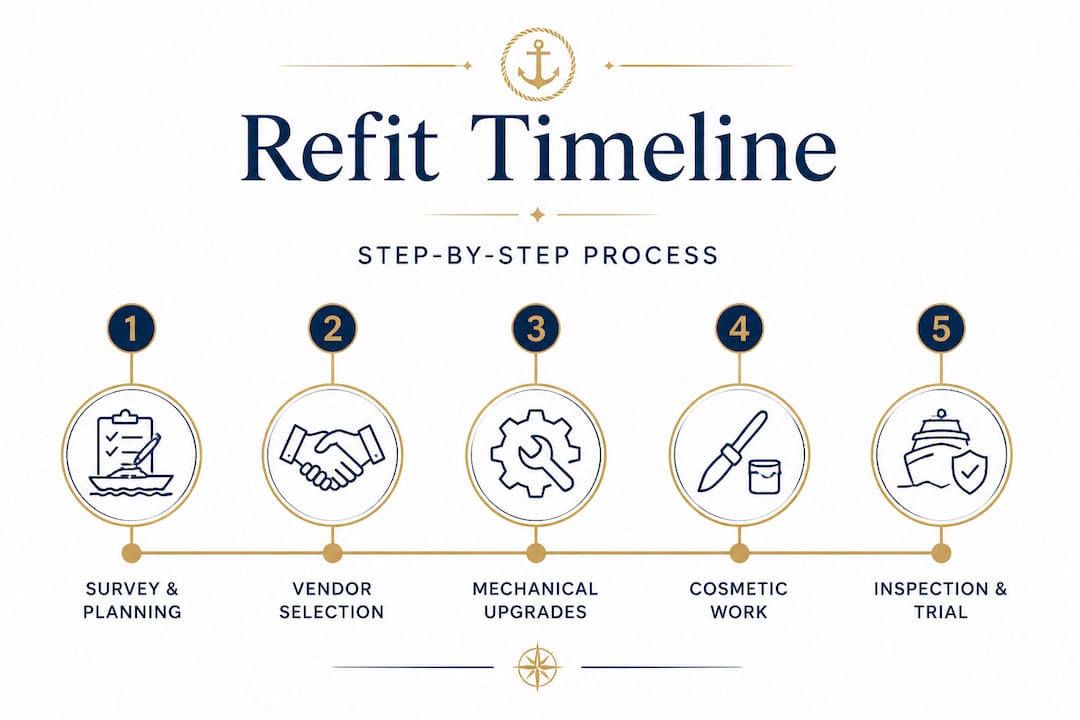
Once you have prepared properly, the next step is to understand the actual timeline and sequence of your refit. Order matters here. Doing interior work before hull repairs is like painting a house before fixing the foundation.
Phase breakdown for a 70-foot sportfish vessel:
- Survey and planning (2 to 4 weeks): Full marine survey, scope document, vendor sourcing, and final budget approval. This phase sets every decision downstream.
- Haul-out and hull work (2 to 3 weeks): The vessel is pulled from the water for hull inspection, barrier coat application, antifouling paint, through-hull replacements, shaft and propeller assessment, and any structural fiberglass repairs. This is where hull, paint, and gelcoat work happens, and getting it right directly impacts speed and fuel efficiency.
- Mechanical systems upgrades (3 to 6 weeks): Engine service or replacement, gear and propulsion upgrades, alternator changes, seacock replacement, cooling system overhaul, and fuel system servicing. This is the longest phase and the one most prone to delays from parts availability. For a detailed breakdown, the mechanical system refit process covers what to expect at each stage.
- Interior and deck refit (4 to 8 weeks): Cockpit work, helm station upgrades, electronics installation, canvas replacement, upholstery, joinery, and any insulation or sound-deadening improvements. This phase has the widest time range because it is the most owner-driven and customizable.
- Final fitting and commissioning (1 to 2 weeks): Systems integration, dock trials, punch-list resolution, and sea trial. Nothing gets signed off until performance benchmarks are met.
Typical refit phases follow this exact sequence for a reason. Reversing the order creates rework, which is expensive and demoralizing for everyone on the project.
Total expected duration: 3 to 6 months for a large sportfish vessel undergoing a serious, integrated refit.
“The most dangerous moment in any refit is when the owner decides to add scope after the mechanical phase has started. Every addition at that point carries a multiplied cost in labor and schedule impact.” This is something we tell every owner before ink hits paper.
Common pitfalls to watch for:
- Scope creep: New items discovered mid-project that push out the schedule. Manage this by accepting survey findings upfront rather than hoping problems go away.
- Parts availability: Custom or older model parts can take four to eight weeks to source. Order early and confirm lead times before committing to a completion date.
- Underestimating the survey: A survey that reveals osmotic blisters or structural delamination will add weeks and significant cost. Do not underestimate findings to keep the budget comfortable on paper.
For a closer look at the upgrade sequence, our performance upgrade steps resource walks through each phase in detail.
| Phase | Duration | Key activities |
|---|---|---|
| Survey and planning | 2 to 4 weeks | Survey, scope, vendor selection |
| Hull and structural | 2 to 3 weeks | Barrier coat, antifouling, through-hulls |
| Mechanical systems | 3 to 6 weeks | Engines, propulsion, fuel, cooling |
| Interior and deck | 4 to 8 weeks | Electronics, joinery, cockpit, canvas |
| Final and commissioning | 1 to 2 weeks | Sea trial, punch list, sign-off |
Pro Tip: Lock your parts orders for the mechanical phase before haul-out day. Waiting until the boat is on stands to order parts is a classic and avoidable cause of week-long delays.
Major upgrades: What delivers the best performance and value
Understanding the phases is key, but choosing the right upgrades brings the real value. Not all improvements are created equal when it comes to return on investment and measurable on-water performance.
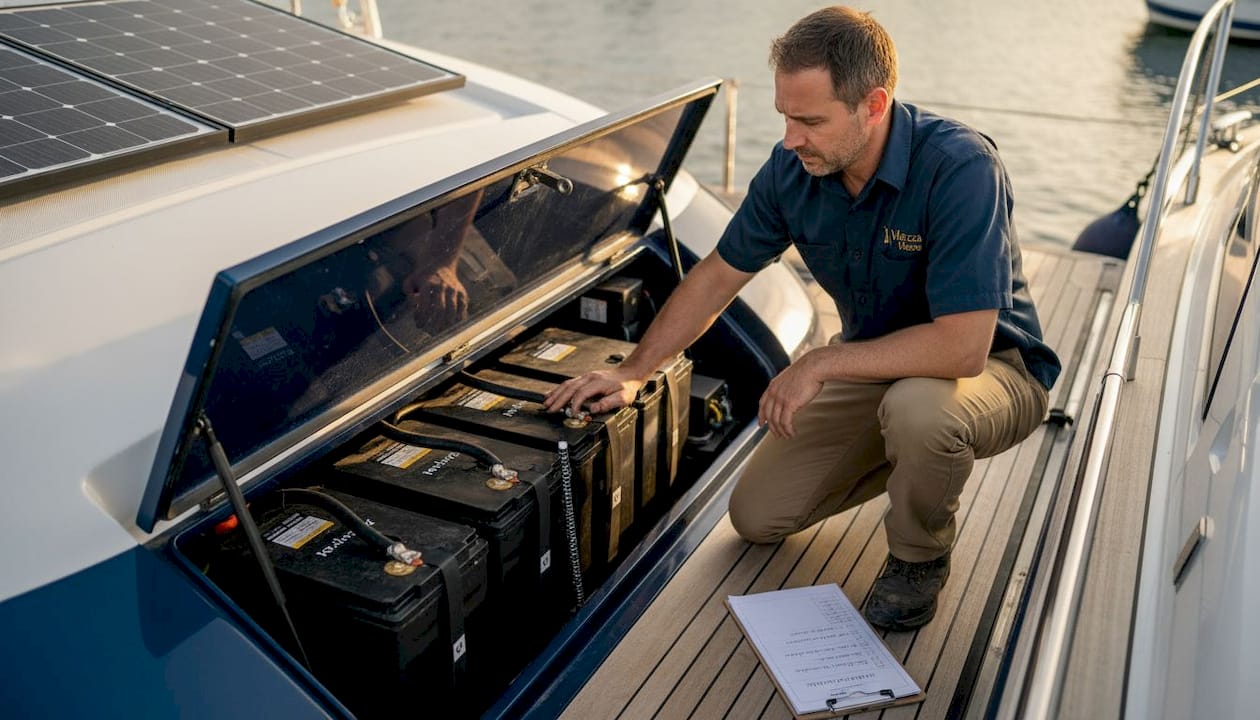
Power and energy systems. A solar array paired with a LiFePO4 lithium iron phosphate battery bank and a modern inverter/charger system gives your vessel genuine off-grid capability. This upgrade typically runs around $20,000 for a full package on a mid-size sportfisher, but the value is real. You run air conditioning, refrigeration, and electronics at anchor without running your main engines or a generator constantly. That means less engine hours, less fuel burn, and a quieter experience at the hook.
Gyro stabilizers and hull modifications. Gyro stabilizers, devices that use spinning gyroscopes to counteract roll motion, dramatically improve ride comfort on offshore runs. Combined with hull modifications like strake refinement or keel tuning, you can expect fuel savings of up to 10 percent and noticeably smoother passage-making. For tournament fishermen spending long days running offshore, this is not a luxury. It is a fatigue reducer that makes you a better angler at the end of a long run.
Modern navigation electronics. Installing a Garmin or Raymarine chartplotter and radar suite with integrated autopilot is one of the highest-return upgrades you can make for safety and efficiency. Modern navigation upgrades include AIS integration, night-vision capable displays, and autopilot systems that hold a precise course in following seas. These systems pay for themselves in fuel alone by enabling optimized routing.
Cockpit and deck upgrades. Teak cockpit work is both functional and aesthetic. Properly maintained or replaced teak provides superior non-slip grip in wet conditions, which matters enormously when you are fighting a big fish or moving quickly around the cockpit. Combined with upgraded outriggers and a rebuilt tower, these changes elevate the entire experience of using the vessel. Explore the full range of sportfish upgrade options to see what is possible.
Interior refit. Cabin comfort has a direct effect on how often and how far you use the boat. Updated upholstery, improved berth arrangements, modern climate control, and quality joinery work are the difference between a vessel you use for day trips and one you live aboard for tournament weeks. See what is possible through well-executed luxury interior refit ideas that balance comfort with the practical needs of a working sportfisher.
Here is where the best returns concentrate:
- Mechanical reliability: Engine service and propulsion upgrades deliver safety, longevity, and performance gains that everything else depends on.
- Navigation electronics: Safety and efficiency improvements are immediate and measurable.
- Energy independence: LiFePO4 systems reduce operating costs and extend offshore capability.
- Hull and bottom work: Direct link to speed and fuel economy, verified on sea trial.
How to verify your refit: Inspection, sea trial, and final sign-off
After completing all upgrades, your job is to verify the work meets expectations. This phase is where owners most commonly let their guard down, especially after months of project fatigue.
Steps to verify your refit properly:
- Schedule an independent post-refit survey. The same surveyor who did your pre-refit assessment is the ideal choice. They already know the baseline condition and can directly compare before and after findings. Do not rely solely on the yard’s own quality check.
- Set performance benchmarks before the sea trial. Agree on specific numbers: target speed at cruise RPM, fuel burn per hour at that speed, vibration levels, and system performance under load. Without defined benchmarks, the sea trial becomes a subjective exercise.
- Conduct a full sea trial, not just a dock trial. Take the vessel offshore under conditions that replicate real use. Run at cruise speed for an extended period. Test all electronics under real-world signal conditions. Push the autopilot and verify the stabilizer performance.
- Build and track a punch list. Any item that does not meet agreed scope or benchmark gets written down before you return to the dock. Not after. Not from memory.
- Do not sign off until the list is clear. Retention of final payment until punch-list resolution is standard practice and protects your investment.
“A sea trial that verifies speed increases of up to 2 knots and fuel savings of 10 percent from hull and mechanical work is not unusual. If your yard cannot point to measurable gains at sea trial, ask why.”
If you experience any post-refit mechanical concerns, a thorough engine troubleshooting guide can help you identify issues before they become bigger problems.
What most owners get wrong with sportfish refits (and how to avoid it)
Here is the honest perspective after working alongside Florida sportfish owners through dozens of refit projects: the biggest losses happen before the first tool is lifted.
Owners consistently underinvest in the planning phase. They want to start cutting and rebuilding, and the deliberate work of surveying, scoping, and budgeting feels slow. But every dollar saved on planning tends to cost three dollars in rework or surprise expenses. A thorough scope document is not bureaucracy. It is the blueprint that keeps everyone accountable.
The cosmetic refit trap is real and expensive. Owners who repaint, re-upholster, and replace canvas without addressing mechanical, structural, or navigation deficiencies end up with a beautiful vessel that still underperforms and depreciates. Resale buyers and brokers look past cosmetics quickly. What holds value is documented mechanical integrity, updated systems, and a clean survey report.
Relying exclusively on yard recommendations is another vulnerability. Yards have preferred vendors and preferred solutions. That does not mean they are wrong, but you deserve independent verification. Insist on before-and-after performance data. Have your independent surveyor review completed work. Use sea trial benchmarks you agreed to in advance, not the yard’s assessment of what is acceptable.
Document everything. Every work order, every part number, every survey finding, and every sea trial result. This documentation is a tangible asset at resale and protects you if warranty issues arise. Owners who cannot produce refit records get lower offers and face more skeptical buyers. Well-documented interior carpentry work and other improvements that include invoices and photos command meaningfully better resale outcomes.
The smartest refit is the one that prioritizes what you can measure: speed, fuel efficiency, systems reliability, and comfort hours offshore. Everything else is secondary.
Get help with your sportfish refit in Florida
If your sportfish is ready for a transformation, having the right team makes the difference between a project that stays on scope and one that drags on for a year.

At Mazza Marine, Mino and Luigi have built a network of trusted Florida vendors covering every aspect of a serious refit, from mechanical and nav electronics to interior joinery, custom welding, and hull work. We coordinate the entire process so you are not chasing contractors across three boatyards. Whether you are planning your first major refit or returning for another season of upgrades, our expert step-by-step refit services and in-depth Florida refit guide give you a clear path forward. For bespoke joinery and cockpit work, explore our carpentry and interior upgrades to see the quality we deliver. Call us or send a message. Smooth sailing starts here.
Frequently asked questions
How long does a full sportfish refit usually take?
A complete refit for a 60 to 70-foot sportfish typically takes 3 to 6 months, depending on scope, parts availability, and yard scheduling.
What are the most valuable upgrades during a refit?
Solar, LiFePO4, and modern nav upgrades, combined with hull modifications, consistently deliver the highest measurable performance and usability gains.
How much should I budget for a sportfish refit in Florida?
Budgets start around $2,000 for targeted systems work, but a meaningful performance and comfort refit typically runs $20,000 and up, with major projects reaching hundreds of thousands of dollars.
Do I need a post-refit survey and sea trial?
Yes, both are essential. The post-refit sea trial confirms work quality and verifies that promised performance improvements, like speed gains and fuel savings, have actually been achieved before you sign off.
Recommended
Text or Call 954-330-9653 Schedule Appointment
Mazza Marine Yacht Services & Refit

Fiberglass Upgrades and Damage Repair

Premium Yacht Paint/ Faux Teak

Fishing: Custom Rods, Reels,Tackle

Electrical, Electronics and Navigation

Paint, Hull and Gelcoat

Teak Decks, Wood Cabinets, Carpentry

Canvas, Enclosures and Upholstery

Mechanical, Repower and Running Gear

Plumbing, Bilge and Thru-Hulls

Welding and Custom Fabrication

Interior Refit And Past Work
Get your yacht value Estimate
"*" indicates required fields