
View Our Recent Work:

Overview: The fastest, lowest-risk route to buy a sport fishing boat in Florida right now is to work with a dedicated buyer’s broker who knows Florida closings. A buyer’s broker gives you off-market access, negotiation protection, and survey oversight that a listing broker simply cannot provide. Florida Statutes Chapter 328 requires titling and registration within 30 days of purchase, and a properly executed bill of sale is your only legal proof of ownership during that window. Mazzamarine connects buyers with experienced Florida yacht professionals who handle every step from first showing to final registration.
Two things to do right now:
- Contact Mazzamarine for a buyer consultation and request a bill-of-sale template before you make any offer.
- Secure a certified marine surveyor (ABYC or SAMS accredited) before you commit to any vessel.
Pro Tip: Never contact a listing broker as your sole representative. That broker works for the seller. Your interests and theirs are not the same.
Table of Contents
- Where can you find sport fishing boats for sale in Florida?
- Practical places to search for Florida sportfishing listings fast
- How do you evaluate and compare sport fishing boats by size and budget?
- What should you inspect before buying a used sportfishing boat?
- What are Florida’s titling, registration, and tax requirements for buyers?
- What does it really cost to own a sportfishing boat in Florida?
- How does financing and closing work for a sportfishing boat purchase?
- Why does a dedicated buyer’s broker matter in Florida?
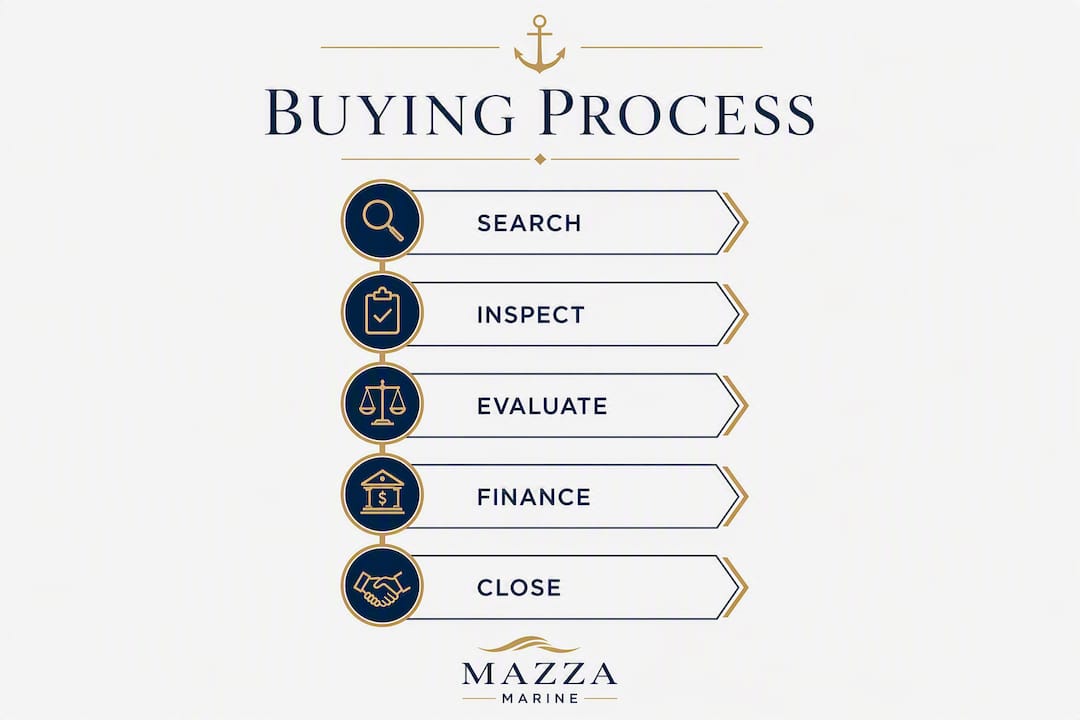
- Your step-by-step checklist from first search to registration
- Key Takeaways
- The part most buyers get wrong about buying in Florida
- Mazzamarine: buying support, refits, and maintenance in one place
- Useful sources for Florida boat buyers
Where can you find sport fishing boats for sale in Florida?
Florida is one of the most active sportfishing markets in the world, and the buying channels vary widely in what they actually deliver. Choosing the wrong channel costs you time, money, and sometimes the boat itself.
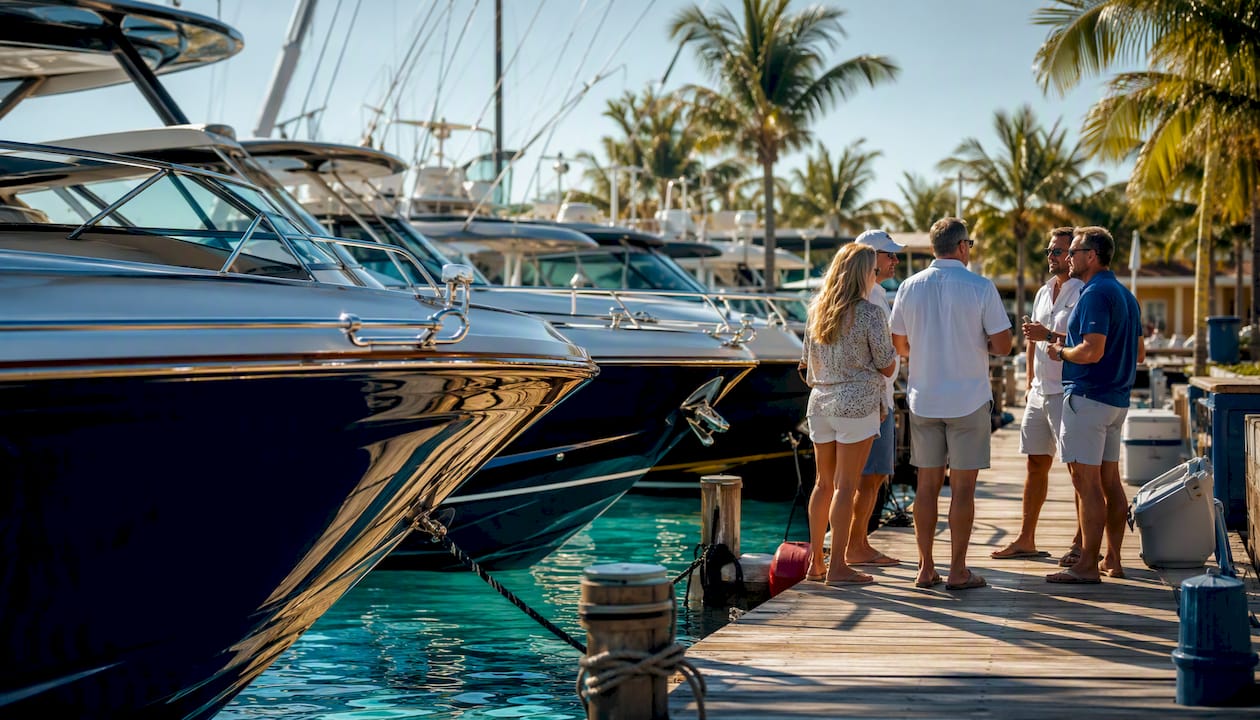
| Channel | Price fit | Seller type | Financing | Survey/sea trial | Timeline |
|---|---|---|---|---|---|
| National marketplace (self-serve) | Broad range | Mixed broker/FSBO | Varies | Buyer arranges | 4–10 weeks |
| Brokerage listing | Mid to high | Listing broker | Often available | Broker facilitates | 4–6 weeks |
| Buyer’s broker | Mid to high | Any | Guided | Broker manages | 4–6 weeks |
| Marina/onsite display | New and used | Dealer or owner | Dealer financing | Dealer arranges | 2–6 weeks |
| Private/FSBO | Lower asking | Owner direct | Rare | Buyer arranges | 2–8 weeks |
| Custom builder | High | Builder | Builder financing | Pre-delivery sea trial | 6 months |
A few things worth understanding about each channel:
- National marketplaces give you the widest inventory view but no representation. You are on your own for negotiation, survey scheduling, and paperwork.
- Listing brokers represent the seller. They will facilitate a transaction, but their fiduciary duty is not to you.
- Buyer’s brokers work exclusively for your interests. Professional brokers prepare offers, collect escrow deposits, and negotiate survey contingencies that protect your deposit if the survey reveals problems.
- Marina/onsite displays are useful for seeing boats in person quickly, but inventory is limited to what that dealer carries.
- FSBO listings often have lower asking prices but carry higher risk: no survey facilitation, no escrow management, and no professional guidance on Florida title requirements.
- Custom builders are the right path only if you have a specific configuration in mind and a longer timeline.
Practical places to search for Florida sportfishing listings fast
The best searches combine a national marketplace with direct outreach to local brokers and marina contacts. Here is how to filter effectively.
Marketplace search filters to apply:
- Location: Florida, or specific metro (Miami, Fort Lauderdale, Palm Beach, Tampa, Naples)
- Boat type: sportfish, sportfishing, sportfish yacht, center console, express fisherman
- Length: set your target band (see Section 4 below)
- Price: set a ceiling 10–15% above your true budget to catch negotiable listings
- Engine hours: filter out anything over your threshold (typically 1,000–1,500 hours for a used diesel)
- Listing age: prioritize listings under 60 days; older listings often have undisclosed issues or unrealistic pricing
- HIN present: skip any listing that does not display the Hull Identification Number
Off-market and marina outreach checklist:
- Call marina dockmaster offices directly and ask about boats coming off lease or owners looking to sell privately.
- Ask local brokers for “incoming” listings not yet published online.
- Check marina bulletin boards in Fort Lauderdale’s 17th Street Causeway corridor and the Miami River area.
- Request broker inventory sheets from Florida-based brokerage houses with active sportfish inventory.
- Filter for “broker vs. owner” on marketplace listings to separate represented boats from FSBO.
- Confirm haul-out location before traveling: a boat listed in “Florida” may be in a yard two hours from the nearest major marina.
How do you evaluate and compare sport fishing boats by size and budget?
Length is the single most important variable in a sportfishing purchase because it determines offshore capability, fuel burn, crew comfort, and storage options. Here is how the major length bands break down for Florida buyers.
- 20–26 feet: Inshore and nearshore fishing, trailerable, center-console dominant. Ideal for bay fishing, flats, and light offshore runs in calm conditions. Used examples in good condition typically range from $25,000 to $80,000 depending on engine configuration and age.
- 26–34 feet: The most versatile band for Florida. Capable of Gulf Stream runs in reasonable weather. Twin outboards common. Used sportfish in this range typically run $60,000 to $200,000; newer twin-engine center consoles push higher.
- 34–45 feet: True offshore sportfishing territory. Express fisherman and convertible designs dominate. Diesel inboards or large outboard arrays. Used examples range from $150,000 to $600,000+ depending on brand, engine hours, and refit history.
- 45 feet and above: Tournament-grade sportfishing yachts. Full-time liveaboard capability, fighting chairs, outriggers, tower, and generator standard. Prices start around $400,000 for older vessels and climb well past $2 million for late-model builds.
| Dimension | What to check |
|---|---|
| Price / budget | Compare asking price to recent sold comps in the same length/brand/year band |
| Length & offshore range | Match to your target fishing grounds (inshore, nearshore, Gulf Stream, deep water) |
| Condition: new vs. used | Engine hours, service records, haul-out history, osmotic blister history |
| Seller type | Brokered listing vs. FSBO; brokered boats carry more documentation |
| Included equipment | Outriggers, tower, electronics suite, live-bait system, recent refit items |
| Financing availability | Dealer and brokerage listings more likely to have lender relationships |
| Haul-out / marina access | Confirm yard location, slip availability, and hurricane storage options |
What should you inspect before buying a used sportfishing boat?
A professional marine survey is non-negotiable. But knowing what the surveyor is looking for helps you ask better questions and spot red flags before you even book the appointment.
- Request records first. Before the survey, ask for engine logs, service invoices, haul-out reports, and any prior survey documents. Missing records are a red flag on their own.
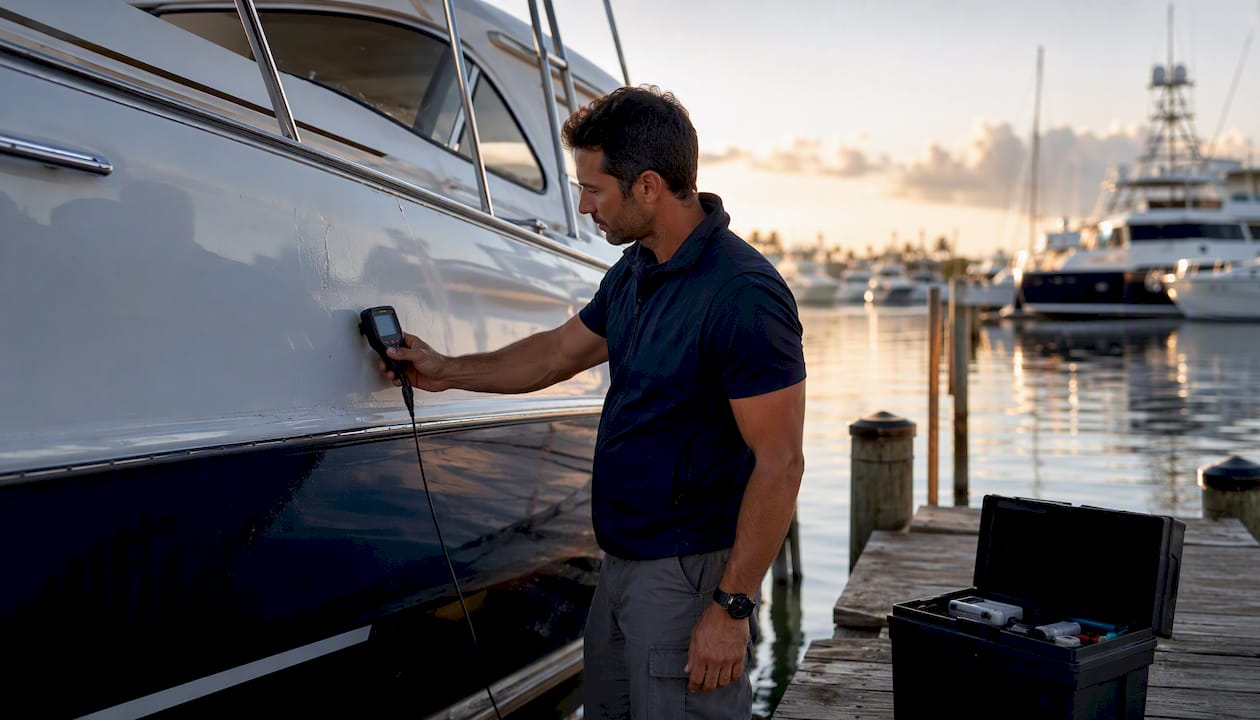
- Hull and structural integrity. The surveyor will check for soft spots in the deck and transom, osmotic blistering below the waterline, and stringer condition. Soft transoms on older fiberglass sportfish are common and expensive to repair.
- Engine room wiring. Clean, labeled wiring indicates good maintenance; bundled or corroded wiring is a major red flag even when the rest of the boat looks pristine. Wiring problems lead to costly post-sale repairs and fire risk.
- Engine mounts, gearboxes, and thru-hulls. Check for corrosion, weeping seacocks, and worn mounts that cause vibration underway.
- Bilge pumps and fresh water systems. Confirm bilge pumps are operational and that fresh water lines show no signs of mold or deterioration.
- Electronics, outriggers, and tower. Verify all electronics power up and function. Inspect outrigger bases and tower welds for fatigue cracks.
- Sea trial checklist. Run the engines to operating temperature. Check oil pressure and coolant temp under load. Test steering response, observe vibration at cruise RPM, confirm all electronics function underway, and check for any exhaust smoke color anomalies.
- Hire the right people. Use a certified marine surveyor (ABYC or SAMS accredited), a qualified diesel mechanic for compression and diagnostics, and an independent captain for the sea trial if you are not an experienced operator yourself.
Pro Tip: Check the marine battery installation and wiring condition carefully during any survey. Corroded terminals and undersized cables are among the most common hidden electrical problems on used sportfish boats in Florida’s salt environment.
What are Florida’s titling, registration, and tax requirements for buyers?
Florida has clear, mandatory rules. Missing any of them delays possession and can create legal exposure.
- The 30-day rule. Florida law requires every newly purchased vessel to be titled and registered within 30 days. During that window, the bill of sale serves as your temporary certificate of number and must be aboard whenever the vessel is underway.
- Bill-of-sale contents. The bill of sale must include: vessel make, length, propulsion type, Hull Identification Number (HIN), and signatures from both buyer and seller. A bill of sale missing any of these elements does not qualify as a valid temporary certificate.
- Where to file. Applications for title and registration are filed at a county tax collector or license plate agent office. You can register for one or two years.
- Sales tax. Florida’s base sales tax on vessel purchases is 6%, with local surtaxes that vary by county. Consult a qualified marine tax attorney before considering any removal-from-state strategy; the legal risks are real and the IRS and Florida DOR both scrutinize large vessel transactions.
- Documentation and lien searches. Documentation agents perform title searches and prepare filings and are standard practice in experienced yacht transactions. Do not skip this step.
- Collect these documents before closing: executed survey and sea-trial report, title search results, proof of payment or escrow instructions, insurance binder, marina reservation or haul-out confirmation, and a signed bill of sale with all required fields.
A typical Florida brokerage closing runs 4–6 weeks from accepted offer to ownership transfer. Cash purchases with clean title can close in 2–3 weeks. Financed deals or vessels with complex title histories may extend to 8 weeks or more.
A brokerage closing for a typical yacht can involve roughly 23 forms; foreign-flagged vessels may require 27 or more. Working with an experienced broker or documentation agent is not optional for complex transactions. (Palm Beach Yacht Sales)
What does it really cost to own a sportfishing boat in Florida?
The purchase price is only the beginning. Florida’s climate, marina scarcity, and hurricane season create an ownership cost structure that surprises many first-time buyers.
- Insurance: Sportfishing boats carry higher premiums than comparable cruising vessels due to offshore exposure and higher replacement values. Budget meaningfully above what you might expect from a car insurance analogy.
- Marina slip or high-and-dry rack: Rack space in South Florida is genuinely scarce. Waitlists at popular facilities run months long, and annual fees vary widely by location and vessel size.
- Hurricane storage and haul-out: Insurance premiums and the cost of hurricane storage and marina space can materially change a buyer’s total annual ownership cost. Budget for at least one haul-out per year and a dedicated hurricane prep plan. Mazzamarine’s hurricane prep guide for Florida boat owners covers storage and prep steps in detail.
- Routine maintenance: Engines, outdrives, generators, zincs, bottom paint, and annual electronics service add up quickly. A structured maintenance program reduces both fuel costs and unexpected repair bills.
- Fuel: A twin-diesel 40-foot sportfish running at cruise RPM burns significantly more per hour than most buyers anticipate. Factor fuel into every trip budget.
- Unexpected repairs: Older vessels especially carry hidden costs. Budget a contingency reserve of 5–10% of the purchase price annually for unplanned repairs.
The practical reality, as Florida yacht professionals consistently note, is that insurance, hurricane prep, and marina scarcity often dominate the annual ownership budget more than the boat’s loan payment.
How does financing and closing work for a sportfishing boat purchase?
Marine lending is a specialized category, and the mechanics differ from a car loan or a home mortgage in ways that matter.
- Loan terms: Marine lenders typically offer terms of 5–20 years depending on vessel age, size, and loan amount. Older vessels (15+ years) often qualify for shorter terms only.
- Down payment: Expect 10–20% down for newer vessels with clean title; older or higher-risk vessels may require 20–30%.
- Dealer and broker financing: Many brokerage houses maintain relationships with marine lenders and can facilitate pre-approval. Dealer financing is available for new builds and certified pre-owned inventory.
- Escrow mechanics: A deposit (typically 10% of the agreed price) goes into escrow at the time of the accepted offer. The survey and sea-trial contingency allows the buyer to renegotiate or withdraw if the survey reveals material defects, with the deposit returned.
- Documentation agents: Use one. They perform lien searches, prepare title transfer documents, and prevent the errors that delay closings.
Before applying for financing, have these ready:
- Recent financial statements or proof of funds
- Government-issued ID
- Proof of insurance (or a binding quote)
- Vessel specifications and HIN
- Bill-of-sale template (Mazzamarine can provide one)
For a detailed breakdown of lending products available to Florida buyers, Mazzamarine’s Florida boat financing guide covers current loan structures and lender expectations.
Why does a dedicated buyer’s broker matter in Florida?
The difference between a listing broker and a buyer’s broker is not subtle. A listing broker’s job is to sell the boat. A buyer’s broker’s job is to protect you.
- Off-market access: Experienced buyer’s brokers know about boats before they hit public listings, giving you first-look advantage on the best inventory.
- Negotiation: A buyer’s broker negotiates price, repair credits, and closing terms on your behalf, not the seller’s.
- Survey and sea-trial management: They coordinate surveyors, mechanics, and sea-trial captains, and they know which findings are deal-breakers versus negotiating points.
- Florida documentation guidance: They walk you through the 30-day rule, bill-of-sale requirements, and escrow mechanics so nothing falls through the cracks.
- Post-sale onboarding: The best buyer’s brokers stay engaged after closing, connecting you with service vendors, marina contacts, and refit specialists.
“Hiring your own buyer’s broker delivers better outcomes than contacting listing brokers directly because the buyer’s broker works only for your interests — not the seller’s.” (Florida yacht sales professionals, 2026)
Mazzamarine brings brokerage representation together with hands-on service capabilities: urgent repairs, repowering, mechanical overhaul, electronics upgrades, interior refits, and sportfish-specific upgrades, including outriggers, towers, and performance rigging. That combination means your buyer’s broker and your post-sale service team are the same trusted network.
Pro Tip: Ask any buyer’s broker how many Florida sportfishing closings they have handled in the past 12 months. Local closing experience matters more than general brokerage volume.
Your step-by-step checklist from first search to registration
Follow this sequence and you will not miss a critical step.
- Shortlist boats with a visible HIN, clear listing history, and documented engine hours.
- Order a pre-purchase survey from an ABYC or SAMS certified surveyor and schedule a sea trial.
- Secure financing pre-approval or confirm proof of funds before making an offer.
- Execute a written offer with a 10% deposit in escrow and a survey/sea-trial contingency clause.
- Complete closing paperwork: signed bill of sale (with all required Florida fields), title transfer, and lien release.
- File for title and registration at your county tax collector’s office within 30 days of purchase.
- Arrange insurance coverage with a binder in hand before the vessel leaves the seller’s dock.
- Reserve marina slip or high-and-dry rack storage, and confirm hurricane storage availability if buying before June.
Additional reminders before taking delivery:
- Verify your tow vehicle’s GVWR and Gross Rear Axle Rating on the door decal before trailering. A 20-foot center console on a tandem trailer can weigh roughly 5,000 pounds, exceeding many SUVs’ safe towing capacity.
- Confirm insurance quotes are binding, not just estimates, before closing.
- If buying in spring, reserve hurricane storage immediately. Availability disappears fast.
Key Takeaways
Working with a dedicated buyer’s broker is the single most effective way to buy a sport fishing boat in Florida, protecting your deposit, your timeline, and your post-sale ownership experience.
| Point | Details |
|---|---|
| Use a buyer’s broker | A buyer’s broker works exclusively for you, providing off-market access and negotiation protection. |
| Florida 30-day rule | Title and register within 30 days; your bill of sale (with HIN, make, length, propulsion, and signatures) is your legal proof of ownership during that window. |
| Budget beyond the purchase price | Insurance, hurricane storage, and marina scarcity often exceed the annual loan payment for Florida sportfishing boats. |
| Brokerage closings require documentation | A typical Florida brokerage closing involves roughly 23 forms; use a documentation agent to avoid delays. |
| Mazzamarine for buying and beyond | Mazzamarine connects buyers with Florida yacht experts for brokerage, post-sale maintenance, refits, and sportfish upgrades. |
The part most buyers get wrong about buying in Florida
There is a persistent belief that finding the right boat is the hard part. It is not. The hard part is everything that happens between “accepted offer” and the moment you actually own the vessel free and clear.
Florida’s combination of high transaction volume, hurricane-season urgency, and genuinely complex documentation requirements creates a closing environment where small errors become expensive delays. Buyers who go it alone, contacting listing brokers directly and arranging their own surveys without professional coordination, routinely discover problems after closing that a buyer’s broker would have caught or negotiated away before signing.
The other thing buyers consistently underestimate is the ongoing cost structure. A 38-foot sportfish in South Florida is not just a purchase. It is an annual commitment to insurance, maintenance, storage, and fuel that can rival a second mortgage if you have not budgeted carefully. The buyers who thrive in this market are the ones who did the math before they fell in love with a specific boat.
None of this is a reason to hesitate. Florida is genuinely one of the finest places in the world to own and fish from a sportfishing boat. The water, the species, the culture, and the infrastructure are unmatched. The point is simply that the buyers who enjoy it most are the ones who bought right, with professional representation and a clear-eyed ownership budget from day one.
Mazzamarine: buying support, refits, and maintenance in one place
Buying a sportfishing boat in Florida means you need more than a transaction. You need a team that stays with you after the ink dries.
Mazzamarine is that team. From initial buyer consultation through survey coordination, closing support, and post-purchase onboarding, Mazzamarine’s network of Florida yacht experts handles the full arc of ownership. After closing, the same network covers urgent repairs, engine repowering, mechanical overhauls, electronics and navigation upgrades, interior refits, custom sportfish rigging, and hurricane prep coordination. There is no handoff to a separate service company. The relationship you build during the buying process is the same one that keeps your boat running at its best for years afterward.
If your survey reveals issues, Mazzamarine’s yacht maintenance and reliability program gives you a structured path to address them without scrambling for vendors. And if you are evaluating a boat whose engine hours give you pause, the repower planning guide helps you decide whether to rebuild, replace, or walk away.
Contact Mazzamarine today to schedule your buyer consultation and get a bill-of-sale template, a surveyor referral, and a post-purchase maintenance plan built around your specific vessel.
Useful sources for Florida boat buyers
Every Florida sportfishing buyer should bookmark these resources before making an offer.
| Source | What you will find there |
|---|---|
| Florida Statutes §328.46 — The Florida Senate | The exact text of the 30-day registration rule and bill-of-sale requirements |
| FLHSMV Vessel Titling and Registrations | Official state guidance on where and how to file for title and registration |
| Florida Statutes §328.03 — The Florida Senate | Certificate of title requirements and application deadlines |
| Florida Sportsman — How to Choose a New Boat | Practical guidance on boat selection, towing, and ownership costs for Florida conditions |
| Yachting Experts — Sportfishing Boat Buying Guide | Survey red flags, engine-room inspection priorities, and buyer due diligence checklist |
| Yachting Experts — Florida Yacht Sales Process | Closing timelines, documentation agent roles, and title transfer steps |
| Mazzamarine — How to Buy a Yacht in Florida | Practical checklist and timeline for Florida yacht purchases |
Before closing, save or print:
- The FLHSMV vessel titling page (for county office locations and required forms)
- Your surveyor’s written report and sea-trial notes
- The executed bill of sale with all required Florida fields completed
- Your insurance binder and marina reservation confirmation
Recommended
Text or Call 954-330-9653 Schedule Appointment
Mazza Marine Yacht Services & Refit

Fiberglass Upgrades and Damage Repair

Premium Yacht Paint/ Faux Teak

Fishing: Custom Rods, Reels,Tackle

Electrical, Electronics and Navigation

Paint, Hull and Gelcoat

Teak Decks, Wood Cabinets, Carpentry

Canvas, Enclosures and Upholstery

Mechanical, Repower and Running Gear

Plumbing, Bilge and Thru-Hulls

Welding and Custom Fabrication

Interior Refit And Past Work
Get your yacht value Estimate
"*" indicates required fields