
View Our Recent Work:

Overview: the fastest way to protect a yacht is a written storm prep workflow you activate on a clear T-hours timeline, T-72 through T-12, with one decision made first: haul out, relocate, or secure in place. Pick that path before you touch a single line.
Start these within 72 hours of a watch or warning:
- Confirm your haul-out or hurricane-hole slot with the marina or yard
- Pull your written plan and crew contact list
- Begin stripping canvas, sails, and loose gear
- Test bilge pumps and charge every battery bank
Pro Tip: Print your checklist now and laminate it. Cell service and Wi-Fi fail exactly when you need the plan most.
If your rigging, mooring hardware, or systems fail this checklist, call a professional before the storm, not after.
Key Takeaways
A storm prep workflow for yachts succeeds when the haul-out, relocate, or secure-in-place decision is locked before T-72 and every subsequent task follows a written, timed checklist.
| Point | Details |
|---|---|
| Decide first, act second | Lock haul out, relocate, or secure-in-place before starting line work or system shutdowns. |
| Practice before hurricane season | Run a full drill on a calm weekend to expose weak points in your timeline. |
| Budget battery runtime | Test bilge pumps under load and confirm battery banks can run them for 24+ hours. |
| Document everything | Timestamped photos and a written action log speed up insurance claims after landfall. |
| Call in professional support | Mazza Marine coordinates haul-out logistics and urgent repairs for owners activating their storm plan. |
Table of Contents
- Building a Storm Prep Workflow for Yachts That Actually Works
- Deciding Whether to Haul Out, Relocate, or Stay in the Slip
- How to Secure a Yacht in a Marina Berth
- Trailer and Haul-Out Prep for Smaller Vessels
- Mooring, Anchoring, and Hurricane-Hole Options
- Testing the Systems That Actually Keep Your Yacht Afloat
- What Goes in Your Storm Kit
- The T-Hours Timeline: What to Do and When
- What to Do After the Storm Passes
- Practicing the Plan Before You Ever Need It
- How Mazza Marine Backs Up Your Storm Plan
- Crew Safety Comes Before the Vessel Every Time
- Talking to Authorities and Emergency Services Before and During a Storm
- Securing Everything Beyond Sails and Canvas
- Keeping Power Running When the Grid Doesn’t
- Which Weather Tools Actually Matter for Boaters
- Turning the Timeline Into an Assigned Task List
- What I’ve Learned Watching Storm Plans Succeed and Fail
- Where to Go for Official Storm Guidance
- Get Professional Backup for Your Storm Prep Plan
- Frequently Asked Questions
- Sources
Building a Storm Prep Workflow for Yachts That Actually Works
A storm prep workflow for yachts is only as good as the paperwork behind it. The NHC’s guidance for marine interests is blunt about this: owners need a written checklist, an equipment list, and a crew that has actually seen the plan before a tropical cyclone threatens, not during one. That’s the difference between a workflow and a scramble.
Here’s what a real pre-season file looks like:
- A written plan stored both onshore and in cloud storage, plus a printed copy aboard and in your truck
- Full vessel inventory: hull identification number, serial numbers on engines and electronics, current photos and a walkthrough video, updated every season
- Signed haul-out and storage agreements with your marina or boatyard, with notification triggers spelled out in writing so nobody argues about who calls whom
- A storm kit with spare lines, anchors, pumps, batteries, and a handheld VHF, checked and restocked every spring
- Seasonal inspection of cleats and backing plates, dock pilings, chafe points, bilge pump function, and battery capacity
Pro Tip: Do your seasonal inspection the same weekend every year, ideally right before hurricane season opens. A fixed date beats a mental note you’ll forget in March.
Deciding Whether to Haul Out, Relocate, or Stay in the Slip
This decision comes first, before you touch a line or pull a sail cover. Vessel type, your marina’s construction and elevation, local surge risk, and how much road and haul-out capacity you can realistically access all push you toward one of three paths.
Haul out if your yard has a confirmed slot, your route stays open, and surge risk at your slip is high. Relocate to a hurricane hole if your vessel can make the passage in time and the anchorage offers real protection from fetch and current. Secure in place only when the first two aren’t viable and your slip has strong pilings, good chafe protection, and a marina with a written storm plan of its own.
Each path has its own action list:
- Haul out: confirm the slot in writing, map your route, prep the trailer or cradle
- Relocate: chart the passage, confirm fuel range, notify the marina you’re leaving
- Secure in place: double every line, rig spring lines fore and aft, and stage chafe gear immediately
Pro Tip: Treat this as a state machine. Lock your relocation or haul-out decision before you shut down systems or strip electronics. Switching plans midway just doubles your workload and your risk.
How to Secure a Yacht in a Marina Berth
If you’re staying in the slip, follow this sequence in order rather than jumping between tasks.
- Double every dock line and add crossing spring lines fore and aft, attached high on the pilings to allow for storm surge.
- Rig chafe protection at every point a line touches a cleat, chock, or piling, and set fenders and fender boards where the hull will actually make contact as the water rises.
- Strip windage: sails, canvas, Bimini tops, dinghies, and anything loose on deck comes off or gets lashed down hard.
- Seal watertight points: hatches, ports, and vents closed and secured, windows taped if your vessel plan calls for it, and through-hulls plugged or seacocks closed per your own shutdown checklist.
- Manage shore power: decide when to disconnect, and make sure bilge pumps stay powered on battery banks regardless.
- Coordinate with the marina in writing: leave your plan, contact numbers, and authorization for emergency access or haul-out if you can’t return in time.
Extra-long lines matter more than most owners think. FWC’s storm guidance specifically calls for doubled lines and cross-springs on berthed vessels, precisely because surge can lift a boat higher than a standard line allows for.
- Use nylon three-strand for stretch and shock absorption, not stiff polyester
- Chafe gear goes on every contact point, not just the obvious ones
- Confirm your marina’s own hurricane SOP in writing before the season starts
Trailer and Haul-Out Prep for Smaller Vessels
If your boat can come out of the water, do it early, because every yard in your county is chasing the same haul-out slots the moment a watch is issued.
- Confirm your hauler or boatyard agreement before the season, not during storm week
- Inspect trailer tires, bearings, axles, and lash points now, while there’s no line at the shop
- Stage blocks and check tow-vehicle readiness
- Lash the vessel to the trailer at every rated point, not just the bow eye
- Set tire pressure to the trailer’s rated load, and for small open boats, partial-fill with water for ballast if your plan calls for it
- Choose inland storage on elevated ground, away from flood zones, and anchor or ground the trailer itself against wind
Mooring, Anchoring, and Hurricane-Hole Options
A dedicated hurricane hole, a reinforced slip, or a properly rigged mooring each offer real protection, and the right choice depends on your local geography more than personal preference. Sand holds best, followed by clay and hard mud. Rock and soft mud are poor holding ground and invite dragging or grounding.
Helix moorings deserve real consideration here. A helix mooring screws deep into the seabed and typically holds far better than a standard mushroom anchor or dead weight, which is why owners in exposed anchorages increasingly install them ahead of season rather than relying on a single hook. If you’re anchoring rather than mooring, use multiple anchors set at angles, with scope of 10:1 or more for offshore exposure, and mix chain and rope for both strength and stretch.
- Inspect swivels, shackles, and chain on any permanent mooring before June
- Double up on mooring pendants where your bow fitting allows it
- Never rely on a single anchor point in an exposed hurricane hole
Testing the Systems That Actually Keep Your Yacht Afloat
Every system on this list needs a pass or fail answer before you leave the boat, not a guess.
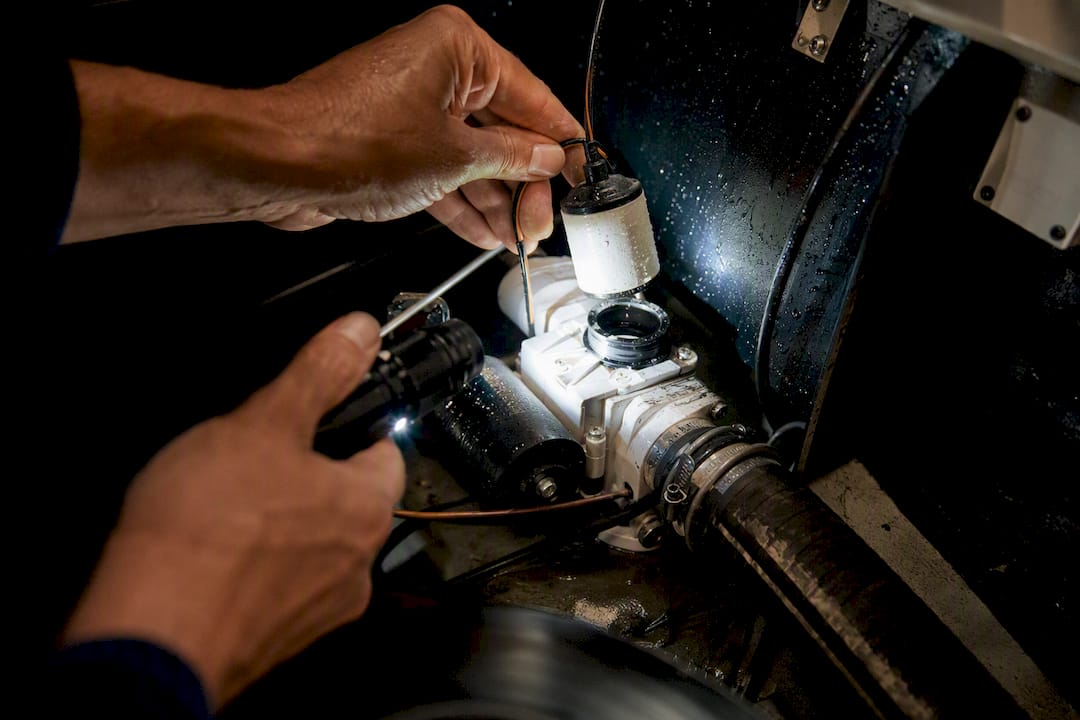
Your bilge system matters more than almost anything else on the vessel. Test the primary and secondary pumps under load, verify the float switches trigger correctly, and confirm how long your fully charged battery bank can actually run the pumps. Owners routinely forget to calculate expected runtime, and a pump with a dead battery six hours into the storm is the same as no pump at all.
| System | Test | Pass Criteria |
|---|---|---|
| Bilge pumps | Run under simulated load | Both pumps cycle, float switches trigger correctly |
| Battery bank | Check voltage after full charge | Holds rated voltage, runs pumps 24+ hours |
| Seacocks/through-hulls | Inspect seals, close or plug | No seepage, action logged in writing |
| Fuel system | Fill tanks, secure valves | Tanks full, valves closed per shutdown plan |
Shut down non-essential electrical loads to stretch your battery budget, and consider a standalone backup bilge pump and battery bank that isn’t wired into the main system at all. For seacocks, inspect the seals, close or plug per your own vessel’s shutdown checklist, and write down exactly what you closed. Fill fuel tanks to reduce condensation risk and secure the valves. Pull portable navigation electronics entirely, and for anything fixed in place, seal panel seams and connectors against water intrusion.
Pro Tip: Run your bilge pump test the same day you check your batteries. A fresh charge hides a weak pump; a real load test doesn’t.
What Goes in Your Storm Kit
Stage this kit ashore or in a dry locker where you can grab it fast, not buried under winter gear in a locker you haven’t opened since October.
- Heavy-duty dock lines, chafe gear, fenders, and fender boards
- Storm anchors, extra shackles, and spare chain
- Spare bilge pumps, backup battery banks, waterproof flashlights, and a manual bailer
- Handheld VHF radio and charged portable radios
- Waterproof copies of insurance, registration, and pre-storm photos or video
- First-aid kit, flares, life jackets, and an EPIRB or PLB if your vessel carries one
The T-Hours Timeline: What to Do and When
Print this table. Hand a copy to every crew member who has a role in your plan.
| Time Marker | Primary Action |
|---|---|
| T-72 | Confirm haul-out/relocation decision; notify marina in writing |
| T-48 | Begin stripping canvas, sails, and loose gear; test bilge pumps |
| T-24 | Double and chafe-protect all lines; seal hatches and through-hulls |
| T-12 | Final battery check, shore power decision, last documentation photos |
| Final | Confirm marina contact list; evacuate crew per your safety plan |
Assign roles now, not during T-72. One person calls the yard, one manages lines and rigging, one runs the systems checklist, and one documents every action with photos and a written log. Final actions before you leave: last battery voltage check, decide on shore power, remove any gear you missed, and confirm the marina has your authorization on file for emergency access.
What to Do After the Storm Passes
Don’t board until you’ve checked for fuel leaks, exposed wiring, or an unstable dock structure. Those hazards kill people every hurricane season, often within the first hour after the wind drops.
- Photograph and video everything with a timestamp before you touch or move anything
- Build a written inventory of damaged items and log every emergency expense as you incur it
- Call your insurer promptly, and understand your policy’s named-storm clause and deductible before you need it, not after
- Preserve all evidence exactly as your carrier’s instructions specify
For salvage and repair, know your escalation order: professional salvors for anything taking on water or aground, marina management for dock and utility damage, and a marine repair provider like Mazza Marine’s emergency repair team for hull, electrical, or mechanical damage that needs fast, qualified hands.
Practicing the Plan Before You Ever Need It
Run your full workflow on a sunny weekend and time every task. NOAA’s guidance is direct about this: actual hurricane prep almost always takes longer than owners expect, and a dry run is the only way to find that out before it costs you.
Name a primary and a secondary responder, including a marina contact and someone authorized to act if you’re out of state. Update contact lists and haul-out agreements every year.
Pro Tip: If your drill runs longer than four hours, your real activation under a T-72 warning will run longer too. Adjust your timeline accordingly.
How Mazza Marine Backs Up Your Storm Plan
A written plan is only as strong as the hands available to execute it, and that’s where a network like Mazza Marine’s fits into hurricane season. We coordinate on-call haul-out logistics across Florida ports, handle urgent electrical and bilge system repairs, and connect owners to salvage referrals when a storm outruns the plan.
- Haul-out and hauling logistics coordination with Florida yards
- Urgent pre-storm and post-storm mechanical and electrical repairs
- Referrals for salvage and structural assessment after major damage
Jason has spent years working alongside Florida yacht owners and captains through hurricane seasons, watching which storm plans hold up and which ones fall apart at T-24.
Crew Safety Comes Before the Vessel Every Time
No storm prep workflow is complete without a plan for the people executing it, and this is the part owners rush past most often. Your vessel’s plan should include a hard deadline for when crew leave the boat, regardless of how much work remains undone.
Run an emergency drill alongside your storm prep drill, not as a separate exercise. Walk the crew through where life jackets and the EPIRB are stored, how to shut down engines and electrical systems in an emergency, and the evacuation route off the dock if conditions deteriorate faster than forecast. Assign one person as the safety lead whose only job is watching conditions and calling the “leave now” decision, separate from whoever is managing lines or systems.
Communication during the event matters as much as before it. Set a check-in schedule with anyone still aboard or nearby, using handheld VHF as your primary channel since cell towers frequently fail in high wind. Establish a rally point ashore where crew regroup if they get separated during evacuation, and make sure every crew member has that address memorized, not just saved in a phone that might lose power.
Build in a hard stop time tied to your T-hours timeline: nobody stays aboard past T-12 under any circumstances, no matter how much rigging work feels unfinished. A yacht can be repaired. Write this rule into your plan in plain language, and make sure every crew member has agreed to it before hurricane season starts, not during the event when adrenaline and pride tend to override good judgment.
Talking to Authorities and Emergency Services Before and During a Storm
Your marina’s harbor master and your county’s emergency management office are your two most important calls once a watch is issued, and both expect to hear from you before the storm, not after.
Notify the harbor master or dockmaster in writing as soon as you commit to your haul-out, relocation, or secure-in-place decision. Marinas that manage hundreds of slips need lead time to coordinate crane schedules, travel lifts, and staff, and owners who wait until T-24 often find the yard already booked solid. If you’re relocating to a hurricane hole in unfamiliar waters, contact the local harbor authority or Coast Guard sector office to confirm the anchorage isn’t restricted and to register your presence, since some jurisdictions track vessels sheltering in protected waters during active storms.
Local emergency management offices, like the guidance published by Lee County’s public safety division, publish evacuation zones and mandatory evacuation orders that apply to marinas and waterfront property, not just residential areas. Know your zone before hurricane season starts.
Once the storm has passed, check in with your marina and local authorities before returning to the waterfront. Many counties restrict access to marinas and docks until structural inspections clear them as safe, and showing up before that clearance can put you in the way of active recovery operations.
Securing Everything Beyond Sails and Canvas
Windage reduction gets most of the attention in storm prep, but the smaller items left behind cause a disproportionate share of post-storm damage and cleanup headaches.
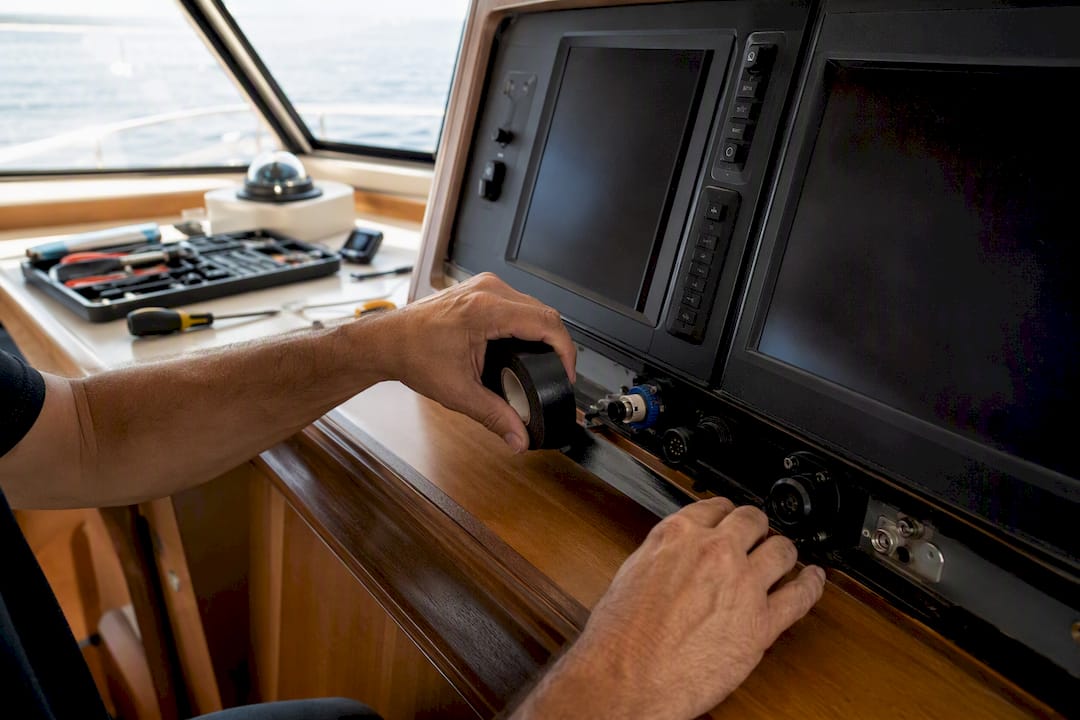
Start with electronics. Remove every piece of portable navigation gear, handheld radios, and chartplotters you can physically detach, and store them in a dry, elevated location ashore. For fixed electronics you can’t remove, seal panel seams and connector points with marine-grade tape to reduce water intrusion risk, since even a sealed helm station can take on water under sustained wind-driven rain.
Personal belongings need the same treatment. Clear cabins of loose items, clothing, electronics, and anything that can become a projectile or absorb water and mold over during a multi-day power outage. Stow or remove cushions and upholstery where possible, since soaked foam cushions are one of the most common and expensive post-storm losses owners report.
Hazardous materials deserve particular attention because they create both safety and environmental liability. Secure or remove batteries not part of your essential bilge system, cleaning chemicals, oil, and any loose fuel containers. A punctured chemical container in a flooded bilge complicates cleanup and can trigger separate reporting requirements depending on what spills.
Walk the boat with a simple rule: if it’s not bolted down or built in, it either comes off the boat or gets lashed down hard enough to survive being inverted. That standard catches the small items owners forget under pressure, from tackle boxes to loose deck chairs to the dinghy davit hardware nobody thinks about until it’s airborne.
Keeping Power Running When the Grid Doesn’t
Prolonged power outages after a major storm can stretch for days or weeks, and your bilge pumps don’t care whether the marina’s shore power is back online.
Before the storm, fully charge every battery bank aboard and calculate expected bilge pump runtime under load, not just at rest. A battery that reads full voltage can still fail to sustain a pump cycling every few minutes for 48 hours straight, which is why a standalone backup battery bank dedicated solely to bilge pumps is worth the investment for any vessel staying in the water.
Shut down every non-essential electrical load before the storm arrives: air conditioning, entertainment systems, non-critical lighting. Every amp saved extends how long your bilge system can run unattended.
For extended outages, portable generators and marine-rated battery banks bridge the gap until shore power returns, but they need their own storm plan. Store portable generators in a dry, secure location away from flood risk, and never run one inside an enclosed space aboard due to carbon monoxide risk. If your marina loses shore power entirely, confirm with the dockmaster how long they expect the outage to last and whether they have generator support for common infrastructure like fuel pumps or security lighting.
Document your battery voltage and pump status at every T-hours checkpoint. A simple voltage log, checked at T-72, T-48, T-24, and T-12, tells you whether your power budget is holding or draining faster than expected, giving you time to add a backup source before it becomes an emergency.
Which Weather Tools Actually Matter for Boaters
The National Hurricane Center remains the authoritative source for tropical cyclone forecasts, and every T-hours decision in your workflow should trace back to an NHC watch, warning, or advisory rather than a general news forecast.
Beyond NHC’s own marine forecast products, NOAA Weather Radio provides continuous broadcast coverage that doesn’t depend on cell service or internet access, which matters once a storm knocks out local infrastructure. Marine-specific weather apps that pull directly from NHC and National Weather Service data feeds give you storm surge modeling, wind field forecasts, and local marine zone advisories in a format built for boaters rather than general audiences.
Check multiple update cycles rather than a single forecast snapshot. Storm tracks and intensity forecasts shift meaningfully between the morning and evening NHC advisories, and a plan locked in at T-72 based on one advisory needs re-checking at T-48 as the track narrows. Set your primary decision points, haul out, relocate, or secure in place, around confirmed advisory data rather than early modeling that carries wider uncertainty.
Turning the Timeline Into an Assigned Task List
A timeline only works if specific people own specific tasks at specific hours, rather than a general list everyone assumes someone else is handling.
At T-72, one person confirms the haul-out or relocation decision in writing with the marina, while another begins the vessel inventory photo and video documentation update. At T-48, assign line and rigging work to your most experienced hand aboard, while a second person handles the full canvas, sail, and loose gear removal pass. Bilge pump testing and battery charging should start at T-48 as well, giving you a full day of buffer if a pump or charger needs replacing before landfall.
By T-24, your line doubling, chafe protection, and hatch and through-hull sealing need to be complete, verified by a second person walking the boat with the written checklist in hand. This is also when your safety lead confirms the crew evacuation deadline and rally point with everyone still involved in the process.
T-12 is documentation and final checks only, not new work. Final battery voltage readings, final photos of the secured vessel, confirmation of the shore power decision, and a final written notification to the marina that your plan is complete and crew have evacuated. Assigning these tasks by name, not just by time, is what separates a workflow that survives contact with an actual hurricane from a checklist nobody actually executes under pressure.
What I’ve Learned Watching Storm Plans Succeed and Fail
The owners whose yachts come through a named storm intact almost always have one thing in common: they ran their plan on a calm Saturday months before hurricane season, found the gap in their bilge pump runtime or their haul-out agreement, and fixed it while it was still an inconvenience instead of an emergency.
Where to Go for Official Storm Guidance
- NHC’s marine storm prep guidance for authoritative federal checklist standards
- FWC’s boating hurricane resources for Florida-specific line and gear tactics
- Risk Strategies’ hurricane preparedness paper for insurance and storage-agreement planning
Get Professional Backup for Your Storm Prep Plan
A written checklist gets you most of the way there, but a hauler with no open slot or a bilge pump that fails its load test needs hands, not paperwork. Mazza Marine is the professional fallback for Florida yacht owners who need haul-out coordination, urgent mechanical or electrical repairs, or a fast damage assessment before or after a named storm reaches your marina.
If your last inspection turned up a weak seacock, a tired bilge pump, or rigging hardware you’re not confident in, that’s exactly the kind of issue worth fixing before hurricane season, not during it. Our network covers everything from urgent marine repairs to electrical system diagnostics and haul-out logistics across Florida ports. For voyage and passage planning ahead of a relocation decision, Sphynx Barcelona’s sailing preparation guide is worth a look too. Reach out to Mazza Marine now to get your vessel assessed and your haul-out or repair plan locked in before the next watch is issued.
Frequently Asked Questions
What is the ideal storm prep workflow for yachts starting point?
Start with the decision, not the task list. Confirm whether you’re hauling out, relocating, or securing in place before T-72, then work through your written checklist in order.
How far in advance should I activate my hurricane safety protocols for yachts?
Begin serious action at T-72 once a watch is issued, but your written plan, haul-out agreements, and storm kit should already be in place months earlier, ideally before hurricane season opens.
Are helix moorings worth installing for yacht storm readiness?
For owners in exposed anchorages without a protected slip, a helix mooring typically offers stronger holding power than a standard mushroom anchor and is worth the pre-season investment.
What’s the biggest mistake owners make when trying to secure a yacht during a storm?
Waiting to decide. Owners who wait until T-24 to choose between hauling out and staying in the slip often find haul-out slots already booked and lose their best option entirely.
Do I need a professional to help execute my yacht storm readiness plan?
Not always, but if your inspection turns up failing pumps, weak mooring hardware, or electrical issues you can’t diagnose yourself, a marine repair provider should handle it before the storm arrives, not after.
Sources
- Tropical Cyclone Concerns for Marine Interests
- NOAA boater hurricane preparedness recommendations (repository)
- Storm Prep Resources | FWC
- Severe Weather Preparedness for Boat & Yacht Owners (Risk Strategies)
Recommended
Text or Call 954-330-9653 Schedule Appointment
Mazza Marine Yacht Services & Refit

Fiberglass Upgrades and Damage Repair

Premium Yacht Paint/ Faux Teak

Fishing: Custom Rods, Reels,Tackle

Electrical, Electronics and Navigation

Paint, Hull and Gelcoat

Teak Decks, Wood Cabinets, Carpentry

Canvas, Enclosures and Upholstery

Mechanical, Repower and Running Gear

Plumbing, Bilge and Thru-Hulls

Welding and Custom Fabrication

Interior Refit And Past Work
Get your yacht value Estimate
"*" indicates required fields