
View Our Recent Work:

Expect to pay $120 to $600 for a bolt-on prefab platform, $600 to $3,000 for a yard-installed build on a smaller boat, and $3,000 to $15,000 or more for a fully custom fabricated platform on a larger yacht. The spread comes down to three things: material choice, how much transom reinforcement your hull needs, and whether you’re paying for labor, shipping, and matching gelcoat on top of the platform itself. If you’re in the lower bands, start shopping prefab units. If you’re eyeing custom work, get templates made and book a yard consultation before you request quotes.
TL;DR:
- Prefab platforms generally cost $120 to $600 for the panel, with installation adding $200 to $1,200 depending on yard rates and mounting complexity.
- Custom fabrication for larger yachts can exceed $15,000, mainly due to structural reinforcement, material, and hardware upgrades, beyond just the platform panel.
- Transom reinforcement and proper mounting are the main cost drivers, requiring stainless backing plates, internal access, and precise engineering to prevent flexing or damage.
- Material choices affect long-term costs: fiberglass and synthetic decking need minimal maintenance, whereas teak offers the best appearance but demands regular upkeep and higher initial expense.
- Additional costs, such as yard fees, freight, or hardware upgrades, often raise the final invoice significantly above the initial quote, especially for large custom platforms.
Table of Contents
- What Drives Swim Platform Fabrication Cost by Approach
- Aluminum, Fiberglass, Teak, or Synthetic: What Each Material Really Costs
- Why the Transom Interface Is the Real Cost Driver
- The Hidden Costs That Inflate Your Final Invoice
- Your Pre-Quote Checklist and 12 Questions to Ask
- How Long a Swim Platform Project Actually Takes
- What Mazza Marine Has Learned Building These Right
- Permits, Regulations, and What They Mean for Your Budget
- Why Labor Costs Swing So Much by Region and Provider
- When to DIY, When to Hire a Yard
- Get a Platform Built Right the First Time
- Sources
What Drives Swim Platform Fabrication Cost by Approach
Every swim platform project falls into one of four buckets, and the price gap between them is wider than most owners expect walking in.
Prefab and bolt-on platforms sit at the entry level. Unit prices typically run $120 to $600, and that number usually covers the platform itself, plus basic mounting hardware. Professional installation adds another $200 to $1,200 depending on the yard’s day rate and how much bracket work is involved. That installation fee is where a lot of owners get caught off guard. It’s common to see a platform quoted at $400 and then discover the labor to mount it properly, especially on a transom that wasn’t drilled for it, doubles the total.
DIY builds are the cheapest path if you have the skills and time. Owners have documented full plywood-and-fiberglass builds, including glass cloth, epoxy, fairing compound, stainless bolts, and locally fabricated brackets, for a few hundred dollars in materials alone. The tradeoff is obvious: you’re supplying the labor, the engineering judgment, and accepting all the risk if the transom interface isn’t done right.
Yard-installed builds land in the middle. This is where a shop handles both the platform and a proper mounting job, including brackets sized to your hull, marine sealant work, and finish matching. Total costs commonly run $600 to $3,000 depending on boat size and whether reinforcement is needed.
Full custom fabrication is its own category entirely. Owners quoting extended platforms for larger boats have reported project totals reaching into the high thousands or low five figures once you factor in:
- Custom aluminum or fiberglass fabrication sized to the exact hull
- Internal structural work, including sleeving and backing plates
- Matching gelcoat or paint across the new structure
- Hardware upgrades like integrated ladders or rails
A quote that only covers the platform panel itself, without the mounting system, is not a complete quote. Ask what’s included before you compare numbers side by side.
Aluminum, Fiberglass, Teak, or Synthetic: What Each Material Really Costs
Material choice affects your bill twice: once at fabrication, and again every season after in maintenance.
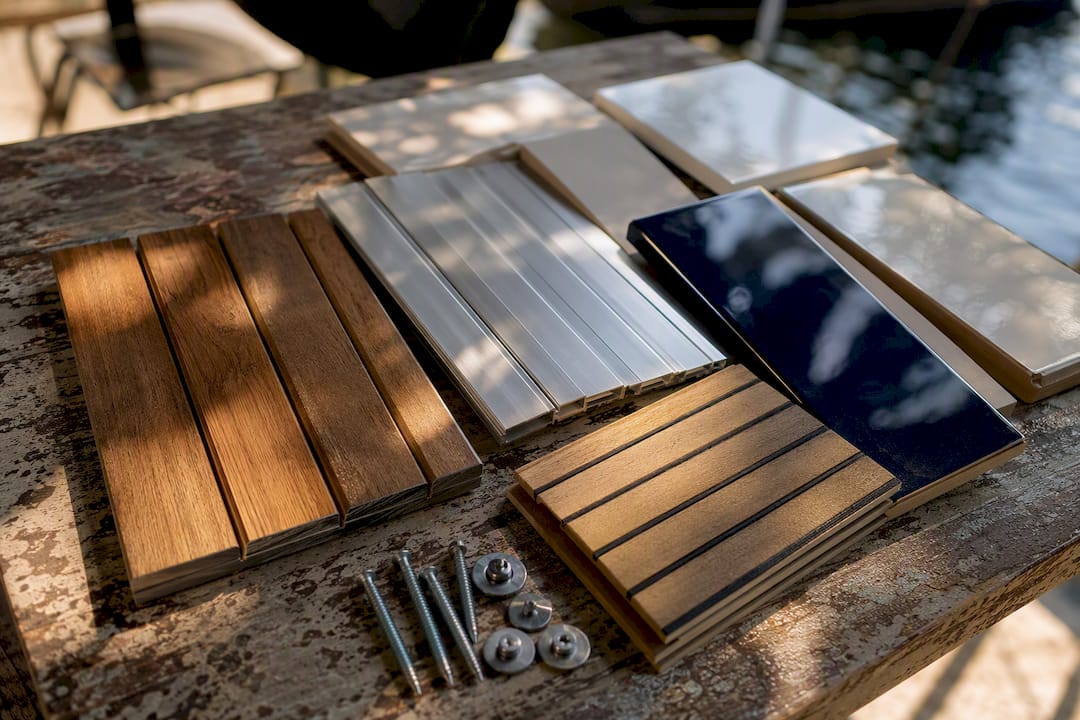
Aluminum platforms tend to sit at the lower-to-mid price point and hold up well structurally, though they need periodic inspection for galvanic corrosion where dissimilar metals meet. Fiberglass costs a bit more upfront but matches your hull’s gelcoat and requires minimal upkeep beyond normal cleaning. Teak remains the gold standard for appearance, with a warm, classic look that photographs beautifully at the dock, but it demands regular oiling or sealing to keep that warm glow from graying out in Florida sun. Synthetic decking, like PlasTEAK-style composite planking, splits the difference: it mimics teak’s look without the annual maintenance cycle, and pricing is often quoted around $0.40 per square inch, which means a standard 72-inch by 24-inch platform can land around $691 before mounting hardware.
Here’s how the tradeoffs shake out:
- Aluminum: Lower cost, strong lifespan, occasional corrosion checks needed
- Fiberglass: Mid-range cost, matches hull finish, low ongoing maintenance
- Teak: Highest upfront and maintenance cost, best resale appeal for traditional yachts
- Synthetic/PlasTEAK: Mid-range cost, near-zero maintenance, close aesthetic match to real teak
Pro Tip: If you’re weighing teak against synthetic decking purely on looks, ask your fabricator for a sample panel of each under direct sunlight. The color difference that looked negligible indoors often shows up fast once it’s sitting on the water.
For a deeper look at how teak sourcing and installation affect long-term ownership costs, our teak, carpentry, and interior refit guide breaks down what to expect.
Why the Transom Interface Is the Real Cost Driver
The platform panel is rarely the expensive part. The structure holding it to your boat is where the real engineering, and the real risk, lives.
Larger platforms, especially ones rated to carry a boarding ladder, a tender, or several people at once, almost always need internal backing plates and sometimes sleeving through the transom core to spread the load properly. Skipping this step to save money is exactly how owners end up with a platform that flexes, cracks the gelcoat around the mounts, or pulls loose after a season of hard use.
When a yard quotes reinforcement, they’re pricing three things:
- Materials: stainless backing plates, sleeves, and fasteners, typically 316-grade for saltwater durability
- Internal access: how much of the interior needs to be opened up to reach the transom core
- Labor hours: fitting, glassing in reinforcement, and sealing everything against water intrusion
Before you sign anything, verify these five items in writing:
- Backing plate material and thickness
- Number and spacing of mounting bolts
- Stated load rating for the finished platform
- Whether interior access panels need to be cut (and who patches them)
- Warranty coverage on the structural work specifically, not just the platform panel
A vendor who can’t answer these clearly is a vendor you should keep shopping past.
The Hidden Costs That Inflate Your Final Invoice
The platform price you get quoted is rarely the number on your final invoice. Yard labor, lift fees, and logistics stack up fast, and most of them aren’t optional once your boat is on the schedule.
Common add-ons include:
- Yard day rates and marina handling fees for hauling or working around your slip
- Crane or forklift charges if the platform needs to be positioned before mounting
- Crating and freight for oversized custom platforms shipped from a fabrication shop
- Gelcoat or paint matching to blend the new structure into your existing hull
- Extra hardware like integrated ladders, grab rails, or non-skid surfacing
Shipping and marina offload alone can run several hundred to over a thousand dollars on large custom pieces, particularly when a crate needs careful handling and your marina isn’t set up for heavy freight.
Statistic Callout: Industry pricing patterns suggest these add-on costs commonly push a final invoice above the platform-only quote by an appreciable margin.
Your Pre-Quote Checklist and 12 Questions to Ask
Before you request pricing from any fabricator, write down your budget line items separately: platform material, mounting hardware, structural reinforcement, labor, and finish matching. A vendor who bundles all of it into one number is harder to compare against a competing quote.
Send these 12 questions to every shop you’re evaluating:
- What material is the platform panel made from?
- What stainless grade are the fasteners and brackets (316 preferred for saltwater)?
- What are the backing plate dimensions and material?
- How many mounting bolts, and what’s their spacing?
- What’s the rated load capacity?
- Do you require a rigid template, and who builds it?
- What’s included in the base quote versus billed separately?
- Is gelcoat or paint matching included?
- What’s the labor rate for internal access work?
- What warranty covers the structure versus the panel?
- What’s your typical lead time from template to installation?
- Who’s responsible for crating and freight if applicable?
Pro Tip: A complete quote reads like a parts list, not a paragraph. If a fabricator can’t itemize materials, hardware, and labor separately, ask again before you sign.
How Long a Swim Platform Project Actually Takes
Prefab installs typically move fast, often a single day at the yard once the unit arrives. Custom fabrication is a different timeline entirely: expect several weeks from initial template to final installation, and that clock resets if your template needs rework, since inaccurate templates are one of the most common causes of schedule slippage that owners report.
Book custom work in the off season if you can. Yards fill up fast heading into peak boating months, and a rushed template rarely produces a clean fit.
What Mazza Marine Has Learned Building These Right
We’ve handled transom reinforcement and custom platform builds where the original mounting simply wasn’t engineered for the load an owner wanted, tenders, ladders, multiple guests. It’s almost always a template problem or a shortcut on backing plates. We require rigid templates, not cardboard or flexible material, because a platform is only as accurate as what it was built from. We also spec 316 stainless as standard, not an upgrade, because saltwater doesn’t negotiate with lower grades over time. For a closer look at how reinforcement and mounting engineering actually works, see our swim platform extension guide.
Permits, Regulations, and What They Mean for Your Budget
Swim platform work rarely triggers a formal permit the way dock construction or major hull modifications might, but that doesn’t mean it’s regulation-free. If your project extends the vessel’s overall length, even by a foot or two, check with your marina and, if applicable, your state boat registration authority, since some states calculate slip fees and registration classes off documented length overall. A platform extension that pushes you into a new length bracket can quietly change your annual costs even if the fabrication itself was flawless.
If you’re working with a documented vessel rather than a state-registered one, structural changes of any significance are worth logging with your documentation records, particularly if you plan to sell the boat later and a surveyor needs to reconcile what’s actually on the hull against what’s on paper.
Marina rules matter too. Some slips have specific guidelines on how far a platform can project past the transom, especially in tighter marinas where finger piers are close together. It’s worth a phone call to your dockmaster before finalizing platform dimensions, not after the fabrication is finished.
None of this tends to be expensive to resolve, but catching it before fabrication is far cheaper than catching it after. A reputable fabricator who works regularly in your area should be able to flag these issues during the design conversation, which is one more reason to lean on a shop with local yard relationships rather than an out-of-state supplier shipping in blind.
Why Labor Costs Swing So Much by Region and Provider
Labor is the least predictable line item in any swim platform quote, and the swings aren’t random. Coastal markets with high yacht density, South Florida among them, tend to carry higher yard day rates simply because demand for qualified marine welders and fiberglass technicians outpaces supply during peak season. A shop booked solid through spring has less incentive to shave labor rates than one with open bays in the off season.
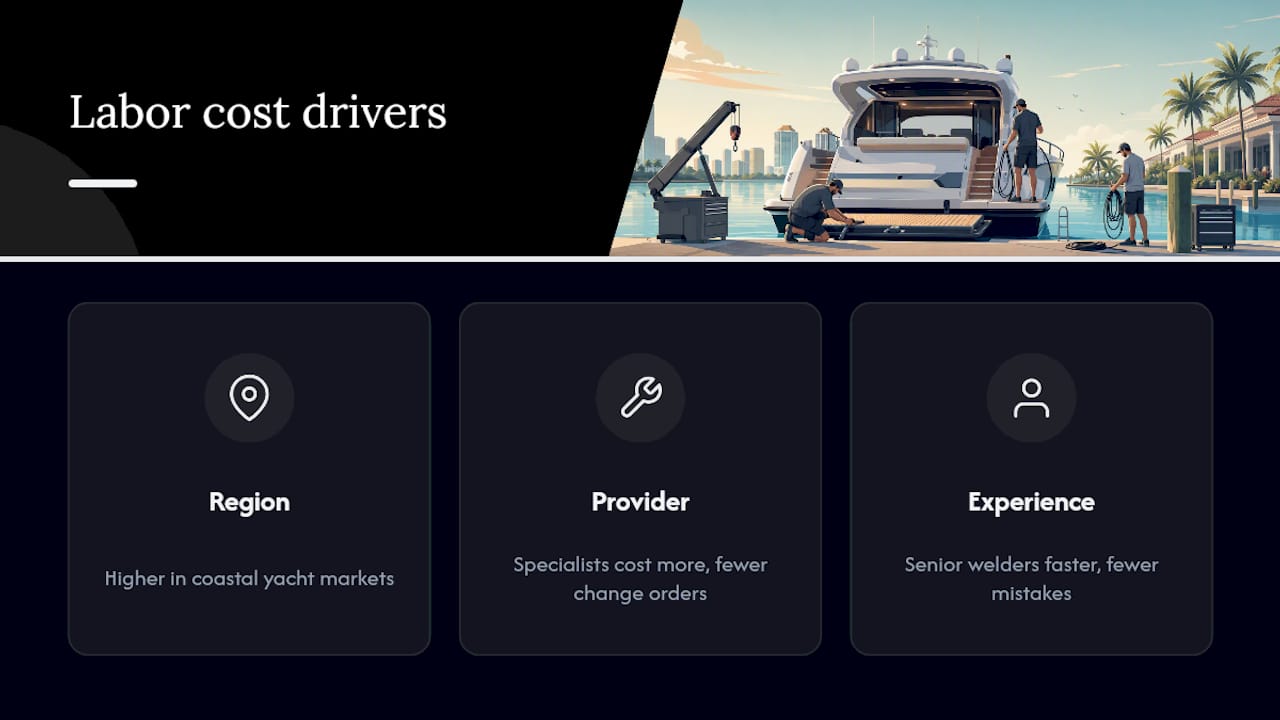
Provider type matters just as much as geography. A specialized fabrication shop with in-house welders and fiberglass technicians will often price labor differently than a general boat repair outfit that subcontracts structural work. Specialization sometimes costs more per hour, but it usually means fewer change orders and less risk of a mounting job that needs revisiting six months later.
Experience level within a shop also shows up in the invoice. A senior welder working with 316 stainless and a full understanding of transom load paths moves faster and makes fewer costly mistakes than a less experienced tech learning on your boat. That’s not a knock on newer techs, it’s simply a reason day rates vary the way they do between shops in the same zip code.
When to DIY, When to Hire a Yard
Small boats with simple transoms and light loads are reasonable DIY territory if you’re comfortable with fiberglass work. Anything carrying a tender, a ladder rated for multiple people, or requiring backing plates through the transom core belongs with a professional yard. The resale and liability math tips fast: a poorly reinforced platform is a survey flag that can cost you a sale, while proper documentation of structural work adds confidence for the next owner. Collect your templates, request two or three itemized quotes, and verify backing plate specs in writing before you commit.
— Jason
Get a Platform Built Right the First Time
Mazzamarine is the direct alternative to piecing together a platform project through separate vendors for welding, fiberglass, and finish matching. We handle custom fabrication, transom reinforcement, and installation under one roof, which means the backing plate spec, the bracket welding, and the gelcoat match all come from the same shop instead of three different quotes you have to reconcile yourself.

Before you reach out, gather what you can: rough transom photos, dimensions if you have them, and a clear idea of what the platform needs to carry, whether that’s a ladder, a tender, or just extra swim deck. Our team handles the rest, from rigid templating through final installation with 316 stainless hardware and welding built for saltwater. If you’re ready to move past guessing at numbers, request a consultation for your custom fabrication project and get a quote built around your actual boat, not a generic estimate.
Sources
Forum threads offer useful real-world anecdotes, but they vary widely by boat and region, so treat them as context rather than a budgeting baseline. For structured pricing, the boat swim platform buyer’s guide and the material comparison from Power & Motoryacht are solid starting points. A written yard quote for your specific hull remains the only truly authoritative number.
- 10 Best Boat Swim Platforms (August 2026) Tested Reviews and Buying Guide
- Best Boat Swim Platform Options: Fiberglass, Teak & More
- Does anyone have an idea what an extended swim platform might cost for a 53’ ? | Sam’s Marine
- Swim platform cost | TrawlerForum
Recommended
Text or Call 954-330-9653 Schedule Appointment
Mazza Marine Yacht Services & Refit

Fiberglass Upgrades and Damage Repair

Premium Yacht Paint/ Faux Teak

Fishing: Custom Rods, Reels,Tackle

Electrical, Electronics and Navigation

Paint, Hull and Gelcoat

Teak Decks, Wood Cabinets, Carpentry

Canvas, Enclosures and Upholstery

Mechanical, Repower and Running Gear

Plumbing, Bilge and Thru-Hulls

Welding and Custom Fabrication

Interior Refit And Past Work
Get your yacht value Estimate
"*" indicates required fields