
View Our Recent Work:

Installed natural teak decking typically runs $60 to $120 per square foot, while synthetic teak and composite alternatives land closer to $30 to $70 per square foot. On a 40-foot boat, a full teak re-deck can cost tens of thousands of dollars, while synthetic options generally cost less than half that amount. If resale value and that warm teak glow matter most, natural teak earns its premium. If you want lower lifecycle costs and less annual fuss, synthetic wins.
TL;DR:
- Substrate condition is often the primary cause of cost variation, with repairs sometimes adding tens of thousands of dollars to a simple deck replacement.
- The final installed price depends heavily on labor factors like seam caulking, hardware removal, and complex custom elements, not just plank material or boat size.
- Synthetic decking generally costs less upfront and incurs lower long-term maintenance expenses than natural teak, especially outside cooler climates.
- Proper site inspection and detailed quotes are essential to avoid budget overruns; owners should insist on substrate checks and clear scope documentation.
- Most cost surprises happen when hidden core damage is discovered during demo, so contingency planning of 20 to 30 percent is highly advisable.
Table of Contents
- Teak Deck Replacement Cost Breakdown by Boat Size
- Comparing Teak vs Synthetic Decking Materials
- What Actually Drives the Price of Your Deck Project
- DIY Deck Work vs Hiring a Professional Crew
- Long-Term Maintenance Costs: Teak vs Synthetic
- How to Request a Quote You Can Actually Trust
- What Florida Refits Actually Teach Us About Teak Costs
- The Real Trade-Off Nobody States Plainly Enough
- Getting a Straight Answer From Mazzamarine on Your Deck Project
- Sources
Teak Deck Replacement Cost Breakdown by Boat Size
Numbers without context are useless on a boat this personalized, so let’s ground these ranges in real deck areas. A 40-foot cruiser typically carries 200 to 350 square feet of teak decking, depending on cockpit layout, swim platforms, and bow pulpit coverage. Multiply that by the per-square-foot bands above and you start to see why two boats with identical length overall can land on wildly different invoices.
Material-only teak planking runs about $25 to $50 per square foot, but that number is misleading on its own. The gap between material cost and installed cost is where labor, fabrication, and fastening methods live, and it’s usually the biggest surprise for first-time owners requesting quotes. Vendor guidance from Teakdecking Systems confirms that deck area, material choice, substrate condition, and design complexity drive the final number more than boat length alone.
Here’s how the math tends to shake out across common vessel sizes:
- 30-foot boat (roughly 120–180 sq ft of deck): $7,200–$21,600 for natural teak installed; $3,600–$12,600 for synthetic.
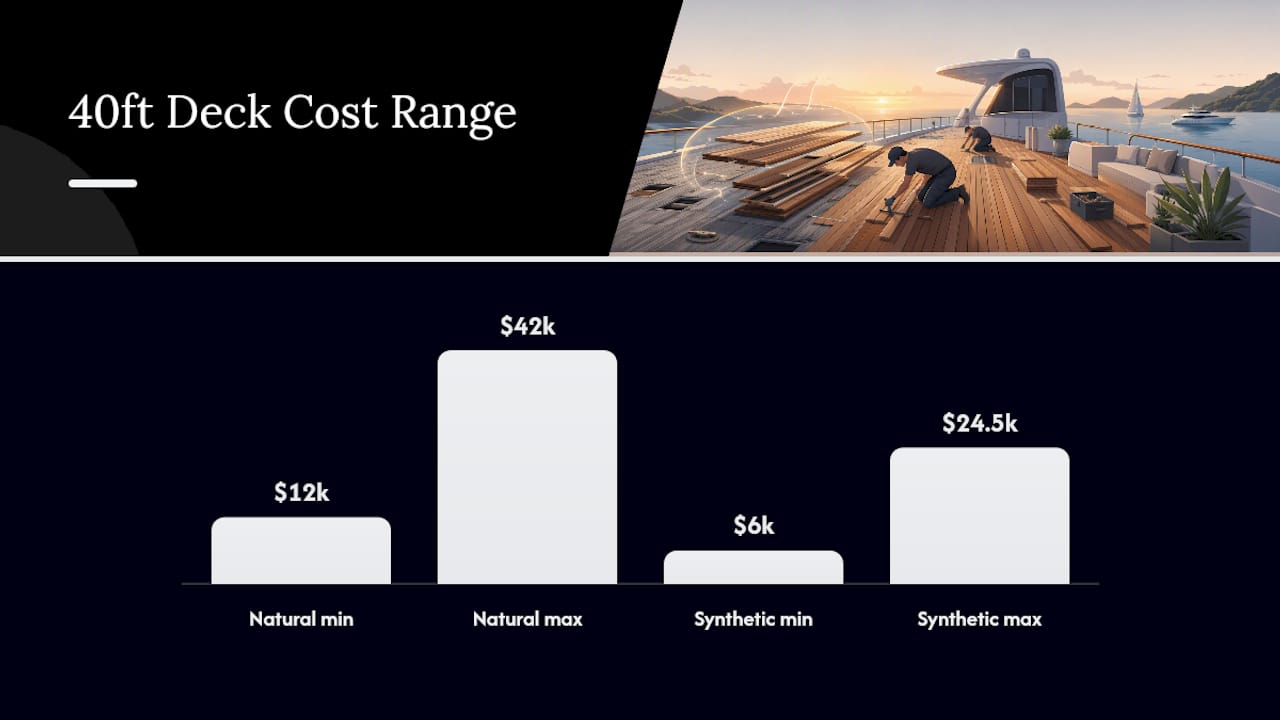
- 40-foot boat (roughly 200–350 sq ft): $12,000–$42,000 for natural teak; $6,000–$24,500 for synthetic.
- 50-foot boat (roughly 350–550 sq ft): $21,000–$66,000 for natural teak; $10,500–$38,500 for synthetic.
These ranges swing based on three details that rarely show up in a rough estimate. Plank width and thickness specification changes labor time significantly. Narrower, more traditional plank widths require more seams, and every seam is another run of caulking. Seam caulking specification matters too. Standard polysulfide caulk costs less than premium two-part systems, but the premium versions tend to hold up longer in Florida heat. Edge and margin boards, the pieces that frame hatches, hardware, and deck edges, require more precise fabrication than straight-run planking, and yards typically price that work separately from the main field.
Forum anecdotes back up just how wide this variance gets in practice. One owner reported yard quotes ranging from $75 to $286 per square foot for the same basic scope, depending on region and yard capacity. That spread isn’t a pricing scam. It reflects genuinely different specs, labor markets, and shop overhead.
Comparing Teak vs Synthetic Decking Materials
Choosing between natural teak and its faux competitors comes down to what you value more: the timeless look of real wood or a lower bill five years from now. Both camps have real advocates, and both have real trade-offs worth weighing before you sign a contract.
Here’s how the major options stack up on installed cost and upkeep:
- Natural teak: $60–120/sq ft installed, $25–50/sq ft material-only. Requires annual cleaning, periodic sealing, and re-caulking every several years. Holds resale value and classic nautical character better than any alternative.
- Synthetic teak (PlasDECK-style and similar): $30–70/sq ft installed. Minimal maintenance beyond occasional soap-and-water cleaning. Costs roughly 30 to 50 percent less upfront than traditional teak.
- Composite/engineered decking: Often matches or slightly undercuts premium teak on installed price while cutting long-term maintenance sharply, making it competitive over a 15 to 20-year ownership window.
- EVA foam: Generally the most budget-friendly synthetic option, popular on smaller runabouts and swim platforms, though it lacks the refined look yacht owners typically want on a flybridge or cockpit.
- Cork composite: A lighter-weight, increasingly popular alternative with good grip and moderate cost, though it’s less common on larger yachts and harder to source through traditional teak installers.
Climate is the wild card in this decision. Synthetic decking, especially darker colors, can absorb significant heat in direct Florida sun, making bare feet uncomfortable on an August afternoon. Natural teak stays noticeably cooler underfoot because of the wood’s natural insulating properties.
Pro Tip: If you’re leaning synthetic for a boat that lives in South Florida sun, specify a lighter color profile and consider shade solutions like a cockpit awning. It’s the cheapest fix for the heat problem, and it costs nothing compared to redoing the deck later.
What Actually Drives the Price of Your Deck Project
Two boats of the same length can generate quotes tens of thousands of dollars apart, and it almost never comes down to the planking itself. The real cost drivers hide in the details a rough phone estimate can’t capture.
- Substrate condition. Once old teak comes up, yards typically find some degree of core damage from decades of screw penetrations and water intrusion. Remediation ranges from spot core replacement to a full fiberglass relay, and this single line item causes more budget overruns than any other factor. Teakdecking Systems notes that substrate condition is one of the primary reasons two vessels with identical dimensions can carry very different price tags.
- Hardware removal and refit. Every stanchion, cleat, winch base, and deck fitting has to come off before new decking goes down, then get reinstalled and properly bedded afterward. This is detailed, time-consuming labor that adds real hours to any invoice.
- Custom layouts and design elements. Inlaid compass roses, custom borders, king planks, and boat-name lettering all require extra fabrication time. A straightforward field replacement is far cheaper per square foot than a deck with intricate detailing.
- Caulking specification. Premium marine caulk systems cost more per linear foot than economy versions but last longer in tropical heat and UV exposure.
- Logistics and location. Crew travel time, marina or yard storage fees, and whether the work happens during peak season (November through April in Florida) or the slower summer months all move the final number. Off-season scheduling can meaningfully soften labor costs when a yard has open bay time.
DIY Deck Work vs Hiring a Professional Crew
Every owner asks the same question at some point: how much of this could I do myself? Taking care to protect the gelcoat finish beneath your decking is critical during any DIY work, so understanding gelcoat protection is essential before you begin. The honest answer is that some tasks are genuinely safe to tackle solo, and others will cost you more in the long run than if you’d hired a pro from day one.
Professional installers typically quote by the square foot for straightforward field replacement, by the hour for hardware refit and custom detail work, or as a flat project price once they’ve surveyed the substrate. Timelines vary widely: a partial panel replacement on intact substrate might take a week or two, while a full re-deck with substrate repair routinely stretches four to eight weeks depending on yard backlog and material lead times.
Owners can genuinely save money by handling a few specific tasks:
- Removing and inventorying deck hardware before the crew arrives (label everything, you’ll thank yourself later).
- Photographing the existing layout in detail for the yard’s reference.
- Handling minor cosmetic prep like masking or protecting adjacent gel coat.
What owners should never attempt solo: core repair, structural bonding, or panel fabrication. A well-documented DIY teak replacement account from Practical Sailor found that hardware removal alone took two people eight full days, and the overall project stretched to three months instead of the planned two. That’s not a knock on ambitious owners. It’s a reminder that marine carpentry punishes inexperience with time, not just money.
Pro Tip: If you want to save labor dollars without taking on real risk, ask your installer whether they’ll credit you for doing the hardware removal and inventory yourself. Many shops will, and it’s the safest DIY task on the whole list.
Long-Term Maintenance Costs: Teak vs Synthetic
Sticker price is only half the picture. What you pay to keep the deck looking right over the next decade often matters more than the installation invoice.
Natural teak asks for a real annual commitment: routine cleaning to prevent mildew staining, periodic sealing depending on how much sun exposure the deck gets, and a re-caulking cycle that typically arrives somewhere between eight and fifteen years depending on caulk quality and climate. Each of those re-caulk jobs is its own smaller expense, separate from the original install.
- Annual teak cleaning and light maintenance: modest recurring cost, but consistent every year of ownership.
- Re-caulking cycle: a meaningful mid-life expense roughly once a decade.
- Full replacement: typically needed once the wood itself has worn thin from repeated sanding, generally 15 to 25 years depending on care.
Synthetic decking flips this equation. Maintenance drops sharply once it’s installed, usually amounting to little more than soap and water, and there’s no re-caulking cycle to plan around since the material doesn’t use traditional seam caulk in the same way.
Over a 10 to 15-year ownership window, a teak deck’s total cost of ownership often climbs well past its original installed price once you factor in cleaning products, periodic sealing, and at least one re-caulk cycle. Synthetic decking’s total cost tends to stay closer to its original installed number, though owners in year-round hot climates should budget for eventual UV-related fading or texture changes sooner than a cooler-climate boat would experience.
How to Request a Quote You Can Actually Trust
A vague quote is the single biggest source of budget surprises in this whole process. The fix is simple: arrive with information the yard can’t ignore, and ask questions that force specificity.
- Prepare measurements and photos first. Document total deck area, existing hardware locations, and any soft spots you’ve noticed underfoot. A yard doing a proper site survey will check the substrate directly, not just eyeball the surface from a dock walk.
- Ask about substrate inspection method. Moisture meters and core sampling reveal problems a visual check misses entirely.
- Ask about caulk and adhesive specification by name, not just “premium” or “marine-grade.” Vague language in a quote usually means vague accountability later.
- Confirm who handles hardware refit and whether that labor is included in the base price or billed separately.
- Ask about warranty terms on both material and installation labor.
Red flags worth walking away from: a quote with no substrate inspection mentioned, no warranty language at all, or scope described in single vague sentences instead of itemized line items. Send every yard the same simple scope template covering deck area, hardware count, and desired caulk spec, and you’ll get quotes you can actually compare side by side instead of apples-to-oranges guesses.
What Florida Refits Actually Teach Us About Teak Costs
On the docks around Miami, the pattern repeats constantly: an owner budgets for a straightforward re-deck, then the crew pulls up the old planking and finds core damage nobody could see from the surface. That single discovery is the most frequent reason quoted costs climb mid-project.
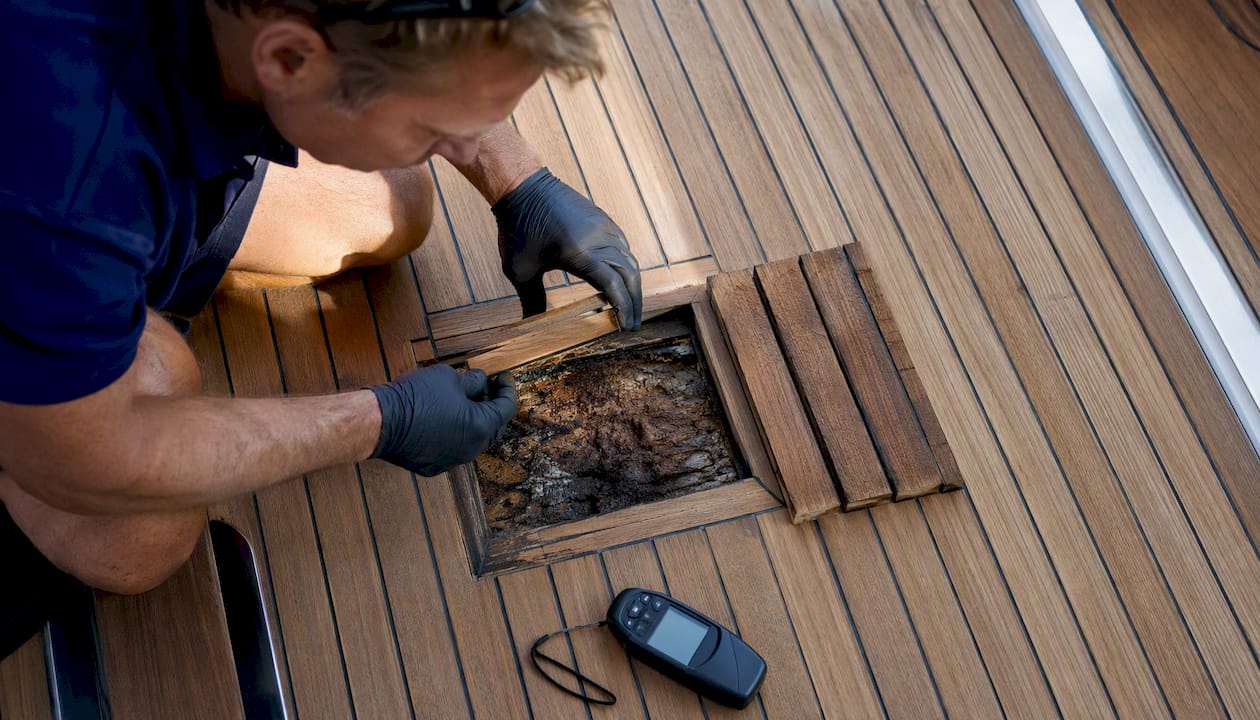
Partial replacement is generally recommended when substrate damage is isolated to specific zones like helm pods or transom areas, with full re-decking reserved for boats where moisture has spread broadly beneath the surface. Timing matters too. Scheduling deck work alongside mechanical projects during Florida’s drier winter months avoids the delays that South Florida’s wet season can add to any exterior refit. Comprehensive quotes typically include substrate findings, itemized hardware handling, and a realistic timeline before work begins.
The Real Trade-Off Nobody States Plainly Enough
Here’s the plan that actually works: measure and photograph your existing deck, run the questions above past at least two yards, and build in a 20 to 30 percent contingency for whatever the substrate turns out to be hiding. That contingency isn’t pessimism. It’s just how boats work.
The deeper truth is that most owners overthink the material decision and underthink the substrate risk. Teak raises curb appeal and resale value in a way synthetic simply can’t replicate, but synthetic lowers your total cost of ownership if you’re running a heavily used charter or fishing boat. Neither choice is wrong. What’s wrong is signing a contract before someone has physically checked what’s under the old decking. If a yard hasn’t offered a substrate survey before quoting a firm number, order one yourself before you commit to anything.
— Jason
Getting a Straight Answer From Mazzamarine on Your Deck Project
Most teak quotes fall apart the moment substrate damage surfaces mid-project, which is exactly why Mazzamarine builds every deck estimate around a real inspection first, not a guess from dock level. We handle the full range: site surveys, partial panel replacement, complete re-decks, faux-teak installs, and substrate repair, all coordinated through the same Florida network of vendors and craftsmen we’ve built relationships with over years on these docks.

A typical Mazzamarine quote spells out scope, photos of the existing deck and hardware, a realistic timeline, and warranty terms before you sign anything, with digital templating used where it speeds up fabrication and cuts down on time your boat spends out of the water. If your deck project is tangled up with other work, like a broader yacht refit in Miami, we coordinate trades so mechanical, electrical, and carpentry crews aren’t tripping over each other on your timeline. Curious whether a restoration might beat a full replacement for your boat’s current condition? Reach out for a site visit or a digital estimate, and bring your measurements and photos. We’ll tell you straight whether you’re looking at a recaulk job or a full re-deck before we ever write up a number.
Sources
- Step-by-Step: Yacht flooring cost guide and material comparisons
- Yacht Deck Replacement Cost: What Affects the Price? | Teakdecking Systems
- Synthetic teak durability and practical notes | Practical-Sailor
Recommended
Text or Call 954-330-9653 Schedule Appointment
Mazza Marine Yacht Services & Refit

Fiberglass Upgrades and Damage Repair

Premium Yacht Paint/ Faux Teak

Fishing: Custom Rods, Reels,Tackle

Electrical, Electronics and Navigation

Paint, Hull and Gelcoat

Teak Decks, Wood Cabinets, Carpentry

Canvas, Enclosures and Upholstery

Mechanical, Repower and Running Gear

Plumbing, Bilge and Thru-Hulls

Welding and Custom Fabrication

Interior Refit And Past Work
Get your yacht value Estimate
"*" indicates required fields