
View Our Recent Work:

Most boat owners think of a haul-out as a time to touch up the bottom paint and call it done. The truth runs much deeper. The importance of regular haul-outs extends well beyond cosmetics. A proper haul-out is one of the few moments you get a complete, unobstructed view of every system below the waterline, from hull integrity to through-hull fittings to propeller shaft seals. What gets caught during that window can mean the difference between a minor repair and a catastrophic failure at sea. This article covers what happens during a haul-out, how often you should schedule one, and what to prioritize when your vessel comes out of the water.
Table of Contents
- Key takeaways
- The importance of regular haul-outs explained
- Benefits of regular haul-outs for longevity and safety
- How often you should haul out your boat
- Essential maintenance tasks to prioritize at every haul-out
- My honest take on haul-outs as a maintenance investment
- How Mazzamarine supports your haul-out and maintenance needs
- FAQ
Key takeaways
| Point | Details |
|---|---|
| Haul-outs are safety events | They reveal hidden hull defects, corroded fittings, and worn components before they become dangerous. |
| Annual schedule for saltwater boats | Saltwater accelerates corrosion and fouling, making yearly haul-outs the practical standard. |
| Pressure washing uncovers the truth | Immediate washing after lift exposes osmotic blisters, gelcoat cracks, and shaft damage invisible in the water. |
| Zinc anodes signal proactive care | Replacing depleted anodes on schedule protects the hull from galvanic corrosion between haul-outs. |
| Condition matters more than age | Haul-out timing should be driven by operating environment and vessel condition, not a calendar alone. |
The importance of regular haul-outs explained
A haul-out is not just a lift out of the water. It is a structured maintenance window that gives you and your boatyard a rare, complete view of the vessel’s underwater systems. Understanding what actually happens during the process makes the investment far easier to justify.
Here is how a thorough haul-out typically unfolds:
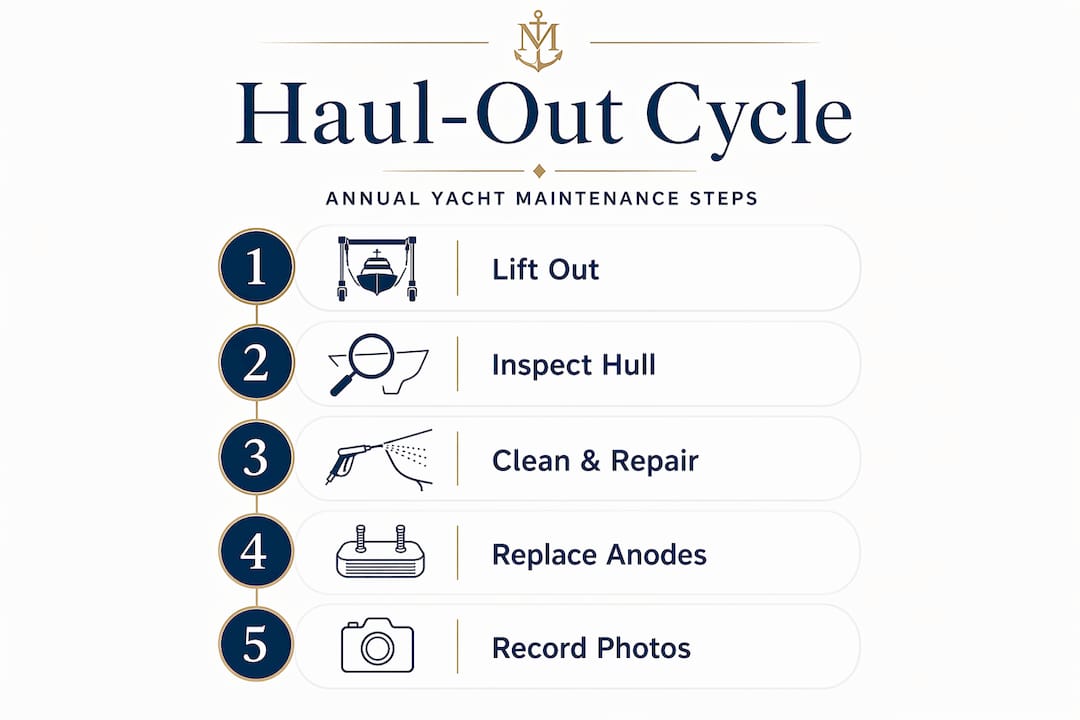
- Hauling and blocking. The vessel is lifted using a travel lift and set on jack stands or a cradle. The yard team checks for immediate structural concerns as the boat comes out of the water.
- Pressure washing. The hull is washed down while the marine growth is still soft and fresh. Pressure washing reveals osmotic blisters, hairline gelcoat cracks, and fishing line wrapped around shaft seals. These defects disappear behind fouling when the boat stays in the water.
- Hull and fitting inspection. The team examines the hull for blistering, delamination, and impact damage. Every through-hull fitting, seacock, and propeller strut gets checked for movement, corrosion, and wear.
- Zinc anode assessment. Sacrificial anodes are measured and inspected. Depleted or painted-over zincs indicate the hull has been operating without adequate corrosion protection.
- Propeller and shaft inspection. Propellers are checked for dings, cupping loss, and cavitation erosion. The shaft and cutless bearing are assessed for wear.
- Bottom paint application. Old antifouling paint is assessed, barrier coats are applied where needed, and fresh antifouling is applied before relaunch.
For a 40-foot vessel, typical haul-out costs run approximately $1,600 for the haul and launch, $240 for pressure washing, and around $2,200 for bottom paint. Those numbers feel significant until you weigh them against the cost of a through-hull failure or a seized propeller shaft at the wrong moment.
Pro Tip: Ask your boatyard to photograph every fitting, anode, and blister before any cleaning or repairs begin. That visual baseline becomes invaluable when comparing condition at the next haul-out.
Benefits of regular haul-outs for longevity and safety
The most compelling case for consistent boat care haul-outs is not the cosmetic payoff. It is what you prevent. Every hour a vessel spends in saltwater, corrosion and marine growth are working against the hull, fittings, and running gear. Regular inspections interrupt that cycle before small problems become structural ones.
Here are the concrete advantages of staying on schedule:
- Early damage detection saves serious money. Osmotic blistering caught at one haul-out costs hundreds to treat. Left through multiple seasons, the same blistering can require full hull barrier coat restoration costing thousands.
- Fuel efficiency improves with a clean hull. Heavy fouling adds drag that forces the engine to work harder. A freshly painted bottom restores the vessel’s designed performance and burns less fuel on every passage.
- Mechanical failures decrease. Mechanical failure is consistently linked to inadequate maintenance, and USCG 2023 data recorded 636 boating fatalities in a single year. Haul-outs give you the opportunity to catch worn components before they fail underway.
- Resale value holds. A documented haul-out history tells a prospective buyer that the vessel was cared for. Boats with clean maintenance records command stronger prices and sell faster.
- Insurance compliance. Some marine insurers require proof of regular haul-outs and surveys. Skipping cycles can create gaps that complicate claims.
The vessel haul-out explained guide from Mazzamarine goes deeper on what each of these inspections involves for Florida-based yachts specifically, where the combination of saltwater, heat, and heavy biological fouling accelerates every one of these issues.
How often you should haul out your boat
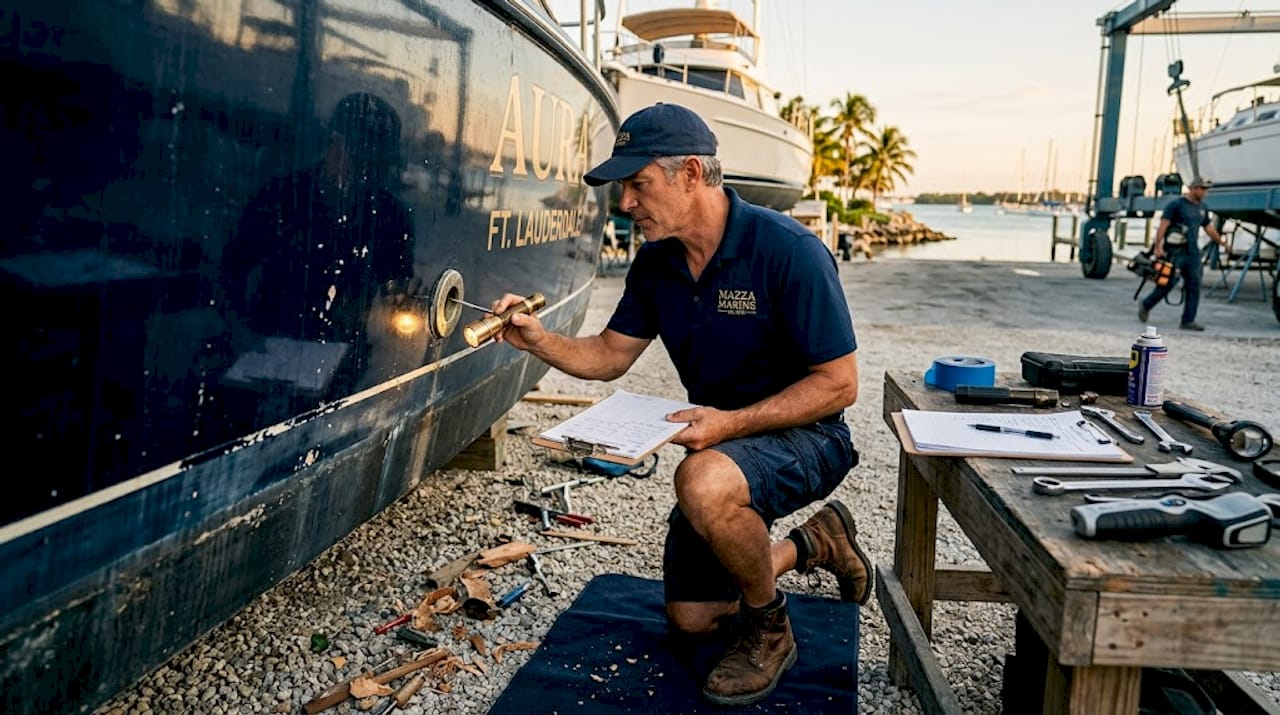
The short answer is once a year for saltwater vessels. The more accurate answer depends on where you operate, how heavily you use the boat, and what condition inspections reveal.
| Vessel Type and Environment | Recommended Interval | Notes |
|---|---|---|
| Saltwater, heavy use | Every 12 months | Bottom paint degradation and anode depletion are rapid |
| Saltwater, light use | Every 12 to 18 months | Still prioritize annual inspection where possible |
| Freshwater, moderate use | Every 18 to 24 months | Lower corrosion and fouling pressure |
| Racing or charter vessels | Every 6 to 12 months | Performance and liability demands tighter schedules |
| Vessels with known hull issues | As directed by surveyor | Condition-based assessment overrides calendar |
Annual haul-outs manage both bottom paint degradation and sacrificial anode depletion, the two most time-sensitive maintenance items on any saltwater vessel. Waiting longer than a year in a warm, fouling-heavy environment like South Florida means arriving at the haul-out with a hull covered in barnacles, compromised paint, and zincs that have been consumed well past their useful life.
That said, haul-outs should not stand alone. Experts advise combining annual haul-outs with in-water diver cleanings and visual checks between cycles. A diver who cleans the running gear every 60 to 90 days catches growth early and keeps the hull performing between haul-outs. It is not a substitute for the full inspection, but it protects the investment.
Condition-based assessment is also more reliable than vessel age alone when determining scheduling. A 10-year-old vessel kept in a covered slip in freshwater may show less deterioration than a 5-year-old boat moored in a tidal marina in Miami.
Pro Tip: Keep a simple maintenance log with photos from each haul-out. Comparing hull condition across two or three cycles tells you far more about the right interval for your specific vessel than any general guideline.
Essential maintenance tasks to prioritize at every haul-out
Knowing what to look for during the haul-out process makes you a far better advocate for your vessel. These are the items that matter most and where deferred attention leads to the greatest risk.
- Through-hull fittings and seacocks. Bronze through-hulls can suffer dezincification, a pinkish discoloration that weakens the fitting structurally even when the valve still operates. Any lateral movement or discoloration signals immediate replacement. A failed through-hull below the waterline is not a minor repair.
- Sacrificial anodes. Painted-over or loose zincs are a clear sign the previous haul-out was rushed or poorly executed. Zinc anodes protect everything from the shaft and propeller to bronze fittings by sacrificing themselves to galvanic corrosion. Replace them whenever they are more than 50 percent depleted.
- Osmotic blistering. Small blisters in the gelcoat are cosmetic. Large, water-filled blisters that penetrate into the laminate are structural. The distinction matters enormously, and it is one only visible when the hull is dry and properly examined.
- Bottom paint condition. Checking the paint and hull systems helps you decide whether the vessel needs a simple topcoat or a full strip and barrier coat reapplication. Skipping this assessment saves nothing and risks osmotic damage spreading through a season.
- Propeller and running gear. Even minor propeller damage increases vibration, cavitation, and fuel consumption. A prop that looks fine underwater can show significant wear once cleaned and measured in the yard.
- Mechanical systems connected to the haul. The haul-out is the right moment to inspect shaft seals, cutless bearings, and rudder bearings. These items wear in ways that are undetectable through normal in-water operation but become obvious when the vessel is out, clean, and static.
A proper marine mechanical inspection during the haul-out can catch issues with these systems before they create bigger failures underway.
My honest take on haul-outs as a maintenance investment
I have talked to hundreds of boat owners over the years, and the pattern is consistent. The ones who skip or delay haul-outs are almost always the ones calling for urgent repairs at the worst possible time, the weekend before a charter, the day before a passage south.
What I have learned is that the haul-out is not the expense most people think it is. Catching a dezincified through-hull fitting before it fails costs you the price of a fitting and an afternoon of yard time. Missing it costs you a potential sinking, an insurance claim, and more stress than the entire maintenance budget combined.
The owners who get the most out of their vessels treat the haul-out as a scheduled event, not a reaction to something going wrong. They bring a list, ask their boatyard good questions, and leave with photos and a service record. Over time, that approach builds a relationship with the yard that is genuinely worth something. You get honest assessments, faster turnaround, and a team that knows your boat.
I also push back on the idea that older vessels need more frequent haul-outs automatically. A well-maintained 20-year-old vessel with consistent records sometimes shows better condition than a neglected 8-year-old boat. Condition-based assessment is the real guide. Look at what the hull and fittings tell you, and let that drive the schedule. That philosophy has never steered me wrong.
— Jason
How Mazzamarine supports your haul-out and maintenance needs
When a haul-out reveals something serious, or when you want to make the most of the time your vessel is out of the water, having the right team ready to act makes all the difference.
Mazzamarine connects Florida yacht owners with a trusted network of specialists covering everything from urgent repairs and hull work to custom paint, through-hull replacements, and complete mechanical overhauls. If you are not sure whether it is time for a haul-out or if a previous inspection raised questions you need answered, the signs you need yacht repairs guide is a strong starting point. Mazzamarine handles every aspect of the process, so your vessel comes out of the haul-out in genuinely better condition than it went in. Reach out to Mino, Luigi, and the Mazzamarine team to schedule your next inspection and keep your vessel ready for the water.
FAQ
What is a haul-out and why does it matter?
A haul-out is when your vessel is lifted out of the water for inspection, cleaning, and maintenance. It is the only way to fully examine the hull, fittings, and running gear that remain submerged during normal use.
How often should you haul out a saltwater boat?
Annual haul-outs are recommended for saltwater vessels because saltwater accelerates bottom paint degradation and depletes sacrificial anodes within 12 months of operation.
What are the signs your boat needs a haul-out sooner than scheduled?
Increased fuel consumption, unusual vibration, reduced speed at normal throttle settings, or visible growth below the waterline are all signals that a haul-out should happen ahead of schedule.
Can you skip a haul-out and just use diver cleanings instead?
Diver cleanings maintain hull performance between haul-outs but do not replace them. Only a full haul-out allows inspection of through-hull fittings, osmotic blistering, shaft seals, and anode condition.
Does a regular haul-out history improve resale value?
Yes. A documented record of regular boat maintenance and haul-out service signals to buyers that the vessel was properly cared for, which directly supports a stronger asking price and faster sale.
Recommended
Text or Call 954-330-9653 Schedule Appointment
Mazza Marine Yacht Services & Refit

Fiberglass Upgrades and Damage Repair

Premium Yacht Paint/ Faux Teak

Fishing: Custom Rods, Reels,Tackle

Electrical, Electronics and Navigation

Paint, Hull and Gelcoat

Teak Decks, Wood Cabinets, Carpentry

Canvas, Enclosures and Upholstery

Mechanical, Repower and Running Gear

Plumbing, Bilge and Thru-Hulls

Welding and Custom Fabrication

Interior Refit And Past Work
Get your yacht value Estimate
"*" indicates required fields