
View Our Recent Work:

Choosing the right tournament boat is one of the most consequential decisions a competitive angler will make. The difference between a podium finish and a brutal dead-fish penalty often comes down to livewell design, electrical capacity, and hull performance. Not the size of your rod collection. This guide covers exactly what serious competitive fishing boats need to deliver, which models are earning respect on the tournament circuit in 2026, and how to match your setup to the water you fish.
Key takeaways
| Point | Details |
|---|---|
| Livewell quality wins tournaments | Continuous aeration and temperature management directly reduce fish mortality and costly penalties. |
| Electrical planning is non-negotiable | Tournament boats need 300 to 500 amp-hours daily to power trolling motors, electronics, and livewells reliably. |
| Hull choice shapes your day | Fiberglass offers speed and refinement; aluminum trades some comfort for durability and value on smaller water. |
| Situational fit matters more than brand | The best bass boat for a pro on big water may be entirely wrong for a weekend angler on a small inland lake. |
| Rigging upgrades transform older boats | Targeted tournament boat accessories like hydraulic jack plates and backup aerators extend competitive life significantly. |
1. What makes a great tournament boat
The industry term for what most tournament anglers are shopping for is a bass boat, though the broader category includes offshore sportfish builds and aluminum walleye rigs depending on the circuit. Understanding the distinction matters before you spend anything.
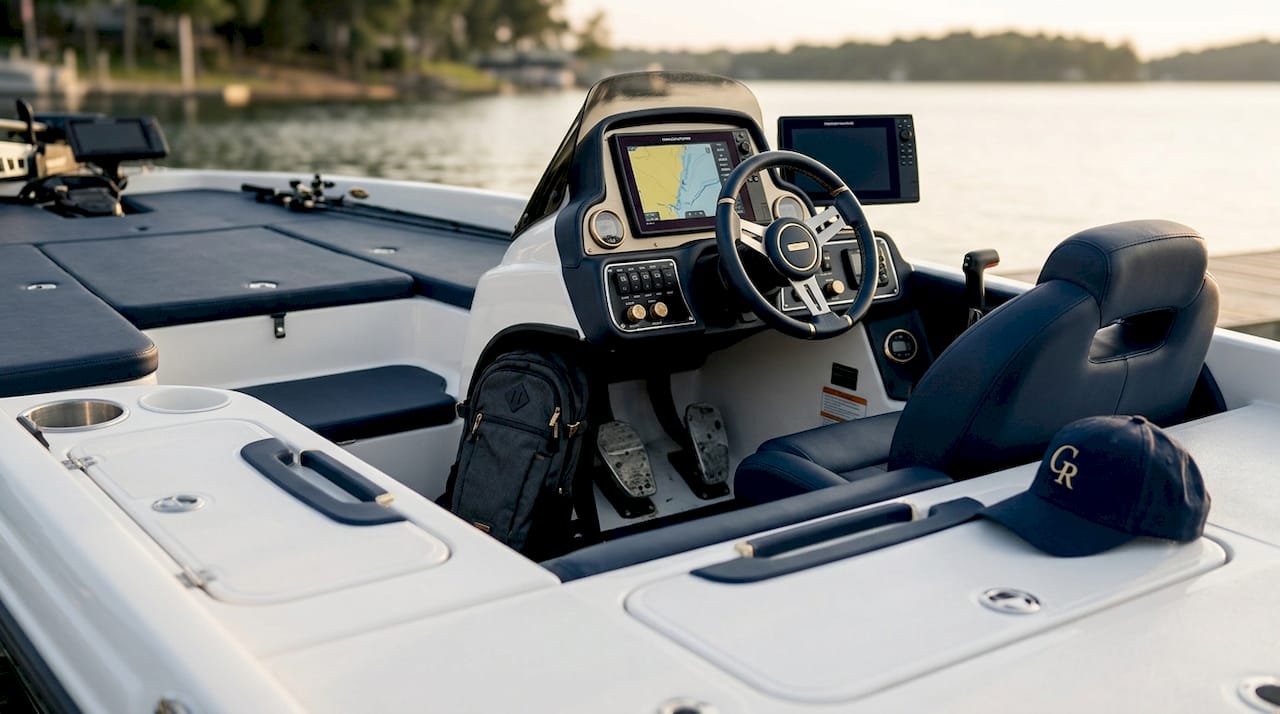
A true bass boat built for competition is purpose-designed around three priorities: getting to a spot fast, keeping fish alive, and staying fishable for eight to ten hours straight. That sounds simple. In practice, it means scrutinizing every system on the vessel before you sign anything.
Here is the core framework for evaluation:
- Livewell system: Capacity, aeration method (recirculating, vented, or oxygenated), temperature control features, and pump reliability
- Electrical architecture: Battery bank size, battery type, dedicated circuits for trolling motor, electronics, and livewells
- Hull design: Length, beam width, deadrise angle, and material (fiberglass versus aluminum)
- Rigging and accessories: Hydraulic jack plates, Power-Pole anchors, trolling motor mount type, rod storage
- Motor and performance: Top speed, hole shot, fuel capacity relative to tournament day length
Pro Tip: Weight distribution is underrated. A boat that rides perfectly balanced with a full livewell, full fuel, and two anglers will perform completely differently than one set up for solo testing. Always test-drive under tournament load conditions before buying.
Pay close attention to livewell volume in gallons relative to the number of fish a given circuit allows. A 30-gallon livewell sounds respectable until you realize it becomes crowded fast with a five-fish limit of quality largemouth. Forty gallons or more, split across two compartments, is a far more forgiving setup.
2. Top tournament bass boats earning respect in 2026
The competitive fishing boats generating the most conversation among touring pros and weekend circuit anglers right now share a few consistent traits. They run Yamaha 250 SHO or comparable power, carry hydraulic jack plates and oxygenators for precise shallow-water stops, and feature electrical systems built to run hard all day without voltage sag.
Below are the standout features separating elite-level builds from the rest of the field:
- Yamaha 250 SHO-powered rigs with TH Marine Atlas jack plates sit at the top of the pro preference list. The ability to adjust running height on the fly delivers both performance speed and precise shallow water access within the same day.
- Oxygenation systems over standard recirculating aerators represent a meaningful upgrade. Dissolved oxygen delivery is measurable, and keeping O2 above 5.5 ppm is what separates a healthy livewell from a stressful one.
- 36-volt trolling motor systems paired with three-battery banks have become the baseline expectation at the Bassmaster and FLW level. The extra voltage translates to stronger thrust, longer runtime, and more precise boat control in current.
- Dual-purpose seating with integrated storage beneath the rear deck keeps gear accessible without turning the deck into an obstacle course late in a tournament day when fatigue sets in.
- Fiberglass hulls in the 20 to 21-foot range remain the sweet spot for most bass-specific tournaments. They handle moderate chop without beating you up, track straight at speed, and carry enough volume for full gear loads.
Aluminum builds from quality manufacturers deserve more credit than they typically receive. On smaller lakes, rivers, and shallow bodies of water, a well-built aluminum bass boat is lighter, easier to trailer, and punishes your body less on rough-water days than a heavy fiberglass hull pushing speed it was not designed to handle.
3. How leading competitive fishing boats compare
Side-by-side data is where boat shopping gets real. The numbers below reflect production configurations common in 2026. Dealer rigging, motor packages, and electronics add-ons will shift final pricing.
| Model type | Length | Horsepower | Livewell capacity | Battery config | Hull material | Price range |
|---|---|---|---|---|---|---|
| Pro-grade fiberglass bass boat | 20 to 21 ft | 225 to 250 hp | 40 to 50 gal (dual) | 3x 31-series AGM or lithium | Fiberglass | $55,000 to $75,000 |
| Mid-range fiberglass bass boat | 18 to 20 ft | 175 to 200 hp | 28 to 36 gal (dual) | 2x 27-series AGM | Fiberglass | $35,000 to $52,000 |
| Tournament aluminum bass boat | 17 to 19 ft | 115 to 150 hp | 20 to 30 gal | 2x 24-series AGM | Aluminum | $18,000 to $32,000 |
| Offshore tournament sportfish | 36 to 43 ft | Dual 400+ hp | 60 to 100 gal | Multi-bank lithium or AGM | Fiberglass | $350,000 and up |
A few observations worth noting beyond the specs. Lithium deep-cycle batteries are gaining real traction among serious anglers because they hold consistent voltage throughout the discharge cycle, which means your trolling motor performs the same at 4 p.m. as it did at 6 a.m. The trade-off is cost and charger compatibility. Plan your whole electrical system together, not battery by battery.
For offshore circuits, builds like the KingFisher 38 GFX represent tournament-capable offshore priorities: high horsepower, large insulated livewells, and enough fuel to run 60 miles offshore and fish all day. That is a different animal than a bass boat, but the same core principles apply.
4. Matching the right boat to your waters and budget
The best boats for tournaments are never one-size-fits-all. Context drives the decision more than any single spec.
For big water anglers (Great Lakes, Lake Erie, large reservoirs): prioritize beam width, deadrise angle, and freeboard. A narrow 19-foot hull that rides beautifully on a Tennessee river impoundment will terrify you on a 2-foot Erie chop.
For small lake and river anglers: lighter aluminum rigs or compact fiberglass boats in the 17 to 18-foot range offer easier launch access, lower fuel burn, and enough performance for the distances involved. You are not giving up tournament capability by going smaller. You are being smart about fit.
Budget-first anglers should focus on the livewell and electrical system above all else. A used 19-foot fiberglass bass boat with a properly rebuilt livewell and a fresh battery bank will outperform a newer boat with a failed aerator pump every single time. Running aerators continuously rather than on timers matters more than boat age.
Pro Tip: In hot Florida or Texas summers, add two to three frozen water bottles to your livewell on days when surface temps exceed 85°F. It gradually lowers water temperature without cold-shocking the fish, and it costs you nothing.
Here is a focused list of fishing tournament boat setup upgrades that extend the competitive life of an existing vessel:
- Backup battery-powered aerators as insurance against pump failure mid-tournament
- Hydraulic jack plate to improve motor height adjustability and hole shot
- Dedicated electronics battery isolated from trolling motor loads to prevent voltage drops on sonar and graph units
- Power-Pole shallow water anchors for silent, accurate stops on productive targets
- Insulated livewell lid liners to reduce heat transfer on hot days
Many of these upgrades can be fabricated and installed by a skilled marine shop, which keeps costs far below a new boat purchase.
My honest take on tournament boat selection
I have watched anglers drop serious money on the flashiest rig in the parking lot and struggle all day because they never pressure-tested their livewell system before the launch ramp. And I have watched other anglers show up in a well-worn fiberglass 19-footer and win money because every piece of their setup was dialed in with intention.
Here is what I have come to believe after years around competitive fishing: your electrical system is your tournament infrastructure. Tournament boats need 300 to 500 amp-hours daily to run everything properly, and most anglers underestimate that demand until something fails at exactly the wrong moment. Design your battery bank first. Then pick the boat around it.
Fish care is the other place where I see avoidable mistakes. Only 41% compliance with aerated water containers at weigh-in has been reported at some events. That is not just a rule problem. It is a culture problem. If you take live fish to a weigh-in and they die because of how they were handled, that is on your setup. Your livewell is your responsibility.
The trade-off between speed and stability never fully resolves itself. Faster boats are sexier and more exciting to own. Stable, comfortable boats finish more tournaments. I lean toward stability and let my fishing do the talking.
Treat your tournament boat as a professional tool. Maintain it like one. It will return the favor.
— Jason
Keep your tournament boat at peak performance with Mazzamarine
Your tournament setup is only as strong as the systems powering it. Whether you need a mechanical tune-up before the season starts, a livewell replumb, or a full sportfish performance upgrade, the team at Mazzamarine handles it all under one roof in Florida.

Mino and Luigi and their network of Florida marine experts specialize in exactly what competitive fishing boats demand: engine and mechanical overhauls, custom fabrication, electrical work, and hull care that keeps your rig tournament-ready season after season. If something feels off on your boat, the Florida yacht repair guide at Mazzamarine is a smart first check. One conversation with the Mazzamarine team can be the difference between a boat that costs you fish and a boat that wins you money.
FAQ
What should I look for in a tournament boat?
Prioritize livewell capacity and aeration quality, electrical system size, hull stability for your target water, and ergonomic rigging. A boat that keeps fish alive and runs reliably all day outperforms a faster boat with failing systems.
How many batteries does a tournament bass boat need?
Most tournament bass boats require three deep-cycle batteries: two for the 36-volt trolling motor and one dedicated unit for electronics and livewells. This configuration delivers the 300 to 500 amp-hours needed for a full tournament day.
Is a fiberglass or aluminum bass boat better for tournaments?
Fiberglass offers better speed, refinement, and handling on larger or rougher bodies of water. Aluminum is lighter, more durable for shallow rivers, and more affordable. The right choice depends on the water you fish most.
How do I keep fish alive in a livewell during hot weather?
Run your aerator continuously rather than on a timer, maintain dissolved oxygen above 5.5 ppm, and add two to three frozen water bottles on days exceeding 85°F. Test all pumps before leaving the dock, and carry a backup battery-powered aerator.
Can I upgrade an older boat for tournament use?
Yes. A hydraulic jack plate, upgraded livewell aeration system, a fresh battery bank with a dedicated electronics circuit, and shallow water anchors can transform a well-built older hull into a legitimate competitive fishing boat without the cost of a new build.
Recommended
Text or Call 954-330-9653 Schedule Appointment
Mazza Marine Yacht Services & Refit

Fiberglass Upgrades and Damage Repair

Premium Yacht Paint/ Faux Teak

Fishing: Custom Rods, Reels,Tackle

Electrical, Electronics and Navigation

Paint, Hull and Gelcoat

Teak Decks, Wood Cabinets, Carpentry

Canvas, Enclosures and Upholstery

Mechanical, Repower and Running Gear

Plumbing, Bilge and Thru-Hulls

Welding and Custom Fabrication

Interior Refit And Past Work
Get your yacht value Estimate
"*" indicates required fields