
View Our Recent Work:

Tournament fishing boats are purpose-built vessels designed to meet competition rules and maximize angler performance during high-stakes fishing events. Whether you’re running a B.A.S.S. Nation qualifier on the Mississippi River or a local Alabama Bass Trail circuit, the right rig separates contenders from also-rans. Brands like Ranger, Nitro, and Latitude build these boats with one goal: give you every legal advantage the rules allow. This guide breaks down what makes a tournament-ready bass boat worth your investment in 2026, from compliance requirements to electrical architecture to elite angler storage setups.
1. What tournament rules actually govern your boat setup
Tournament compliance is the foundation of any competitive fishing boat selection. Get it wrong and you’re disqualified before your first cast counts.
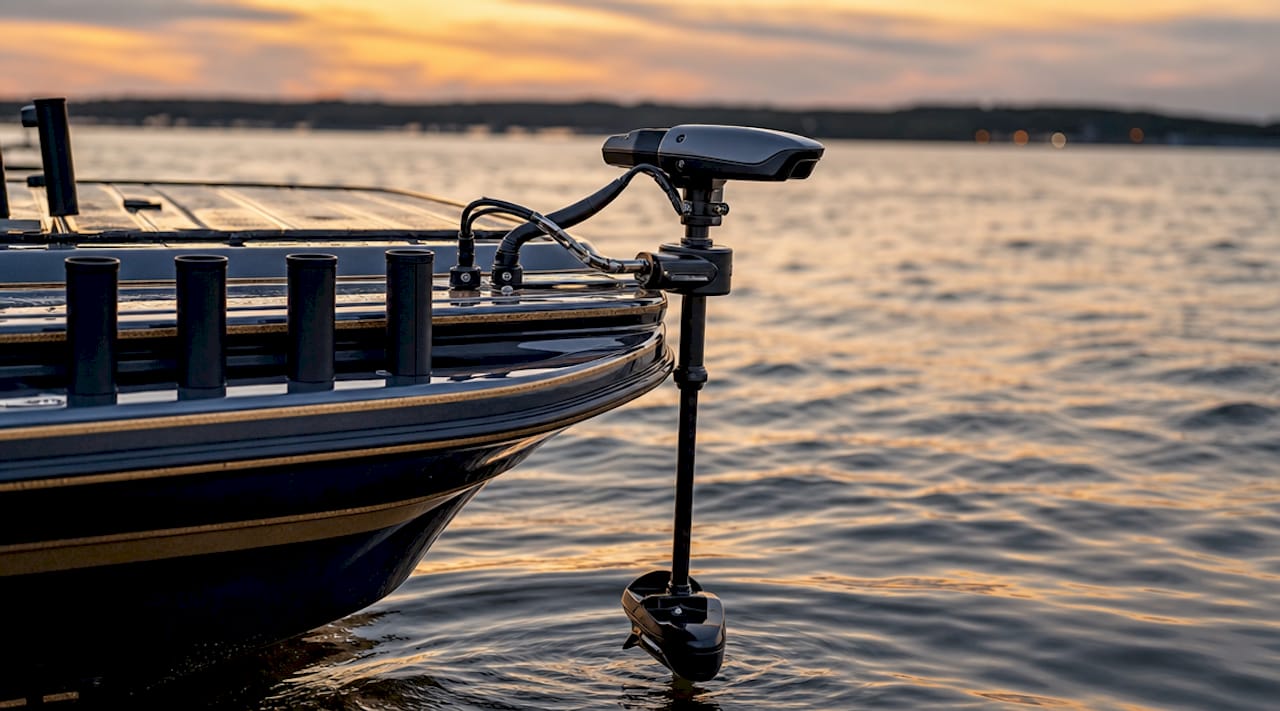
B.A.S.S. Nation 2026 rules require electric motors mounted only at the bow, with stern motors and certain bass/crappie brakes removed entirely. This rule directly affects which trolling motor mount systems are legal and how your deck layout must be configured. Many anglers discover this conflict only after purchasing a boat already rigged for recreational use.
The Alabama Bass Trail mandates aerated livewell space and prohibits raised platforms or ladders exceeding gunnel height. Horsepower limits are also enforced, meaning your engine choice must fall within circuit-specific caps. Structural modifications that look like performance upgrades can actually get you scratched from the weigh-in line.
The NC Bass Challenge takes a different approach to livewell compliance: bass cannot be placed in livewells during official practice days, with livewell checks conducted pre-launch. This matters because practice-day and competition-day rules differ, requiring you to manage two separate compliance strategies on the same boat.
- Verify bow-only electric motor placement before any rigging
- Remove stern motors and prohibited brakes prior to tech inspection
- Confirm livewell aeration meets circuit-specific standards
- Check platform and ladder height against gunnel restrictions
- Review horsepower limits for each circuit you plan to enter
Pro Tip: Keep a printed copy of each circuit’s rulebook in your boat’s dry storage. Rules vary enough between B.A.S.S. Nation, Alabama Bass Trail, and regional circuits that relying on memory is a genuine disqualification risk.
2. Top tournament fishing boats and their standout features
The best tournament fishing boats in 2026 combine hull performance, electronics readiness, and factory-level rigging that saves you time and money before your first event.
The Ranger Z519R Cup package arrives with pro-grade rigging, 7-inch touchscreen monitors, and harness upgrades already installed. This matters because aftermarket electronics installations on production boats often introduce wiring inconsistencies that show up as failures mid-tournament. Ranger builds the integration in from the start, which is a meaningful advantage over bare-hull competitors.
Latitude Tournament Fishing Boats represent the purpose-built end of the spectrum. The 20-foot Latitude model starts around $89,900 with professional components and warranties designed for circuit-level competition. That price reflects a boat engineered from the keel up for tournament use rather than adapted from a recreational platform.
Nitro Pro Level models occupy the middle ground, offering strong hull designs and competitive storage at price points below the Ranger and Latitude tier. They’re a legitimate choice for anglers entering their first full season of circuit fishing without the budget for a flagship rig.
Key features to evaluate across all models:
- Hull design: Deep-V hulls handle rough water better; modified-V designs offer more deck space
- Rod lockers: Length and capacity matter more than most buyers realize until mid-tournament
- Livewell systems: Recirculating aeration with temperature management is the current standard
- Electronics readiness: Factory-wired transducer ports and network-ready helm pods save hours of installation
- Storage compartments: Forward, aft, and console storage all serve different gear categories
Pro Tip: Request a full wiring diagram from the dealer before purchase. Factory tournament packages vary in what’s actually pre-wired versus what’s simply pre-drilled. Knowing the difference before you sign protects you from expensive surprises.
3. How to optimize your boat’s electrical system for tournament days
Electrical reliability is the single most overlooked competitive advantage in tournament bass boat preparation. A trolling motor drawing 50 to 80 amps at full power on a 36-volt system, combined with sonar units and livewell pumps running simultaneously, creates a load profile that undersized battery banks simply cannot sustain across a 6 to 9 hour tournament day.
The solution is a properly segmented battery architecture. Separating your starting battery from your trolling motor bank and your electronics bank prevents a single system failure from cascading into a full boat shutdown. This is not optional at the elite level. It is the standard configuration on every professionally rigged tournament boat.
Here is a practical setup sequence for a competition-ready electrical system:
- Size your trolling motor bank first. Calculate your average daily amp draw and add 20% reserve capacity. Lithium iron phosphate batteries deliver more usable capacity per pound than AGM, though they cost significantly more upfront.
- Dedicate a separate electronics bank. Sonar units, GPS chartplotters, and live-imaging displays draw continuous low amperage. Isolating them prevents trolling motor voltage spikes from causing display resets.
- Install an independent charging system. Onboard chargers that monitor each bank separately maintain proper charge levels without overcharging. Systems like the WaveCharge Pro manage multi-bank configurations automatically.
- Label every circuit. Tournament mornings are not the time to trace an unlabeled wire. Color-coded, labeled wiring harnesses are a professional standard for good reason.
- Test under load before the event. Run your trolling motor at full power for 30 minutes at the dock while sonar and livewell pumps operate. Any weak connection or undersized wire will reveal itself there rather than on the water.
Electrical draw profiles vary between continuous low-amp sonar loads and high-amp spikes during aggressive trolling. Managing both profiles requires nuanced battery selection, not just raw capacity. Reliable electrical capacity provides a direct competitive advantage by preventing the mid-day equipment failures that cost anglers fish and time.
4. Storage and organization: how elite anglers set up their boats
Storage organization separates anglers who adapt quickly from those who lose critical minutes fumbling through gear mid-tournament. Elite anglers treat their rod lockers and tackle compartments with the same precision they apply to their fishing technique.
Dylan Nutt’s 2026 Bassmaster Classic-winning boat carries 25 to 30 rods in the rod locker alongside a 250-horsepower Yamaha VMAX SHO engine. That rod count reflects a deliberate strategy: pre-rig every technique you might need so that switching presentations takes seconds, not minutes. Most recreational anglers carry 8 to 10 rods. Elite tournament anglers treat rod locker capacity as a core performance specification.
Tackle organization follows the same logic. Compartmentalized tray systems with technique-specific labeling let you pull the right box without opening three wrong ones first. Plano, Flambeau, and similar tackle management systems fit standard bass boat compartments and hold up to the vibration and moisture of tournament days.
Livewell setup deserves its own attention. Fish health directly connects to livewell temperature control and oxygen levels, and dead fish weigh penalties apply under most circuit rules. A livewell that keeps water cool and oxygenated through a Florida summer afternoon is not a luxury. It is a scoring system.
- Pre-rig rods by technique the night before the tournament
- Assign specific compartments to specific gear categories and never mix them
- Keep a dedicated “quick-change” box at the front of your most accessible compartment
- Run your livewell system for 20 minutes before launch to verify temperature and aeration
- Store rain gear and safety equipment in a separate, always-accessible location
Pro Tip: Photograph your full boat setup after each tournament. When something worked perfectly, you want to replicate it exactly. When something slowed you down, the photo shows you what to fix.
5. Comparing fishing tournament boats by budget and fishing style
Choosing between high performance fishing boats comes down to three variables: your target circuit, your water type, and your realistic budget.
| Boat Model | Starting Price | Best For | Key Strength |
|---|---|---|---|
| Latitude LTB20 | ~$89,900 | Elite circuits, open water | Purpose-built tournament engineering |
| Ranger Z519R Cup | Mid-tier premium | Multi-circuit anglers | Factory electronics and harness integration |
| Nitro Pro Level | Budget-competitive | First-season circuit anglers | Value-to-performance ratio |
Larger reservoirs and open-water circuits favor deeper-V hulls that handle chop without sacrificing speed. Smaller impoundments and river circuits reward more maneuverable, shallower-draft designs. The Latitude LTB20 excels on big water; Nitro’s shallower designs work well on tighter venues.
Budget-conscious anglers entering their first season should prioritize livewell quality and electrical capacity over raw horsepower. A well-maintained mid-tier rig with a properly sized battery bank and a clean livewell system will outperform an underprepared flagship boat every time. The tournament boat buyer’s guide at Mazzamarine covers the full evaluation framework for anglers at every budget level.
Key takeaways
Tournament fishing boats require compliance, electrical reliability, and organized storage to deliver consistent competitive results across a full season.
| Point | Details |
|---|---|
| Compliance comes first | Verify motor placement, livewell specs, and structural rules for every circuit before rigging. |
| Electrical architecture matters | Separate starting, trolling, and electronics banks to prevent cascading failures on tournament days. |
| Storage is a performance tool | Pre-rigged rods and organized tackle reduce mid-tournament downtime and improve decision speed. |
| Fish care affects your score | Livewell temperature control and aeration directly determine whether your catch survives to weigh-in. |
| Budget shapes your options | Prioritize livewell quality and electrical capacity over horsepower when resources are limited. |
What I’ve learned from watching anglers win and lose on the same water
I’ve spent enough time around competitive anglers to know that the boat rarely loses the tournament. The angler does. But the boat can absolutely win it.
The anglers who consistently cash checks share one habit: they treat pre-event checks for livewells, bilge pumps, and navigation gear as non-negotiable. Not a quick glance. A full functional test, the night before, at the dock. I’ve watched talented anglers get bounced from weigh-in lines because a livewell pump failed silently at 10 a.m. and they didn’t notice until the fish were already gone.
The other thing I’d push back on is the obsession with horsepower. Yes, a 250-horsepower Yamaha VMAX SHO like Nutt runs is a beautiful piece of engineering. But I’ve seen anglers on 150-horsepower rigs finish ahead of 250-horsepower boats because their electrical system was clean, their rods were pre-rigged, and they never wasted 20 minutes chasing a dead sonar unit. Compliance and preparation beat raw power more often than the tournament fishing community admits.
If you’re building your first serious tournament rig, spend the money on the electrical system and the livewell before you spend it on the engine upgrade. The fish you keep alive and the electronics that stay on all day are what put money in your pocket.
— Jason
Keep your tournament rig performing at its best with Mazzamarine
A tournament-ready boat is only as good as its last service. At Mazzamarine, Mino and Luigi have built a Florida network of marine specialists who understand what competitive anglers demand from their equipment. From engine and mechanical work to nav and electronics upgrades, the team handles every system that keeps your rig reliable from launch to weigh-in. Explore sportfish upgrades including outriggers, towers, and performance enhancements built for serious fishing. For a full refit or targeted improvement, the sportfish upgrade guide walks you through every step. Reach out to Mazzamarine and fish your next tournament knowing your boat is ready.
FAQ
What makes a good tournament fishing boat?
A good tournament fishing boat combines rule-compliant rigging, a properly segmented electrical system, high-capacity rod storage, and a reliable livewell with aeration and temperature control. These features directly affect both your compliance standing and your ability to keep fish alive through weigh-in.
How much does a tournament-ready bass boat cost?
Purpose-built tournament bass boats like the Latitude LTB20 start around $89,900, while factory-equipped models like the Ranger Z519R Cup fall in the mid-tier premium range. Budget-competitive options from Nitro offer strong value for first-season circuit anglers.
What battery setup do tournament bass boats need?
Tournament bass boats require separate battery banks for the starting motor, trolling motor, and electronics. A 36-volt trolling motor draws 50 to 80 amps at full power, so battery banks must carry reserve capacity to sustain a full 6 to 9 hour tournament day reliably.
Can I use a recreational bass boat in tournaments?
Many recreational bass boats can be made tournament-legal with the right modifications, including bow-only electric motor mounting and compliant livewell aeration. However, structural restrictions like platform height limits and horsepower caps vary by circuit and must be verified before competing.
Why do tournament rules differ between circuits?
Tournament compliance varies widely between B.A.S.S. Nation, Alabama Bass Trail, NC Bass Challenge, and regional circuits because each organization sets its own safety, fish care, and equipment standards. Anglers competing across multiple circuits must review each rulebook independently to avoid disqualification.
Recommended
Text or Call 954-330-9653 Schedule Appointment
Mazza Marine Yacht Services & Refit

Fiberglass Upgrades and Damage Repair

Premium Yacht Paint/ Faux Teak

Fishing: Custom Rods, Reels,Tackle

Electrical, Electronics and Navigation

Paint, Hull and Gelcoat

Teak Decks, Wood Cabinets, Carpentry

Canvas, Enclosures and Upholstery

Mechanical, Repower and Running Gear

Plumbing, Bilge and Thru-Hulls

Welding and Custom Fabrication

Interior Refit And Past Work
Get your yacht value Estimate
"*" indicates required fields