
View Our Recent Work:

Overview: Work with a licensed broker, cross-check listings on YachtWorld, SportFishTrader, or UnitedYacht, and make every offer subject to survey and sea trial before a single dollar leaves escrow. That single habit separates buyers who close confidently from those who inherit someone else’s deferred maintenance.
Here is your 72-hour action checklist to get the process moving safely:
- Shortlist listings on YachtWorld, SportFishTrader, and UnitedYacht filtered by length, builder, and price range.
- Contact a licensed broker and request their credentials, documented transaction history, and any active listings that match your mission.
- Request maintenance records from the seller or listing broker before scheduling any travel or sea trial.
- Verify the HIN (Hull Identification Number) against USCG documentation and run a lien search.
- Schedule a SAMS- or NAMS-accredited marine surveyor and confirm the survey scope covers hull, propulsion, electronics, and all fishing systems.
- Obtain financing pre-approval from a marine lender before submitting an offer.
- Submit your offer with a subject-to-survey clause and fund escrow only after the survey report is in hand.
Table of Contents
- Where do you find used sport fishing yachts, and should you use a broker?
- How do you choose the right used sport fishing yacht for your mission?
- What builders and models should you look for in the used sportfish market?
- What does the inspection, survey, and closing process actually look like?
- What does a used sportfish actually cost beyond the listing price?
- How do financing and insurance work for used sport fishing yachts in the U.S.?
- What does the closing timeline look like from offer to delivery?
- Key Takeaways
- What experienced sportfish brokers actually see that buyers miss
- Mazzamarine helps U.S. buyers close and refit with confidence
- Authoritative sources and recommended next reads
Where do you find used sport fishing yachts, and should you use a broker?
The U.S. brokerage market for pre-owned fishing boats runs deep. YachtWorld alone lists vessels from 26 feet to 144 feet across wide price bands, which means inventory is rarely the problem. Knowing where to look and who to trust is key.
Major marketplaces at a glance
| Marketplace | Best for | Key advantage |
|---|---|---|
| YachtWorld | Broadest U.S. and international inventory | Largest listing database; broker-verified listings |
| SportFishTrader | Sportfish-specific search | Niche focus; easier to filter by fishing configuration |
| UnitedYacht | Full-service brokerage network | Expert buying advice and documented maintenance history emphasis |
| Mazza Marine network | Florida-based buyers and sellers | Brokerage plus immediate refit/survey coordination |
Broker vs. private sale
| Factor | Buyer’s broker | Private sale |
|---|---|---|
| Financing | Broker paperwork simplifies lender approval | Harder; lenders want documented chain of title |
| Maintenance records | Brokers prioritize complete service history | Often incomplete or absent |
| Recourse | Contractual protections, escrow management | Limited; buyer assumes more risk |
| Price | Typically reflects market; commission built in | Can be lower, but condition risk is higher |
| Logistics | Survey, closing, transport coordinated | Buyer arranges everything independently |
Private sales can offer lower prices, but they rarely come with the documented maintenance history that lenders, insurers, and smart buyers demand. A buyer’s broker earns their commission most visibly on cross-regional purchases, complex refits, and any transaction where the seller’s paperwork is thin. When the boat is local, fully documented, and the seller is transparent, a private deal can work. Outside those conditions, a broker’s regional network of surveyors, yards, and finance contacts is worth every point of commission.
How do you choose the right used sport fishing yacht for your mission?
Buying on price alone is the most common mistake in this market. Define your mission before you open a single listing: the boat that wins a Bahamas billfish tournament is a different animal from the one that runs a family out to the Gulf Stream on weekends.
Mission-to-size framework
- Owner-operator day fishing (25–35 ft): Simpler systems, lower fuel burn, manageable solo or with one mate. Center consoles and smaller express boats fit here.
- Tournament/long-range bluewater (40–55 ft): Full outrigger spread, large fishboxes, overnight accommodations for two to four. This is the sweet spot for serious sportfish buyers.
- Crewed sportfish (55 ft+): Dedicated crew quarters, watermaker, generator redundancy, and full electronics suite. Ownership complexity rises sharply above 55 feet.
Must-have systems by mission
- Tournament fishing: Large insulated fishboxes (300+ quarts), livewell capacity, outrigger spread, tower with fighting chair, and a proven diesel package with low hours.
- Extended bluewater/Bahamas runs: Watermaker, 200+ gallon freshwater capacity, freezer, redundant bilge pumps, and a generator with at least 8 kW output.
- Owner-operator simplicity: Single-engine or twin-engine with straightforward service access, minimal crew accommodations, and a hull designed for the specific sea conditions you fish.
Late-model pre-owned vs. older refit boats
A five-year-old used sport fishing vessel with original systems and complete logs often costs less to own than a 15-year-old boat that has been partially refit. The older boat may look sharp on the surface, but unknown-history risk compounds with age. The exception is a fully documented refit with receipts: engine replacement, new electronics, fresh bottom paint, and updated safety gear. When the paper trail is complete, an older hull with a fresh repower can be exceptional value.

What builders and models should you look for in the used sportfish market?
The five builders that dominate U.S. brokerage listings each occupy a distinct niche. Price bands below are ballpark ranges that vary significantly with condition, documented maintenance, repower history, and electronics package.
Builder quick reference
- Viking: The gold standard for offshore tournament fishing. Exceptional build quality, strong resale value, and a loyal owner community that keeps service records meticulous.
- Hatteras: Classic American sportfish heritage, known for seakeeping in rough offshore conditions. Older hulls (1970s–1990s) are widely available and often refit to high standards.
- Bertram: Legendary deep-V hull with a devoted following. The 31 and 35 remain among the most recognizable pre-owned fishing boats in Florida waters.
- Cabo: West Coast DNA with a loyal following in the Pacific and Gulf. Known for speed and a clean, modern interior layout.
- Grady-White: The benchmark for day-fishing center consoles and smaller express boats. Exceptional fit and finish, strong resale, and straightforward maintenance.
Typical length and price bands (ballpark)
| Builder | Typical used length range | Ballpark price category | Crew accommodations |
|---|---|---|---|
| Viking | 25–55 ft | Mid to premium | Full overnight; larger models with crew quarters |
| Hatteras | — | Mid to premium | Full overnight; classic layout |
| Bertram | 40–55 ft | Entry to mid | Overnight on 35 ft+; day-boat on smaller models |
| Cabo | 25–35 ft | Mid | Overnight on 35 ft+ |
| Grady-White | 18–45 ft | Entry to mid | Day-boat to light overnight |
What does the inspection, survey, and closing process actually look like?
Always buy subject to survey and sea trial. No exceptions. For any used sport fishing yacht over $30,000, hire a surveyor accredited by SAMS (Society of Accredited Marine Surveyors) or NAMS (National Association of Marine Surveyors), both of which are commonly required by U.S. insurers and lenders.
Sportfish-specific survey checklist
- Hull and transom: Tap test for delamination, moisture meter readings on transom and stringers, blister inspection below waterline.
- Propulsion and shafting: Shaft alignment, cutlass bearing wear, prop condition, strut integrity.
- Engines and transmissions: Cold start and full-throttle sea trial, exhaust smoke color, oil analysis if available, transmission fluid condition.
- Electronics and transducers: Chartplotter, radar, VHF, fishfinder/sonar, autopilot, and all NMEA integrations powered on and tested.
- Livewells and sea chests: Flow rate, pump condition, seacock operation.
- Bilge and moisture: Bilge pump function, moisture readings under sole boards, stringer condition.
- Rod lockers and fishboxes: Drain integrity, hatch seals, insulation condition.
- Outriggers and tower mounts: Weld integrity, corrosion at base plates, halyard and line condition.
- Deck hardware: Soft spots under cleats, windlass, and rod holders indicate water intrusion.
Pro Tip: Specialization matters when hiring a surveyor. A surveyor whose practice centers on planing-hull sportfish will catch transom delamination and sea chest issues that a generalist might miss. Ask specifically about their sportfish experience before booking.
Use the survey report as a negotiation foundation, not a pass/fail verdict. Categorize findings into safety/structural issues (demand seller-funded repair or a price credit) and cosmetic items (accept or negotiate). Escrow funds stay held until both parties agree on the resolution.
Complete maintenance logs are the single biggest differentiator between a good used sportfish and a costly headache. Experienced brokers at UnitedYacht consistently prioritize late-model vessels with consistent service history precisely because it reduces unknown-history risk and strengthens both financing and insurance prospects.
Closing checklist
- Signed purchase agreement with subject-to-survey clause
- Escrow funded through a neutral third party
- Bill of sale executed at closing
- HIN verification against USCG Abstract of Title
- Lien search completed (USCG documentation vessels require a federal lien search)
- USCG documentation transfer or state title transfer, depending on vessel size and owner preference
- Delivery or transport plan confirmed in writing
What does a used sportfish actually cost beyond the listing price?
Marine surveys typically incur costs calculated per foot of vessel length, so budget accordingly before the haul-out fee. That survey cost is the best money you will spend in the entire transaction.
One-time costs to budget:
- Survey fee ($15–$25/ft) plus haul-out ($300–$800 depending on yard)
- Electronics upgrades (chartplotter, radar, fishfinder): $3,000–$15,000+ depending on scope
- Repowering (if engines are high-hours): $40,000–$120,000+ for twin diesel repowers on 40–55 ft boats
- Brokerage commission: typically 10% of sale price, paid by the seller in most U.S. transactions
- Sales tax and transfer fees: vary by state; Florida charges 6% sales tax on vessel purchases (capped at $18,000 for vessels)
- Initial refit or cosmetic work: highly variable
Annual recurring costs:
- Insurance: hull and liability coverage typically runs 1%–2% of insured value annually for well-maintained vessels
- Slip or dry storage: $500–$3,000+ per month depending on location and vessel size
- Routine maintenance (bottom paint, engine service, zincs): $5,000–$20,000+ annually for a 40–55 ft sportfish
- Fuel: a twin-diesel 45-footer burns roughly 40–60 gallons per hour at cruise; budget accordingly
- Crew wages (if applicable): captain day rates or annual salary depending on ownership model
Budget a contingency percentage of the purchase price for unforeseen repairs or refit items discovered post-survey, with a higher contingency advisable for older hulls.
How do financing and insurance work for used sport fishing yachts in the U.S.?
Lenders and insurers will both require a recent marine survey, documented maintenance records, and clear title verification before approving a loan or binding coverage. That is not a suggestion; it is standard underwriting practice for used sport fishing vessels.
Financing checklist
- Marine lenders typically finance vessels up to 20 years old with a clean survey; older hulls may require larger down payments or specialty lenders.
- Standard down payments range from 10%–20% for qualified buyers; some lenders require 20%–30% on vessels over 15 years old.
- Broker or dealer paperwork (purchase agreement, bill of sale, survey report) is required for loan approval.
- Pre-approval before making an offer strengthens your negotiating position and speeds closing.
Insurance checklist
- Underwriters evaluate hull condition, engine hours, operation area (coastal vs. offshore vs. bluewater), owner experience, and security systems.
- Coverage must be bound before delivery; do not take possession without confirmed insurance.
- Typical exclusions: racing, commercial use, operation outside agreed cruising area, and wear-and-tear items.
- A documented maintenance log can directly lower your premium by demonstrating consistent upkeep to the underwriter.
Documentation basics
- Vessels 26 feet and over may be documented with the USCG, which provides a federal title and simplifies financing and international travel.
- State registration is an alternative for smaller vessels or those not requiring federal documentation.
- International transfers require customs clearance and may involve additional import duties; consult a maritime attorney for cross-border transactions.
What does the closing timeline look like from offer to delivery?
A typical U.S. sportfish transaction from accepted offer to delivery runs 3–6 weeks when the survey is clean and financing is pre-approved. Here is how the stages stack up:
Week 1: Offer accepted, subject-to-survey clause confirmed, escrow funded. Buyer schedules haul-out and SAMS/NAMS surveyor.
Week 2: Survey and sea trial completed. Survey report delivered within 48–72 hours. Buyer and seller negotiate any findings; price adjustment or repair credits agreed in writing.
Week 3: Financing finalized with survey report submitted to lender. Insurance bound. Closing documents prepared: bill of sale, HIN verification, lien search results, USCG documentation transfer or state title paperwork.
Week 4–6: Closing executed, funds released from escrow, title transferred. Delivery or transport arranged. For buyers who need the vessel moved from another state, motor yacht transport logistics are worth coordinating through a specialist to avoid damage claims and scheduling delays.
If the survey uncovers significant structural or mechanical findings, the timeline extends while repairs are negotiated or completed. Never rush this stage. A two-week delay to resolve a transom repair is far less painful than inheriting the problem post-closing.
Key Takeaways
The safest and most efficient route to buying a used sport fishing yacht is broker-led, survey-protected, and escrow-secured from the first offer to final delivery.
| Point | Details |
|---|---|
| Survey before deposit | Always include a subject-to-survey clause; hire a SAMS- or NAMS-accredited surveyor for any vessel over $30,000. Expect to pay a survey fee of $15–$25 per foot. |
| Maintenance logs matter most | Complete service records reduce unknown-history risk and are required by most lenders and insurers for underwriting. |
| Budget beyond the listing price | Survey fees run $15–$25 per foot; add haul-out, refit, insurance, and a 10%–15% contingency to your total budget. |
| Mission drives the decision | Define your primary use (tournament, bluewater, day fishing) before shortlisting boats; the wrong layout costs more to fix than the price difference. |
| Mazzamarine for Florida buyers | Mazzamarine coordinates brokerage support, accredited survey referrals, and post-purchase refit and upgrades for U.S. buyers based in or delivering to Florida. |
What experienced sportfish brokers actually see that buyers miss
There is a pattern that shows up repeatedly in sportfish purchases: buyers fall in love with a boat’s tower and outrigger spread, then discover six months later that the engines haven’t had a proper service in three years and the transom has been taking on moisture since the last owner’s hard grounding. The cosmetics were immaculate. The logs were nonexistent.
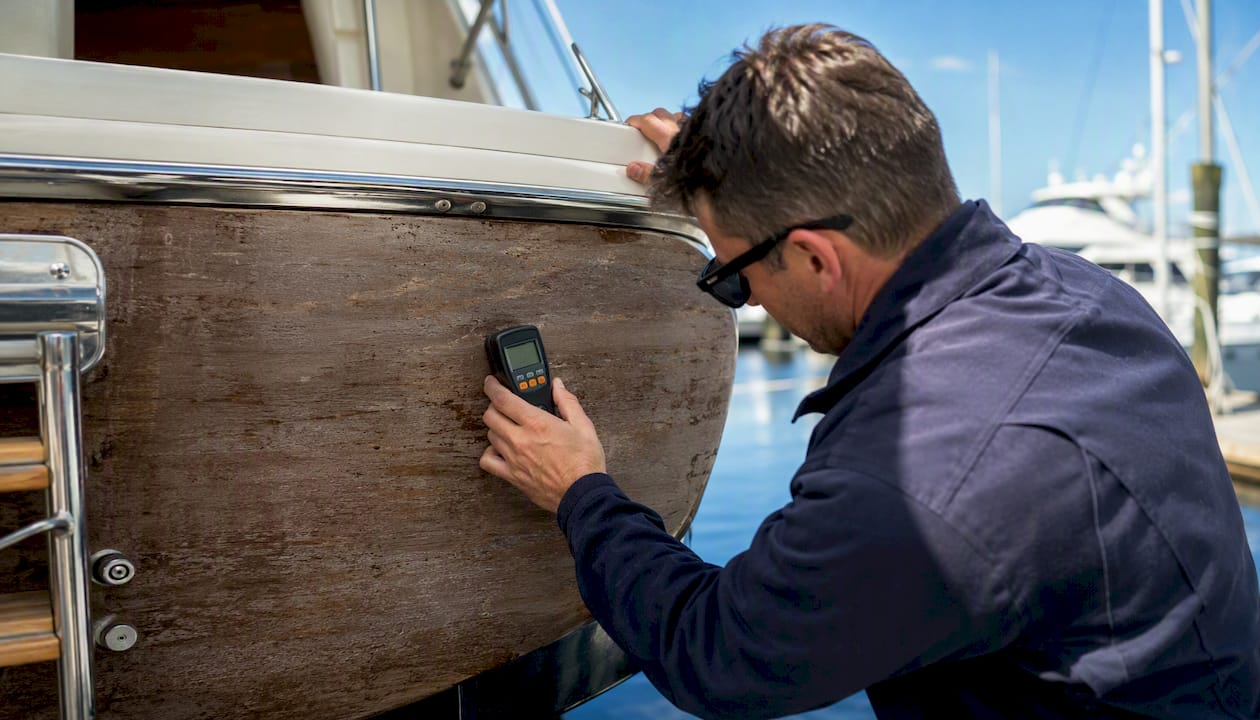
The most reliable buying insight from the field is deceptively simple: ask for the maintenance logs before you ask for the price. If the seller hesitates or produces a single sheet of handwritten notes, treat that as a structural red flag, not a paperwork inconvenience. Boats with complete, consistent service records sell faster and finance easier because every party in the transaction, including the lender and insurer, can see exactly what they are buying.
Two practical notes worth carrying into every negotiation: first, a survey finding is a negotiation tool, not a deal-killer. Use it to request seller-funded repairs or a price credit on substantive mechanical or structural items. Second, if the boat needs a refit after purchase, scope the work before closing, not after. Knowing whether you need a full sportfish upgrade package or just an electronics refresh changes your offer price and your financing amount.
Mazzamarine’s Florida network has handled the full arc from brokerage support through post-purchase refit coordination, and the buyers who arrive with clean survey reports and complete logs consistently close faster and spend less on surprises.
Mazzamarine helps U.S. buyers close and refit with confidence
Buying a used sportfish is one thing. Getting it ready to fish the way you want it is another. Mazzamarine brings both together for Florida-based buyers and those delivering to Florida waters. From brokerage support and accredited survey coordination to complete post-purchase refit planning, the Mazzamarine team handles the full scope of what comes after the offer is accepted.

Mino and Luigi’s network covers urgent repairs, engine and mechanical work, sportfish-specific upgrades, electronics packages, custom fabrication, and full interior refits. Whether your survey turns up a transom issue or you simply want the boat configured exactly for tournament fishing, Mazzamarine coordinates the work so you are not managing a dozen vendors independently. Contact Mazzamarine today to schedule a brokerage consultation or request a refit estimate for your next vessel.
Authoritative sources and recommended next reads
Use these resources to verify listings, find accredited surveyors, and confirm USCG documentation requirements before closing.
- YachtWorld: The largest U.S. brokerage listing database. Use it to benchmark pricing, compare length bands, and verify broker credentials on active listings.
- SportFishTrader: Niche sportfish marketplace. Filter by fishing configuration, builder, and region to narrow inventory faster than general platforms.
- UnitedYacht Sales — Sportfishing Buying Guide: Broker-authored advice on mission-first selection and the importance of documented maintenance history.
- SAMS (Society of Accredited Marine Surveyors): Use the SAMS directory to find accredited surveyors by region and vessel type. Confirm sportfish experience before booking.
- NAMS (National Association of Marine Surveyors): Alternative accreditation body; NAMS-certified surveyors are accepted by most U.S. lenders and insurers.
- Little Yacht Sales — Survey, Sea Trial, and Post-Survey Negotiation: Practical guide to reading a survey report and using findings to negotiate price credits or seller-funded repairs.
- USCG National Vessel Documentation Center: Primary source for USCG documentation, lien searches, and Abstract of Title requests. Run a search on any vessel before closing.
- Galati Yachts — What to Look For in a Used Sportfishing Boat: Covers mission-first selection, hull inspection priorities, and the condition standards that separate a good used sportfish from a costly one.
Recommended
Text or Call 954-330-9653 Schedule Appointment
Mazza Marine Yacht Services & Refit

Fiberglass Upgrades and Damage Repair

Premium Yacht Paint/ Faux Teak

Fishing: Custom Rods, Reels,Tackle

Electrical, Electronics and Navigation

Paint, Hull and Gelcoat

Teak Decks, Wood Cabinets, Carpentry

Canvas, Enclosures and Upholstery

Mechanical, Repower and Running Gear

Plumbing, Bilge and Thru-Hulls

Welding and Custom Fabrication

Interior Refit And Past Work
Get your yacht value Estimate
"*" indicates required fields