
View Our Recent Work:

Many Florida yacht owners schedule their first haul-out without fully understanding what they’re getting into, and that gap in knowledge can lead to missed inspections, unexpected yard costs, and even insurance complications. A haul-out is one of the most important events in your yacht’s annual calendar, yet confusion around terminology, process, and timing is surprisingly common. This guide breaks down everything you need to know, from the basic definition to hurricane season strategy, so you can approach your next haul-out with confidence and make the most of every minute your vessel spends out of the water.
Table of Contents
- What is a vessel haul-out?
- Types of haul-outs: short-haul vs. full haul-out
- The haul-out process: step-by-step walkthrough
- Strategic haul-outs: hurricane prep, insurance, and fleet planning
- What most yacht owners miss about haul-outs in Florida
- Where to go for expert haul-outs and Florida yacht upgrades
- Frequently asked questions
Key Takeaways
| Point | Details |
|---|---|
| Haul-out basics | A vessel haul-out lifts your yacht from the water for essential inspection and maintenance. |
| Types of haul-outs | Short-hauls serve quick tasks while full haul-outs allow for extensive work and upgrades. |
| Hurricane preparation | Scheduling a haul-out before storm season safeguards your investment and may be an insurance requirement in Florida. |
| Strategic timing | Advanced planning and communication with your yard ensure a faster, more effective haul-out. |
What is a vessel haul-out?
A vessel haul-out is defined as lifting the boat or yacht out of the water entirely for inspection or maintenance. That’s the simple version. The fuller picture is that a haul-out gives you access to every part of the hull, running gear, propellers, shafts, rudders, thru-hulls, and keel fittings that you simply cannot reach while the vessel is floating. It’s the only way to perform proper bottom painting, hull cleaning down to bare fiberglass or metal, and thorough underwater inspections.
For Florida yacht owners, haul-outs carry extra significance. Florida’s warm, nutrient-rich waters accelerate marine growth, barnacle accumulation, and osmotic blistering far faster than cooler northern climates. The combination of tropical heat, saltwater, and frequent use means that what works as an 18-month schedule in New England may need to be compressed to 12 months or less in South Florida.
Good hull maintenance starts with understanding which conditions trigger the need for a haul-out. Here are the most common reasons:
- Hull fouling: Barnacles and algae reducing speed and fuel efficiency
- Bottom paint recoat: Antifouling paint losing effectiveness after months in Florida’s warm water
- Running gear service: Prop reconditioning, shaft straightening, cutlass bearing replacement
- Zinc anode replacement: Sacrificial zinc anodes that protect against galvanic corrosion deplete faster in Florida’s marina environments
- Osmotic blister repair: Fiberglass hulls can develop water-filled blisters under the gelcoat that require dry-out time and epoxy repair
- Thru-hull inspection and replacement: Every fitting below the waterline needs periodic inspection
- Insurance and regulatory compliance: Many insurers and flagging authorities require documented haul-outs at set intervals
- Hurricane preparedness: Securing the vessel on land ahead of storm season
“A vessel’s underwater condition tells the full story of how well she’s been cared for. The haul-out is your chance to read that story and write a better chapter.”
The timing of your haul-out in Florida should account for the busy spring yard season (March through May), when most owners are prepping for summer use, and the critical window before hurricane season peaks in late August and September.
Types of haul-outs: short-haul vs. full haul-out
Haul-out scope can be short, known as a short-haul, or longer depending on the work required and individual yard policies. Understanding the difference saves you time, money, and scheduling headaches.
A short-haul typically involves lifting the vessel using slings on a travel lift, completing a specific task, and returning the boat to the water the same day or within 24 to 48 hours. Tasks suited for short-hauls include zinc anode swaps, quick underwater inspections, propeller removal for off-site reconditioning, and minor running gear checks. Some yards charge a flat short-haul fee that is significantly lower than a full block-and-stay rate.
A full haul-out involves lifting the vessel, transporting it to a blocking area in the yard, and supporting it on keel blocks and stands for an extended period. This is the standard approach for bottom painting, blister repair, hull fairing, major structural work, and anything that requires the vessel to dry out completely. Full haul-outs can last anywhere from a few days to several weeks depending on the scope of work.
| Feature | Short-haul | Full haul-out |
|---|---|---|
| Duration | Hours to 48 hours | Days to weeks |
| Typical cost | Lower flat rate | Higher daily yard rate |
| Blocking required | No, stays in slings | Yes, keel blocks and stands |
| Common tasks | Zincs, quick inspection, prop removal | Bottom paint, blister repair, hull fairing |
| Best for | Single focused task | Multiple or complex repairs |
| Drying time | Minimal | Full hull dry-out possible |
How do you decide which type you need? Follow this approach:
- List all tasks you want completed before the vessel goes back in the water.
- Consult the yard about what they can accomplish in a short-haul window.
- Factor in drying time if your bottom paint system requires a dry hull for proper adhesion.
- Check your insurance to see if any conditions specify a full block-and-stay inspection.
- Plan around your schedule, since full haul-outs during peak Florida spring maintenance season book weeks in advance.
The short-haul is an excellent tool when your vessel is on a tight schedule, but never let cost savings push you toward a short-haul when the work genuinely requires a full haul-out. Cutting corners underwater always costs more in the long run.
The haul-out process: step-by-step walkthrough
A haul-out is essential for underwater hull and running gear inspection, as well as bottom painting work. Knowing exactly what to expect helps you prepare your vessel properly and get the most out of every hour in the yard.
Here is how a well-organized haul-out typically unfolds:
-
Reserve your yard slot early. Florida yards fill up fast, especially in March through May and again in late July as hurricane season approaches. Call your preferred yard at least four to six weeks in advance, or earlier if your vessel is over 60 feet.
-
Prepare your documentation. Bring previous haul-out records, your current insurance policy, and a written list of all required work. A clear work order prevents misunderstandings and protects you if damage disputes arise later.
-
Pre-haul inspection with your captain. Walk the vessel before delivery to the yard, noting any existing cosmetic damage, equipment status, and underwater observations from recent diver reports. Photograph everything and date the images.
-
Arrival and travel lift staging. The yard crew will guide your vessel into the travel lift bay. Sling placement is critical, particularly for deep-keel sailboats or vessels with running gear that extends well aft. Communicate clearly with the crew about keel depth, shaft position, and any known sensitivities.
-
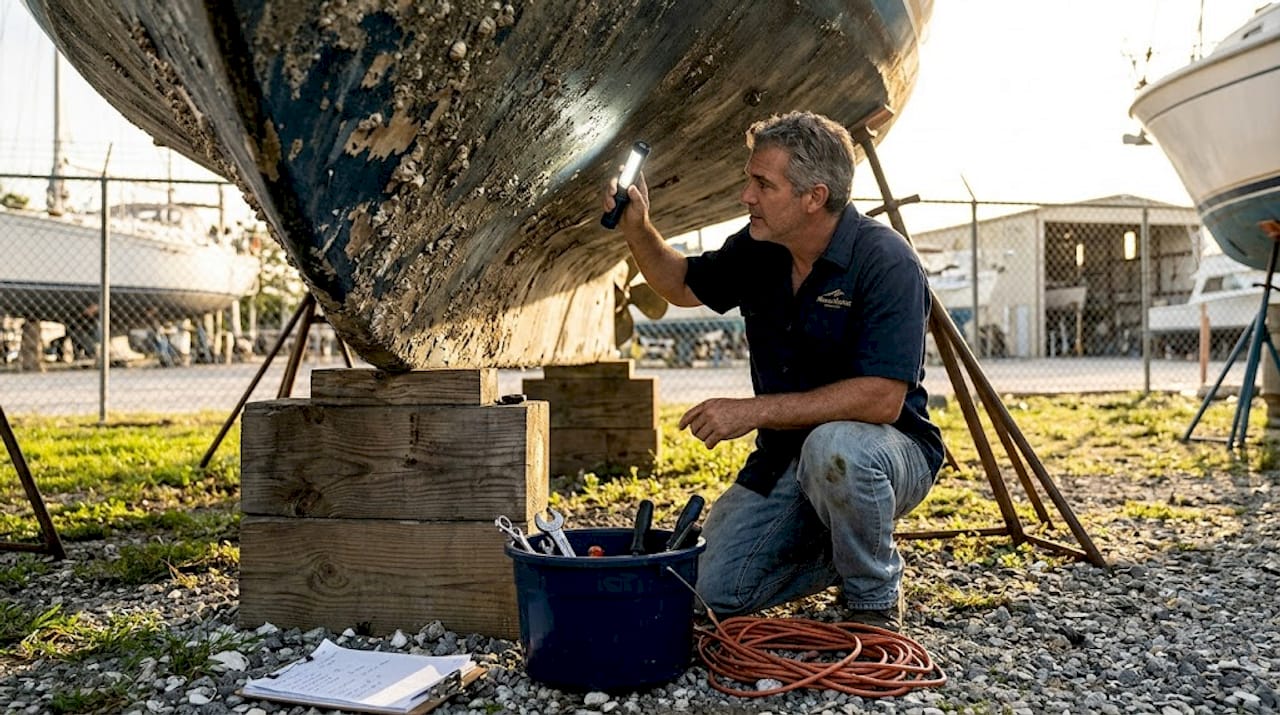
Lifting and blocking. Once lifted, the vessel moves to the blocking area. The yard places keel blocks and stabilizing stands. Inspect the blocking placement yourself before leaving the vessel. Improperly placed stands can damage hull gelcoat or stress the hull structure.
-
Underwater inspection. With the hull exposed, a thorough regular inspection of all surfaces becomes possible. Check the running gear for corrosion or scoring, the shaft alignment indicators, rudder post integrity, and every thru-hull fitting. Address hull maintenance steps like blister mapping at this stage.
-
Work execution. Whether it’s a bottom paint job, structural repair, or running gear service, ensure the yard provides daily progress updates if you’re not on-site. Ask for written sign-off on completed tasks.
-
Engine and systems checks. The haul-out is also an ideal moment to address engine checks since raw water strainers, impellers, and sea cocks are all more accessible on the hard.
-
Final walkthrough and relaunch. Before the vessel goes back in the water, complete a full check of all sea cocks and thru-hulls. Confirm that all hose clamps are tight and the shaft seal is properly adjusted. Never rush the relaunch.
Pro Tip: Create a two-part checklist: one for the vessel going out of the water, and one for the vessel going back in. Any damage discovered after relaunch that was not documented before haul-out becomes a he-said/she-said situation with the yard. Your dated photos and written records are your protection.
Strategic haul-outs: hurricane prep, insurance, and fleet planning
For hurricane readiness in Florida, treat haul-out as an integral part of your insurance and operations risk management. That means securing storage reservations early and fully understanding the yard’s protocol before the storm threat arrives.
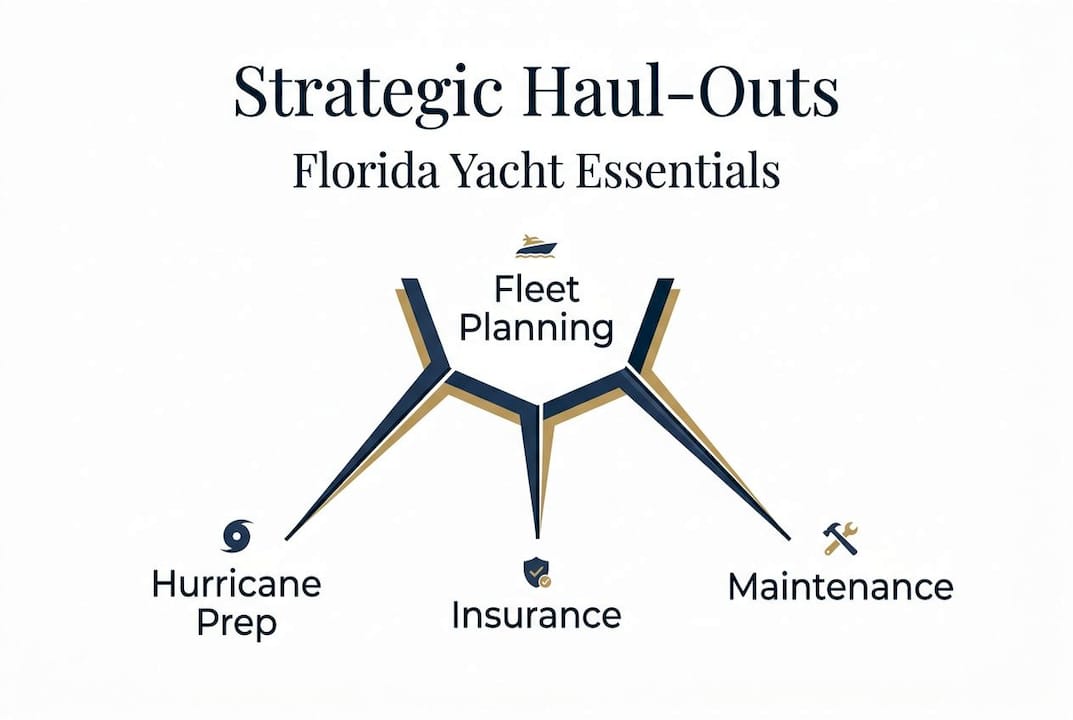
Florida’s official hurricane season runs June 1 through November 30, but the highest risk period is August through October. Most experienced yacht owners and captains begin planning their hurricane haul-out no later than early June, with preferred yards often fully booked for storm storage by mid-July. If you wait for a named storm to approach, your options will be severely limited.
| Timeline | Action required |
|---|---|
| January to March | Review insurance policy for haul-out requirements |
| April to May | Contact yards, reserve storm storage slot |
| June 1 | Hurricane season begins; confirm reservation |
| By July 15 | Finalize yard documentation and pre-haul checklist |
| August to October | Peak storm window; vessel secured and insured |
| November | Relaunch planning and post-storm inspection |
Fleet owners managing multiple vessels face additional complexity. Use this checklist to stay organized:
- Assign one point of contact per vessel for yard communications
- Stagger haul-out dates to avoid all vessels being out simultaneously, unless hurricane storage is the goal
- Negotiate fleet rates with yards for multiple vessels, since many yards offer meaningful discounts
- Maintain a shared documentation folder with current insurance certificates, haul-out records, and vessel specs for all boats
- Confirm each yard’s specific heavy machinery and strapping protocols, since not all yards handle the same vessel types
Insurance interacts directly with haul-out planning in ways many owners overlook. Some policies require vessels to be hauled and stored ashore when a named storm enters a defined geographic radius, often 150 to 200 miles. Failure to comply can void your coverage. Other policies offer premium discounts for documented annual haul-outs that show a pattern of proactive mechanical systems care and inspection.
Pro Tip: Read your marine insurance policy’s named storm clause carefully, and call your broker to ask specifically about haul-out requirements. Then share those requirements with your yard when you make your reservation. The yard’s documented compliance with your insurer’s storage protocols is often required to process a storm-related claim.
What most yacht owners miss about haul-outs in Florida
Here’s an honest take you won’t find in most generic boating guides: the biggest haul-out mistakes are rarely about the hull work itself. They’re about planning, communication, and documentation.
Most captains and owners operate on a calendar-based schedule. Annual haul-out in the spring, done. What they miss is that Florida’s conditions vary significantly year to year. A particularly warm and rainy summer accelerates fouling. A busy season with extra miles logged means more wear on running gear. Rigid schedules ignore these realities. Smart owners adjust their haul-out timing based on actual underwater observations from divers, fuel burn data (slower boats often have heavy fouling), and diver reports on zinc condition.
The second major blind spot is yard relationships. Captains who develop genuine professional relationships with yard managers get better scheduling, faster turnaround, and often better pricing. They get a call when a cancellation opens up in prime season. They get an honest heads-up when a task is going to take longer than quoted. The transactional approach, calling a yard only when you need something, costs more in both time and money over the long run.
Documentation is perhaps the most underestimated element of a haul-out. We’ve seen disputes over post-haul paint chips, stand marks on the hull, and gelcoat scratches that were impossible to resolve because neither the owner nor the yard had clear pre-haul records. Protecting long-term value means treating every haul-out as a formal event with written records, photographs, and signed work orders.
Finally, the owners and captains who get the most from their haul-outs are those who treat them as strategic fleet management events, not interruptions. They bundle multiple tasks. They use the haul-out window to address electrical penetrations, sterntube seals, and waterline refinishing all at once. That integrated approach reduces yard time per task and builds a well-documented maintenance history that genuinely strengthens insurance leverage and resale value.
Where to go for expert haul-outs and Florida yacht upgrades
Knowing the theory behind haul-outs is valuable, but having the right professional network in Florida makes the real difference between a smooth haul-out season and a costly, stressful one.

Mazza Marine connects Florida yacht owners and captains with a trusted network of yard professionals, surveyors, and craftsmen covering everything from urgent yacht repairs to complete refit projects. Whether your vessel needs a fresh paint and gelcoat treatment following haul-out, structural running gear work, or a full interior refit while she’s on the hard, Mino and Luigi bring years of hands-on experience and a deep network of Florida’s finest marine vendors. Reach out to the Mazza Marine team and let’s build a haul-out plan that protects your vessel and elevates your ownership experience for the long haul.
Frequently asked questions
How often should I schedule a haul-out for my yacht in Florida?
Most experts recommend at least once a year for Florida-based vessels, though hulls in high-fouling areas or older fiberglass construction may benefit from more frequent haul-outs given the pace of marine growth in warm waters.
What’s the difference between a short-haul and a full haul-out?
A short-haul uses travel lift slings for a quick, focused service like zinc replacement or prop removal, while a full haul-out places the vessel on blocks for extended work that may require days or weeks on the hard.
Can a haul-out reduce my insurance costs?
Yes, documented haul-outs create a verifiable maintenance history that many insurers view favorably, and proper risk management through regular inspections can reduce premiums or improve coverage terms with some underwriters.
Do I need to haul out before hurricane season in Florida?
Yes, hauling out before peak storm season is strongly recommended and often required by your marine insurance policy, since hurricane readiness depends on secured land storage and documented yard protocols that protect your coverage in the event of a claim.
Recommended
Text or Call 954-330-9653 Schedule Appointment
Mazza Marine Yacht Services & Refit

Fiberglass Upgrades and Damage Repair

Premium Yacht Paint/ Faux Teak

Fishing: Custom Rods, Reels,Tackle

Electrical, Electronics and Navigation

Paint, Hull and Gelcoat

Teak Decks, Wood Cabinets, Carpentry

Canvas, Enclosures and Upholstery

Mechanical, Repower and Running Gear

Plumbing, Bilge and Thru-Hulls

Welding and Custom Fabrication

Interior Refit And Past Work
Get your yacht value Estimate
"*" indicates required fields