
View Our Recent Work:

A boat survey is defined as a professional inspection of a vessel’s structure, systems, and seaworthiness, conducted by a qualified marine surveyor to assess condition, value, and safety before purchase or insurance. If you’re buying a used boat, financing a yacht, or renewing a marine insurance policy, a survey is the single most important step you can take to protect your investment. Skipping it is the kind of decision that looks fine on closing day and costs you dearly six months later. This guide walks you through what a marine survey covers, what it costs, who needs one, and how to use the results like a seasoned buyer.
What is a boat survey and what does it cover?
A boat survey, known in the industry as a marine survey, is a structured, independent assessment of a vessel carried out by a certified marine surveyor. The surveyor examines the boat from bow to stern, above and below the waterline, to produce a written condition report. Lenders, insurers, and experienced buyers all rely on this document before committing money to a vessel.
The marine survey is not a simple visual walkthrough. A qualified surveyor checks hull integrity, deck hardware, through-hull fittings, bilge systems, electrical wiring, fuel systems, navigation equipment, safety gear, and engine condition. Each system gets evaluated against accepted marine standards, and any deficiency gets documented with photos and written notes.
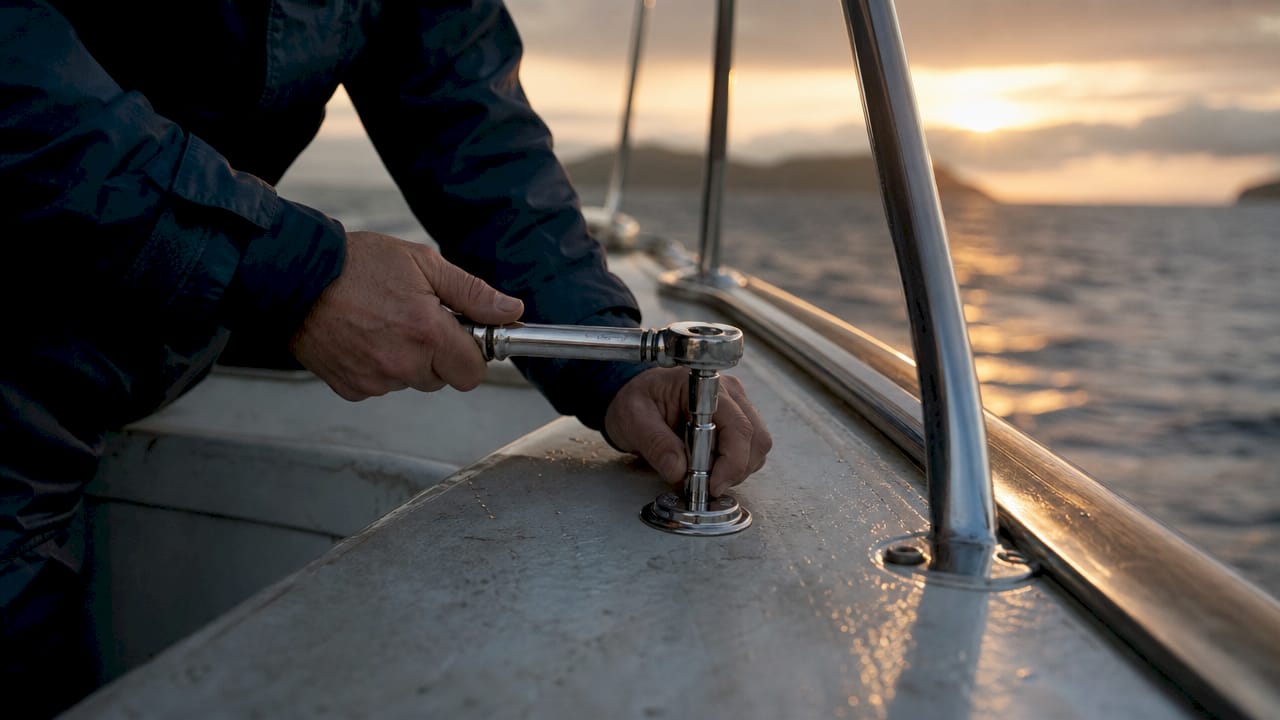
A thorough boat survey is a buyer’s best protection against hidden costly defects that can cause serious financial loss. That protection is the core reason the marine survey exists, not just to satisfy a lender’s checklist.
Though sometimes treated as a formality, boat surveys provide vital independent assessments that protect buyers far beyond lender or insurer requirements. A good surveyor acts as your expert eyes on a vessel you may have only seen at a dock in favorable lighting.
What does a typical boat survey involve?
The standard boat survey involves three distinct stages: a dockside evaluation, a haul-out hull inspection, and a sea trial. Each stage reveals different information, and skipping any one of them leaves gaps in your understanding of the vessel’s true condition.

Stage 1: Dockside evaluation
The surveyor boards the vessel at the dock and begins a systematic inspection of every accessible system. This includes:
- Hull topsides, deck surfaces, and structural bulkheads
- Electrical systems, including wiring, panels, and battery banks
- Fuel tanks, fuel lines, and ventilation
- Bilge pumps, through-hull fittings, and seacocks
- Navigation electronics, lighting, and communication equipment
- Safety gear: life jackets, flares, fire extinguishers, and EPIRBs
- Interior joinery, upholstery, and any signs of water intrusion
The dockside phase is thorough and methodical. A surveyor on a 40-foot vessel may spend three to four hours on this stage alone.
Stage 2: Haul-out and hull inspection
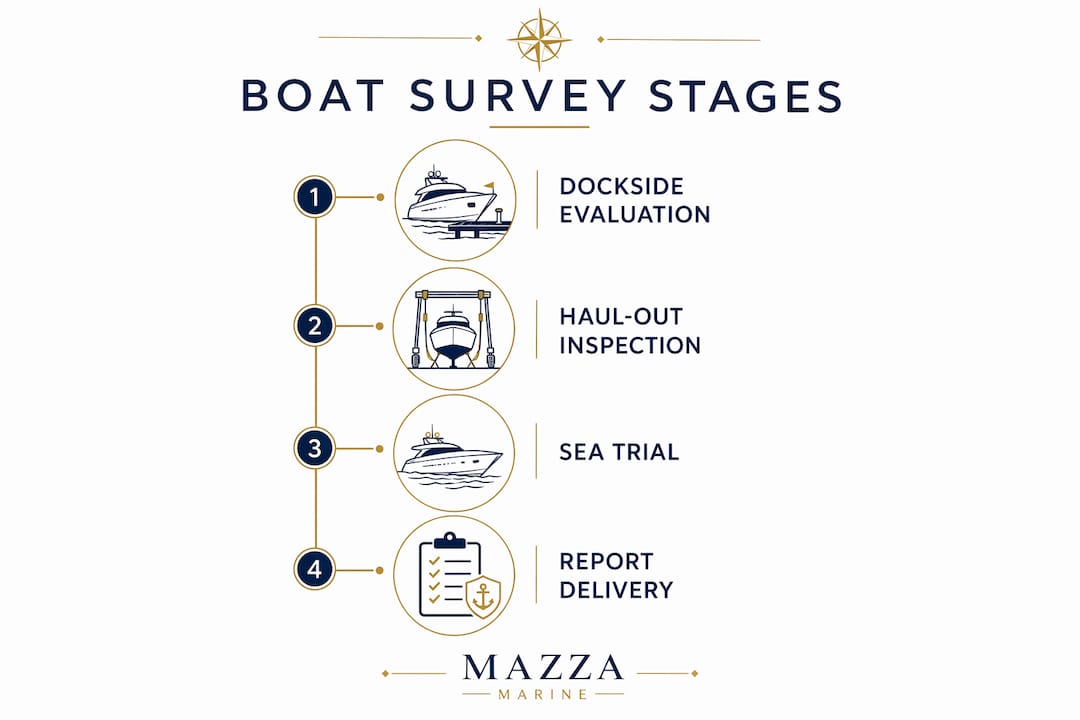
The boat gets lifted from the water so the surveyor can examine the underwater hull, keel attachment, propeller shafts, rudder, and running gear. This is where osmotic blistering, delamination, and structural damage become visible. No hull inspection conducted in the water gives you the same level of certainty.
Stage 3: Sea trial
The sea trial confirms that the engine, transmission, steering, and onboard systems perform correctly under real operating conditions. Overheating, vibration, poor throttle response, and electrical faults often only appear when the vessel is underway.
Survey reports are typically delivered within 24–48 hours to seven days after the inspection is complete. That timeline gives you a detailed written document with photographs to review before finalizing any purchase agreement.
Pro Tip: Ask your surveyor to walk you through the vessel during the dockside phase. Watching them work in real time teaches you more about the boat’s condition than reading the report alone ever will.
How much does a boat survey cost and who pays?
A typical boat survey costs between $500 and $1,500, not including haul-out and pressure washing fees. Those additional expenses vary by boatyard and vessel size but can add several hundred dollars to the total. Budget for the full package, not just the surveyor’s fee.
Payment responsibilities follow a clear convention in the industry:
- Survey and haul-out fees: Paid by the buyer, as these are the buyer’s due-diligence costs
- Agreed post-survey repairs: Typically negotiated and paid by the seller, or reflected in a price reduction
- Additional inspections: If the surveyor must return due to incomplete boat preparation, the buyer usually absorbs that cost
The financial logic here is straightforward. Spending $800 to $1,500 on a survey before buying a $60,000 vessel is a fraction of what a single hidden structural defect could cost to repair. Engine rebuilds, hull delamination repairs, and electrical rewiring on a mid-size yacht routinely run into five figures.
Pro Tip: When planning your budget, also account for cruise-related travel costs and marina fees if the vessel is located away from home. Logistics add up fast when you factor in travel, overnight stays, and boatyard scheduling.
One often-overlooked cost driver is poor preparation. Coordinating haul-out, battery charging, shore power connection, and clearing lockers before the surveyor arrives is vital to avoid inspection delays or added costs. A surveyor who cannot access a system or complete a sea trial due to a dead battery will charge for the return visit.
Who needs a boat survey and when is it essential?
A marine survey is strongly recommended for used boats valued over $10,000–$15,000, vessels with inboard engines, and all sailboats. The more complex the vessel, the more a survey earns its cost. Here is a breakdown of when a survey is not optional:
- Financing a purchase: Most marine lenders require a current survey report before approving a loan. The survey establishes the vessel’s fair market value and confirms it is worth the loan amount.
- Obtaining insurance: Marine insurers frequently require a survey for vessels over a certain age or value. Without one, coverage may be denied or limited.
- Buying a used vessel over $10,000: At this price point, the financial exposure from hidden defects justifies the survey cost every time.
- Purchasing a sailboat or inboard-powered vessel: These vessel types carry more mechanical and structural complexity than a simple outboard-powered runabout.
- Buying from a private seller: Unlike a dealer transaction, private sales offer no warranty or recourse. The survey is your only independent verification of condition.
Even new boats at higher price points benefit from a pre-purchase inspection. Dealer inventory can sit for extended periods, and gelcoat, electrical systems, and engines can develop issues during storage. For first-time buyers especially, avoiding common yacht buyer mistakes starts with insisting on a proper survey regardless of how new or clean the boat appears.
Common findings and how to interpret survey results
Survey reports rarely show a perfectly clean vessel. Most surveys highlight wear or defects, focusing on significant safety or cost issues to guide buyer decisions. That reality surprises first-time buyers who expect a pass/fail verdict. A marine survey does not work that way.
The report is a risk assessment tool, not a grade. Every used boat has wear. The surveyor’s job is to tell you which issues are cosmetic, which are mechanical, and which are structural or safety-critical.
Here is how to read the findings:
- Cosmetic issues: Faded gelcoat, worn upholstery, and surface scratches. These affect appearance but not safety or function. Use them for minor price negotiation.
- Mechanical issues: Worn impellers, aging belts, corroded battery terminals. These are maintenance items with predictable repair costs. Factor them into your offer.
- Structural issues: Hull delamination, keel bolt corrosion, or compromised bulkheads. These are serious. Get contractor estimates before proceeding.
- Safety-critical findings: Faulty seacocks, deteriorated fuel lines, or failed bilge pumps. These require immediate repair and may be deal-breakers depending on severity.
Experienced buyers focus less on cosmetic flaws and more on critical mechanical or structural issues that impact safety and cost. That mindset shift is what separates a smart purchase from an expensive mistake.
Attending the survey in person enables you to directly observe damage locations and better understand report findings beyond the written document. A photo of a soft spot on a deck means more when you have pressed your foot on it yourself.
Pro Tip: Use the survey report as a negotiation document, not just a condition summary. A list of legitimate deficiencies gives you concrete grounds to request a price reduction or require seller-funded repairs before closing.
Key Takeaways
A marine survey is the most cost-effective tool a boat buyer has to avoid financial loss, with a structured three-stage process covering hull, systems, and sea trial performance.
| Point | Details |
|---|---|
| Survey definition | A marine survey is a professional, independent inspection of a vessel’s condition, value, and safety. |
| Three-stage process | Every complete survey covers dockside evaluation, haul-out hull inspection, and a sea trial. |
| Cost and payment | Surveys cost $500–$1,500 plus haul-out fees, paid by the buyer before purchase. |
| Who needs one | Any buyer of a used vessel over $10,000, or anyone financing or insuring a boat. |
| How to use results | Treat the report as a risk tool and negotiation document, not a pass/fail verdict. |
Why I think most buyers underestimate the survey
After years of watching boat deals close in Florida, the pattern I see most often is this: buyers spend months researching models, comparing layouts, and dreaming about weekends on the water. Then they rush the survey because they are emotionally committed to the boat and do not want anything to slow the deal down.
That is exactly backwards. The survey is where the real decision gets made. I have seen buyers walk away from beautiful-looking vessels with serious osmotic blistering hidden below the waterline. I have also seen buyers confidently close on boats with long survey punch lists because they understood which items were cosmetic and which were structural. The survey gave them the information to decide clearly.
The biggest mistake I see is buyers who do not attend the inspection. Reading a report in a PDF is not the same as standing in the engine room while the surveyor points to a corroded fuel line. The marine surveyor’s role is to be your expert on that day. Use them fully.
One more thing worth saying plainly: a clean survey does not mean a perfect boat. It means the surveyor found nothing that rises to the level of a documented concern on that day. Boats are living systems. They change. Use the survey as your baseline, then commit to regular boat inspections to stay ahead of what comes next.
— Jason
What Mazzamarine can do after your survey

A survey report is the starting line, not the finish line. Once you know what your vessel needs, the next step is finding the right people to handle the work. Mazzamarine connects Florida boat owners with a trusted network of yacht repair specialists, from urgent mechanical fixes to full interior refits and engine overhauls. Whether your survey turned up electrical concerns, hull work, or deferred engine maintenance, the Mazzamarine team has the right vendor for the job.
Explore the full range of marine repair services available through Mazzamarine’s Florida network, or check the signs you need yacht repairs to prioritize what your survey flagged. Mino, Luigi, and the Mazzamarine team are one call away from turning your survey findings into a solid plan.
FAQ
What is a boat survey in simple terms?
A boat survey is a professional inspection of a vessel’s condition, safety, and value, conducted by a certified marine surveyor before purchase or insurance.
How long does a boat survey take?
Most surveys take four to eight hours on the day of inspection, with the written report delivered within 24 hours to seven days afterward.
Do I need a survey for a new boat?
A survey is most critical for used vessels, but higher-value new boats can benefit from an independent inspection, especially if the vessel has been in dealer storage for an extended period.
Can I use survey results to negotiate the price?
Yes. Documented deficiencies in the survey report give you concrete grounds to request a price reduction or require the seller to fund specific repairs before closing.
What happens if the survey finds serious problems?
You can negotiate repairs, request a price reduction, or walk away from the deal. A serious structural or safety finding does not obligate you to proceed with the purchase.
Recommended
Text or Call 954-330-9653 Schedule Appointment
Mazza Marine Yacht Services & Refit

Fiberglass Upgrades and Damage Repair

Premium Yacht Paint/ Faux Teak

Fishing: Custom Rods, Reels,Tackle

Electrical, Electronics and Navigation

Paint, Hull and Gelcoat

Teak Decks, Wood Cabinets, Carpentry

Canvas, Enclosures and Upholstery

Mechanical, Repower and Running Gear

Plumbing, Bilge and Thru-Hulls

Welding and Custom Fabrication

Interior Refit And Past Work
Get your yacht value Estimate
"*" indicates required fields