
View Our Recent Work:

Overview: A yacht’s flag state is the country where it is legally registered, and that single decision shapes everything from the safety certificates on board to the tax structure behind the ownership. Think of it as the yacht’s legal nationality. Under international maritime law, every vessel operating on international voyages must carry a flag state, and that state’s authority travels with the boat wherever it sails.
The flag state issues the vessel’s core operational certificates, sets the safety and environmental standards the yacht must meet, and governs the labor conditions for everyone working on board. Port states verify all of this through inspections when the yacht arrives in foreign waters. Choose a well-regarded flag state and those inspections tend to be brief and routine. Choose poorly, and you may find your yacht detained in a foreign port while paperwork gets sorted.
Here is what a flag state controls on your vessel:
- Legal nationality and registration of the yacht
- Safety certificates issued under SOLAS (International Convention for the Safety of Life at Sea)
- Environmental compliance under MARPOL (International Convention for the Prevention of Pollution from Ships)
- Crew certification standards under STCW (Standards of Training, Certification and Watchkeeping)
- Labor conditions governed by MLC 2006 (Maritime Labour Convention)
- Port state inspection frequency, shaped by the flag state’s international reputation
Why your flag state choice matters more than most owners realize
The flag state is not just a formality on a registration document. It determines the legal and regulatory world your yacht lives in, and the financial consequences can be substantial.
A flag state’s reputation directly affects how often port authorities inspect your vessel. Flag states listed on the Paris MOU white list, the international benchmark for quality maritime administrations, face fewer inspections and shorter delays in European and Atlantic ports. That translates to real time and money saved across a season of cruising.
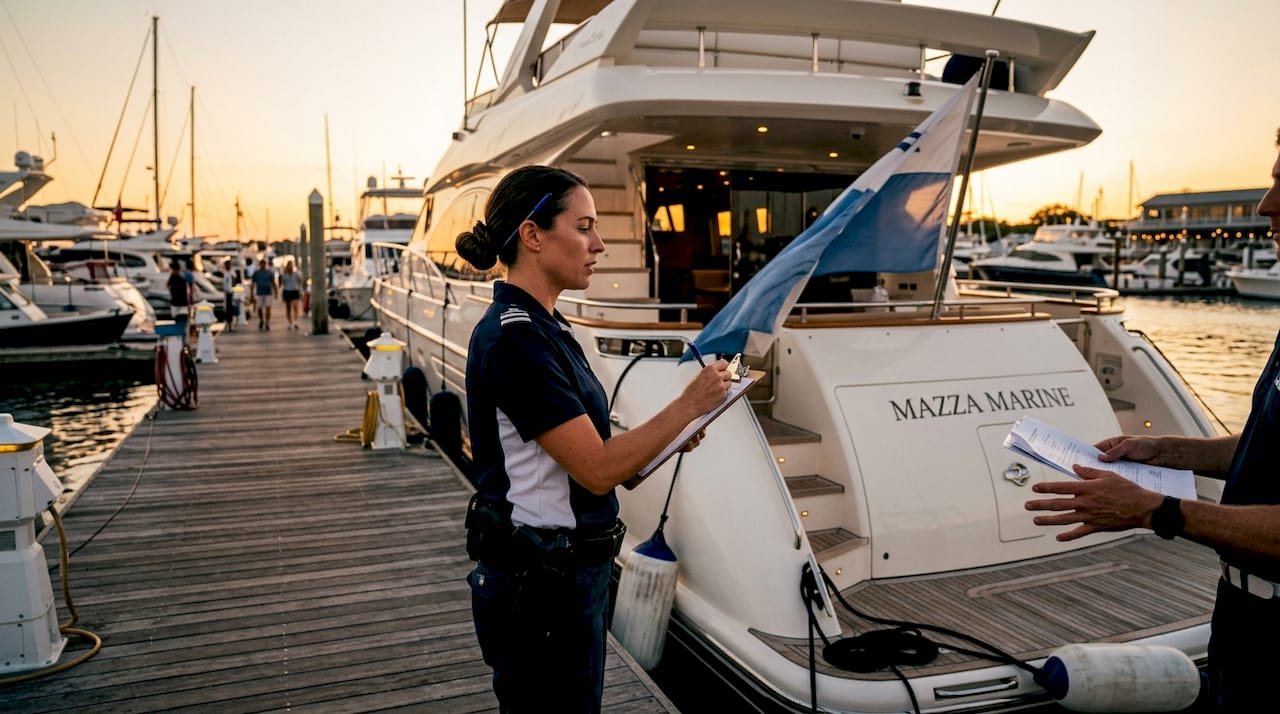
The financial picture goes deeper than annual registration fees. VAT exposure, ownership structure alignment, and charter eligibility all tie back to the flag state. Registration fees are often the smallest line item. Hidden costs like VAT penalties and misaligned ownership structures can dwarf them. Crew hiring is also directly affected, since the flag state sets which certifications are accepted and which labor laws apply on board.
Key areas where flag state choice has direct financial and operational impact:
- Taxation and VAT exposure tied to cruising grounds and charter activity
- Charter eligibility, since commercial use triggers stricter compliance requirements
- Crew certification acceptance and labor law compliance under MLC 2006
- Port inspection frequency based on the flag state’s Paris MOU standing
- Ownership structure compatibility, particularly for offshore corporate arrangements
How yacht regulatory codes evolved to shape flag state responsibilities
The regulatory frameworks that define what a flag state must enforce have grown considerably over the past few decades, driven by the increasing size and complexity of modern superyachts.
The International Maritime Organization (IMO) conventions, particularly SOLAS, MARPOL, STCW, and MLC 2006, form the backbone of what flag states are responsible for enforcing. These conventions were originally designed for commercial shipping, and applying them to private yachts required adaptation. That gap gave rise to specialized Large Yacht Codes, which address the unique safety, structural, and operational characteristics of superyachts that commercial shipping rules were never built to handle.
Flag states differ considerably in how thoroughly they implement these codes. A registry that adopts a comprehensive Large Yacht Code and enforces it through recognized classification societies carries more credibility than one offering a lighter administrative touch with minimal oversight. Ongoing updates to these codes reflect advances in fire suppression systems, stability calculations, and environmental discharge standards, and flag states that keep pace with those updates protect their white-list standing.
Regulatory milestones shaping modern flag state duties:
- SOLAS sets minimum safety standards for vessel construction, equipment, and operations
- MARPOL governs pollution prevention, including sewage, oil, and garbage discharge
- STCW defines the training and certification standards for officers and crew
- MLC 2006 establishes minimum labor rights and living conditions for seafarers
- Large Yacht Codes address superyacht-specific requirements not covered by commercial shipping rules
- Classification society oversight provides the technical auditing that flag states rely on for certificate issuance
Pro Tip: Before registering, verify that your chosen flag state’s Large Yacht Code is current and that it works with a recognized classification society. Outdated codes can create compliance gaps that surface during port inspections.
How flag states compete for registrations, and what that means for you
Flag state registries actively compete for yacht registrations, and that competition shapes the options available to owners. The dynamics are worth understanding before you commit to a flag.

Registries compete on registration costs, tax regimes, administrative efficiency, and the prestige their flag carries in international waters. A flag state’s white-list standing under the Paris MOU is arguably its most valuable asset, since it signals to port authorities worldwide that vessels flying that flag meet international standards. Registries that slip to gray or black-list status face increased inspections and reputational damage that can take years to repair.
The trade-off between a light-touch regulatory regime and a rigorous one is real. A registry with minimal oversight may offer lower fees and faster processing, but vessels flying that flag often face heightened scrutiny in European and American ports. Registries with strong enforcement records tend to attract larger, higher-value yachts whose owners prioritize smooth port access over marginal fee savings.
What drives competition among flag state registries:
- Registration and annual fees, which vary considerably across jurisdictions
- Tax regimes, including VAT treatment for charter vessels
- Administrative efficiency and speed of certificate issuance
- Paris MOU white-list status, which directly affects port inspection frequency
- Prestige and recognition in key cruising regions like the Mediterranean and Caribbean
- Specialized yacht codes that attract superyacht owners seeking tailored regulatory frameworks
Practical implications for yacht owners and operators
Choosing a flag state is one of the most consequential decisions you make as a yacht owner, and the effects show up in day-to-day operations, not just on paper.
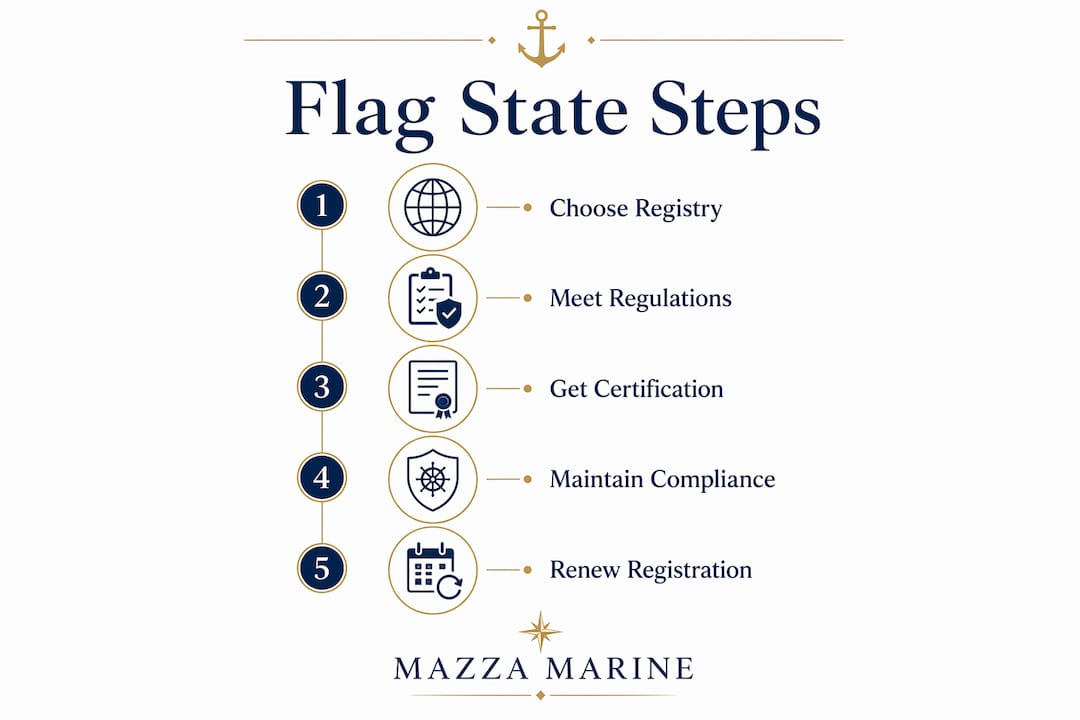
For US-based owners, the flag state often differs from the ownership jurisdiction. A Cayman Islands flag paired with a Jersey-registered company is a common structure among ultra-high-net-worth owners, combining the Cayman registry’s prestige with the tax efficiency of an offshore corporate holding. The flag state and the ownership entity serve different legal purposes, and aligning them correctly requires expert guidance from maritime lawyers and tax advisors who understand both sides.
Misalignment between how a yacht is used and what its flag state permits creates real risk. A vessel registered as a private yacht that conducts commercial charters without the appropriate flag state endorsements faces penalties, potential detention, and insurance complications. Crew certification breaches are equally costly, since port state inspectors check crew documentation against the flag state’s requirements, not the owner’s assumptions.
Operational and financial considerations tied directly to flag state selection:
- Charter use requires specific flag state endorsements and survey compliance
- VAT planning depends on matching the flag state to the yacht’s primary cruising grounds
- Crew documentation must align with the flag state’s accepted certification standards
- Ongoing survey obligations vary by flag state and vessel classification
- Insurance coverage can be affected by flag state reputation and compliance history
- Ownership structure should complement the flag state for maximum legal and tax efficiency
Key flag states for US owners: Malta, Marshall Islands, and Cayman Islands
Three registries dominate the conversation for US-based yacht owners, each with a distinct profile and strategic use case.
Malta is the preferred flag for owners who cruise or charter extensively in EU waters. Malta’s VAT leasing structures are specifically designed to optimize tax treatment for high-value charter vessels, and its EU membership means a Maltese-flagged yacht benefits from favorable VAT rules across the Mediterranean. The Malta flag is particularly well-suited for commercial charter operations where EU VAT compliance is a priority.
Marshall Islands attracts owners who want a globally recognized, administratively efficient registry with flexibility for private use. The Marshall Islands registry permits private yachts to charter up to 84 days per year after completing specific surveys, making it a practical choice for owners who want occasional charter income without committing to a full commercial registration. It holds a strong Paris MOU white-list position, which keeps port inspections manageable across the Atlantic and Caribbean.
Cayman Islands carries a reputation for prestige and rigorous standards that appeals to owners of large, high-value vessels. The Cayman registry operates a well-regarded Large Yacht Code and works closely with major classification societies. For US owners structuring ownership through offshore entities, a Cayman flag paired with a complementary corporate structure is a refined approach to tax efficiency and legal protection. The registry’s standing in the superyacht world is strong, and its flag is recognized without friction in virtually every major port.
Other registries used by US owners include St. Vincent and the Grenadines and the British Virgin Islands, both of which offer lower fees and faster processing, though with less prestige than the three above. US documentation through the Coast Guard remains an option for domestic use, but it carries limitations for international cruising and commercial charter that make offshore flags more practical for owners who travel widely.
Pro Tip: Paris MOU white-list status is the single fastest way to assess a registry’s quality. Check the Paris MOU website before committing to any flag state, and confirm the registry’s current standing, not its historical one.
Proper yacht registration documentation is the foundation of flag state compliance. Getting it right from the start avoids costly corrections later.
Why there is no single international yacht code
One of the most practical realities of the flag state system is that no unified international code governs yachts the way commercial shipping is governed. The IMO conventions apply broadly, but they were written for cargo ships and passenger vessels. Yachts, particularly superyachts, occupy a regulatory space that individual flag states fill with their own Large Yacht Codes.
This fragmentation means that a 50-meter yacht registered in the Cayman Islands operates under a different technical code than an identical vessel registered in Malta, even though both must comply with the same underlying IMO conventions. The differences show up in construction standards, fire safety requirements, stability criteria, and crew-to-passenger ratios. Owners who move a yacht from one registry to another sometimes discover that the new flag state’s code requires modifications to equipment or documentation that the previous registry accepted without question.
The absence of a single unified code is not a flaw in the system so much as a reflection of how flag state competition works. Registries differentiate themselves partly through the quality and specificity of their yacht codes, and that differentiation gives owners real choices. Understanding those differences, and how they interact with your yacht’s size, use, and cruising grounds, is where expert guidance pays for itself. A yacht classification society can help you map the technical requirements of different flag states before you commit to one.
Key Takeaways
A yacht’s flag state governs its legal nationality, safety certification, crew standards, and tax exposure, making it one of the most consequential decisions in yacht ownership.
| Point | Details |
|---|---|
| Flag state defines legal nationality | The flag state issues safety certificates and governs compliance with SOLAS, MARPOL, STCW, and MLC 2006. |
| Paris MOU white-list status matters | White-listed flag states face fewer port inspections, reducing delays and operational disruptions for owners. |
| Marshall Islands charter allowance | The Marshall Islands registry permits private yachts to charter up to 84 days per year after specific surveys. |
| VAT and ownership structure alignment | Registration fees are rarely the largest cost; VAT exposure and misaligned ownership structures carry greater financial risk. |
| No unified international yacht code | Flag states each enforce their own Large Yacht Codes, creating real differences in technical requirements across registries. |
Mazzamarine can help you stay compliant on the water

Choosing the right flag state is only the beginning. Once your yacht is registered and sailing, keeping it in compliance with your flag state’s safety and maintenance obligations is an ongoing responsibility. Mazzamarine’s network of Florida yacht experts covers everything from urgent repairs and complete maintenance packages to engine work, electronics, and custom refits, all with the kind of attention to detail that flag state inspectors expect to see.
Whether you need a marine repair service to address a compliance issue before an inspection or a full maintenance program to keep your vessel survey-ready year-round, Mazzamarine has the partners and the expertise to handle it. Mino and Luigi built this network because they know what it takes to keep a yacht in top condition, and they bring that same passion to every owner they work with. Reach out to Mazzamarine and start the conversation today.
Recommended
Text or Call 954-330-9653 Schedule Appointment
Mazza Marine Yacht Services & Refit

Fiberglass Upgrades and Damage Repair

Premium Yacht Paint/ Faux Teak

Fishing: Custom Rods, Reels,Tackle

Electrical, Electronics and Navigation

Paint, Hull and Gelcoat

Teak Decks, Wood Cabinets, Carpentry

Canvas, Enclosures and Upholstery

Mechanical, Repower and Running Gear

Plumbing, Bilge and Thru-Hulls

Welding and Custom Fabrication

Interior Refit And Past Work
Get your yacht value Estimate
"*" indicates required fields