
View Our Recent Work:

Custom paint is defined as a tailored, multi-layer coating system designed specifically for a vessel’s hull material, existing coatings, and intended use rather than simply a color preference. For boat owners, this distinction matters enormously. A custom paint system addresses compatibility, protection, and aesthetics as a unified whole. It covers everything from the primer bonding to your hull substrate all the way to the UV-resistant topcoat reflecting sunlight off your bow. Whether you own a fiberglass sportfish, an aluminum center console, or a classic wooden cruiser, understanding what custom paint truly means is the first step toward a finish that lasts.
What is custom paint in a marine coating system?
Custom paint, in the marine context, means selecting paint components appropriate to your hull material, use case, and existing coating condition rather than defaulting to a standard product. The industry term for this approach is a “paint system,” and it encompasses surface preparation, primer or barrier coat, and one or more finish coats working together as a chemically compatible unit. Picking a beautiful color without understanding the system beneath it is one of the most common and costly mistakes boat owners make.
A proper marine paint system starts with three diagnostic questions: What is the hull made of? What coatings are already on it? And how is the boat used? Fiberglass, aluminum, and wood each demand different primers and topcoats. A boat that sits in a Florida marina year-round needs a different bottom paint than one trailered after every use. These factors define the custom paint options available to you before color ever enters the conversation.
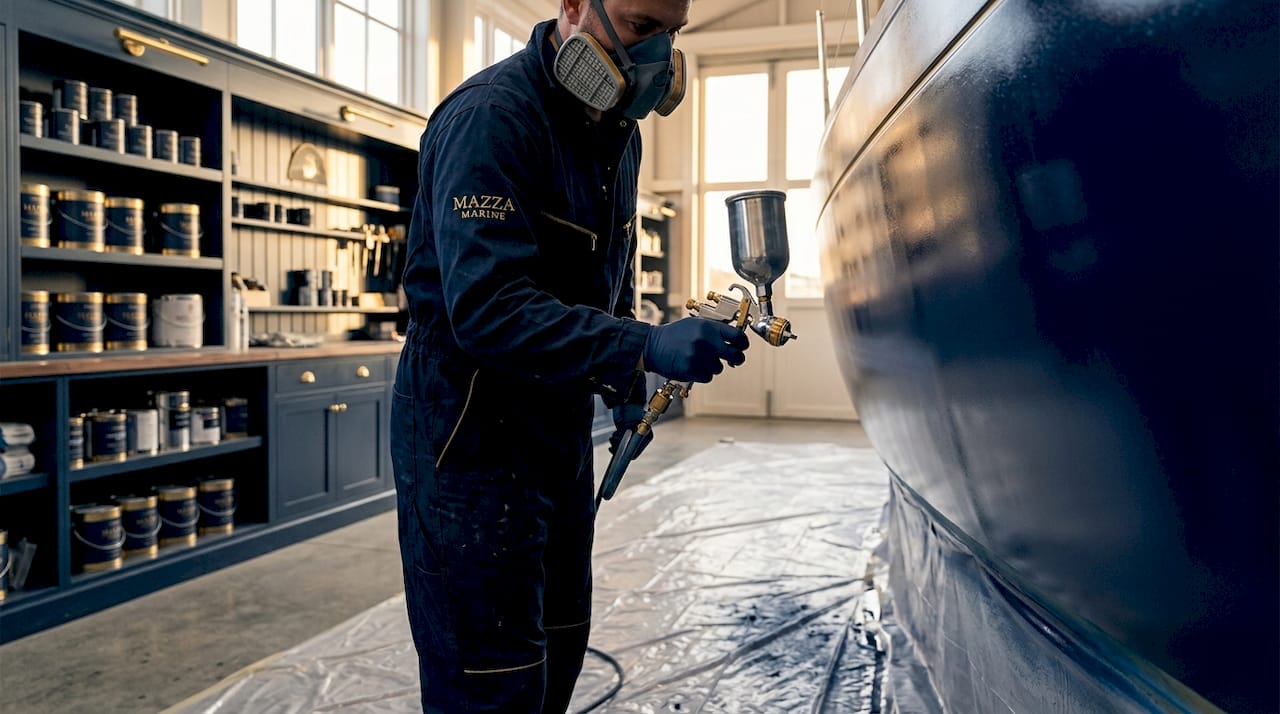
The benefits of custom paint extend well beyond appearance. A correctly specified system protects against osmotic blistering, galvanic corrosion, UV degradation, and fouling. It also preserves resale value, which matters significantly in Florida’s active yacht market. Think of a well-executed custom paint job as the outer armor of a floating piece of craftsmanship. Every layer has a purpose, and every product choice either strengthens or weakens the whole.
What layers compose a custom marine paint system?
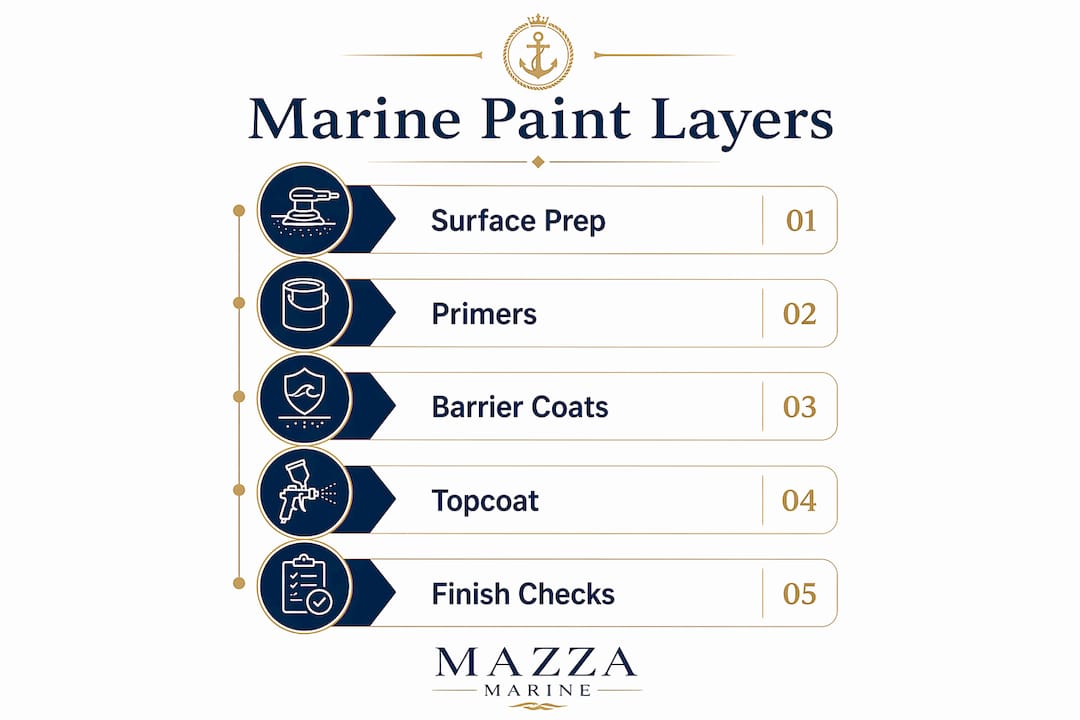
Marine coating systems include surface preparation, primer or barrier coats, and finish coats, each chosen based on hull material and usage. Understanding what each layer does helps you make smarter decisions and ask better questions when working with a professional.
Here is how the layers break down:
- Surface preparation: Sanding, cleaning, and degreasing the hull to create a profile the primer can bond to. No paint system compensates for poor prep. Skipping this step guarantees premature failure.
- Primer: A chemical interface layer that bonds the substrate to the topcoat. Primer selection must chemically bridge the substrate and topcoat and cannot compensate for poor surface prep. Failures here cause paint system failure.
- Barrier coat: A waterproof epoxy layer applied below the waterline to prevent moisture intrusion and osmotic blistering. This layer is non-negotiable on fiberglass hulls in warm, saltwater environments.
- Finish coat (topside paint): The visible layer above the waterline, available in 1-part and 2-part polyurethane formulations.
- Bottom paint: An antifouling layer below the waterline, often ablative, designed to slowly wear off and expose fresh biocide.
The choice between 1-part and 2-part polyurethane topcoats deserves special attention. 2-part polyurethane paint requires strict conditions and experience, while 1-part paints are more forgiving for DIY applications. Two-part systems use cross-linked chemistry that produces a harder, glossier, more durable finish. One-part systems cure through evaporation and oxidation, making them more accessible for owners doing their own work. The tradeoff is durability: two-part finishes typically outlast one-part by several seasons in harsh marine environments.
Pro Tip: Pro painters use tinted primers and barrier coats as built-in wear indicators. When the contrasting color starts showing through, it signals that repainting is due. This technique, used in TotalBoat’s lobster boat project with Jacob Knowles, eliminates guesswork about coating thickness.
How does custom paint differ from gelcoat?
This is one of the most misunderstood topics in fiberglass boat ownership, and getting it wrong leads to expensive mistakes. Gelcoat is a distinct layer on fiberglass boats, chemically different from paint, and it is gradually consumed through polishing. It is a pigmented polyester or vinyl ester resin applied during the manufacturing process, not a coating added later.
Here is the critical sequence to understand when deciding between gelcoat repair and painting:
- Assess gelcoat thickness. Polishing removes a thin layer of gelcoat each time. Once the gelcoat becomes too thin to hold a shine, no amount of buffing restores it.
- Evaluate the damage. Small chips and crazing can be repaired with gelcoat filler. Widespread oxidation or thinning across large areas signals that painting is the better path.
- Understand the chemistry. Gelcoat loss on fiberglass hulls is irreversible. Once you paint over gelcoat, you cannot return to a gelcoat finish without stripping back to bare fiberglass.
- Apply the right primer. Painting over gelcoat requires a compatibility evaluation and a primer designed to bond to the existing resin surface. Skipping this step causes delamination.
- Accept the color matching challenge. Aged gelcoat fades and shifts in tone. Matching new paint to a 10-year-old gelcoat surface is difficult. Professionals aim for the closest visual match, not a perfect one.
For more on when to choose paint versus gelcoat, the gelcoat vs. paint comparison from Mazzamarine walks through the decision in practical terms. The short answer: if your gelcoat is thin, oxidized, or heavily faded, a quality topside paint system delivers a better long-term result than chasing a restoration that the chemistry no longer supports.
What custom paint color options are available for boats?
Color selection is where the creative side of custom paint jobs comes alive, but it is also where owners most often lose sight of practical priorities. The range of options is genuinely broad.
| Color Type | Best Use | Key Consideration |
|---|---|---|
| Solid whites and off-whites | Topsides, decks | Reflects heat, hides chalking, easiest to maintain |
| Deep blues and greens | Topsides, accent stripes | Higher UV absorption, may fade faster in Florida sun |
| Custom mixed shades | Full hull, accent work | Matched to hardware, trim, or owner preference |
| Dark bottom paints | Below waterline | Hides growth between haul-outs, harder to inspect |
| Metallic and pearl finishes | Topsides, show boats | Striking appearance, requires skilled application |
Topside color selection affects UV resistance, heat absorption, and maintenance visibility, with white often being the most practical choice. This is not just aesthetics. A dark hull absorbs significantly more solar heat, which can affect interior temperatures and accelerate coating degradation in Florida’s climate. White and light colors also make surface contamination, scratches, and oxidation easier to spot early.
Custom color matching is a genuine craft. Mixing custom shades to coordinate with a boat’s aluminum parts, hardware, or canvas creates a cohesive, bespoke look that sets a vessel apart. TotalBoat’s work with Jacob Knowles on his lobster boat demonstrated this approach: a custom final color was mixed to visually harmonize with the boat’s aluminum components, producing a personalized result that no off-the-shelf product could replicate.
Pro Tip: When selecting a topside color, bring a sample of your boat’s hardware, canvas, and any existing trim to the paint supplier. Matching these elements together produces a far more polished result than choosing a color from a chip card alone.
One practical note on color matching aged surfaces: professionals rarely achieve exact matches to faded gelcoat or old paint due to UV-driven color shift. The goal is the closest visual match, not a perfect one. If you are repainting a section rather than the full hull, this limitation becomes visible at the seam.
How to select and apply custom paint for maximum durability
The most durable custom paint jobs share one thing in common: the owner or professional started with diagnosis, not product selection. Selecting paint components before understanding the boat’s hull material, existing coating condition, and use is a common error that leads to adhesion failure and wasted investment.
Follow this sequence for a paint system that holds up:
- Identify your hull material. Fiberglass, aluminum, and wood each require different primers. Using the wrong primer on aluminum, for example, can accelerate corrosion rather than prevent it.
- Test or strip existing coatings. Incompatible paint layers delaminate. If you do not know what is on the hull, test a small area or consult a technical compatibility chart from the paint manufacturer.
- Complete surface preparation before ordering paint. Sand to the appropriate grit, clean with a solvent wipe, and address any structural repairs. Paint reveals every flaw beneath it.
- Apply barrier coat below the waterline. Barrier coats provide a waterproof seal critical to preventing blistering and adhesion failure. Apply multiple coats, tinting each a different color to create wear indicators.
- Apply antifouling bottom paint in multiple coats. Ablative copper paints function as self-cleaning systems, slowly wearing off to expose fresh biocide. Two to three coats is standard for Florida waters.
- Apply topside finish in thin, even coats. Two-part polyurethane requires controlled temperature and humidity. One-part systems are more forgiving but still demand clean, dry conditions.
Common mistakes that compromise custom paint jobs include:
- Skipping primer and applying topcoat directly to bare fiberglass or old paint
- Mixing paint brands without verifying chemical compatibility
- Applying bottom paint over a topside product or vice versa
- Rushing between coats without observing manufacturer recoat windows
- Neglecting to apply a barrier coat on fiberglass hulls in saltwater
For a deeper look at the full marine paint system and how each component contributes to yacht longevity, Mazzamarine’s resource library covers the topic with Florida-specific context.
Key takeaways
Custom paint success depends on system compatibility, thoughtful diagnosis of hull condition, and balancing practical protection with desired aesthetics before a single drop of color is chosen.
| Point | Details |
|---|---|
| System over color | Choose your paint system based on hull material and use case before selecting any color. |
| Layer compatibility | Every layer from primer to topcoat must be chemically compatible or the system will fail. |
| Gelcoat is not paint | Once gelcoat thins beyond restoration, painting is the correct path and cannot be reversed. |
| Color has functional impact | Dark colors absorb more heat and may fade faster in Florida sun. White is the most practical topside choice. |
| Barrier coat is non-negotiable | Below the waterline, a proper epoxy barrier coat prevents blistering and protects the hull long-term. |
Why color is the last thing I think about on a paint job
I have watched boat owners spend hours agonizing over the perfect shade of blue for their hull while giving almost no thought to what primer they are going to use underneath it. That imbalance is the single biggest predictor of a paint job that looks great for one season and starts peeling by the second.
The honest truth is that color is the easiest part of a custom paint project. The hard part is the diagnosis. What is actually on that hull right now? Is the gelcoat still viable or has it crossed the threshold where painting is the only real option? Are the existing coatings compatible with what you want to apply? These questions take more time to answer than picking a color, but they determine whether your investment holds up for three years or ten.
I also think the term “custom paint” misleads people into thinking the customization is purely cosmetic. The real customization is in the system specification. A lobster boat working in cold New England waters needs a fundamentally different coating system than a sportfish running out of Miami. Both can be “custom.” Neither is defined by color alone.
My advice: before you open a paint catalog, open a conversation with someone who knows your hull material and your local conditions. The expert steps for custom yacht paint in Florida are different from anywhere else in the country, and treating them as generic leads to generic results. Spend the time on the system. The color will take care of itself.
— Jason
How Mazzamarine handles your custom paint project
Mazzamarine brings together Florida’s most trusted yacht specialists for every stage of a custom paint project, from hull assessment and coating selection to professional application and long-term care. Whether your vessel needs a full topside repaint, barrier coat restoration, or a bespoke color match to complement your hardware and canvas, the Mazzamarine network has the expertise to deliver a finish worthy of the water you sail. Mino and Luigi built this network on a genuine passion for craftsmanship, and that shows in every project they take on. Explore Mazzamarine’s paint, hull, and gelcoat services to start your custom paint conversation with people who treat your boat like their own.
FAQ
What is custom paint used for on boats?
Custom paint is used to protect and personalize a vessel’s hull, topsides, and bottom surfaces through a tailored multi-layer coating system. It addresses UV resistance, antifouling, corrosion prevention, and aesthetic goals specific to the boat’s material and use.
How many coats does a custom paint job require?
A complete custom marine paint system typically includes one to two primer coats, two to four barrier coats below the waterline, and two to three finish coats on topsides. The exact number depends on hull condition, product specifications, and the level of protection required.
Can you paint over gelcoat on a fiberglass boat?
Yes, but it requires proper surface preparation and a primer compatible with the gelcoat surface. Once you paint over gelcoat, returning to a gelcoat finish requires stripping back to bare fiberglass, so the decision should be made carefully.
What is the difference between 1-part and 2-part topside paint?
One-part paints cure through evaporation and are more forgiving for DIY application. Two-part polyurethane paints use cross-linked chemistry for a harder, glossier finish but require controlled conditions and experienced application to achieve good results.
How do I choose the right bottom paint for Florida waters?
Florida’s warm saltwater environment favors ablative copper-based antifouling paints applied over a proper epoxy barrier coat. Ablative paints self-clean by slowly wearing off to expose fresh biocide, making them well-suited to boats that stay in the water year-round.
Recommended
Text or Call 954-330-9653 Schedule Appointment
Mazza Marine Yacht Services & Refit

Fiberglass Upgrades and Damage Repair

Premium Yacht Paint/ Faux Teak

Fishing: Custom Rods, Reels,Tackle

Electrical, Electronics and Navigation

Paint, Hull and Gelcoat

Teak Decks, Wood Cabinets, Carpentry

Canvas, Enclosures and Upholstery

Mechanical, Repower and Running Gear

Plumbing, Bilge and Thru-Hulls

Welding and Custom Fabrication

Interior Refit And Past Work
Get your yacht value Estimate
"*" indicates required fields