
View Our Recent Work:

Navigation electronics, known in the marine industry as integrated navigation systems, are the interconnected suite of digital instruments that give boat and yacht owners precise positioning, hazard detection, and real-time situational awareness on the water. The global marine electronics market was valued at USD 6.66 billion in 2024 and is projected to reach USD 9.73 billion by 2030. That growth reflects how central these systems have become to modern boating, from weekend cruisers in Biscayne Bay to offshore sportfish captains running the Gulf Stream. Understanding what nav electronics are, how they work, and what they deliver is the first step toward owning and operating a yacht with genuine confidence.
What is nav electronics, and what does it include?
Nav electronics is the shorthand term for a vessel’s complete navigation electronics suite. The recognized industry term is integrated navigation system, and it covers every device that collects, processes, or displays navigational data aboard a boat. That includes GPS and GNSS receivers, radar, Automatic Identification Systems (AIS), echo sounders, autopilots, and multifunction displays (MFDs). Manufacturers like Garmin, Furuno, and Raymarine have built entire product ecosystems around these components, and the communication standard that ties them together is NMEA 2000.
The core components each serve a distinct role:
- GPS/GNSS receivers provide precise positioning and timing by receiving signals from satellite constellations including GPS, GLONASS, and Galileo.
- Radar detects surface targets and weather formations. Advanced radar features like MARPA (Mini Automatic Radar Plotting Aid) and rain separation make collision avoidance far more reliable in poor visibility.
- AIS transponders identify nearby vessels by name, heading, speed, and destination, giving you a live traffic picture around your boat.
- Echo sounders and depth sensors map the water column beneath the hull, alerting you to shoaling water, reefs, and submerged hazards before they become problems.
- Autopilots hold a programmed course, reducing helm fatigue on long passages and freeing the captain to monitor conditions.
- Multifunction displays (MFDs) pull all of this data into one screen. MFDs consolidate GPS, radar, AIS, wind data, depth, and engine monitoring into a single customizable interface.
Pro Tip: When evaluating any nav electronics package, count the number of sensor inputs the MFD can handle simultaneously. A display that maxes out at four inputs will frustrate you the moment you add a thermal camera or a second radar.
How do nav electronics work together as an integrated system?
The real power of modern navigation electronics comes not from any single device but from how they communicate. Two protocols govern that communication: NMEA 0183 and NMEA 2000. NMEA 0183 is the older standard, transmitting data in a simple serial format between two devices at a time. NMEA 2000 is the current backbone of any well-built system.
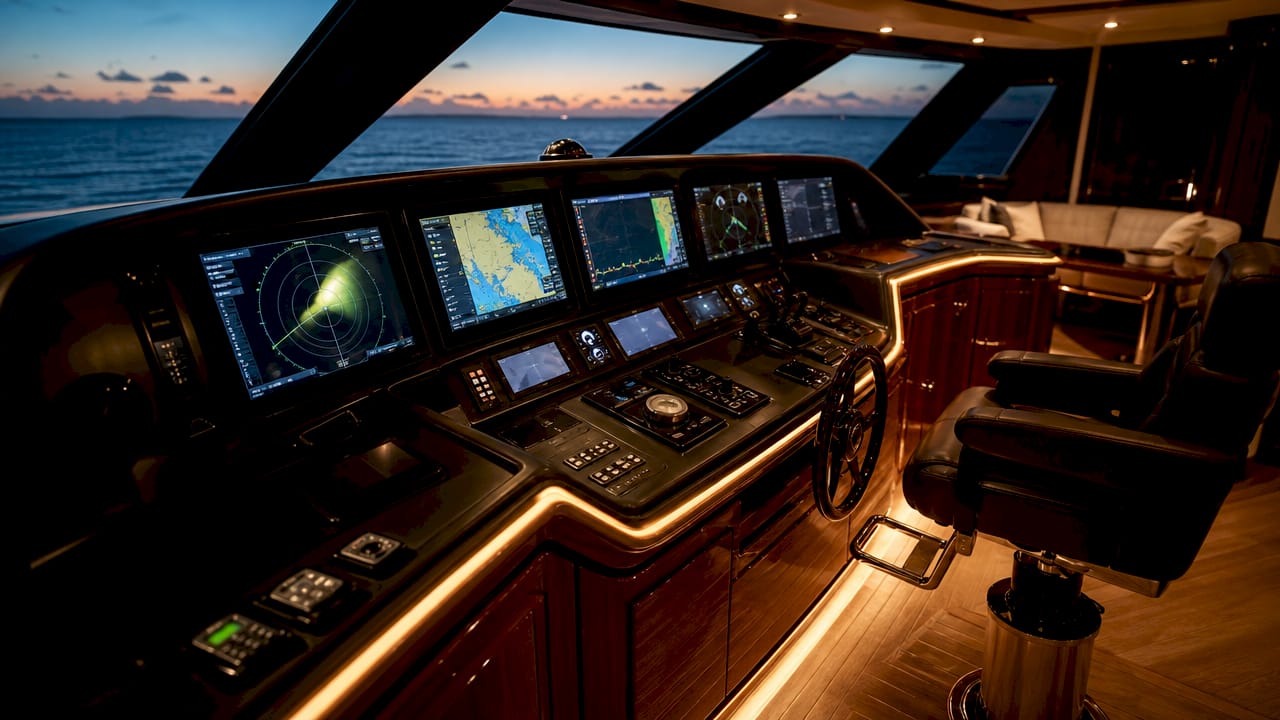
NMEA 2000 uses CAN Bus architecture operating at 250 kbps, enabling every connected device to send and receive data simultaneously across a single network backbone. That means your radar, GPS, AIS, depth sounder, and autopilot are all reading from the same data stream at the same moment. The practical result is that when your AIS detects a vessel on a collision course, your autopilot can receive that alert and your MFD can display the conflict graphically, all within seconds.
Here is how data flows through a properly integrated system:
- Sensors collect raw data. GPS satellites, radar pulses, AIS radio signals, and sonar returns all feed into their respective hardware units.
- Sensor fusion processes the data. Kalman filter-based sensor fusion combines GNSS positioning with gyrocompass headings and Doppler log speed data to maintain accuracy even when satellite signals are degraded or spoofed.
- The NMEA 2000 network distributes the fused data. Every display and instrument on the backbone receives the same accurate, real-time picture.
- The MFD presents the unified view. The captain sees one coherent display rather than five separate instruments telling slightly different stories.
- Alarms and autopilot responses trigger automatically. Depth alarms, AIS collision alerts, and off-course warnings fire without manual intervention.
“Modern marine electronics function best as a unified ecosystem where sensors like radar, AIS, autopilot, and thermal cameras communicate via a single data network for coherent support during navigation.” Source
This ecosystem thinking is what separates a genuinely capable nav setup from a collection of expensive gadgets that happen to share a helm pod.
What are the practical benefits of nav electronics for boaters?
The benefits of nav electronics fall into four categories that matter to every yacht owner: safety, efficiency, compliance, and comfort.
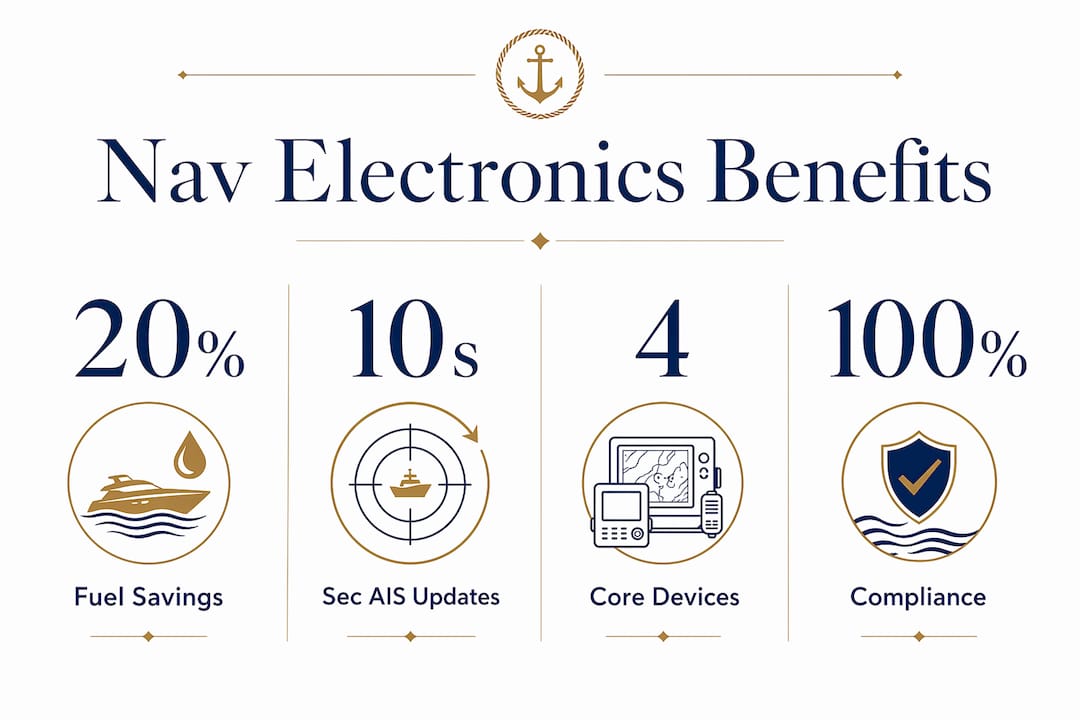
Safety is the most immediate gain. AIS transmits dynamic navigational data every 2 to 10 seconds and static vessel information every 6 minutes, giving you a continuously updated picture of every AIS-equipped vessel within range. Radar fills the gaps for vessels without AIS, and thermal imaging cameras extend detection capability in fog, rain, and nighttime conditions. Together, these tools reduce the reaction time required to avoid a collision from minutes to seconds.
Efficiency translates directly to money. Optimized routing via nav electronics reduces fuel consumption by 10% to 20%. On a sportfish yacht burning 50 gallons per hour, that saving adds up to a meaningful number over a season. Route planning tools built into modern chartplotters from Garmin and Furuno calculate the most fuel-efficient track based on current, wind, and sea state data.
Compliance is non-negotiable for vessels sailing internationally. Navigation electronics are governed by standards from the International Maritime Organization (IMO) and the International Electrotechnical Commission (IEC). Selecting equipment that meets these standards is not optional for offshore passages. It protects you legally and operationally.
Comfort is the benefit that owners feel every day. Autopilot systems hold a precise course across open water while you monitor weather, manage the crew, or simply enjoy the passage. Integrated monitoring of engine temperature, fuel levels, and bilge status means fewer surprises and more time enjoying the water.
Pro Tip: If you are planning a refit, prioritize safer boating navigation upgrades before cosmetic work. A well-integrated nav system adds genuine resale value and insurance credibility to any yacht.
How to choose and maintain nav electronics for your yacht
Selecting the right nav electronics starts with an honest assessment of how and where you use your boat. A center console running inshore Florida waters has different needs than a 60-foot sportfish heading to the Bahamas or the Caribbean.
Matching system scope to vessel use
| Vessel Type | Recommended Core System | Key Priority |
|---|---|---|
| Inshore/day boat | GPS chartplotter, VHF, depth sounder | Simplicity and reliability |
| Coastal cruiser | MFD, AIS, radar, autopilot | Situational awareness |
| Offshore yacht | Full NMEA 2000 network, dual radar, EPIRB, satellite comms | Redundancy and compliance |
| Commercial/charter | IMO/IEC compliant suite, GMDSS, AIS Class A | Regulatory certification |
Once you know your scope, prioritize NMEA 2000 compatibility across every device you purchase. Mixing protocols creates data gaps and troubleshooting headaches. Garmin’s GPSMAP series, Furuno’s NavNet TZtouch3, and Raymarine’s Axiom Pro line all operate natively on NMEA 2000 and offer strong ecosystem support.
Maintenance is where many owners fall short. A few non-negotiable practices:
- Update chart data and firmware at least once per season. Outdated charts are a genuine hazard in areas with shifting sandbars or new construction.
- Inspect all antenna connections and cable runs annually for corrosion, particularly at the transducer and radar mast connections.
- Test AIS transmission and reception before every offshore passage, not just reception.
- Work with a certified marine electronics installer for any new installation or major reconfiguration. Improper grounding is the single most common cause of interference and equipment failure.
For a structured approach to keeping your system current, the nav system improvement checklist from Mazzamarine covers Florida-specific considerations that generic guides miss entirely.
Key takeaways
Nav electronics form an integrated maritime ecosystem that combines GPS, radar, AIS, and autopilot through NMEA 2000 to deliver safety, efficiency, and compliance for every voyage.
| Point | Details |
|---|---|
| Nav electronics definition | Integrated navigation systems combining GPS, radar, AIS, echo sounders, and autopilots into one network. |
| NMEA 2000 is the backbone | This CAN Bus protocol at 250 kbps allows all devices to share data simultaneously for real-time accuracy. |
| Fuel and cost savings | Optimized routing through nav electronics reduces fuel consumption by 10% to 20% per voyage. |
| Compliance is mandatory | IMO and IEC standards govern equipment selection, especially for vessels operating offshore or internationally. |
| Maintenance protects your investment | Annual firmware updates, antenna inspections, and certified installation prevent the most common system failures. |
Why I think most boaters underestimate what nav electronics actually do
Here is something I have noticed after years of working alongside Florida yacht owners at Mazzamarine: most people buy nav electronics the same way they buy a television. They compare screen sizes, count the features on the spec sheet, and pick the brand they recognize. What they miss is the ecosystem question entirely.
The captain who installs a Garmin MFD, a Furuno radar, and a generic AIS transponder without verifying NMEA 2000 compatibility ends up with three instruments that technically work but do not talk to each other. That is not a navigation system. That is three separate tools sharing a helm pod. I have seen this setup on boats that cost half a million dollars.
The transition from analog instruments to fully integrated digital systems changed boating more profoundly than most people realize. A gyrocompass and a paper chart required genuine skill and constant attention. A modern integrated system with sensor fusion technology handles the computational load that used to demand a trained navigator. That is not a reason to trust the electronics blindly. It is a reason to invest in understanding what they are doing so you can catch it when something goes wrong.
My honest prediction: the next five years will bring tighter integration between satellite communication systems and onboard nav networks, with AI-assisted collision avoidance becoming standard on mid-range MFDs. The boats that are already running clean NMEA 2000 networks will absorb those upgrades easily. The boats running a patchwork of incompatible instruments will face expensive retrofits.
Embrace the technology, but learn it. The electronics support the captain. They do not replace the captain.
— Jason
Upgrade your yacht’s navigation with Mazzamarine
Mazzamarine works with Florida yacht owners who want their navigation electronics to perform as a true integrated system, not a collection of mismatched instruments. Whether you are outfitting a new sportfish, refitting a cruiser, or simply bringing an aging nav suite up to current standards, the team at Mazzamarine connects you with certified installers and trusted vendors across South Florida. Explore the full range of yacht navigation upgrades available through Mazzamarine’s network, from NMEA 2000 backbone installations to full MFD and radar configurations. If your current system is showing its age, the signs you need yacht repairs guide is a practical starting point for assessing what needs attention first.
FAQ
What is nav electronics in simple terms?
Nav electronics is the shorthand term for a vessel’s integrated navigation system, combining GPS, radar, AIS, depth sounders, and autopilots into one networked suite that provides real-time positioning and situational awareness.
How does NMEA 2000 connect nav electronics devices?
NMEA 2000 uses a CAN Bus network operating at 250 kbps, allowing every connected device including radar, GPS, and AIS to share data simultaneously across a single backbone cable.
What are the main benefits of nav electronics for yacht owners?
The primary benefits are improved collision avoidance, fuel savings of 10% to 20% through optimized routing, regulatory compliance with IMO and IEC standards, and reduced helm fatigue through autopilot integration.
Do I need AIS as part of my nav electronics setup?
AIS is strongly recommended for any vessel operating in busy waterways or offshore. It transmits your vessel’s identity and position while displaying nearby traffic, updating dynamic data every 2 to 10 seconds.
How often should nav electronics be serviced or updated?
Chart data and firmware should be updated at least once per season, and all antenna connections and cable runs should be physically inspected annually. Any major reconfiguration should be handled by a certified marine electronics installer.
Recommended
Text or Call 954-330-9653 Schedule Appointment
Mazza Marine Yacht Services & Refit

Fiberglass Upgrades and Damage Repair

Premium Yacht Paint/ Faux Teak

Fishing: Custom Rods, Reels,Tackle

Electrical, Electronics and Navigation

Paint, Hull and Gelcoat

Teak Decks, Wood Cabinets, Carpentry

Canvas, Enclosures and Upholstery

Mechanical, Repower and Running Gear

Plumbing, Bilge and Thru-Hulls

Welding and Custom Fabrication

Interior Refit And Past Work
Get your yacht value Estimate
"*" indicates required fields