
View Our Recent Work:

A quick rinse after a day on the water feels satisfying, but it barely scratches the surface of what your yacht actually needs. Florida’s combination of intense UV radiation, saltwater exposure, and year-round humidity creates a relentless assault on every surface of your vessel, from the gelcoat on the hull to the stitching in your upholstery. Skipping professional boat detailing doesn’t save money; it quietly destroys value. In this article, we’ll walk you through exactly why Florida yachts need specialized care, what a true professional detailing service delivers, and how to make the right choice for your vessel.
Table of Contents
- The unique threats Florida yachts face
- What professional boat detailing includes (and why it matters)
- Lasting benefits: Appearance, resale value, and longevity
- How to select the right boat detailing service
- Why professional detailing is the smartest investment Florida yacht owners make
- Preserve your yacht with expert care — next steps
- Frequently asked questions
Key Takeaways
| Point | Details |
|---|---|
| Florida climate risks | The sun, salt, and humidity in Florida cause rapid wear that only professional detailing can reliably address. |
| Improved vessel value | Regular detailing enhances your yacht’s appearance and delivers measurable long-term resale value. |
| Specialized processes matter | Professional detailers use tools and methods that prevent costly hull and upholstery damage. |
| Smart provider selection | Choosing certified professionals ensures warranty compliance and true peace of mind. |
The unique threats Florida yachts face
A simple rinse isn’t enough, and that becomes obvious when you understand what Florida’s conditions actually do to a yacht over time. As noted in the hull maintenance guide for Florida yacht owners, Florida’s harsh sun, saltwater, and humidity accelerate yacht wear far beyond what owners in cooler, less salty climates experience. The damage is cumulative, often invisible at first, and expensive to reverse once it takes hold.
UV radiation in South Florida is among the strongest in the continental United States. Over time, it breaks down the molecular bonds in gelcoat and marine paint, causing oxidation. Oxidized gelcoat turns chalky, loses its gloss, and eventually becomes porous enough to absorb water. Salt crystals left on surfaces after a day offshore act like microscopic sandpaper, wearing through protective coatings with every wave and breeze. Add persistent humidity, and you create the perfect environment for mildew to colonize canvas, teak, and upholstery alike.
Common damage types and their primary causes
| Damage Type | Primary Cause | Estimated Repair Cost |
|---|---|---|
| Gelcoat oxidation | UV exposure | $500 to $3,000+ |
| Corrosion on hardware | Salt and moisture | $300 to $2,500 |
| Mildew on canvas and upholstery | Humidity | $400 to $1,500 |
| Paint delamination | UV plus salt infiltration | $2,000 to $8,000 |
| Teak darkening and cracking | UV and standing water | $600 to $4,000 |
The costs in that table assume you catch damage early. Ignoring these issues for even one season compounds the cost dramatically. Here are some real repair scenarios tied directly to skipping regular professional detailing:
- Replacing a full set of corroded stainless steel fittings on a 45-foot sportfish after salt was never properly removed from the deck hardware
- Repainting the entire topsides of a cruiser after oxidized paint began flaking during a routine survey
- Replacing salon upholstery that had mildew embedded so deep it could not be safely cleaned
- Refinishing a teak cockpit sole that cracked and darkened after being left unprotected through two Florida summers
- Addressing blistering below the waterline on a 60-foot motoryacht after inadequate maintenance allowed water to penetrate the fiberglass laminate
Proper attention to maintaining marine paint on a regular schedule prevents the vast majority of these outcomes. The repairs on that list each cost more than several years of professional detailing appointments combined.
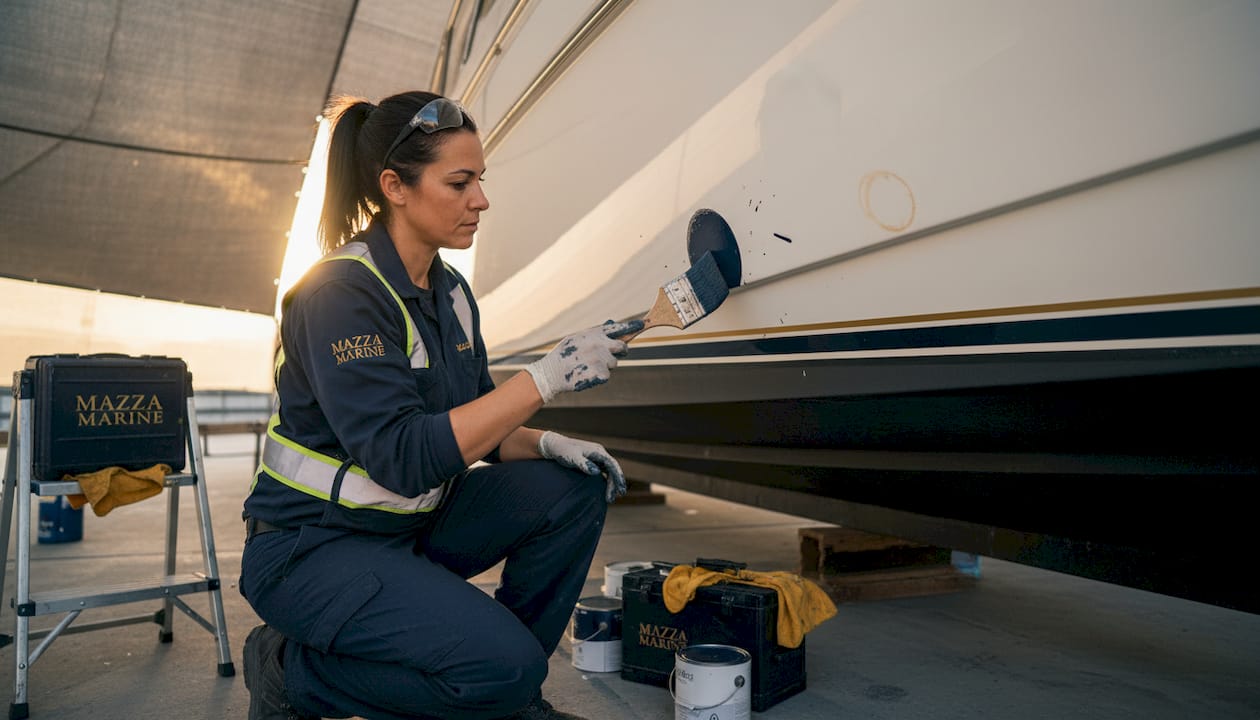
Pro Tip: In Florida, professional detailing every three to four months is the standard recommendation for vessels in active use. If your yacht sits on a mooring or in a marina slip, the combination of sun and humidity means this schedule is not a luxury, it is a practical necessity.
What professional boat detailing includes (and why it matters)
With the risks clear, it’s crucial to know what you’re getting from a detailing professional versus a solo approach. The difference is not just effort or time. It’s specialized chemistry, professional equipment, and trained judgment applied to surfaces that require precision.
A true professional detailing service follows a structured, multi-stage process. According to the boat painting process guide, professional detailing involves multi-stage cleaning, polishing, protection, and often paint touch-ups for both hull and topsides. This is fundamentally different from washing and waxing with products you pick up at a marine store.
Professional detailing vs. DIY cleaning
| Factor | DIY Cleaning | Professional Detailing |
|---|---|---|
| Products | Consumer-grade, generic | Marine-specific compounds and coatings |
| Equipment | Household tools | Dual-action polishers, pressure systems |
| Surface assessment | Visual only | Experienced inspection of finish depth |
| Outcome | Clean appearance, no protection | Cleaned, compounded, sealed, and protected |
| Risk of damage | Moderate to high | Low with certified technicians |
| Time required | 4 to 8 hours for average vessel | Variable but systematic and thorough |
| Long-term cost | Higher due to damage accumulation | Lower through damage prevention |
Here is the order of services a qualified detailer follows and what each step actually addresses:
- Thorough pre-wash removes loose salt, dirt, and biological matter without grinding it into the finish
- Decontamination lifts embedded salt crystals and oxidized particles from the gelcoat surface
- Compounding cuts through surface oxidation using abrasive compounds matched to the severity of the damage
- Polishing refines the surface after compounding, restoring gloss and removing fine swirl marks
- Waxing or ceramic coating application seals the polished surface against UV, salt, and moisture
- Metal treatment applies corrosion inhibitors to all exposed stainless, chrome, and aluminum hardware
- Canvas and upholstery care addresses mildew, UV fading, and fabric degradation with marine-specific products
Check out our canvas care tips for more detail on protecting that often-neglected element of your vessel. Canvas and enclosures take a remarkable beating in Florida, and they are frequently the first surfaces to fail visually when detailing is skipped.
Each of these steps requires a different product formulation and a different technique. Using the wrong compound on a thin gelcoat layer can cut through to the fiberglass beneath. Using the wrong wax on anti-fouling paint can compromise its biocide effectiveness. These are not risks a professional takes because their reputation, your vessel, and your trust depend on getting it right.
Lasting benefits: Appearance, resale value, and longevity
Once you understand the detailing process, the difference in long-term results becomes clear. The benefits of consistent professional detailing extend well beyond a clean, attractive vessel sitting in the slip. They show up in your maintenance bills, your insurance assessments, and most powerfully, in what a buyer is willing to pay when the time comes to sell.
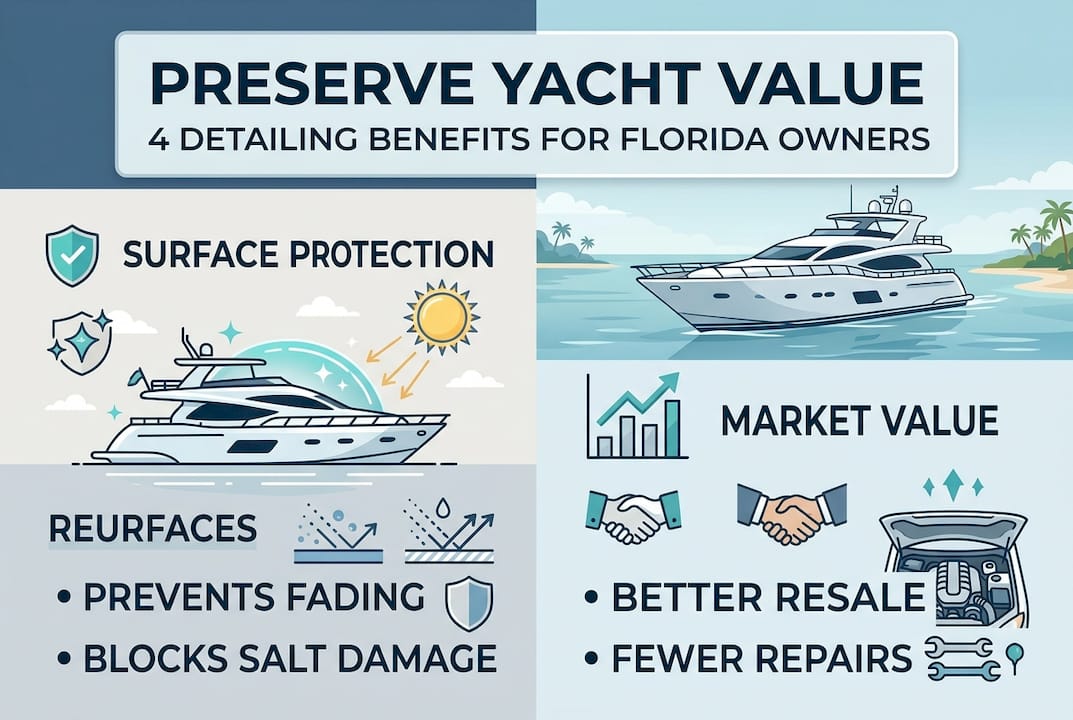
Consistent detailing prevents the visible and hidden wear that impacts resale, often increasing a vessel’s market value by maintaining like-new condition across all surfaces. A yacht that has been professionally detailed on schedule looks newer, surveys better, and commands stronger offers than a comparable boat that has been allowed to oxidize and corrode.
Here are the core, tangible benefits of keeping a regular professional detailing schedule:
- Higher resale value: Buyers pay a premium for vessels that look and survey well, and documented detailing history is direct evidence of responsible ownership
- Reduced repair bills: Catching surface damage early and neutralizing it prevents escalation into structural problems
- Extended paint and gelcoat life: Properly maintained finishes last significantly longer, pushing back the cost of full paint jobs or gel restoration
- Better fuel efficiency: A clean hull with well-maintained anti-fouling paint reduces drag and friction, directly improving performance and fuel consumption
- Healthier interior environments: Regular mildew treatment on canvas, upholstery, and headliners keeps the cabin comfortable and hygienic
- Stronger insurance positioning: Surveyors notice maintenance history, and a well-documented vessel can support more favorable coverage terms
- Preserved mechanical systems: Corrosion that starts on deck hardware can migrate to through-hull fittings and engine room components if it isn’t addressed
The connection between exterior detailing and engine performance might not be obvious at first, but neglected surfaces are a warning sign that maintenance has slipped across the board. A yacht owner who stays on top of detailing tends to stay on top of everything else too, which keeps the whole vessel in better mechanical shape.
Pro Tip: Keep a detailed maintenance log that includes every professional detailing appointment, the products used, and any observations noted by the technician. When you’re ready to sell, this documentation is tangible proof of diligent care and gives buyers confidence that your asking price reflects real value.
How to select the right boat detailing service
Knowing the benefits, your next decision is choosing someone truly qualified to care for your vessel. Not all detailing services are equal, and the wrong choice can cause more damage than skipping detailing altogether. Auto detailers, general handymen, and inexperienced boat washers operating without proper marine training are among the most common sources of gelcoat and paint damage in Florida marinas.
Choosing experienced professionals helps avoid damage to sensitive finishes and ensures warranty compliance for any coatings or systems recently installed on your vessel. Here are the critical questions you should ask before hiring anyone to detail your yacht:
- Are you specifically trained in marine detailing, not just automotive or general boat washing?
- What products do you use, and are they marine-grade formulations appropriate for gelcoat, marine paint, and specialized coatings?
- Are you fully insured, with liability coverage that protects your vessel in the event of accidental damage?
- Can you provide references from other Florida yacht owners who can speak to the quality and consistency of your work?
- Do you provide written documentation of services performed, including products used and any surface issues observed?
- What is your process for assessing gelcoat or paint thickness before applying compounds?
- Do you have experience with the specific type of vessel you own, whether that’s a sportfish, flybridge cruiser, sailing vessel, or motoryacht?
“The cheapest detailing quote I ever got cost me $14,000 in paint restoration the following year. Unqualified technicians used the wrong compound and cut through the gelcoat on my transom. It took two applications from a professional marine painter to restore it. Never again.”
Red flags to watch for include detailers who offer one-price-fits-all services regardless of vessel size or condition, those who cannot name the specific products they use, and anyone who dismisses the importance of a pre-service surface inspection. Generic household-grade cleaning products may cause irreversible damage to specialized marine finishes.
Service documentation matters beyond simple record-keeping. Many extended warranties on coatings, upholstery treatments, and canvas enclosures require proof of professional maintenance to remain valid. Use our spring maintenance checklist to make sure your detailing appointments are part of a broader seasonal care schedule that keeps every system in top form.
Why professional detailing is the smartest investment Florida yacht owners make
Here’s a perspective that seasoned Florida yacht owners understand well: detailing isn’t cosmetic, it’s structural. We’ve watched owners skip detailing appointments to save a few hundred dollars and then face thousands in damage that a timely treatment would have caught. The math is stark. A professional detail appointment costs a fraction of a single major repair, yet many owners still treat it as optional.
The real cost of neglect doesn’t arrive all at once. It accumulates quietly. Oxidation dulls the surface, then makes it porous, then allows water infiltration, then causes delamination. Corrosion starts on a fitting, migrates to a mounting plate, then compromises the structural fastener beneath it. Each stage is more expensive to reverse than the one before it. Experienced owners who have lived through one major neglect-related repair almost never skip detailing again.
We’ve seen this pattern enough times to say with confidence: vessels that are detailed consistently hold their value dramatically better than those that aren’t. And connecting your sportfish maintenance routine to a regular detailing schedule amplifies those savings even further. Establish a service log from the day you take ownership, record every appointment and every observation, and treat that log as part of the vessel’s value. A buyer presented with years of documented professional care sees certainty, not risk.
Preserve your yacht with expert care — next steps
Protecting your yacht starts with having the right team in your corner. At Mazza Marine, we connect Florida yacht owners with trusted, experienced detailing and maintenance professionals who understand the unique demands of our waters and climate.
Whether you need guidance on signs you need yacht repairs before damage escalates, want to explore paint and hull solutions to restore your vessel’s finish, or are considering a full teak and interior refit to bring your cabin back to its finest, we have the partners to make it happen. Reach out to Mino, Luigi, and the Mazza Marine team today. Your yacht deserves care that matches your investment, and smooth sailing starts with the right professionals.
Frequently asked questions
How often should I get my yacht professionally detailed in Florida?
For maximum protection, every 3 to 4 months is ideal because Florida’s harsh climate necessitates regular hull and paint maintenance year-round. Vessels used frequently or moored in open slips benefit most from this schedule.
Does professional detailing really increase my yacht’s resale value?
Yes. Consistent detailing prevents visible and hidden wear, and routine professional detailing can significantly boost resale value by keeping your vessel in like-new condition at survey time.
What’s included in a standard professional detailing package?
A full service covers cleaning, compounding, polishing, waxing, and treating all exterior and interior surfaces. Professional detailing is thorough and includes multi-stage surface treatment tailored to the vessel’s specific condition.
Can I use an auto detailer for my yacht?
No. Marine-grade materials and methods are required for boat surfaces, and using auto products may cause damage and void warranties. Experienced professionals help avoid damage to sensitive marine finishes that auto detailers aren’t trained to handle.
Are there risks to skipping professional boat detailing?
Skipping pro detailing accelerates oxidation, mildew, and structural wear, leading to repair costs that far exceed what regular detailing would have cost. The damage compounds with each season of neglect.
Recommended
Text or Call 954-330-9653 Schedule Appointment
Mazza Marine Yacht Services & Refit

Fiberglass Upgrades and Damage Repair

Premium Yacht Paint/ Faux Teak

Fishing: Custom Rods, Reels,Tackle

Electrical, Electronics and Navigation

Paint, Hull and Gelcoat

Teak Decks, Wood Cabinets, Carpentry

Canvas, Enclosures and Upholstery

Mechanical, Repower and Running Gear

Plumbing, Bilge and Thru-Hulls

Welding and Custom Fabrication

Interior Refit And Past Work
Get your yacht value Estimate
"*" indicates required fields