
View Our Recent Work:

A yacht charter is defined as the practice of renting a privately owned vessel for leisure, travel, or exploration, a tradition with roots stretching back centuries through aristocratic privilege, post-war ingenuity, and global market forces. Understanding what is a yacht charter history means tracing a story that moves from the private decks of European nobility to the digital booking platforms reshaping access in 2026. The industry today reflects every major shift in culture, technology, and wealth that has occurred since the first commercial charter agreements were signed in Antigua’s English Harbour after World War II.
What is yacht charter history? Origins from aristocracy to post-war commerce
Yacht chartering as a formal commercial practice is rooted in the late 1940s. Before that, private yachting was the exclusive domain of aristocrats, industrialists, and royalty who owned their vessels outright and never rented them to strangers. The concept of paying to sail someone else’s yacht simply did not exist in any organized form.
The turning point came after World War II. Post-WWII naval asset repurposing in Antigua, led by the Nicholson family at English Harbour, marks the recognized genesis of the modern commercial charter industry. The Nicholsons saw surplus military vessels and a growing class of wealthy travelers with no yachts of their own, and they built a business connecting the two. That entrepreneurial leap transformed a private luxury into a rentable experience.
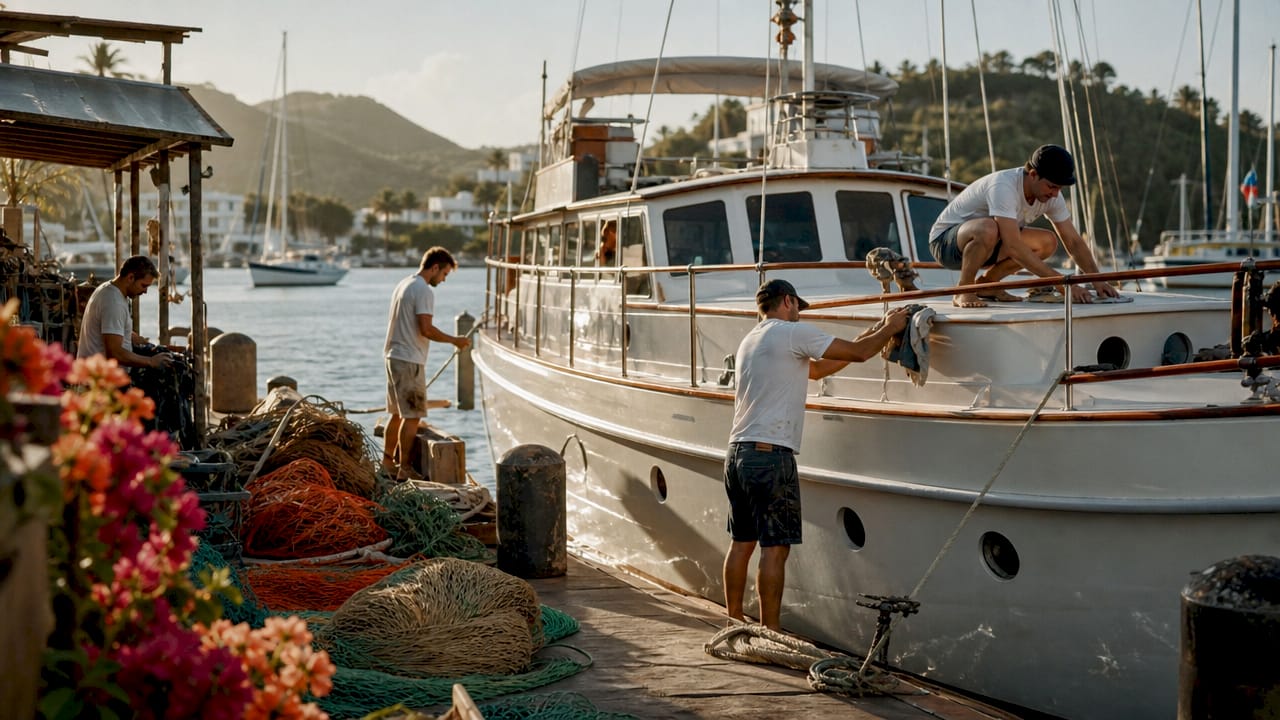
The distinction between private ownership and commercial charter is the foundation of everything that followed. Private yachting meant a vessel existed solely for its owner’s use. Commercial chartering meant a vessel could generate income when the owner was not aboard, and guests could access the sea without the burden of ownership. This economic logic proved durable.
Pro Tip: If you are researching yacht charter origins for academic purposes, English Harbour in Antigua is the single most important geographic reference point. The Nicholson family’s operation there is widely cited as the industry’s commercial birthplace.
Key characteristics that defined early yacht charters:
- Vessels were often repurposed naval or military craft, not purpose-built charter yachts
- Bookings were arranged through personal relationships and word of mouth, not formal agencies
- Destinations were limited to the Caribbean and Mediterranean, where infrastructure existed
- Crew were frequently former naval personnel who transitioned into civilian maritime work
- Charter agreements were informal by modern standards, with minimal regulatory oversight
The aristocratic roots of yachting left a lasting imprint on charter culture. The expectation of white-glove service, fine provisioning, and bespoke itineraries did not disappear when chartering became commercial. Those standards simply transferred from private ownership to the charter experience, setting a tone that the industry still honors today.
How did yacht charters evolve through cultural and market changes?
The cultural meaning of yachting shifted dramatically from the 1980s onward. Yacht clubs and nautical magazine readership declined as yachting moved from a lifestyle identity to a competitive sport and business activity. That shift changed who chartered yachts and why.
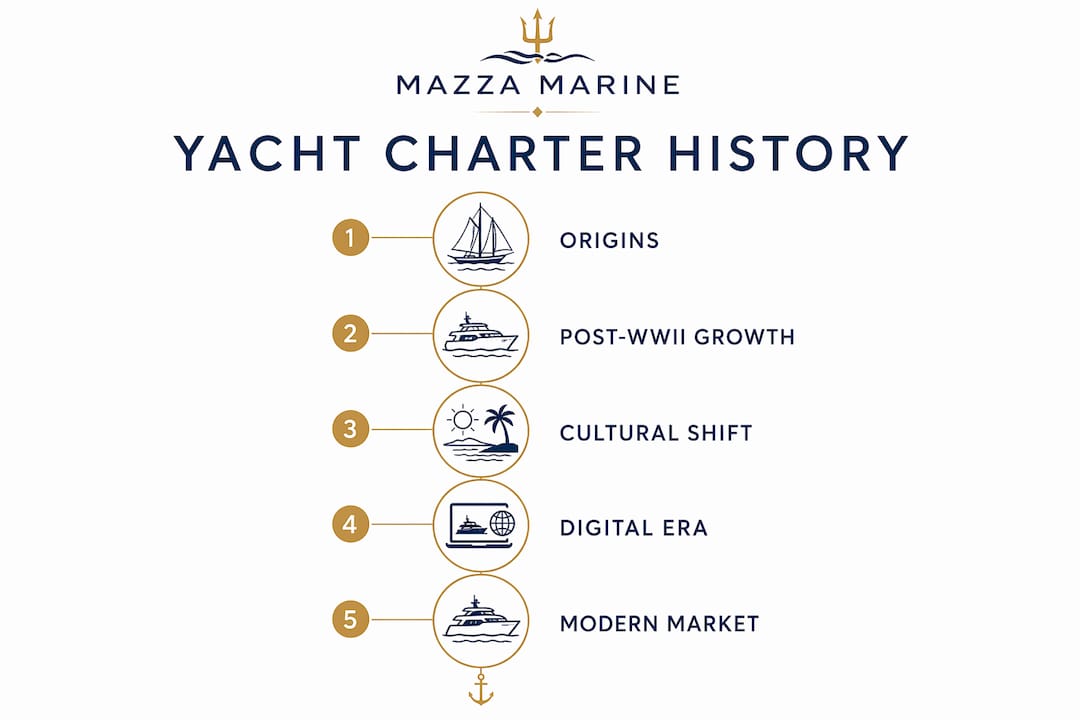
The old yachting community was built around clubs, long passages, and a shared way of life that consumed years. The new charter client wanted a defined vacation window, a specific destination, and a curated experience. These are fundamentally different motivations, and the charter industry adapted its offerings to match them.
Several market changes defined the late 20th century evolution of yacht charters:
- Charter fleets expanded beyond the Caribbean and Mediterranean to include Southeast Asia, the South Pacific, and Scandinavia
- Bareboat charters, where the client sails without a professional crew, grew in popularity as recreational sailing licenses became more common
- Crewed charter packages became more structured, with standardized provisioning menus and itinerary planning services
- Charter brokerages formalized as professional intermediaries, creating a layer of expertise between vessel owners and clients
- Charter-to-buy programs emerged, allowing clients to apply charter fees toward a future purchase
That last development proved particularly significant. 42% of yacht buyers in the €10–30 million range charter at least twice before purchasing. Chartering became a due-diligence tool for serious buyers, not just a vacation option. The industry recognized this and built programs around it.
The expansion of charter itineraries also reflected changing client demographics. Younger, globally mobile clients wanted longer passages, more remote destinations, and experiences that could not be replicated on a cruise ship. Charter operators responded with extended itineraries covering the Indian Ocean, the Maldives, and the Norwegian fjords, routes that would have been considered impractical for commercial charter just two decades earlier.
What technology and market trends shape modern yacht charters?
The digital transformation of yacht chartering accelerated sharply after 2019. Online booking platforms reached 72% of all global yacht charter reservations as of 2026, up from roughly 50% in 2019. That shift represents a fundamental change in how clients discover, compare, and reserve vessels.
The rise of platforms did not eliminate professional brokers. Digital yacht charter platforms complement rather than replace brokers, serving as discovery and education tools while brokers handle contract complexity, crew vetting, and tailored itinerary planning. Understanding yacht brokerage expertise remains relevant for anyone navigating a high-value charter arrangement.
| Charter booking method | Best suited for | Key limitation |
|---|---|---|
| Online platform only | Short charters, standard vessels, familiar destinations | Limited support for complex itineraries or contract disputes |
| Broker-led arrangement | Superyachts, extended passages, first-time charterers | Higher service fees, longer lead times |
| Hybrid approach | Mid-range charters with custom requests | Requires client to manage two relationships |
Fleet composition has also shifted in ways that reflect changing client preferences. Catamarans made up 40–45% of Mediterranean charter fleets in 2026, up from 18% in 2015. Catamarans appeal to first-time charterers because of their stability, deck space, and shallow draft, and they generate higher weekly revenue for operators than comparable monohulls.
Booking timelines compressed significantly. In february 2026, 65% of peak-season Mediterranean charter inventory was already reserved. That statistic signals a permanent behavioral shift. Clients who wait until spring to book a summer Mediterranean charter now face limited availability and higher prices.
Pro Tip: For peak Mediterranean season, target your booking window between october and january. The best vessels at the best rates go to clients who plan six to nine months ahead.
Global charter revenue grew by 4.2% in 2025, marking a phase of market realignment after the post-pandemic surge. The market is maturing rather than contracting. That maturity means more professional operators, clearer pricing structures, and higher baseline expectations from clients.
What does the history of yacht charters mean for charterers today?
The historical arc of yacht chartering has direct practical implications for anyone engaging with the industry now. The aristocratic origins explain why crewed charter culture still prioritizes bespoke service, attentive provisioning, and privacy. Those values were never marketing inventions. They were inherited from a tradition where the vessel was an extension of a private estate.
The post-WWII commercial origins explain the geographic concentration of charter infrastructure. Antigua, the French Riviera, and the Greek islands all developed their charter industries in the decades immediately following the war. Their dominance today is a product of that early investment in marinas, crew training, and regulatory frameworks.
Practical takeaways for charter clients shaped by this history:
- Choose your vessel type deliberately. Catamarans suit families and first-time charterers. Monohull sailing yachts suit experienced sailors who want performance. Motor yachts suit clients prioritizing speed, range, and interior comfort.
- Use the charter-to-buy pathway intentionally. If ownership is a long-term goal, select charter vessels that match your target purchase profile and ask operators about formal charter-to-buy programs.
- Book early for peak regions. Mediterranean summer and Caribbean winter seasons fill months in advance. Late bookings mean compromised choices.
- Engage a broker for complex arrangements. Platform booking works for standard charters. Extended passages, superyachts, and remote destinations require professional broker support.
- Understand that seasonality is expanding. Yacht refit and repositioning cycles now support year-round charter opportunities in regions that were once considered off-season destinations.
The modern charter client benefits from a century of industry refinement. The vessels are safer, the contracts are clearer, the crew are better trained, and the destinations are more varied than at any point in the history of yacht charters. That progress did not happen by accident. It was built on the foundation laid by the Nicholsons in Antigua and shaped by every cultural and market shift that followed.
Key Takeaways
Yacht chartering evolved from aristocratic private yachting into a global commercial industry, and understanding that history explains the standards, structures, and expectations that define the modern charter experience.
| Point | Details |
|---|---|
| Commercial origins | The modern charter industry began in late 1940s Antigua through post-WWII naval asset repurposing by the Nicholson family. |
| Cultural shift | Yachting moved from a lifestyle identity to a sport and vacation product, reshaping who charters and why. |
| Digital transformation | Online platforms now handle 72% of global charter reservations, but brokers remain essential for complex arrangements. |
| Fleet evolution | Catamarans now represent 40–45% of Mediterranean charter fleets, driven by first-time charterer demand. |
| Charter as ownership path | 42% of high-value yacht buyers charter at least twice before purchasing, making chartering a due-diligence tool. |
What yachting’s long history actually taught me
The thing that strikes me most about the history of yacht charters is how much the industry’s soul was set in those first years after World War II. The Nicholsons did not just create a business. They created a template: take a vessel with character, pair it with skilled crew, and deliver an experience that feels personal rather than transactional. Every charter operation that followed, whether a bareboat catamaran in the Aegean or a superyacht in the Maldives, is still working from that same template.
What I find genuinely underappreciated is how the decline of traditional yachting culture actually strengthened the charter market. When yacht clubs lost their social grip and nautical magazines lost their readership, the people who might have become lifelong yacht owners instead became repeat charter clients. The industry absorbed that energy and grew from it.
The current tension between platform booking and broker expertise mirrors an older tension between democratizing access and preserving quality. Platforms make chartering feel approachable. Brokers make it feel right. The best charter experiences I have seen combine both. The history of this industry suggests that tension is productive, not a problem to be solved.
What concerns me looking forward is the compression of booking timelines becoming a barrier for spontaneous or first-time charterers. When 65% of peak inventory is gone by february, the industry risks becoming a market only for the well-organized and well-connected. That would be a step backward from the democratizing impulse that has driven charter growth for decades.
— Jason
Keeping your charter yacht in peak condition
Every great charter experience depends on a vessel that performs as promised. The history of yacht charters is also a history of craftsmanship, from the repurposed naval hulls of Antigua to the purpose-built superyachts of today. A yacht that is not properly maintained cannot deliver the bespoke experience that charter culture demands.
Mazzamarine works with Florida yacht owners and charter operators to keep vessels charter-ready year-round. From marine repair services covering engine systems, hull work, and electronics to full interior refits, the Mazzamarine network handles every aspect of vessel care. If your yacht is showing signs of wear, the Florida repair guide is a practical starting point. Mino, Luigi, and the Mazzamarine team bring the same passion for the sea that built this industry, and they are ready to help you protect your investment.
FAQ
What is a yacht charter, exactly?
A yacht charter is the rental of a privately owned yacht for a defined period, either with a professional crew or as a bareboat arrangement where the client sails independently. The practice became a formal commercial industry in the late 1940s.
Where did commercial yacht chartering begin?
The modern yacht charter industry began in Antigua after World War II, where the Nicholson family repurposed naval vessels and established the first organized charter operation at English Harbour.
How has the yacht charter market changed recently?
Online platforms now account for 72% of global reservations, booking timelines have compressed significantly, and catamarans have grown to represent 40–45% of Mediterranean charter fleets as of 2026.
Can chartering a yacht lead to buying one?
Yes. 42% of buyers in the €10–30 million range charter at least twice before purchasing, and many operators offer formal charter-to-buy programs that apply rental fees toward a purchase.
Do I need a broker to charter a yacht?
For standard charters on familiar routes, an online platform is sufficient. For superyachts, extended passages, or first-time charterers, a professional broker handles contract complexity, crew vetting, and itinerary planning that platforms cannot replicate.
Recommended
Text or Call 954-330-9653 Schedule Appointment
Mazza Marine Yacht Services & Refit

Fiberglass Upgrades and Damage Repair

Premium Yacht Paint/ Faux Teak

Fishing: Custom Rods, Reels,Tackle

Electrical, Electronics and Navigation

Paint, Hull and Gelcoat

Teak Decks, Wood Cabinets, Carpentry

Canvas, Enclosures and Upholstery

Mechanical, Repower and Running Gear

Plumbing, Bilge and Thru-Hulls

Welding and Custom Fabrication

Interior Refit And Past Work
Get your yacht value Estimate
"*" indicates required fields