
View Our Recent Work:

Many Florida yacht owners assume that as long as they have a registration sticker and a valid title, they’re fully covered on the water. That assumption can be costly. Gaps in documentation can trigger insurance claim denials, create ownership disputes during resale, and even expose you to maritime liability you didn’t know existed. Whether you own a 30-foot sportfish or a 60-foot motor yacht, your paperwork is as critical as your engine maintenance. This guide breaks down what proper documentation looks like, why it protects your investment, and how to stay fully compliant under both federal and Florida state requirements.
Table of Contents
- The basics: What documentation means for Florida yachts
- Benefits of proper yacht documentation: Insurance, financing, and legal security
- Step-by-step: Getting and maintaining your yacht documentation
- Florida compliance challenges and documentation edge cases
- Why most yacht owners underestimate the value of documentation
- Protect and enhance your yacht with expert support
- Frequently asked questions
Key Takeaways
| Point | Details |
|---|---|
| Legal protection | Proper documentation shields you from ownership disputes and insurance claim denials. |
| Florida-specific rules | Even federally documented yachts require a state decal to comply locally. |
| Strategic resale value | Accurate records and documentation make future sales and upgrades easier and more profitable. |
| Actionable process | Following a step-by-step process helps owners stay on top of renewals and compliance. |
The basics: What documentation means for Florida yachts
When most yacht owners hear “documentation,” they picture a stack of paperwork collecting dust in the cabin. The reality is far more strategic. In the maritime world, documentation specifically refers to federal vessel registration through the U.S. Coast Guard, which is a separate system from Florida state registration.
State registration is managed by the Florida Department of Highway Safety and Motor Vehicles and applies to most recreational vessels. Federal documentation, handled by the National Vessel Documentation Center, works at a different level entirely. It establishes U.S. nationality for a vessel and opens doors that state registration simply cannot.
Here’s what sets federal documentation apart:
- Who qualifies: Only U.S. citizens can federally document a recreational yacht.
- Size thresholds: Commercial vessels over 5 net tons must be documented; recreational yachts over approximately 25 feet are eligible and strongly recommended.
- Hull display: Federally documented yachts display the vessel name and hailing port instead of a hull number, which gives your yacht a cleaner, more classic nautical character.
- International recognition: A documented yacht carries legal standing in foreign ports, which matters if you cruise the Bahamas or Caribbean.
- Preferred mortgages: Lenders can place a preferred ship’s mortgage on a documented vessel, making financing significantly easier to arrange.
Even with detailed USCG requirements satisfied through federal documentation, Florida still requires you to display a state decal on your vessel. That small sticker is easy to overlook but skipping it creates a compliance gap that can complicate interactions with marine patrol.
For a broader picture of how documentation fits into overall ownership, reviewing yacht management basics gives Florida owners a strong foundation. Pairing that with a safety checklist for compliance ensures nothing slips through the cracks.
Statistic to know: Federal documentation is recommended for all recreational yachts over approximately 25 feet because of the preferred mortgage access, international standing, and clean hull display it provides.
Benefits of proper yacht documentation: Insurance, financing, and legal security
Documentation is not just a bureaucratic formality. It is a financial and legal shield for your yacht and your personal assets.
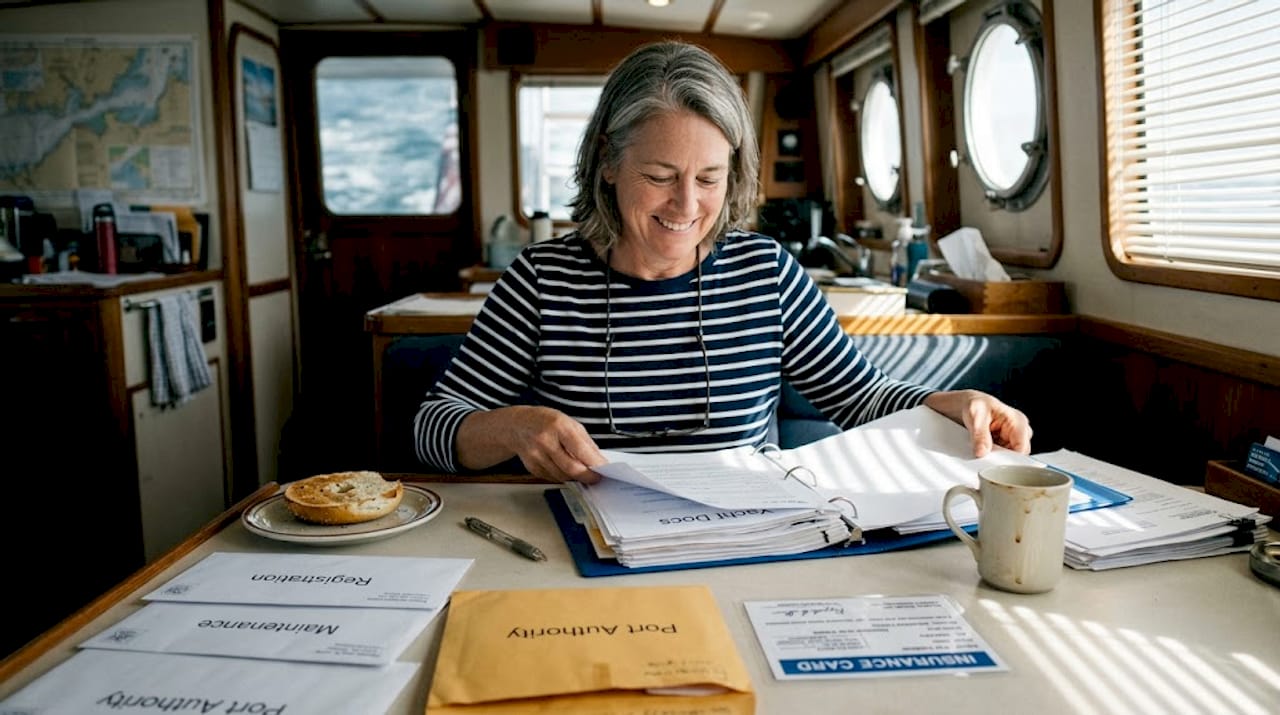
Start with insurance. Carriers who insure high-value vessels look closely at documentation during the underwriting process and again when a claim is filed. Undocumented maintenance and missing vessel records are among the most common reasons insurers reject claims outright. A missing engine service log, an undated hull inspection, or an unrecorded modification can all be cited as grounds for denial. Documentation creates the paper trail that proves your vessel was properly maintained and legally registered at the time of loss.
On the financing side, federally documented yachts qualify for preferred ship’s mortgages, which carry stronger protections for both lenders and buyers. When you’re ready to sell, a documented vessel with a clean chain of title transfers far more smoothly. Buyers and their attorneys can verify ownership history without ambiguity, which speeds up the deal and protects the sale price.
From a liability standpoint, maritime law is its own world. If an accident occurs aboard your yacht in Florida waters, the documentation you carry helps establish the legal framework that governs the dispute. A vessel with proper documentation, maintained records, and current registrations is in a far stronger position to mount a defense.
Here are the top legal and financial risks of neglecting documentation:
- Insurance claim denial due to missing maintenance records
- Inability to secure preferred financing or favorable refinancing terms
- Disputed ownership during resale or inheritance
- Legal exposure in maritime liability cases
- Complications when operating in foreign waters without federal documentation
Pro Tip: Keep a dedicated documentation binder aboard your yacht at all times. Include your USCG certificate of documentation, current Florida decal confirmation, insurance policy summary, and the last three service records. Insurers and lenders want to see organized, current records, and having them ready builds immediate credibility.
Understanding yacht warranties explained alongside your documentation gives you a complete picture of legal coverage. Combining that with a current list of must-have safety equipment positions you well for both inspections and claims.
Step-by-step: Getting and maintaining your yacht documentation
Getting federally documented is straightforward when you follow the right sequence. Here’s how Florida yacht owners should approach it:
- Confirm eligibility: Your vessel must be owned entirely by a U.S. citizen and measure at least five net tons, which typically corresponds to recreational yachts roughly 25 feet or longer.
- Gather ownership documents: Collect your current state title, any prior bill of sale, and builder’s certificate if available.
- Complete the application: Submit through the USCG application portal using the appropriate form for initial documentation (CG-1258 for most applications).
- Display the vessel name and hailing port: Once documented, the vessel’s name and hailing port must be marked on the exterior hull in lettering at least four inches high.
- Obtain the Florida decal: Even with federal documentation complete, register with the state and display the required Florida decal aboard.
- Set a renewal reminder: USCG documentation must be renewed annually. Missing the renewal window creates a lapse that complicates insurance and resale.
Pro Tip: Avoid the most common pitfall of missing renewal deadlines by setting a calendar reminder 60 days before your documentation expiration. Late renewals can require reapplication and create gaps in your vessel’s compliance record.
| Feature | Federal documentation | Florida state registration |
|---|---|---|
| Governing body | U.S. Coast Guard | FL DHSMV |
| Required for | Commercial vessels over 5 net tons | All recreational vessels |
| Hull identifier | Name and hailing port | Hull ID number |
| Preferred mortgage | Yes | No |
| International recognition | Yes | No |
| Annual renewal | Yes | Every 1 or 2 years |
| Citizenship requirement | U.S. citizens only | No restriction |
For guidance on transferring yacht ownership correctly, the documentation chain is critical. Equally, understanding marine craftsmanship essentials keeps your vessel in the condition that supports a clean documentation record.
Florida compliance challenges and documentation edge cases
Even with all documentation in order, Florida yacht owners face unique local compliance hurdles.
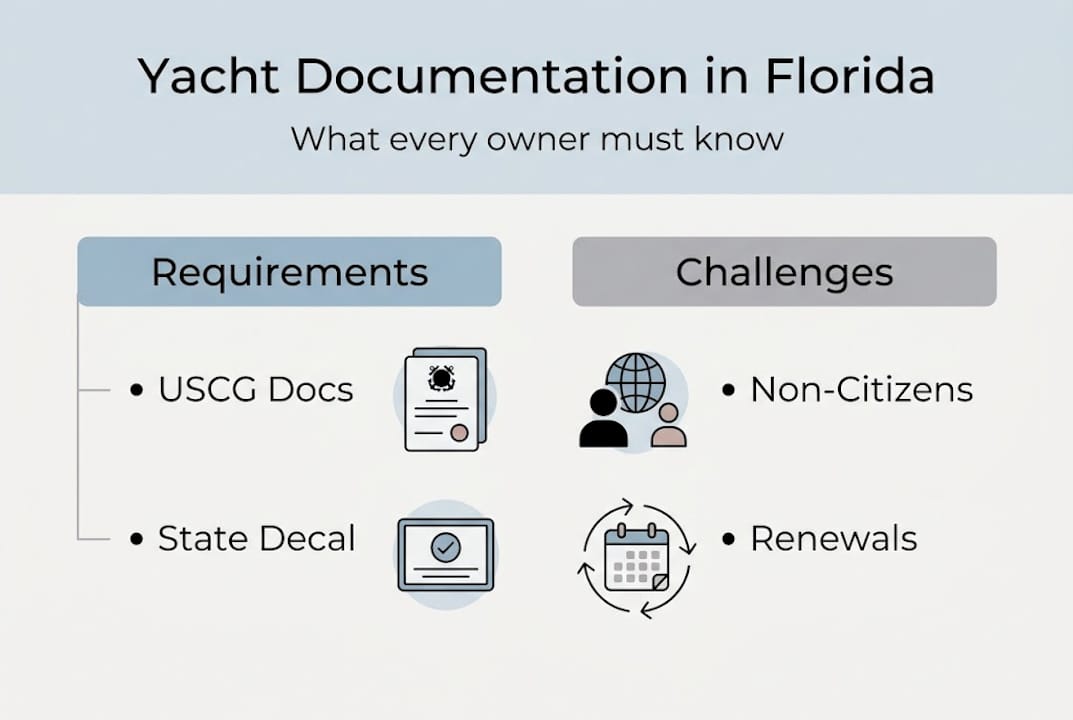
Florida’s mix of intracoastal waterways, offshore cruising, and international proximity creates scenarios that trip up even experienced owners. Here are some of the most common edge cases:
| Challenge | Details | Accepted solution |
|---|---|---|
| Non-citizen ownership | Cannot federally document | Register with Florida state only |
| Multi-state operation | Different state rules apply | Carry both home state and USCG docs |
| Federally documented vessel in FL | No hull number displayed | Florida decal required; carry USCG certificate |
| Foreign waters operation | State registration insufficient | Federal documentation required |
| Joint ownership with non-citizen | Disqualifies federal documentation | Restructure ownership or use LLC with eligible members |
As confirmed in the USCG documentation guide, documented recreational yachts are not required to display hull numbers but must carry the Florida state decal. Non-citizens are not eligible for federal documentation, which is a significant compliance factor for Florida’s large international boat-owning community.
If you operate in multiple states or venture into foreign waters, ask yourself these questions:
- Does my documentation allow me to legally enter the ports I plan to visit?
- Am I carrying the physical USCG certificate of documentation aboard?
- Is my Florida decal current and visible?
- Have I updated my documentation after any major modification or ownership change?
“Failing to align local state compliance with federal documentation can quietly erase the legal advantages federal documentation provides. A lapse in your Florida decal or an unrecorded ownership transfer does not pause your federal status, but it creates contradictions that insurance carriers and courts notice.”
Reviewing Florida safety compliance tips alongside your documentation process is a smart habit, especially before a long offshore passage or international cruise.
Why most yacht owners underestimate the value of documentation
We’ve seen it many times in this industry. A yacht owner invests heavily in a beautiful refit, installs premium electronics, and keeps the engine in flawless shape, yet treats documentation as an afterthought. Then comes the moment of need: a collision, a sale, or a financing request. Suddenly, the missing paperwork costs far more than it ever would have to maintain.
Documentation is not just compliance. It is a strategic asset. Think of it the way you think about your vessel’s logbook, it tells the complete story of your yacht’s life and value. Buyers, insurers, and lenders read that story carefully. A well-documented yacht commands better offers and closes deals faster.
The mindset shift we encourage is simple: treat your records as part of the yacht itself. Every maintenance entry, every documentation renewal, every updated insurance certificate adds tangible value. When you are ready to upgrade, sell, or finance your next vessel through complete boat management, a clean documentation history is one of the most persuasive assets you can present.
Pro Tip: Before any major upgrade or sale, pull your full documentation record and review it for gaps. A short session with a knowledgeable Florida yacht advisor can surface issues early and save you significantly at closing.
Protect and enhance your yacht with expert support
Understanding documentation is the first step. Keeping your yacht fully protected, maintained, and compliant year-round is where the real work begins.
At Mazza Marine, Mino, Luigi, and our Florida network of experts are here to support every aspect of your ownership experience. From urgent repairs to long-term reduce yacht breakdowns programs, we help you stay ahead of problems before they become expensive. Not sure where your yacht stands today? Our team can help you identify repair needs early and build a maintenance plan that protects your documentation record and your investment. Reach out to Mazzamarine experts and start building a relationship that lasts.
Frequently asked questions
Is federal documentation required for my Florida yacht?
Federal documentation is required for commercial vessels over 5 net tons and is optional but strongly recommended for recreational yachts over approximately 25 feet in length, given the financing and international recognition benefits it provides.
What happens if I don’t document my yacht properly?
Improper or missing documentation can lead to denied insurance claims, legal exposure under maritime liability laws, and significant complications when transferring ownership or applying for financing.
Can non-citizens federally document their yacht in Florida?
No. Only U.S. citizens can federally document a recreational yacht. According to the USCG documentation guide, non-citizens must rely on Florida state registration instead.
Do I need a Florida registration decal if my yacht is federally documented?
Yes. Florida requires a current state decal even if your recreational yacht holds full federal documentation. Displaying both keeps you compliant at the state and federal level simultaneously.
Recommended
Text or Call 954-330-9653 Schedule Appointment
Mazza Marine Yacht Services & Refit

Fiberglass Upgrades and Damage Repair

Premium Yacht Paint/ Faux Teak

Fishing: Custom Rods, Reels,Tackle

Electrical, Electronics and Navigation

Paint, Hull and Gelcoat

Teak Decks, Wood Cabinets, Carpentry

Canvas, Enclosures and Upholstery

Mechanical, Repower and Running Gear

Plumbing, Bilge and Thru-Hulls

Welding and Custom Fabrication

Interior Refit And Past Work
Get your yacht value Estimate
"*" indicates required fields