
View Our Recent Work:

Hire a professional emergency repair provider immediately, one with 24/7 dispatch and a single point of contact. That call stabilizes the vessel first, stopping electrical, hull, or mechanical failures from cascading into something far more expensive. A qualified team should reach you fast, deliver a written stabilization report, and hand you a scheduled path to permanent repair before they ever leave the dock. Mazzamarine’s Florida network is built to take that call right now.
TL;DR:
- Emergency providers should have 24/7 dispatch with a single point of contact and a fully stocked mobile crew to minimize stabilization time and costs.
- Initial stabilization focuses on containment and safety, such as temporary hull patches and electrical circuit isolation, before planning permanent repairs.
- Accurate and upfront documentation, including work reports, parts list, and photographic evidence, is essential for insurance and warranty purposes.
- Pricing for emergency repairs includes callout fees, labor premiums, parts, haul-out costs, and can range from hours to weeks depending on damage complexity.
- Proper coordination of multiple trades under one project manager prevents delays and reduces the risk of secondary failures or inflated costs.
Table of Contents
- What Happens When a Yacht Emergency Repair Crew Arrives
- Why Stabilization Comes Before Permanent Repair
- How to Choose and Mobilize an Emergency Provider Fast
- What Emergency Yacht Repairs Actually Cost and How Long They Take
- The Real Lesson Behind Every Emergency Repair Call
- How to Reach Mazzamarine When Every Minute Counts
- Sources
What Happens When a Yacht Emergency Repair Crew Arrives
A competent crew doesn’t start swinging wrenches the moment they step aboard. They triage first, because a smoking bilge pump and a failed thru-hull demand very different responses, and mixing up the order of operations is how small problems become haul-outs.
The first ten minutes typically cover safety basics: isolating electrical circuits that could arc near fuel vapor, checking bilge water levels against pump capacity, and confirming there’s no active fire or fuel leak risk. Only after that does the actual repair conversation start.
Common failures that trigger this response include engine and propulsion breakdowns, major electrical faults, overheating or cooling-system failures, steering and hydraulic loss, and thru-hull or hull breaches that let water in faster than a bilge pump can handle. Each carries its own triage sequence, but the goal is the same: buy time without making things worse.
Stabilization measures a technician might use on-site:
- Temporary hull patches or wedges to slow or stop water intrusion
- Bypassing a failed pump, alternator, or switch with a temporary workaround
- Securing loose rigging, shafts, or steering components before they cause secondary damage
- Isolating a faulty circuit so the rest of the electrical system stays safe to use
Top-tier providers commonly run 24/7 dispatch with mobile repair units and a stocked inventory of critical spares, which is the difference between a two-hour stabilization and an overnight wait for a part that was never on the truck.
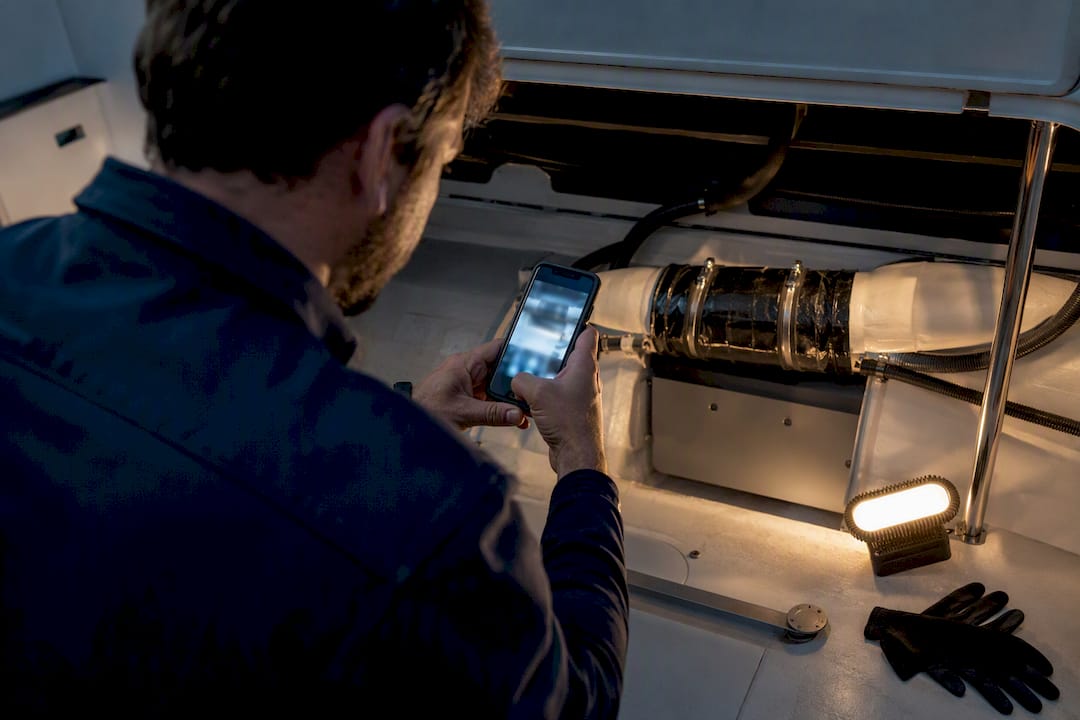
Before the crew leaves, you should have three things in hand: a written assessment of what’s wrong, a description of exactly what was done temporarily, and a parts list with an estimated arrival window. Reputable operators also document the work photographically, which protects you if an insurance claim follows later.
Why Stabilization Comes Before Permanent Repair
Experienced technicians work in two distinct phases, and skipping straight to phase two is where inexperienced outfits get owners into trouble. Phase one is about containment: isolate the failed system, stop active damage, and confirm the vessel is safe to sit at the dock or move under limited power. Phase two is planning: ordering the right parts, scheduling the trades, and deciding whether the repair happens at the slip or requires a haul-out.
This staged approach exists because rushing permanent repairs on an unstable vessel often creates a second failure on top of the first. A temporary electrical bypass done correctly buys the diagnostic team time to source the right part instead of grabbing whatever’s closest.
Pro Tip: Ask your provider whether they use remote technical support during diagnostics. Shore-based engineers guiding on-board crews through AR-assisted workflows can cut diagnosis time significantly, especially for electrical or hydraulic faults that would otherwise require flying in a specialist.
Coordination matters just as much as technique. Managing several independent contractors during an emergency is one of the most common breakdowns owners run into, with each trade blaming the other for delays. A single project coordinator who manages welders, electricians, and mechanics as one team avoids that finger-pointing entirely.
What good coordination looks like in practice:
- One person you call, not four
- A shared timeline across every trade involved
- Parts ordering handled centrally instead of trade-by-trade
- One invoice, one schedule, one point of accountability
How to Choose and Mobilize an Emergency Provider Fast
When water is rising or the engine won’t start, you don’t have time to interview five companies. You need a fast checklist and a script that gets you answers in under two minutes.
Before you dial, know what to listen for:
- 24/7 availability confirmed, not implied. Ask directly whether a technician can be dispatched now, not “sometime today.”
- Certifications and standards. Providers who follow American Boat and Yacht Council best practices tend to document work properly and avoid shortcuts that void warranties.
- Parts on hand. A crew showing up empty-handed for a hydraulic failure just cost you another six hours.
- A single point of contact. If they can’t name who’s coordinating the job, that’s a red flag before they’ve even left the shop.
On that first call, ask exactly this: What are the symptoms telling you the problem might be? What’s your realistic ETA? What will you do first on arrival? Do you have the likely parts in stock, and if not, what’s the lead time? Their answers, or lack of them, tell you everything about how the next few hours will go.
Decision rule worth memorizing: if the fix is contained (a patched thru-hull, a bypassed electrical fault, a secured steering cable) and the vessel is safe to move, an on-site fix often suffices. If the hull integrity is compromised below the waterline or the damage involves structural components, insist on a haul-out rather than accepting a dockside patch as permanent.
Have your documentation ready before the crew arrives: vessel registration, insurance carrier information, and clear authority to approve work on the spot. Notifying your insurer early, even with a brief call, speeds up claims processing later and avoids disputes over what was authorized and when.
What Emergency Yacht Repairs Actually Cost and How Long They Take
Emergency pricing looks different from scheduled maintenance pricing, and owners who don’t expect that get blindsided by the invoice. The premium isn’t padding. It reflects after-hours dispatch, technician availability, and the logistics of getting parts to a boat instead of a shop.
Expect these components on any legitimate emergency invoice:
- A callout or dispatch fee for after-hours or weekend response
- An emergency labor premium above standard hourly rates
- Diagnostic time, billed separately from repair time
- Parts cost, which can spike if a component needs rush shipping
- Haul-out and yard fees if the repair can’t happen at the dock
- Subcontracted trade costs when welding, electrical, or hydraulics specialists are brought in
Timelines vary just as much as cost. On-site stabilization for something like a failed bilge pump or a bypassed circuit often takes a few hours. A haul-out repair involving hull work, shaft alignment, or major mechanical rebuilds can run days to weeks, particularly if complex rewiring or panel work is required rather than a simple onboard fix.
Reputable providers control invoice surprises with staged written estimates. You approve the diagnostic phase, then approve the repair scope once parts and labor are confirmed, rather than getting hit with one final number nobody discussed along the way. That written estimate, paired with photographic records of the damage and repair, also becomes your paper trail if you’re filing an insurance claim or need to verify warranty coverage down the line.
The Real Lesson Behind Every Emergency Repair Call
Most advice on this topic focuses on finding the fastest technician, and speed matters, but it’s not the variable that actually determines outcome. Coordination is. Owners who get burned in emergencies almost never got burned because the mechanic was too slow. They got burned because three different tradespeople were working off three different assumptions, nobody owned the timeline, and the invoice reflected chaos rather than a plan.
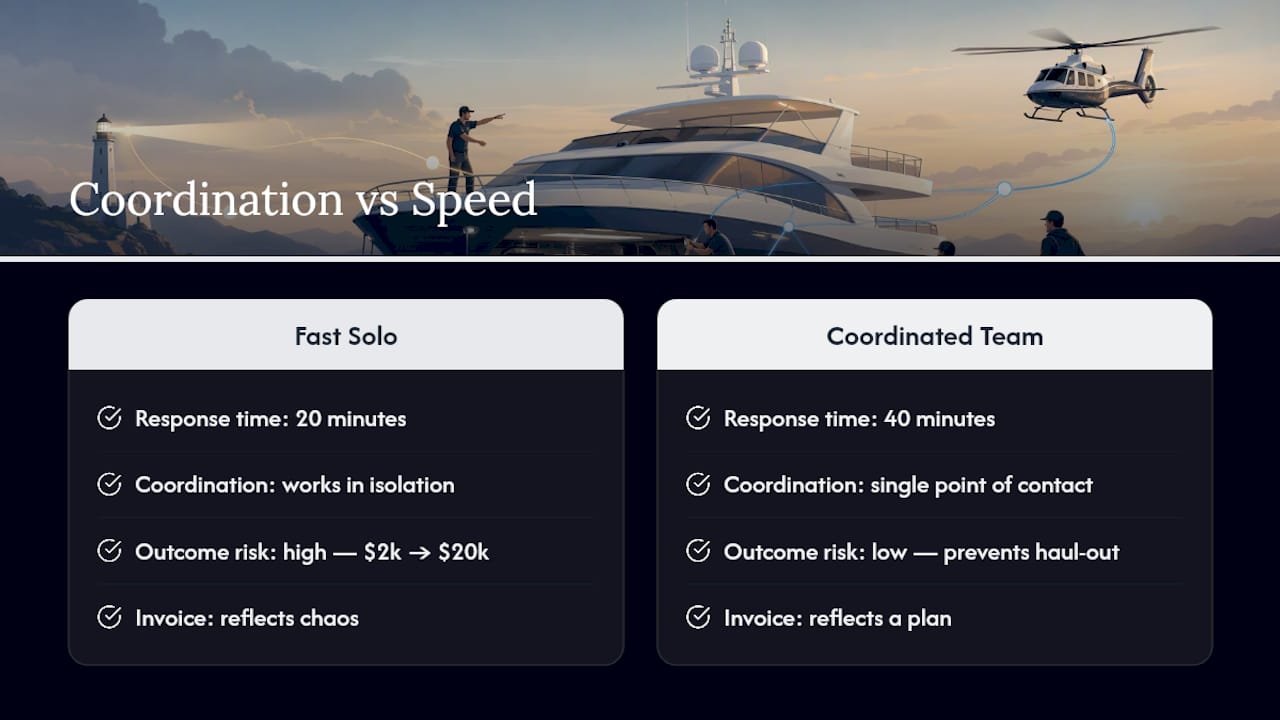
The stabilization-first workflow isn’t a nice-to-have process for high-end fleets. It’s the only sequence that actually prevents a $2,000 electrical fault from becoming a $20,000 haul-out. If you take one thing from this guide, prioritize the single point of contact over the fastest response time. A technician who arrives in twenty minutes but works in isolation from the rest of the repair chain will cost you more time and money than a coordinated team that arrives in forty.
Ask providers about their coordination model before you ask about their ETA. That question separates operators built for real emergencies from ones built for routine maintenance calls.
— Jason
How to Reach Mazzamarine When Every Minute Counts
Mazzamarine runs on a single point of contact model, backed by a Florida specialist network that covers exactly the trades an emergency demands: engine and mechanical, electrical, thru-hull and hull repair, custom welding, and canvas and glass enclosures.

That structure exists because emergencies rarely involve one system in isolation. A hull breach often means electrical exposure too. A steering failure might need both hydraulic and welding expertise on the same call. Rather than you juggling separate vendors mid-crisis, one Mazzamarine coordinator manages the trades, the parts, and the timeline, including haul-out logistics if the damage exceeds what a dockside fix can handle.
When you call, have your vessel’s ID and current location ready, a plain description of the symptoms, photos if you can safely take them, and confirmation of who holds authorization to approve repairs. That’s it. Mazzamarine’s team, founded by brothers Mino and Luigi on a lifelong passion for boats, takes it from there. Explore the full emergency repair service guide for what a properly documented repair should include, or call now to get a coordinator dispatched before the damage grows.
Sources
- Praxis Group — yacht technical management (service managers’ perspective)
- Trident Virtual — remote engineering and AR‑guided support
- Superyacht Services — emergency services workflow and 24/7 support
Recommended
Text or Call 954-330-9653 Schedule Appointment
Mazza Marine Yacht Services & Refit

Fiberglass Upgrades and Damage Repair

Premium Yacht Paint/ Faux Teak

Fishing: Custom Rods, Reels,Tackle

Electrical, Electronics and Navigation

Paint, Hull and Gelcoat

Teak Decks, Wood Cabinets, Carpentry

Canvas, Enclosures and Upholstery

Mechanical, Repower and Running Gear

Plumbing, Bilge and Thru-Hulls

Welding and Custom Fabrication

Interior Refit And Past Work
Get your yacht value Estimate
"*" indicates required fields