
View Our Recent Work:

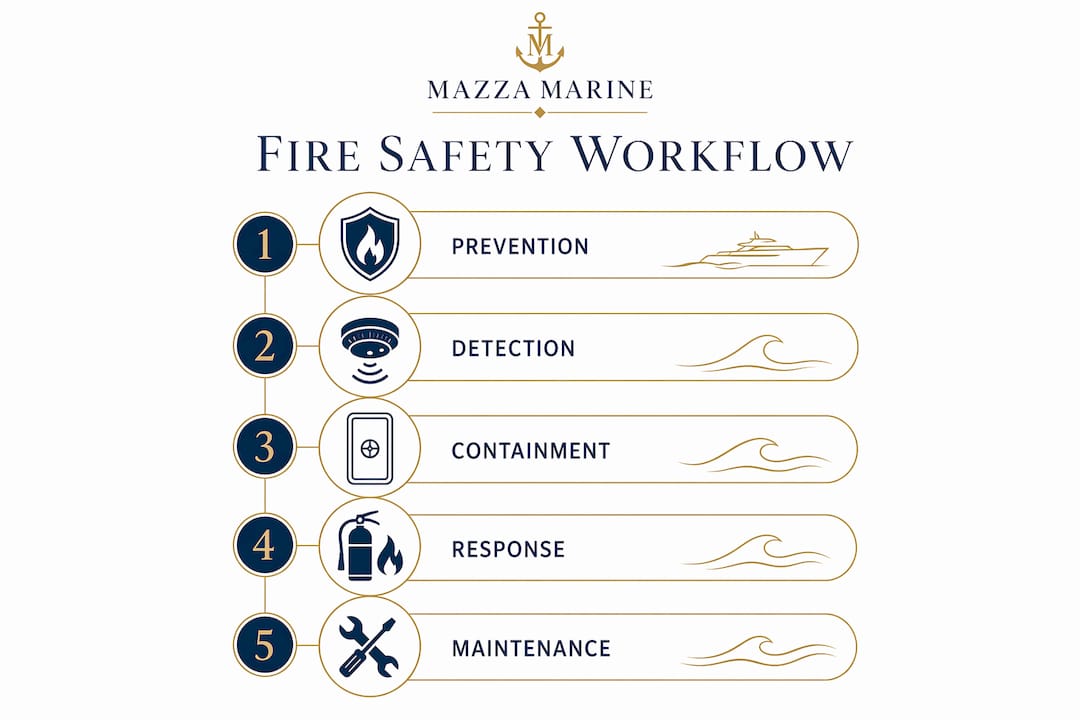
A yacht fire safety workflow is a proactive, structured process for preventing, detecting, containing, and responding to fire emergencies on board. Every captain and owner operating in Florida waters needs one. Fire at sea is unforgiving. You lose the ability to call 911 and wait. You are the first responder, the incident commander, and the safety officer all at once. This guide walks through the full fire safety management system (the recognized industry term) that meets 2026 SOLAS standards, covers required equipment, and gives your crew the training framework to act decisively when seconds matter.
What does a yacht fire safety workflow actually require?
A complete fire safety management system has three layers: the right equipment installed correctly, a trained crew that knows their roles, and documented procedures that get reviewed and updated regularly. Miss any one of those layers and the other two become far less effective.
The U.S. Coast Guard sets the baseline for equipment. Vessels 26–40 feet require two B-I extinguishers or one B-II if no fixed suppression system is installed. With a certified fixed system aboard, one B-I extinguisher satisfies the requirement. Larger vessels carry proportionally heavier requirements. These are minimums, not targets.
Fixed automatic suppression systems are the gold standard for enclosed machinery spaces. Automatic systems activate at temperature thresholds using clean agents, delivering rapid fire control before a crew member even reaches the engine room. CO2 and dry chemical powder (DCP) extinguishers handle portable suppression duties, with CO2 preferred in electronics spaces because it leaves no residue.
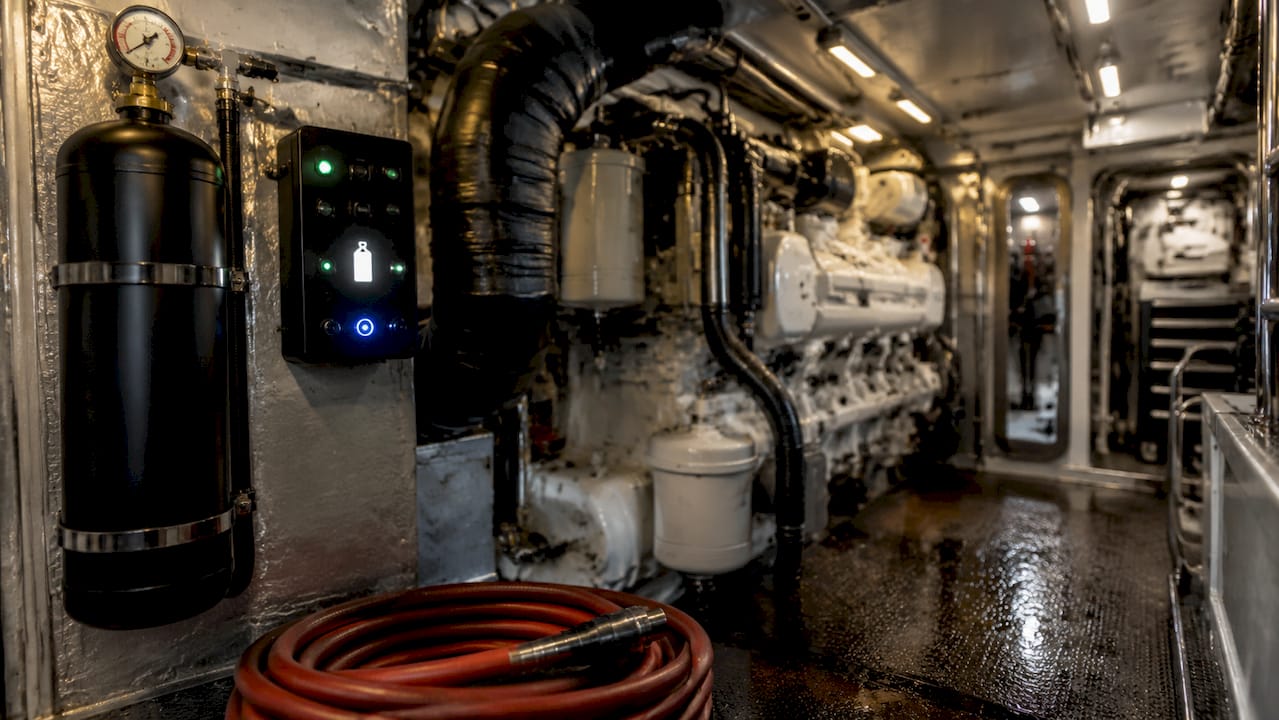
One regulatory update every Florida captain must know: SOLAS amendments effective January 1, 2026 prohibit the use of PFOS-containing firefighting foams, including AFFF, on applicable vessels. This applies to IMO High Speed Craft Code vessels upon first survey after that date. If your vessel carries AFFF foam systems, verify compliance now before your next survey.
| Vessel Length | No Fixed System | Fixed System Installed |
|---|---|---|
| Under 26 ft | 1 B-I extinguisher | None required |
| 26–40 ft | 2 B-I or 1 B-II | 1 B-I |
| 40–65 ft | 3 B-I or 1 B-II + 1 B-I | 2 B-I |
| Over 65 ft | Coast Guard inspection required | Coast Guard inspection required |
Pro Tip: Place extinguishers so you can reach one from any potential fire origin point aboard. Redundant extinguisher placement exceeds legal minimums but cuts response time when it matters most.
How do you train crew for fire emergencies at sea?
Crew readiness is the single most variable element in any fire safety plan. Equipment sits ready. Crew members panic, freeze, or act without coordination unless they have trained for the specific scenario they face.
Effective fire emergency response depends on predefined roles, designated muster stations, and training conducted under STCW and PSCRB standards. Every crew member must know their assignment before the alarm sounds, not after. Managing panic and maintaining decisive command are the two factors that separate a controlled response from a catastrophic one.
The captain carries a specific legal duty here. Passenger fire safety induction is the captain’s responsibility and must happen before departure. That induction covers the location of PFDs, muster stations, emergency exits, and expected passenger behavior during an alarm. Skipping this step because it feels awkward or time-consuming is a liability no captain should accept.
Here is a practical crew training checklist to build into your monthly routine:
- Assign and post emergency roles for every crew member, including backup assignments
- Conduct fire drills monthly and within 24 hours of any crew change
- Practice muster station assembly and headcount procedures under timed conditions
- Review escape routes from all sleeping quarters and the engine room
- Test communication protocols including VHF distress calls and internal crew comms
- Document every drill with date, participants, and any gaps identified
Safety readiness inspections must occur at least monthly and cover fire drill performance, equipment knowledge, and emergency role awareness. Treat these inspections as a living record, not a paperwork exercise.
Pro Tip: Run drills at unexpected times, including at night or during a meal. Realistic conditions expose gaps that calm, scheduled drills never reveal.
Step-by-step: executing your fire emergency procedures
When fire is detected, the first 90 seconds define the outcome. A well-rehearsed crew following a clear sequence will contain most onboard fires before they become vessel-threatening events.
Follow this sequence during any fire emergency:
- Detect and confirm. Smoke alarms, heat sensors, or visual detection trigger the alarm. The officer on watch confirms the location and nature of the fire immediately.
- Alert the crew. Sound the general alarm. All crew members move to their assigned emergency stations without waiting for further instruction.
- Isolate the source. Shut down fuel supply to the affected area. Cut electrical power to that zone. Close ventilation dampers to deny the fire oxygen.
- Activate suppression. Deploy the fixed suppression system if the fire is in an enclosed machinery space. Use portable extinguishers for accessible fires. CO2 for electrical fires, DCP for fuel fires.
- Communicate. The captain transmits a MAYDAY or PAN-PAN call on VHF Channel 16 with vessel name, position, nature of emergency, and number of persons aboard.
- Manage passengers. Direct all non-crew to muster stations. Assign one crew member solely to passenger management.
- Evaluate evacuation. If the fire is not contained within two to three minutes, prepare to abandon ship. Deploy life rafts and confirm all persons are accounted for.
| Step | Action | Responsible Party |
|---|---|---|
| Detection | Confirm fire location | Officer on watch |
| Crew alert | Sound general alarm | Officer on watch |
| Isolation | Shut fuel, power, ventilation | Engineer or designated crew |
| Suppression | Deploy fixed or portable systems | Trained crew member |
| Communication | VHF Channel 16 distress call | Captain |
| Passenger control | Muster and account for all guests | Assigned crew member |
| Evacuation decision | Abandon ship if fire uncontained | Captain |
The most common mistake captains report is hesitating on the distress call. Transmitting early costs nothing. Transmitting late costs lives.
What maintenance keeps your fire safety systems ready?
Fire safety equipment fails quietly. An extinguisher with a slow pressure leak shows no visible damage. A suppression system isolation switch left in the wrong position after maintenance can cause accidental discharge. Scheduled maintenance is the only way to catch these failures before they matter.
Portable extinguishers require pressure and fill level checks at least annually by an authorized service provider. Monthly visual checks by crew should confirm the pressure gauge reads in the green zone and the tamper seal is intact. Any extinguisher that has been discharged, even partially, gets replaced or recharged immediately.
Engine maintenance connects directly to fire prevention. Engine overheating causes 20% of boat fires. Replacing the impeller annually is one of the most cost-effective fire prevention steps a Florida owner can take. Pair that with regular engine servicing to catch wiring faults, fuel line wear, and cooling system issues before they become ignition sources.
Fixed suppression systems carry their own maintenance requirement. Physical isolation switches must be engaged any time maintenance work is performed in a protected space. Failing to isolate the system during engine room work risks accidental discharge, which can injure crew and render the system inoperable when it is actually needed.
Build these tasks into your maintenance calendar:
- Annual extinguisher service by a certified provider
- Monthly crew safety readiness inspection with written records
- Annual impeller replacement and engine cooling system check
- Quarterly inspection of suppression system components and isolation switches
- Biannual review of your yacht safety checklist against current SOLAS and Coast Guard requirements
Pro Tip: Digital maintenance logs stored in a shared crew app make compliance audits fast and give every crew member real-time visibility into what has been serviced and what is due.
Key takeaways
A complete yacht fire safety workflow requires layered equipment, trained crew with predefined roles, and documented maintenance routines that align with 2026 SOLAS standards.
| Point | Details |
|---|---|
| Equipment meets minimums, not goals | Carry extinguishers beyond Coast Guard requirements and position them for fast access from any fire origin point. |
| SOLAS 2026 compliance is mandatory | PFOS-containing foams like AFFF are prohibited on applicable vessels after January 1, 2026. Verify your suppression media now. |
| Crew roles must be predefined | Assign emergency duties before departure and drill monthly so every crew member acts without waiting for instruction. |
| Engine maintenance prevents fires | Annual impeller replacement and engine servicing address overheating, which accounts for 20% of boat fires. |
| Documentation protects you | Written records of drills, inspections, and repairs satisfy SOLAS and ISM code requirements and prove readiness during audits. |
Fire safety is a lifecycle, not a laminated card
I have seen beautifully maintained yachts with fire extinguishers that had not been serviced in four years. The owners were not careless people. They were busy people who treated fire safety as a one-time setup rather than an ongoing commitment. That distinction is where most vessels fall short.
The fire safety lifecycle never closes. Regulations update, crew members change, equipment ages, and new fire risks emerge with every refit or upgrade. The 2026 SOLAS foam prohibition is a perfect example. Vessels that were fully compliant in 2024 may need suppression media changes today.
What I find works in practice is treating the monthly crew safety inspection as a genuine conversation, not a clipboard exercise. Ask your crew where they feel uncertain. Ask them to walk you through their emergency role from memory. The gaps you find in that conversation are the gaps that would cost you during an actual emergency.
Experienced captains also know that passenger induction before departure is not just a legal formality. A calm, clear two-minute briefing from the captain sets the tone for how guests behave if an alarm sounds. Panic from uninformed passengers has turned manageable fires into evacuations. That two minutes is worth more than any piece of equipment.
Build your fire safety management system the way you build a good vessel: with quality materials, regular attention, and the understanding that the sea rewards preparation.
— Jason
Keep your yacht safe and compliant with Mazzamarine
Fire safety readiness does not stop at drills and extinguishers. Your engine, electrical systems, and onboard equipment all need regular professional attention to stay in the condition that prevents fires from starting in the first place.

Mazzamarine works with Florida yacht owners to keep vessels safe, compliant, and performing at their best. From maintenance packages that cover engine servicing and safety equipment checks to urgent repair support in Miami, the Mazzamarine network has the expertise you need. If your vessel is due for an inspection or you want to confirm your fire safety equipment meets 2026 standards, reach out to the team. Mazzamarine also offers guidance on identifying repair needs before they become safety issues. Smooth sailing starts with a vessel you trust completely.
FAQ
What is a yacht fire safety workflow?
A yacht fire safety workflow is a structured, documented process covering fire prevention, equipment maintenance, crew training, and emergency response procedures. The recognized industry term for this system is a fire safety management system, aligned with SOLAS and ISM code requirements.
How often should fire drills be conducted on a yacht?
Fire drills should be conducted at least monthly and within 24 hours of any crew change. Safety readiness inspections covering drill performance and equipment knowledge must also occur at least monthly.
What fire extinguishers are required on a 30-foot yacht?
A 30-foot vessel without a fixed suppression system requires two B-I extinguishers or one B-II extinguisher. With a certified fixed system installed, one B-I extinguisher satisfies the U.S. Coast Guard requirement.
What changed in fire safety regulations for 2026?
SOLAS amendments effective January 1, 2026 prohibit the use of PFOS-containing firefighting foams, including AFFF, on applicable vessels. This applies to IMO High Speed Craft Code vessels upon their first survey after that date.
How does engine maintenance prevent yacht fires?
Engine overheating causes 20% of boat fires. Replacing the impeller annually and scheduling regular engine servicing reduces overheating risk and catches wiring or fuel system faults before they become ignition sources.
Recommended
Text or Call 954-330-9653 Schedule Appointment
Mazza Marine Yacht Services & Refit

Fiberglass Upgrades and Damage Repair

Premium Yacht Paint/ Faux Teak

Fishing: Custom Rods, Reels,Tackle

Electrical, Electronics and Navigation

Paint, Hull and Gelcoat

Teak Decks, Wood Cabinets, Carpentry

Canvas, Enclosures and Upholstery

Mechanical, Repower and Running Gear

Plumbing, Bilge and Thru-Hulls

Welding and Custom Fabrication

Interior Refit And Past Work
Get your yacht value Estimate
"*" indicates required fields