
View Our Recent Work:

Overview: A proper yacht guest safety briefing covers life jacket locations and donning, emergency equipment, man overboard and fire procedures, muster stations, and guest roles — all required by 46 CFR § 26.03-1 before departure. Skipping or shortening it creates both legal exposure and real danger.
Every captain who has watched a first-time guest freeze at the sound of an alarm knows exactly why this briefing matters. The goal is not to frighten anyone. It is to make sure that when something goes wrong, nobody has to stop and think. Here is what a complete, USCG-compliant safety orientation covers:
- Life jacket locations, proper fit, and your vessel’s wear policy
- Emergency equipment: fire extinguishers, ring buoys, flares, and first aid kits
- Emergency check-off list location, posted in a prominent and accessible place
- Man overboard, fire, and abandon-ship procedures
- Muster station and embarkation area
- VHF radio operation for distress calls
- Guest roles and the designated alternate captain
- Safe movement aboard: handrails, wet decks, and restricted areas
- Health considerations: seasickness, hydration, and medical disclosures
What your yacht guest safety briefing must cover
A thorough marine safety briefing touches every system a guest might need to use or avoid in an emergency. The list below reflects both USCG requirements and the practical wisdom of experienced captains who have run these briefings across hundreds of charters.
- Life jackets and personal flotation devices. Show guests where PFDs are stowed, demonstrate the correct donning method for the type carried aboard, and state your vessel’s wear policy clearly. The U.S. Coast Guard estimates that life jackets could have saved over 80% of boating fatality victims.
- VHF radio. Point out the radio’s location and walk guests through a basic distress call. Even one person knowing how to transmit a Mayday can be the difference in a real emergency.
- Fire extinguishers, ring buoys, and first aid kits. Walk the deck and physically point to each item. Guests retain locations far better when they see them in context rather than hear about them in the abstract.
- Emergency procedures. Cover man overboard (throw the ring buoy, keep the person in sight, shout “man overboard”), fire at sea (close hatches to cut air supply, use extinguishers at the base of the flame), and abandon ship. Reference the emergency check-off list posted aboard.
- Muster station. Identify the assembly point and embarkation area. On voyages longer than 24 hours, 46 CFR § 185.506 requires guests to physically don life jackets and proceed to the embarkation station during the orientation.
- Safe movement aboard. Wet decks, low overheads, and open cockpit areas are the most common sources of guest injury. Teach the “one hand for yourself, one hand for the boat” rule before you leave the dock.
- Environmental and weather hazards. Brief guests on conditions specific to the day’s route: current sea state, expected wind, and any hazardous bars or inlets you plan to cross.
- Guest roles and responsibilities. Guests are not passive cargo. Assign the clearest, most capable person as the alternate captain who can stop the vessel if you become incapacitated. This simple designation can prevent a drifting or out-of-control vessel in a real emergency.
How to deliver a safety briefing guests will actually remember
Tone sets everything. Experienced captains consistently report that a calm, matter-of-fact delivery keeps guests attentive rather than anxious. If you sound alarmed, they will feel alarmed. If you sound practiced and confident, they will feel prepared.
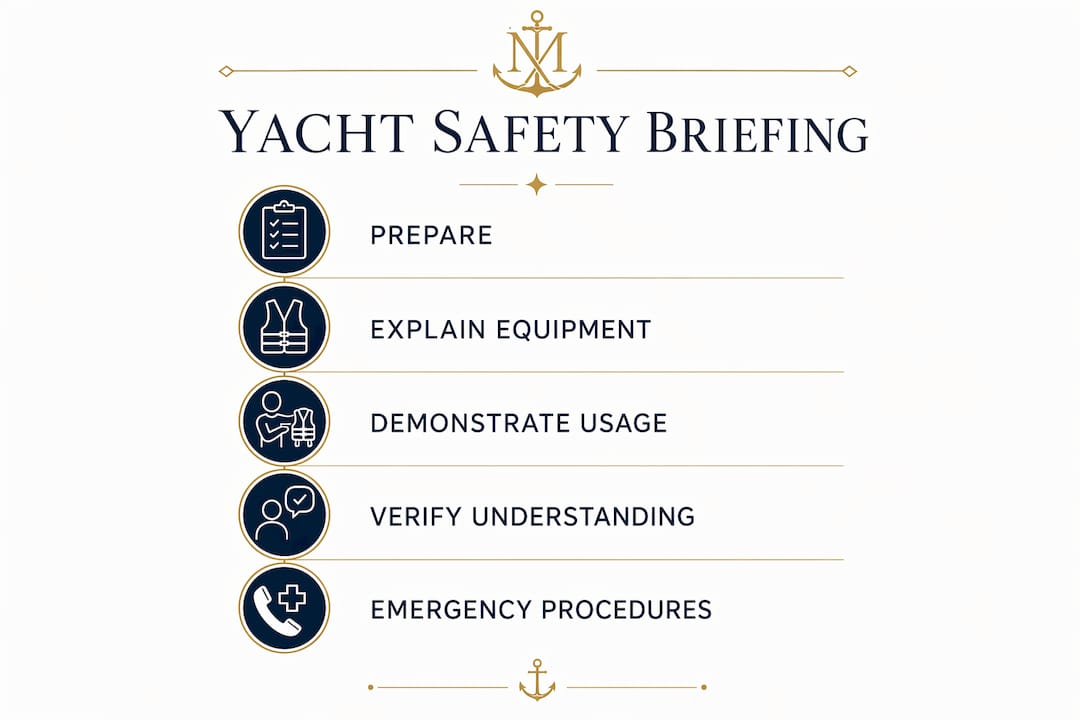
A briefing of a few minutes is considered standard for commercial charter operations, long enough to cover every critical point without triggering the information overload that causes guests to tune out. Resist the temptation to cut it short for guests who claim prior boating experience. Every vessel has a different layout, and skipping the briefing for experienced guests significantly increases both safety and liability risk.
Pro Tip: Instead of pointing to the life jacket locker and moving on, ask a guest to open it and pull one out. Active participation locks in location and procedure far better than passive listening, and it takes less than 60 extra seconds.
A few practical delivery strategies:
- Open with a warm welcome before any safety content. Guests who feel welcomed are more receptive.
- Ask two or three quick questions: Have you been on a vessel like this before? Are you prone to seasickness? Do you have any medical conditions I should know about? Their answers let you tailor the rest of the briefing on the spot.
- Keep the safety briefing separate from any systems briefing. Covering how the watermaker, inverter, and autopilot work in the same session as emergency procedures guarantees that the emergency content gets lost.
- Invite questions at the end and pause long enough for guests to actually ask them.
- For guests boarding mid-voyage after the initial announcement, 46 CFR § 185.506 requires you to brief them individually before they settle in.
Health and medical considerations every captain should address
Health safety aboard a yacht goes well beyond the emergency kit. Addressing it during the briefing prevents minor issues from becoming serious ones, and it signals to guests that you run a thoughtful, professional operation.
- First aid kit location. Point it out and mention what it contains. Guests who know where it is will actually use it for cuts and minor injuries rather than waiting to find you.
- Medical emergencies. Explain that you carry a VHF radio and can contact the Coast Guard or a marine medical service for guidance. Guests with serious conditions feel reassured knowing a communication plan exists.
- Seasickness. Ask guests before departure whether they are prone to it and whether they have taken a preventative. Recommend they stay on deck, fix their gaze on the horizon, and tell you early if they feel unwell. A guest who waits too long to speak up is harder to help.
- Hydration and sun protection. Florida sun on open water is relentless. Remind guests to drink water regularly, apply sunscreen before departure, and wear a hat. Health considerations like hydration and sun protection are part of a complete safety mindset, not an afterthought.
- Medical disclosures. Ask guests to share any relevant conditions, allergies, or medications before you leave the dock. You do not need their full medical history. You need to know if someone carries an EpiPen, has a heart condition, or is on blood thinners.
USCG requirements and industry best practices for passenger safety
The legal foundation for every passenger safety orientation on U.S. waters is 46 CFR § 26.03-1, which requires operators of uninspected passenger vessels to inform all passengers of life jacket stowage locations, the proper method of donning the type carried aboard, the type and location of all lifesaving devices, and the location of the posted emergency check-off list. This must happen before getting underway, with no meaningful exemption for private or experienced guests.
The emergency check-off list itself, required under 46 CFR § 26.03-2, must be posted in a prominent and accessible place as recommended in the Port Canaveral Cruise Terminal Transportation guide for seamless and safe marine operations. It covers rough weather, man overboard, fire at sea, and evacuation procedures. Think of it as your crew’s and guests’ shared reference card when stress makes memory unreliable.
| Requirement | Regulatory basis | Best practice |
|---|---|---|
| Life jacket location and donning | 46 CFR § 26.03-1 | Physical demonstration, not just verbal |
| Emergency check-off list posted | 46 CFR § 26.03-2 | Laminated, at the helm and in the cabin |
| All lifesaving device locations | 46 CFR § 26.03-1 | Walk the deck and point to each item |
| Muster station and embarkation | 46 CFR § 185.506 | Physically walk guests to the station |
| Life jacket donning on 24-hour+ voyages | 46 CFR § 185.506(e) | Conduct a full muster drill before departure |
| Late-boarding passengers | 46 CFR § 185.506(d) | Brief individually before they settle in |
Key compliance points every captain should confirm before departure:
- Emergency check-off list is posted, legible, and accessible to guests without crew assistance.
- Life jackets are sized and sufficient in number for all persons aboard.
- VHF radio is operational and guests know its location.
- Alternate captain is designated and briefed on stopping the vessel.
- Florida yacht safety checklist requirements are met for insurance and USCG compliance.
Expert practice goes a step further than the regulatory floor. The most effective briefings, according to experienced captains, use dialogue rather than monologue to assess guest experience and adjust content accordingly. A group of seasoned offshore sailors needs a different emphasis than a family of first-timers. The regulations set the minimum. Your judgment and preparation set the standard.
Key Takeaways
A complete, USCG-compliant yacht guest safety briefing covers life jacket use, emergency equipment locations, posted check-off lists, muster stations, and guest roles, and must be delivered before departure on every voyage.
| Point | Details |
|---|---|
| Legal requirement before departure | 46 CFR § 26.03-1 mandates life jacket, lifesaving device, and check-off list orientation for all passengers. |
| Life jacket focus saves lives | The U.S. Coast Guard estimates life jackets could have saved over 80% of boating fatality victims. |
| Few minutes standard duration | Commercial charter operations use a 10-minute briefing to cover essentials without overwhelming guests. |
| Designate an alternate captain | Assigning a capable guest to stop the vessel in an emergency prevents out-of-control vessel accidents. |
| Tailor through dialogue | Asking guests about experience and health conditions lets you customize the briefing for real preparedness. |
Keep your vessel as ready as your guests
A safety briefing protects your guests. A well-maintained yacht protects everyone. If your vessel has deferred repairs, aging safety equipment, or systems that need attention before the next departure, Mazzamarine’s Florida network of yacht experts is ready to help. From urgent repairs in Miami to complete yacht maintenance packages, Mino and Luigi’s team handles every aspect of ownership so you can focus on the water.

Not sure where to start? The signs you need yacht repairs guide walks you through what to look for before your next charter season. Reach out to Mazzamarine today and keep your vessel as trustworthy as the briefing you deliver.
Recommended
Text or Call 954-330-9653 Schedule Appointment
Mazza Marine Yacht Services & Refit

Fiberglass Upgrades and Damage Repair

Premium Yacht Paint/ Faux Teak

Fishing: Custom Rods, Reels,Tackle

Electrical, Electronics and Navigation

Paint, Hull and Gelcoat

Teak Decks, Wood Cabinets, Carpentry

Canvas, Enclosures and Upholstery

Mechanical, Repower and Running Gear

Plumbing, Bilge and Thru-Hulls

Welding and Custom Fabrication

Interior Refit And Past Work
Get your yacht value Estimate
"*" indicates required fields