
View Our Recent Work:

Yacht hydraulic steering maintenance is the practice of regularly inspecting, bleeding, and servicing hydraulic components to keep your steering responsive, safe, and failure-free at sea. The hydraulic steering system, known in the industry as a hydrostatic steering system, transfers force from your helm to the rudder through pressurized fluid. When that fluid degrades, air enters the lines, or seals dry out, you lose steering control at the worst possible moment. This guide covers every layer of care, from quick pre-trip checks to five-year system flushes, so you stay ahead of problems rather than reacting to them offshore.
What does yacht hydraulic steering maintenance actually involve?
Hydraulic steering system care covers three distinct tiers of service. The first is routine pre-trip inspection. The second is periodic bleeding and fluid management. The third is comprehensive annual and long-term servicing. Most owners who experience steering failures skipped one of these tiers entirely. Hydraulic systems are often mistakenly assumed to be maintenance-free, but they degrade silently through contamination, seal wear, and air infiltration. Catching those issues early costs you an hour of your time. Missing them can cost you the vessel.
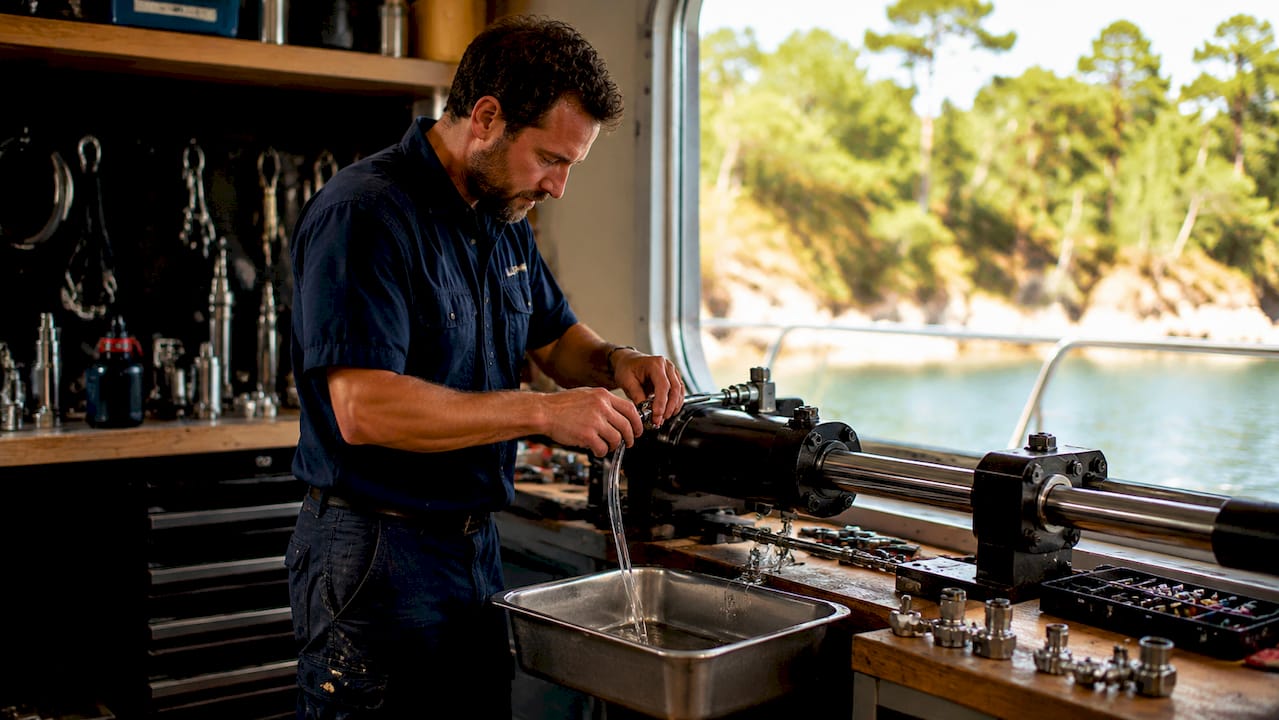
What are the daily and pre-trip hydraulic steering checks?
Every outing deserves a five-minute walk-through of your steering system before you leave the dock. These checks are fast, require no tools, and catch the majority of problems before they become emergencies.
Here is what to look for before every trip:
- Fluid level: Open the helm reservoir and confirm the fluid sits at the full mark. Low fluid is the first sign of a slow leak somewhere in the system.
- Fluid color and clarity: Clean hydraulic fluid is typically clear or light amber. Burnt-smelling or dark fluid signals overheating. Milky fluid means water has entered the system, which destroys seals and corrodes internal components.
- Hose condition: Run your eyes along every visible hose. Look for cracking, chafing, or soft spots. Pay close attention where hoses pass through bulkheads, since those areas take the most wear.
- Connection tightness: Fittings and banjo bolts loosen over time from vibration. Give each connection a visual check and confirm nothing looks wet or weeping.
- Steering ram area: Any visible drops of hydraulic fluid around the steering ram indicate seal failure. Small leaks reduce system pressure and can escalate to complete steering loss.
- Wheel feel: Turn the wheel from lock to lock before starting the engine. Stiffness, grinding, or uneven resistance are all warning signs worth investigating before you leave the slip.
Pro Tip: During off-season storage, turn your wheel lock to lock every six weeks. Regular movement during storage keeps seals moist and prevents them from drying, cracking, and sticking. A dried seal discovered on your first spring outing is a far more expensive problem than a two-minute monthly exercise.
How to bleed and troubleshoot hydraulic steering issues
Spongy or unresponsive steering is the clearest sign that air is trapped in your hydraulic lines. Air compresses under pressure, which means the fluid cannot transfer force cleanly from the helm to the rudder. The fix is bleeding the system, but the process matters as much as the intention.
Follow these steps for a proper bleeding sequence:
- Confirm the symptom. Turn the wheel slowly and feel for sponginess or a delay before the rudder responds. If the wheel turns freely but the rudder barely moves, you may have internal valve or pump failure rather than air alone.
- Top off the reservoir first. Add the manufacturer-specified hydraulic fluid before bleeding. Using the wrong fluid type damages seals and voids warranties on components like Teleflex SeaStar or Hynautic systems.
- Follow the manufacturer’s bleeding sequence exactly. Each system has a specific order for opening bleed screws and cycling the wheel. Skipping steps or reversing the order introduces more air than you remove.
- Use professional-grade tools. Effective bleeding requires pressure bleeders and adherence to manufacturer sequences. Generic auto parts hand pumps typically fail to remove deep trapped air in complex yacht systems.
- Check for infinite wheel spin. If the wheel turns endlessly without any rudder movement, that indicates internal valve failure, not just air. Stop and call a marine mechanic. Continued operation risks complete steering loss.
- Recheck fluid level after bleeding. Bleeding always draws fluid from the reservoir. Refill to the full mark and retest the wheel feel before leaving the dock.
Pro Tip: Full bleeding and flushing can take several labor hours on larger yachts. If you are not confident in the process, the smarter call is professional service. A botched DIY bleed that introduces more air is worse than the original problem.
What does annual and long-term hydraulic system service include?
Annual service goes well beyond what you can see from the cockpit. This is where hidden problems get found and where the long-term health of your system is either protected or neglected.
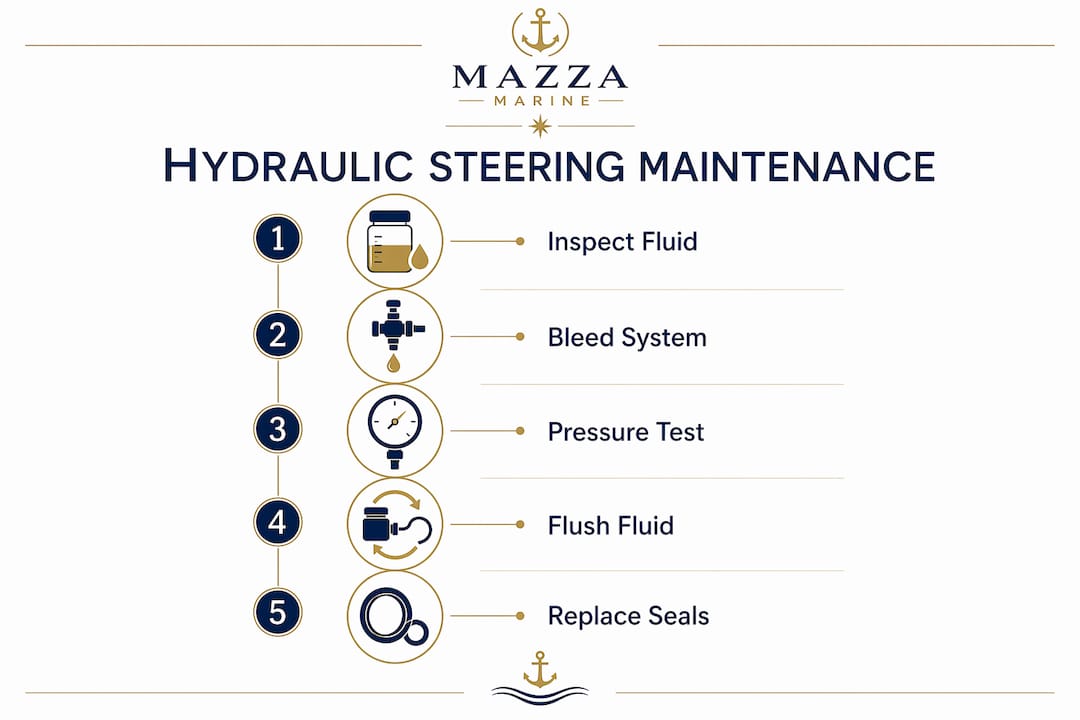
| Service Task | Recommended Interval | Notes |
|---|---|---|
| Full system fluid flush and replacement | Every 5 years | Remove contaminants and metal shavings from internal wear |
| Hose inspection and replacement | Annual | Check for cracking, chafing, and bulkhead wear |
| Pressure testing hydraulic lines | Annual | Test to 150% of operating capacity to find hidden weaknesses |
| Cylinder rod cleaning and light coating | After every outing | Rinse with fresh water; avoid heavy grease |
| Autopilot hydraulic bypass valve check | Annual | Common failure point often overlooked in routine service |
| Full system bleed with air purge | Every 5 years or as needed | Combine with fluid flush for best results |
The five-year full flush is the most commonly skipped service item on private yachts. Complete system flushing every five years removes the fine metal shavings and contaminants that accumulate from normal internal wear. Those particles act as an abrasive inside your pump and valves, accelerating wear with every steering input.
Annual pressure testing of hydraulic lines to 150% of operating capacity catches micro-fractures and fitting weaknesses before they become full failures. This is not a DIY task. It requires calibrated equipment and a trained technician who knows what a healthy pressure curve looks like.
Autopilot hydraulic bypass valves deserve specific attention. They are a common failure point that most owners never think to check until the autopilot stops holding course. Including them in your annual inspection adds ten minutes and can prevent a multi-day repair delay mid-passage.
For a broader view of how hydraulic steering fits into your overall vessel care, the marine mechanical systems guide from Mazzamarine covers the full picture of what keeps a yacht running reliably year after year.
What causes hidden hydraulic steering failures on yachts?
The failures that sink schedules and budgets are rarely the obvious ones. They are the slow, invisible degradations that build over months until something gives way offshore.
- Bulkhead passage corrosion: Chafe and corrosion at bulkhead penetrations are the most frequent failure causes in hydraulic steering systems. The tubing flexes slightly every time you steer, and where it passes through a bulkhead fitting, that repeated movement eventually cuts through the outer layer. Inspect these areas with a flashlight every season.
- Salt crystal damage to cylinder rods: Exposed steering cylinder rods collect salt spray after every outing. Salt accumulation rapidly destroys rubber seals by acting like fine sandpaper against the seal face. Rinse rods with fresh water after each trip and apply a light, appropriate coating. Avoid heavy grease, which traps abrasive particles against the rod surface.
- Dried seals from storage: Seals need moisture and movement to stay pliable. A yacht that sits for months without the wheel being turned will develop brittle, cracked seals. Turning the wheel lock to lock every six weeks during storage is the simplest and most effective preventive habit you can build.
- Vibration loosening fittings: Engine vibration and rough water work fittings loose over time. A fitting that is 90% tight is not tight enough. Check all hydraulic connections as part of your annual service, not just when you notice a problem.
The most dangerous hydraulic steering failure is the one you cannot see coming. Build the habit of checking fluid clarity at every fuel stop. Clear fluid means a healthy system. Dark or milky fluid means you have a problem that is already costing you.
Key takeaways
Proactive yacht hydraulic steering maintenance, built around fluid checks, proper bleeding, and annual professional service, is the most reliable way to prevent steering failure at sea.
| Point | Details |
|---|---|
| Pre-trip checks are non-negotiable | Inspect fluid level, color, hoses, and ram seals before every outing. |
| Fluid clarity is your best diagnostic | Dark fluid signals overheating; milky fluid means water contamination requiring immediate service. |
| Bleeding requires the right tools | Use manufacturer-specified sequences and professional pressure bleeders, not generic hand pumps. |
| Five-year flush protects internal components | Complete fluid replacement every five years removes metal shavings that accelerate pump and valve wear. |
| Storage movement prevents seal failure | Turn the wheel lock to lock every six weeks during off-season to keep seals pliable and functional. |
What i’ve learned after years of watching owners skip the basics
The most common mistake I see yacht owners make is treating hydraulic steering as a set-it-and-forget-it system. It looks simple from the helm. You turn the wheel, the boat turns. Nothing feels wrong until the day it does, and by then you are offshore with a spongy wheel and a very focused mind.
The second mistake is DIY bleeding with the wrong tools. I have seen owners spend a full afternoon cycling their wheel and adding fluid, convinced they bled the system, only to call us two weeks later with the same spongy feel. The air never left. It just moved. Professional pressure bleeding with the correct equipment for your specific system, whether that is a Teleflex SeaStar, a Hynautic setup, or an older Morse system, is not optional for a thorough job.
What actually works is building a rhythm. Pre-trip checks take five minutes. Post-outing rod rinse takes two. Annual professional inspection catches what you cannot see. The owners I know who have never had a steering failure are not lucky. They are consistent. They treat the hydraulic system with the same respect they give the engine, because at sea, one is no more important than the other.
The yacht heavy machinery breakdown guide reinforces this point well. Fewer breakdowns come from scheduled attention, not reactive repairs.
— Jason
Trust Mazzamarine with your hydraulic steering service
When your pre-trip checks reveal something that goes beyond a fluid top-off, you need a team that knows marine hydraulic systems the way a shipwright knows timber. Mazzamarine connects Florida yacht owners with a trusted network of mechanical specialists who handle everything from hydraulic steering inspections and system bleeds to full annual service packages.

Whether you are dealing with a spongy wheel, a weeping ram seal, or you simply want a professional set of eyes on your system before the season starts, Mazzamarine has the right people for the job. Check the signs you need yacht repairs guide to know exactly when to call, and reach out to Mino, Luigi, and the Mazzamarine team to schedule your inspection today.
FAQ
How often should i check hydraulic steering fluid on a yacht?
Check fluid level and clarity before every trip. A full system flush and fluid replacement is recommended every five years to remove internal contaminants.
What does spongy yacht steering mean?
Spongy or unresponsive steering means air is trapped in the hydraulic lines. The system requires bleeding following the manufacturer’s specified sequence using professional-grade pressure tools.
How do i protect steering cylinder rods from salt damage?
Rinse exposed cylinder rods with fresh water after every outing and apply a light protective coating. Avoid heavy grease, which traps salt crystals and abrades seals faster.
What are the most common hydraulic steering failure points?
Chafe and corrosion where hydraulic tubing passes through bulkheads are the most frequent failure causes. Inspect these areas closely during every annual service.
Can i bleed my yacht’s hydraulic steering system myself?
Basic topping off is a DIY task, but full bleeding requires professional-grade pressure bleeders and strict adherence to manufacturer sequences. Generic hand pumps typically fail to remove deep trapped air in complex yacht systems.
Recommended
Text or Call 954-330-9653 Schedule Appointment
Mazza Marine Yacht Services & Refit

Fiberglass Upgrades and Damage Repair

Premium Yacht Paint/ Faux Teak

Fishing: Custom Rods, Reels,Tackle

Electrical, Electronics and Navigation

Paint, Hull and Gelcoat

Teak Decks, Wood Cabinets, Carpentry

Canvas, Enclosures and Upholstery

Mechanical, Repower and Running Gear

Plumbing, Bilge and Thru-Hulls

Welding and Custom Fabrication

Interior Refit And Past Work
Get your yacht value Estimate
"*" indicates required fields