
View Our Recent Work:

Overview: A U.S. yacht repaint runs anywhere from roughly $3,000 for a small 14-footer to well north of $60,000 for a large yacht, and the spread between those numbers comes down to three things: how much prep the hull actually needs, which paint system you choose, and where in the country the work gets done. Before you call a yard, it helps to know which size band you’re in.
Quick ranges by size and scope:
- 14–20 ft: Topside-only repaint $1,500–$5,000; full hull (topside + bottom) $3,000–$8,000
- 26–40 ft: Topside-only $5,000–$14,000; full hull $8,000–$25,000; antifouling bottom job $2,000–$6,000
- 41–60 ft: Topside-only $12,000–$28,000; full hull $20,000–$50,000; antifouling $5,000–$12,000
- 70+ ft: Full hull repaint $40,000–$100,000+; superyacht custom finishes can exceed $150,000
Per-foot rates across the U.S. market typically fall in the $10–$25 range for a standard professional repaint, with budget shops at $4–$12/ft and premium systems or heavy prep pushing $25–$40/ft. A 40-foot cruiser in good condition might require 200–300 labor hours for a full hull repaint at a professional yard. Mazzamarine handles exactly this kind of project in Florida, from the haul-out through final inspection.
Key Takeaways
A professional yacht repaint in the U.S.
| Point | Details |
|---|---|
| Size drives the base cost | Ranges run from $3,000–$8,000 for small boats to $45,000–$100,000+ for 70+ ft yachts. |
| Prep is the biggest variable | Blister repair and fairing can add $4,000–$12,000 to any size project. |
| DIY saves money on small boats | For boats over 30 ft or two-part systems, professional labor usually delivers better long-term value. |
| Paint system choice matters | Awlgrip and Alexseal cost more per gallon but hold gloss longer and support resale value. |
| Mazzamarine for Florida projects | Mazzamarine connects owners with vetted Florida yards for full-scope repaints with written estimates. |
Table of Contents
- How much does a yacht repaint cost by size?
- What actually drives the price up (or down)
- DIY vs. hiring a professional: where the math actually lands
- Choosing the right paint system for your budget and goals
- How to get an accurate quote from a yard
- Timelines, seasonality, and regional pricing
- How Mazzamarine approaches repaint projects in Florida
- What most repaint advice gets wrong
- Mazzamarine’s custom paint and gel coat services in Florida
- Sources
How much does a yacht repaint cost by size?
The table below reflects U.S. market norms for three common scopes. Ranges assume professional labor at $75–$125/hr, standard marine paint systems, and a hull in moderate condition (some prep required, no major blister repair).
| Boat Size | Topside Only | Full Hull | Antifouling Only |
|---|---|---|---|
| 14 ft | $1,500–$5,000 | $3,000–$8,000 | $2,000–$6,000 |
| 20 ft | $2,500–$5,000 | $5,000–$12,000 | $800–$2,000 |
| 30 ft | $5,000–$10,000 | $8,000–$16,000 | $1,500–$5,000 |
| 40 ft | $8,000–$25,000 | $15,000–$28,000 | $2,500–$6,000 |
| 50 ft | $14,000–$28,000 | $25,000–$45,000 | $3,000–$8,000 |
| 70+ ft | $20,000–$50,000 | $45,000–$100,000+ | $8,000–$25,000 |
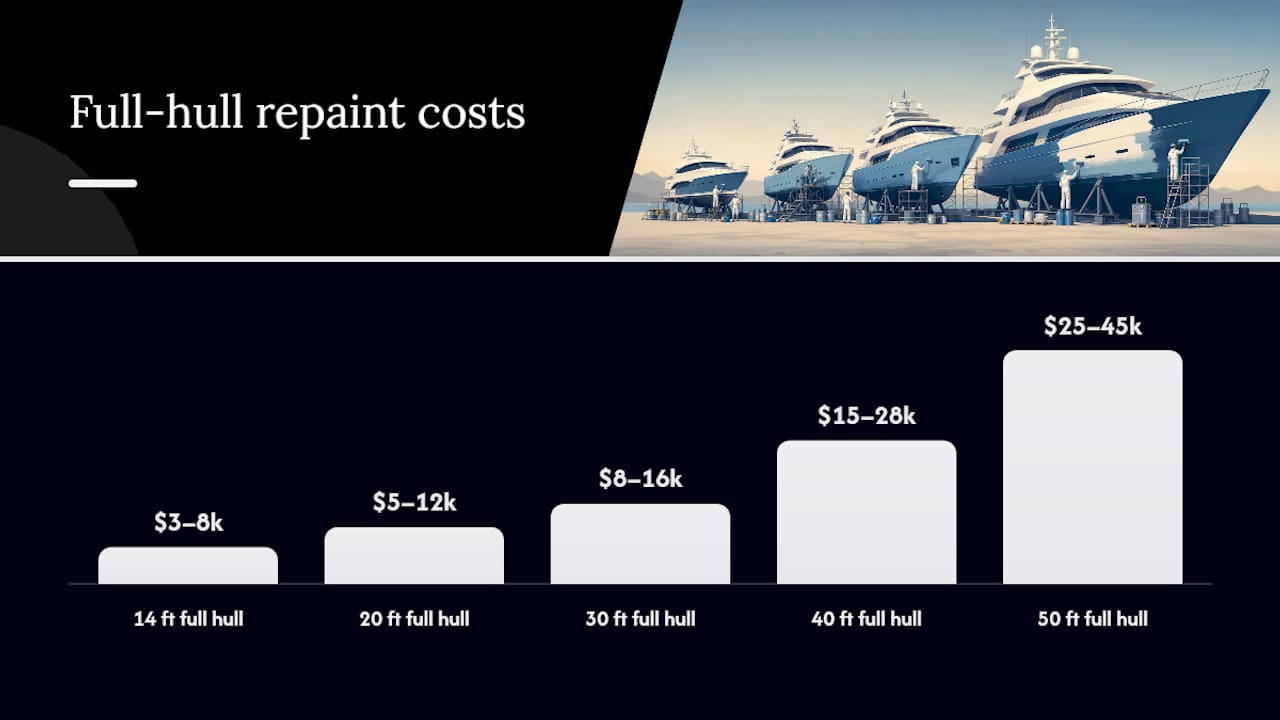
These figures align with published industry cost data showing small boat repaints at $3,000–$8,000, mid-size cruisers at $8,000–$25,000, and large yachts at $20,000–$60,000 or more.
Sample line-item budget: 40-foot cruiser, full hull repaint
This example assumes moderate condition (light surface oxidation, minor gelcoat scratches, no osmosis blisters):
Add $3,000–$12,000 if blister repair or fairing is required. Extensive osmosis damage on a 40-footer can push a full repaint past $45,000 before the first coat of topcoat goes on.
What actually drives the price up (or down)
Most owners are surprised to find that the paint itself is rarely the biggest line item. Labor and prep together typically account for 50–70% of a professional repaint’s total cost, with materials running 10–30%, haul-out and staging 5–15%, and disposal and contingency splitting the remainder, according to industry cost breakdowns.
The primary cost drivers, roughly in order of impact:
- Surface prep and sanding. Stripping old paint down to bare substrate versus a light scuff-sand can be the difference between 40 labor hours and 150 labor hours on a 40-footer.
- Osmosis and blister repair. Each blister ground out, dried, and faired adds time and materials. A hull with moderate blistering can add $4,000–$10,000 to a mid-size project.
- Fairing. Getting a hull fair enough for a high-gloss finish is painstaking work. Yards that quote low often skip or minimize fairing, which shows up in the final finish within a season.
- Primer system. Epoxy primers cost more per gallon than alkyd alternatives but bond better and protect against moisture intrusion. Skipping them to save $300 in materials is a false economy.
- Topcoat system. A single-part polyurethane costs less upfront; a two-part system like Awlgrip or Alexseal costs more but holds gloss significantly longer.
- Haul-out and staging. Yard lift fees, blocking, and staging time vary by facility. Expect $800–$2,500 for a 40-footer depending on the yard.
- Hazardous waste disposal. Sanding dust from antifouling paint is regulated. Disposal fees are non-negotiable and vary by state.
Regional labor and disposal rules add another layer. Florida yards are generally more competitive on labor but can carry seasonal surcharges during peak boating season.
Pro Tip: Ask any yard to break out prep hours as a separate line item. A quote that bundles “prep and paint” into a single number is hiding something. Shops that under-scope prep are planning a finish that looks good at delivery and fades within 18 months.
DIY vs. hiring a professional: where the math actually lands
The honest answer is that DIY repainting makes sense for a small, simple boat with a forgiving single-part paint system. For anything over 30 feet, or any project involving two-part polyurethane, the math usually favors a professional yard.
What DIY actually costs
For a 30-foot boat, a DIY topside repaint using a quality single-part polyurethane might look like this:
- Paint and converter: $400–$900
- Epoxy primer: $300–$600
- Thinners and solvents: $100–$200
- Masking tape, plastic sheeting, and supplies: $150–$300
- Sandpaper and abrasives: $200–$400
- Spray equipment rental or purchase: $300–$800
- Respirators and PPE: $100–$200
- Total materials and tools: $1,550–$3,400
Add 80–150 hours of your own labor. At a modest $50/hr opportunity cost, that’s $4,000–$7,500 in time. The total DIY cost for a 30-footer lands at $5,550–$10,900 when you account for your time honestly. A professional yard might quote $8,000–$16,000 for the same scope, but the finish quality, warranty, and correct disposal of hazardous waste are included.
For two-part systems like Awlgrip or Alexseal, DIY is genuinely risky. These products require precise mixing ratios, controlled application temperatures, and spray equipment that produces a consistent wet-edge. A bad application means sanding back and starting over, which erases any cost savings quickly.
Pro Tip: If you’re set on DIY, single-part polyurethane applied by roller-and-tip (the “Brightside method”) is the most forgiving approach for owners without spray experience. It won’t match a professional spray finish, but it protects the hull and looks clean from 10 feet.
Where professional labor genuinely adds value
Yards bring specialized fairing skills, temperature-controlled spray environments, and project management that catches scope creep early. They also handle hazardous waste disposal correctly, which matters both legally and environmentally. For owners focused on resale value or planning to keep a yacht in a high-sun market like South Florida, a professional two-part finish backed by a written warranty is worth the premium.
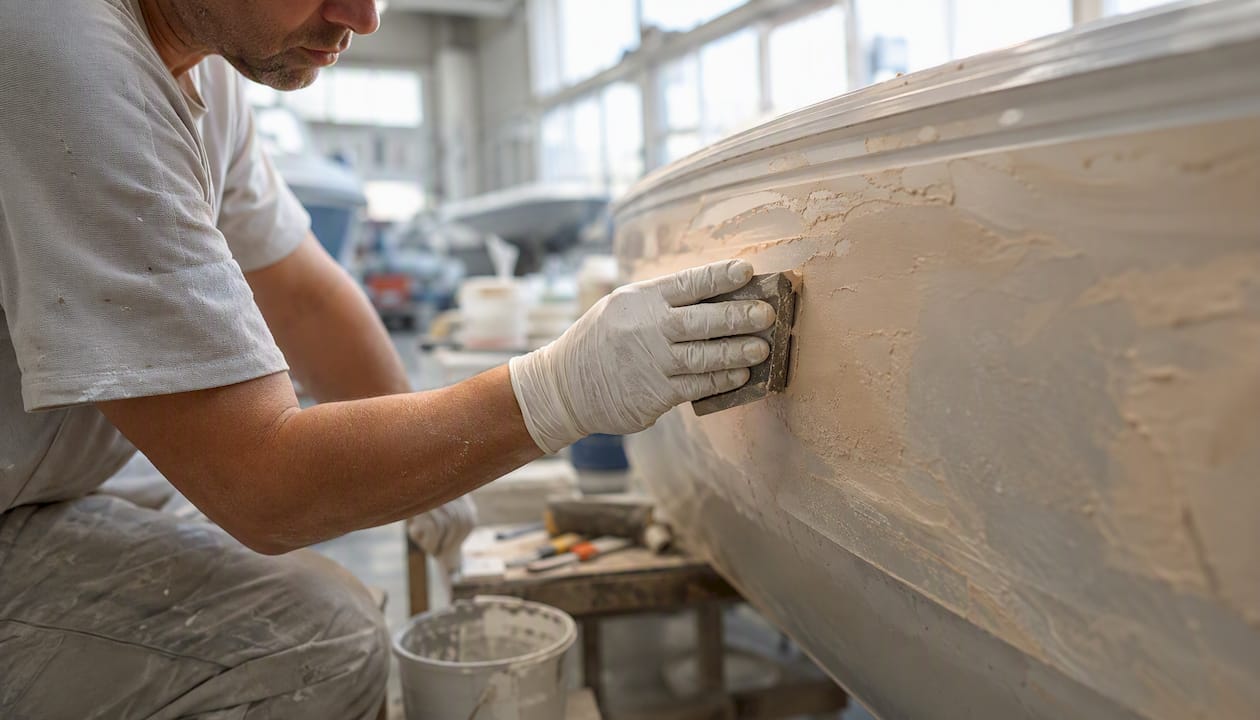
Vinyl wraps are sometimes positioned as a DIY-friendly alternative, typically running 40–60% cheaper upfront than a comparable paint job. But wraps have a service life of roughly 5–7 years versus 8–10 years for a quality paint system, and they cannot address underlying structural damage. If your hull has blisters, deep cracks, or areas that need fairing, a wrap will hide the problem temporarily while it worsens underneath.
Choosing the right paint system for your budget and goals
The paint system you choose affects both the upfront cost and how long you’ll go before the next repaint. Getting this decision right saves money over a 10-year ownership horizon.
Epoxy primers form the foundation of any quality marine paint job. They bond to fiberglass, aluminum, and steel substrates, resist moisture intrusion, and provide the adhesion base that topcoats need to last. Skipping a proper epoxy primer to save $400 is one of the most common mistakes owners make.
Topcoat systems break into two main categories:
- Single-part polyurethanes (Interlux Brightside, Pettit EasyPaint): easier to apply, more forgiving for DIY, lower cost per gallon ($40–$80), but softer gloss that fades faster in UV-intense environments.
- Two-part polyurethanes (Awlgrip, Alexseal): harder finish, exceptional gloss retention, longer service life, but require professional application and cost $80–$200+ per gallon for the topcoat alone.
The four brands you’ll encounter most often at U.S. yards:
- Awlgrip: The industry benchmark for two-part polyurethane topcoats. Widely used on production and custom yachts, known for gloss retention and durability. Typically $120–$180/gallon for topcoat. The preferred system for owners focused on resale value in premium markets.
- Alexseal: A premium two-part system with a reputation for color depth and flexibility. Slightly more expensive than Awlgrip in some formulations, popular on custom and superyacht projects. High-end systems like Awlgrip and Alexseal add materially to materials cost but reduce long-term maintenance and support resale value.
- Interlux: A broad product line covering everything from DIY-friendly single-parts to professional two-part systems. Interlux Perfection is a competitive two-part option at $90–$140/gallon. Good choice for owners who want a professional-grade finish without the full Awlgrip price point.
- Pettit: Strong in antifouling bottom paints and a solid mid-tier option for topsides. Pettit’s Trinidad and Hydrocoat lines are popular for bottom work in Florida and the Southeast. Topside options are available but less common on high-end projects.
For antifouling bottom paint, expect to spend $50–$120/gallon depending on copper content and ablative vs. hard formulation. A 40-footer typically needs 3–5 gallons per coat, with two coats standard.
Pro Tip on wooden topsides: If your repaint project includes varnished wood areas or wooden topsides, the prep and finishing cycles are entirely different from gelcoat work. Varnishing wooden boats requires specialist labor and specific sanding schedules that add both time and cost. Budget separately for any brightwork and get a line-item quote for it.
For ongoing care after a repaint, maintaining marine paint correctly extends the interval between full repaints and protects the investment.
How to get an accurate quote from a yard
The single biggest source of quote confusion is owners and yards talking about different scopes. Two quotes that both say “full hull repaint” can differ by $15,000 if one assumes light prep and one assumes fairing and blister repair. Here’s how to close that gap.
What to provide to every yard:
- Boat dimensions: length overall, beam, and draft
- Current hull material (fiberglass, aluminum, steel, wood)
- Photos of the hull in good light, including any blistered, cracked, or faded areas
- Desired scope: topside only, full hull, bottom/antifouling, or all three
- Color change or same color (color changes require more coats and more masking)
- Target warranty (written warranty vs. no warranty)
- Timing window and any hard deadlines (charter season, delivery date)
Questions to ask every yard:
- Does your quote include blister repair, or is that an add-on?
- How many fairing hours are assumed in the prep estimate?
- How many finish coats are included, and what brand and product?
- What are the haul-out, blocking, and staging fees?
- What are the hazardous waste disposal fees?
- Is the labor rate fixed or subject to change if prep takes longer than estimated?
- Do you provide a written warranty, and what does it cover?
Red flags to watch for:
- A quote that bundles prep and paint into a single line item with no hour breakdown
- Open-ended contingency language (“additional charges may apply for prep”)
- No written warranty offered on a two-part system
- Per-foot rates well below $10/ft with no explanation of prep assumptions
- A yard that won’t provide references for similar-size projects
The boat painting process has clear stages, and any reputable yard should be able to walk you through each one with specific hour and material estimates before you sign.
Timelines, seasonality, and regional pricing
How long a repaint takes depends on scope, hull condition, and how busy the yard is. Weather and season affect both timeline and price more than most owners expect.
Typical timelines by project size:
- Small boat (under 25 ft), topside only: 3–7 days in the yard, assuming no blister repair
- Mid-size (25–45 ft), full hull: 2–5 weeks, including prep, primer, topcoat, and cure time
- Large yacht (45–70 ft), full hull: 4–10 weeks, longer if fairing or structural repairs are needed
- 70+ ft / superyacht: 2–6 months for a complete repaint with custom finishes
Paint cure windows matter. Two-part polyurethanes typically need 7–14 days before the vessel goes back in the water, and full hardness takes 30 days. Rushing the cure schedule damages the finish.
Regional pricing notes:
- Northeast (New England, Mid-Atlantic): Labor and disposal costs run 10–20% above national averages, driven by stricter environmental rules and higher shop overhead. Lead times in spring can stretch 6–10 weeks as yards fill up before the summer season.
- Florida and Southeast: Labor rates are generally more competitive, but high-season demand (October through April) creates surcharges and longer scheduling queues. Booking a Florida repaint for the summer off-season often saves 10–15% and gets faster yard access.
- Gulf Coast: Mid-range labor costs, good availability outside hurricane season, and strong antifouling expertise for warm-water environments.
Operational logistics to plan around: haul-out scheduling often requires 4–8 weeks of lead time at busy yards, marina staging windows are limited, and unexpected repairs discovered during prep (blisters, delamination) can add 1–3 weeks to the timeline. Build contingency days into any schedule that has a hard deadline. For South Florida specifically, seasonal timing for refit work is worth planning well in advance.
How Mazzamarine approaches repaint projects in Florida
A typical Mazzamarine repaint engagement for a 40–48-foot cruiser in South Florida covers the following scope as standard:
- Haul-out coordination and yard scheduling
- Full pressure wash and hull inspection
- Wet sanding and surface prep (hours quoted separately based on condition assessment)
- Epoxy barrier coat primer (two coats)
- Two-part polyurethane topcoat (two finish coats, Awlgrip or Alexseal depending on owner preference and budget)
- Full masking of hardware, waterline, and graphics
- Post-paint inspection and touch-up
- Antifouling bottom paint (if included in scope)
For a 40-footer in moderate condition, the Mazzamarine network typically quotes full-hull repaints in the $22,000–$38,000 range, depending on paint system selection and prep findings. That range assumes no major osmosis repair. If a hull inspection reveals blistering, the team provides a written scope change before any additional work begins, so owners aren’t surprised by the final invoice.
Florida-specific adjustments worth knowing: lift availability at South Florida yards is tightest from November through March. Booking a repaint for May through September typically means faster scheduling and more competitive pricing from yard partners. Yacht maintenance in Miami follows a climate-driven rhythm, and a repaint timed to the off-season protects both the schedule and the budget.
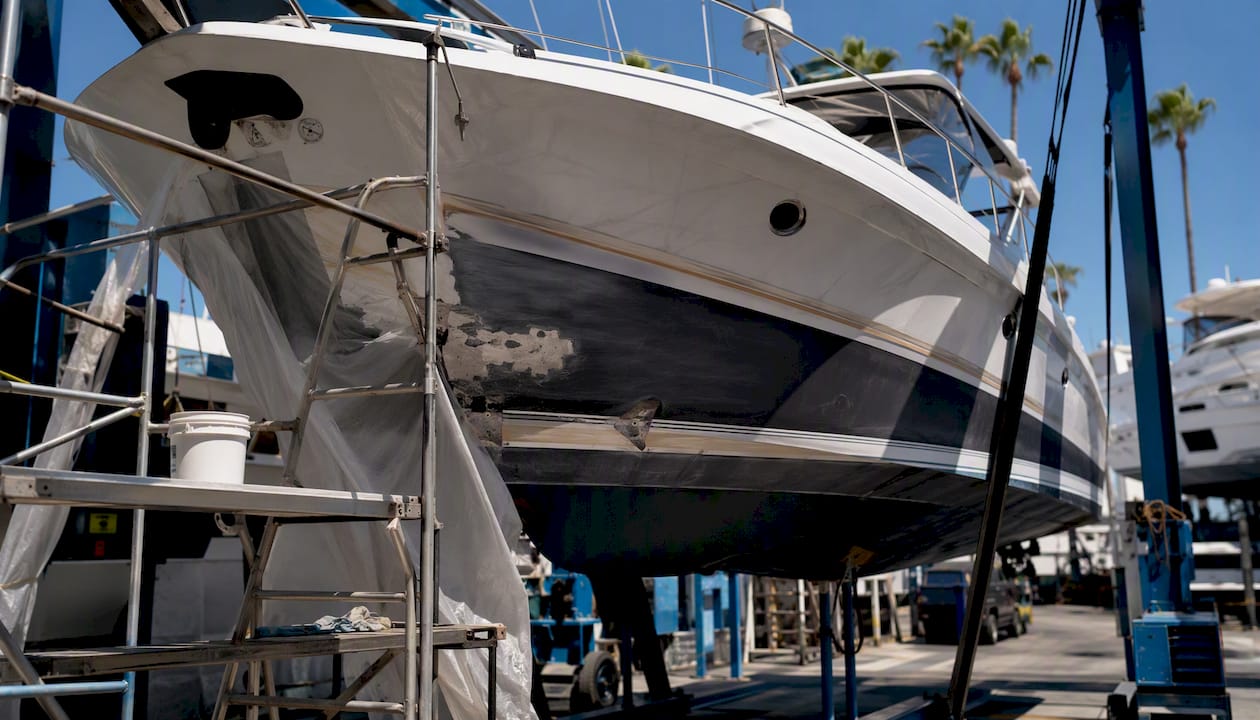
Pro Tip: Send photos of your hull before your first call. A good yard can tell from waterline photos whether blistering is likely and give you a realistic prep estimate before you commit to a haul-out. Mazzamarine’s team does this as part of the initial consultation.
What most repaint advice gets wrong
Most cost guides focus on the paint. The real money is in the prep, and that’s where the advice consistently falls short.
Owners read a per-foot rate, multiply by their boat length, and expect a number. The quote wasn’t dishonest. The assumption was just wrong.
The second thing guides understate is the value of a written warranty. A two-part polyurethane system applied correctly by a professional yard should hold its gloss for 5–8 years in a Florida environment. A yard that won’t back that with a written warranty is telling you something about how they apply it. Premium systems like Awlgrip and Alexseal are designed to be applied under controlled conditions, and the warranty is only valid when those conditions are met. Owners who chase the lowest per-foot rate often end up with a finish that needs refreshing in two seasons, which costs more over a 10-year horizon than paying for the right system the first time.
The third gap: owners treat the repaint as a standalone event rather than part of a broader refit decision. If the hull needs fairing, the running gear needs service, and the waterline fittings are corroding, doing those jobs while the boat is already hauled saves significant money compared to three separate haul-outs. A repaint is the right moment to look at everything below the waterline.
Mazzamarine’s custom paint and gel coat services in Florida
Repainting a yacht is one of the most visible investments an owner makes, and getting the execution right matters as much as getting the quote right. Mazzamarine’s Florida network connects owners with vetted yards and paint specialists who handle everything from a straightforward antifouling refresh to a full two-part polyurethane repaint on a 60-foot sportfish.
To request an accurate quote, send Mazzamarine your boat’s length, beam, hull material, and a set of photos showing the current hull condition. Include your desired scope (topside only, full hull, bottom, or all three), your target timeline, and whether you’re considering a color change. The team will match you with the right yard partner, provide a written scope breakdown before work begins, and manage unexpected findings like blister repair as a documented scope change rather than a surprise line item. For owners who want to understand what their hull and gelcoat actually need before committing to a full repaint, the paint, hull, and gelcoat service page is the right starting point. Ready to move forward? Contact Mazzamarine to get a written repaint estimate from a trusted Florida yard partner.
Sources
Recommended
Text or Call 954-330-9653 Schedule Appointment
Mazza Marine Yacht Services & Refit

Fiberglass Upgrades and Damage Repair

Premium Yacht Paint/ Faux Teak

Fishing: Custom Rods, Reels,Tackle

Electrical, Electronics and Navigation

Paint, Hull and Gelcoat

Teak Decks, Wood Cabinets, Carpentry

Canvas, Enclosures and Upholstery

Mechanical, Repower and Running Gear

Plumbing, Bilge and Thru-Hulls

Welding and Custom Fabrication

Interior Refit And Past Work
Get your yacht value Estimate
"*" indicates required fields