
View Our Recent Work:

Yacht repainting is more than a cosmetic upgrade. In Florida’s brutal marine environment, your vessel’s paint system is the first line of defense against UV degradation, saltwater corrosion, and biofouling that can slash resale value by thousands. Yet many owners misunderstand what repainting involves, leading to costly mistakes and premature finish failures. This guide delivers expert insights on paint systems, application protocols, and maintenance strategies tailored specifically for Florida’s unique challenges, helping you protect your investment and keep your yacht looking pristine.
Table of Contents
- Key takeaways
- Understanding yacht repainting: purpose and process
- Choosing the right paint system: LPU, gelcoat, and vinyl wraps compared
- Expert insights: challenges, nuances, and best practices in yacht repainting
- Post-repaint maintenance: extending your yacht’s finish in Florida’s marine climate
- Expert yacht repainting and maintenance services in Florida
- Frequently asked questions about yacht repainting
Key Takeaways
| Point | Details |
|---|---|
| Right paint system matters | Choosing between LPU, gelcoat, and vinyl wraps affects UV resistance, durability, and maintenance needs in Florida’s harsh marine environment. |
| Follow refinishing protocol | Adhering to a manufacturer’s sequence of surface prep, priming, base coats, and clear coats with correct drying times ensures a premium finish. |
| Mind recoat timing | Applying coats within specified windows maintains chemical bonding and prevents bubbling or delamination. |
| System comparisons clear | LPU delivers high gloss and easy repairs, gelcoat excels at filling deep scratches and structural repairs where thickness matters more than gloss, and vinyl wraps offer a budget friendly option with shorter lifespan. |
Understanding yacht repainting: purpose and process
Yacht repainting protects your vessel’s hull and topsides from the relentless assault of Florida’s marine environment. Without proper coating, fiberglass and metal surfaces face accelerated corrosion, UV breakdown, and marine growth that compromises both appearance and structural integrity. The right paint system creates a barrier that repels saltwater, resists sun damage, and prevents organisms from attaching to your hull.
The repainting process follows a precise sequence that determines your finish quality. Surface preparation removes old coatings, oxidation, and contaminants through sanding, fairing, and cleaning. Primer application creates adhesion between substrate and topcoat while filling minor imperfections. Base coats build color depth and coverage, followed by finishing coats that deliver gloss and UV protection. Each layer requires specific drying times before the next application.
Manufacturer paint systems must be followed religiously. Strict observation of recoat windows ensures chemical bonding between layers, while mixing brands creates adhesion failures that necessitate complete removal and restart. In Florida’s intense UV environment, choosing topcoats with robust UV inhibitors prevents chalking and color fade that plague inferior products.
Timing windows vary by product and temperature. Apply the next coat too early, and solvents trapped beneath cause bubbling. Wait too long, and mechanical adhesion replaces chemical bonding, creating delamination risks. Professional applicators monitor ambient conditions constantly, adjusting schedules when humidity or temperature falls outside specifications. This attention to detail separates premium finishes from problem jobs.
Key repainting steps include:
- Complete surface preparation with progressive grit sanding to achieve proper profile
- Thorough cleaning with approved solvents to remove all contaminants and oils
- Barrier coat application on older hulls to prevent water intrusion and blistering
- Multiple primer coats built up to manufacturer thickness specifications
- Color coats applied in controlled environment with proper spray equipment
- Clear coat finishing for maximum gloss and UV protection on premium jobs
Explore paint hull gelcoat services to understand how professional teams execute these steps flawlessly.
Choosing the right paint system: LPU, gelcoat, and vinyl wraps compared
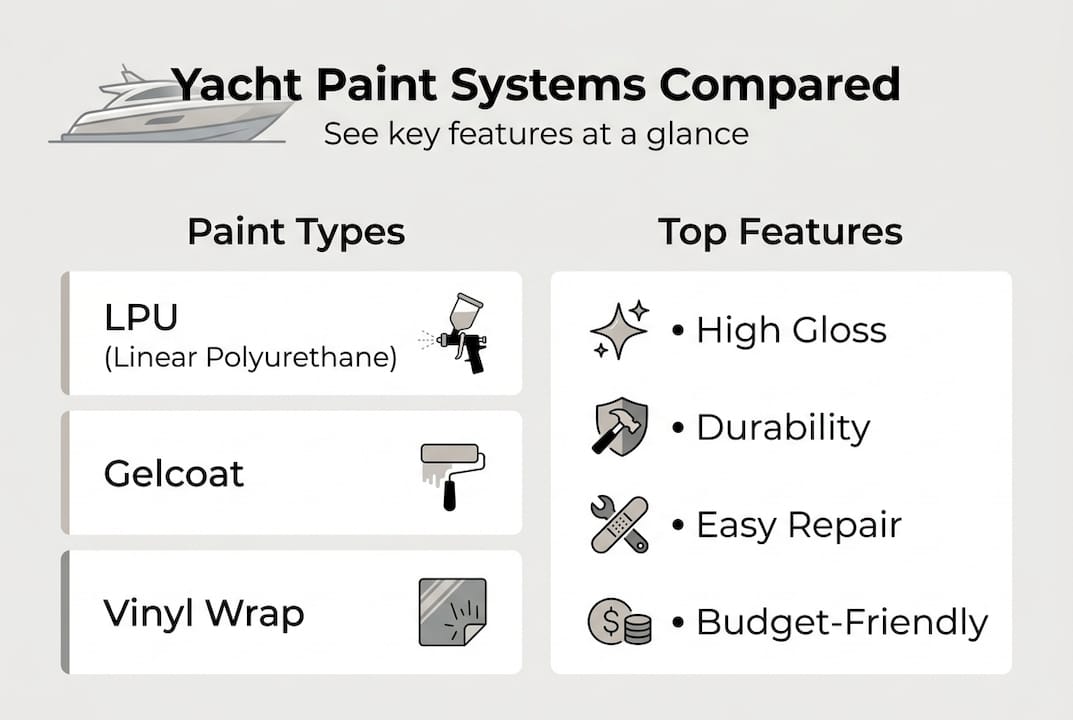
Liquid polyurethane paint delivers the highest gloss levels and easiest repair process for yacht owners. LPU systems cure harder than gelcoat, resist UV damage better, and allow spot repairs that blend invisibly into surrounding areas. When Florida’s sun beats down on your topsides, LPU’s chemical structure maintains color stability and gloss retention far longer than alternatives. Professional spray application creates mirror finishes that turn heads at every marina.
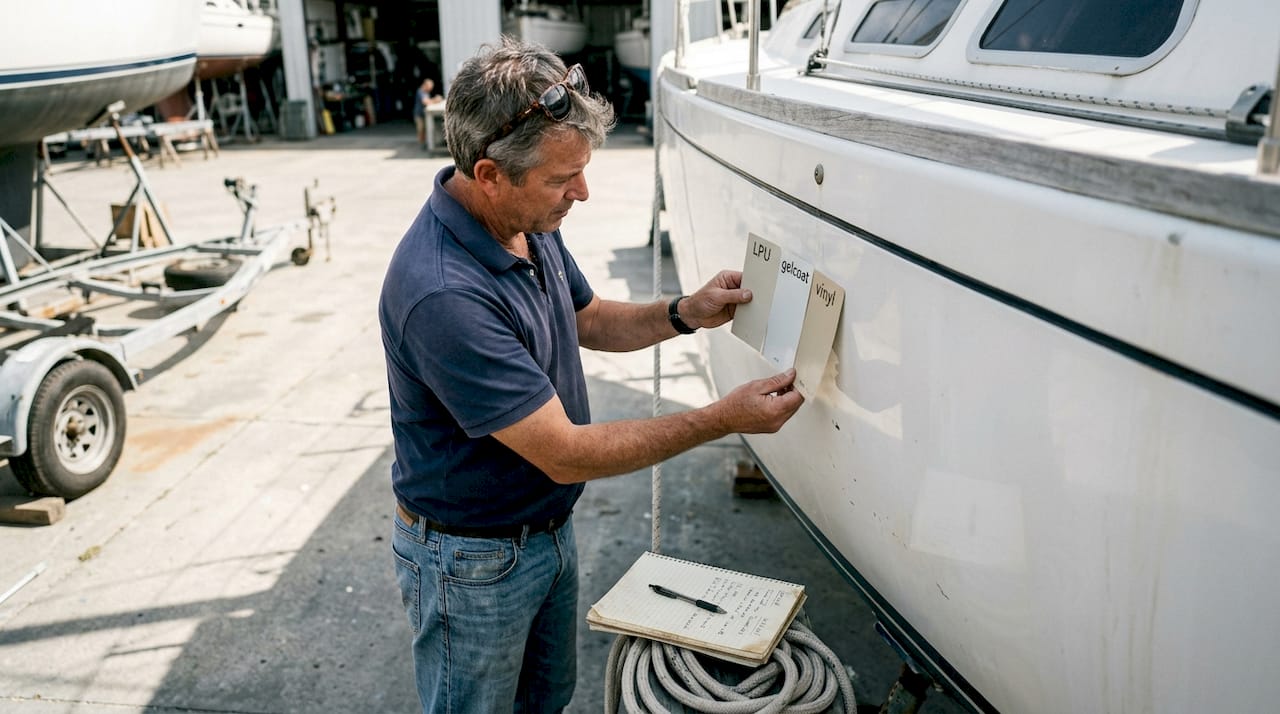
Gelcoat serves different purposes in yacht refinishing. This thicker material excels at filling deep scratches, repairing impact damage, and restoring heavily worn surfaces. Marine fabricators often choose gelcoat for structural repairs where material thickness matters more than ultimate gloss. However, maintaining that glossy appearance requires more frequent polishing and compounds compared to LPU systems.
Vinyl wraps present an intriguing budget option. Wraps cost $5,000 to $10,000 for a 35-foot yacht and install in days rather than weeks. The adhesive films come in countless colors and patterns, allowing creative customization impossible with traditional paint. Yet wraps last only 5 to 7 years before requiring complete replacement, and they lack the depth and richness of properly applied paint systems.
| Paint System | Cost Range | Lifespan | Gloss Quality | UV Resistance | Repair Ease |
|---|---|---|---|---|---|
| LPU Paint | $15,000-$40,000 | 10-15 years | Excellent | Superior | Easy spot repairs |
| Gelcoat | $12,000-$35,000 | 8-12 years | Good | Moderate | Requires blending |
| Vinyl Wrap | $5,000-$10,000 | 5-7 years | Very Good | Good | Section replacement |
Application method dramatically affects outcomes. Spray application with HVLP equipment produces the smoothest finishes, eliminating the orange peel texture that mars roll-and-tip jobs. Larger yachts demand professional spray booths with controlled temperature and humidity to prevent dust contamination and ensure proper curing. Smaller vessels can achieve acceptable results with careful rolling and tipping, though the finish never matches sprayed quality.
Color selection carries practical implications. Darker hues absorb more solar energy, causing surface temperatures that complicate recoating and accelerate UV breakdown. Light colors reflect heat, staying cooler and maintaining gloss longer in Florida’s climate. Metallic and pearl finishes require expert application to avoid mottling and uneven appearance.
Pro Tip: Schedule repainting during Florida’s cooler months between November and March. Lower temperatures and humidity create ideal curing conditions, while reduced afternoon thunderstorms prevent moisture contamination during application.
Discover premium yacht paint options that deliver exceptional results in Florida’s demanding environment.
Expert insights: challenges, nuances, and best practices in yacht repainting
Paint refit projects face mounting pressures from labor shortages and owner expectations that demand new-build quality on older vessels. Skilled applicators command premium wages, and their availability often determines project timelines more than material costs. Yards that once completed repaints in six weeks now schedule eight to ten weeks to accommodate workforce limitations and ensure quality standards.
Manufacturer specifications exist for good reasons, yet shortcuts tempt contractors facing deadline pressure. Skipping surface preparation steps, rushing recoat windows, or substituting unapproved thinners creates problems that surface weeks or months later. Rescaffolding a yacht after finish failure costs more than doing the job correctly initially, both in materials and lost use time.
Early condition assessment prevents budget surprises and schedule overruns. Professional surveys identify hidden damage, substrate moisture, and existing coating compatibility before work begins. This upfront investment allows accurate estimates and prevents the mid-project discoveries that derail timelines and inflate costs. Owners who skip assessment often face change orders that double original quotes.
Best practices for successful yacht repainting:
- Conduct thorough pre-project inspection documenting all surface conditions and defects
- Select paint systems proven in Florida’s marine environment with manufacturer support
- Verify applicator credentials and request references from similar-sized yacht projects
- Establish realistic timelines accounting for weather delays and proper curing periods
- Implement quality control checkpoints at each major process stage before proceeding
- Plan post-paint cure time before launching to achieve full hardness and chemical resistance
Equipment quality directly impacts finish results. HVLP spray guns atomize paint into fine particles that lay down smoothly, while conventional spray creates heavier texture and more overspray waste. Professional booths maintain positive pressure that prevents dust intrusion, filtered air that removes contaminants, and controlled temperature that optimizes curing. These investments separate premium yards from budget operators.
Pro Tip: Request detailed process documentation including product data sheets, mixing ratios, and application logs. This paperwork proves invaluable for future maintenance and establishes accountability if problems develop.
“The difference between acceptable and exceptional yacht finishes comes down to process discipline. Every shortcut shows up eventually, usually at the worst possible time.” – Master yacht painter with 30+ years Florida experience
Understand yacht repairs signs Florida owners should watch for to catch coating problems before they escalate.
Post-repaint maintenance: extending your yacht’s finish in Florida’s marine climate
Fresh water rinses after every saltwater outing remove the salt crystals that etch into paint surfaces and accelerate oxidation. Salt acts as a desiccant, drawing moisture through microscopic coating imperfections and creating the white haze that dulls gloss over time. A simple hose-down takes five minutes but adds years to your paint’s lifespan. Focus on horizontal surfaces where salt deposits concentrate.
pH-neutral detergents protect your investment better than household cleaners. Alkaline soaps strip wax protection and can soften paint binders, while acidic cleaners etch clear coats and dull finishes. Marine-specific products maintain the chemical balance that preserves coating integrity. Apply with soft microfiber mitts, never abrasive brushes or scouring pads that create the fine scratches that trap dirt and reduce gloss.
Ceramic topcoat technology revolutionizes yacht paint protection. These silica-based sealants bond chemically to paint surfaces, creating a sacrificial layer that absorbs UV damage and repels contaminants. Quarterly decontamination treatments remove embedded pollutants before they penetrate, while ceramic coatings make subsequent cleaning dramatically easier. The hydrophobic surface sheds water instantly, preventing mineral deposits.
Florida’s intense UV radiation breaks down paint binders faster than anywhere else in the continental United States. Covered storage during extended non-use periods prevents unnecessary sun exposure. When covers aren’t practical, regular application of UV protectant sprays adds a renewable barrier against photodegradation. These products work like sunscreen for your yacht, absorbing damaging wavelengths before they reach paint layers.
Maintenance schedule for optimal paint longevity:
- Rinse with fresh water after every saltwater use, paying special attention to horizontal surfaces
- Wash with pH-neutral marine soap monthly using soft mitts and gentle pressure
- Apply ceramic coating or quality wax quarterly to maintain protective barrier
- Perform professional decontamination treatment twice yearly to remove embedded particles
- Inspect for chips or scratches monthly and touch up immediately to prevent water intrusion
- Schedule professional polish and detail annually to restore gloss and remove oxidation
| Maintenance Task | Frequency | Time Required | Impact on Paint Life |
|---|---|---|---|
| Fresh water rinse | After each use | 5-10 minutes | Prevents salt damage |
| pH-neutral wash | Monthly | 30-45 minutes | Removes contaminants |
| Ceramic coating application | Quarterly | 2-3 hours | Extends life 30-40% |
| Professional decontamination | Twice yearly | 4-6 hours | Removes embedded pollutants |
| Touch-up repairs | As needed | 15-30 minutes | Prevents water intrusion |
Pro Tip: Keep a small bottle of matching touch-up paint aboard for immediate chip repair. Addressing damage within days prevents moisture from penetrating substrate layers and causing expensive delamination.
Learn comprehensive maintenance for Florida yachts that protects every system, not just paint. Explore the yacht gelcoat repair guide for DIY solutions to minor surface damage.
Expert yacht repainting and maintenance services in Florida
Your yacht deserves the specialized attention that only Florida marine experts provide. Mazzamarine connects you with proven professionals who understand the unique challenges of maintaining vessels in our subtropical climate. From selecting the optimal paint system for your specific use patterns to executing flawless application and establishing maintenance routines, our network delivers results that protect your investment and maintain showroom appearance.
The difference shows in every detail. Our partners use manufacturer-certified products applied according to strict protocols that eliminate the shortcuts plaguing budget operations. Temperature and humidity monitoring, proper surface preparation, and quality control at every stage ensure finishes that last. When you need signs you need yacht repairs addressed before they escalate, our team identifies problems early.
Whether you’re planning a complete repaint or need expert guidance on maintenance strategies, Mazzamarine’s comprehensive paint hull gelcoat services cover every aspect of coating care. Our Florida yacht refit services handle projects of any scale, from touch-ups to complete transformations. Contact our specialists to discuss your yacht’s specific needs and discover why Florida owners trust Mazzamarine for lasting results.
Frequently asked questions about yacht repainting
What is the difference between yacht repainting and repair?
Repainting applies fresh protective coatings to maintain or restore appearance and barrier properties. Repairs address structural damage, gelcoat cracks, or substrate problems before repainting. Most comprehensive projects combine both services, fixing underlying issues before applying new paint systems. Quality paint hull gelcoat work addresses both cosmetic and structural needs simultaneously.
How often should a yacht in Florida be repainted?
Paint typically requires renewal every 10 to 15 years depending on system quality, UV exposure, and maintenance diligence. Florida’s intense sun accelerates degradation compared to northern climates. Regular maintenance including washing, waxing, and ceramic coating extends intervals between full repaints. Neglected vessels may need repainting in 7 to 8 years, while meticulously maintained yachts can reach 15 years before requiring complete refinishing.
What maintenance extends the life of yacht paint in Florida’s climate?
Rinse with fresh water after saltwater use to remove corrosive deposits. Use only pH-neutral detergents with soft cleaning tools to avoid scratching. Apply ceramic topcoat sealants that provide UV protection and make cleaning easier. Quarterly decontamination treatments remove embedded pollutants before they penetrate paint layers. These practices combined can extend paint life by 30 to 40 percent in Florida’s harsh environment. Review Florida yacht maintenance tips for comprehensive care strategies.
Are vinyl wraps a good alternative to traditional yacht repainting?
Vinyl wraps provide affordable coverage lasting 5 to 7 years at roughly half the cost of quality paint. They install quickly and offer creative design options impossible with traditional coatings. However, wraps lack the durability, UV resistance, and depth of properly applied LPU paint systems. For Florida’s intense sun exposure, paint delivers superior long-term value despite higher initial investment. Wraps work well for owners planning to sell within five years or those wanting temporary color changes.
What are common pitfalls to avoid during yacht repainting?
Ignoring recoat windows causes adhesion failures requiring complete removal and restart. Mixing paint brands creates compatibility problems and delamination. Rushing surface preparation leaves contaminants that telegraph through finish coats. Inadequate curing time before launch allows water intrusion before paint achieves full hardness. Starting projects without thorough condition assessment leads to budget-busting surprises mid-job. Understand yacht repainting mistakes before beginning your project. Working with experienced professionals and following manufacturer specifications prevents these expensive errors. Explore proper fiberglass damage repair techniques to address substrate issues before repainting.
Recommended
Text or Call 954-330-9653 Schedule Appointment
Mazza Marine Yacht Services & Refit

Fiberglass Upgrades and Damage Repair

Premium Yacht Paint/ Faux Teak

Fishing: Custom Rods, Reels,Tackle

Electrical, Electronics and Navigation

Paint, Hull and Gelcoat

Teak Decks, Wood Cabinets, Carpentry

Canvas, Enclosures and Upholstery

Mechanical, Repower and Running Gear

Plumbing, Bilge and Thru-Hulls

Welding and Custom Fabrication

Interior Refit And Past Work
Get your yacht value Estimate
"*" indicates required fields