
View Our Recent Work:

A stuffing box is defined as the mechanical seal assembly that prevents seawater from flooding your vessel along the propeller shaft. Yacht stuffing box maintenance means managing a controlled drip rate, inspecting packing condition regularly, and repacking the gland before wear causes shaft damage. The industry also calls this assembly a “shaft packing gland,” and both terms refer to the same component. Get this right, and your bilge stays dry. Get it wrong, and you are dealing with a flooded engine room offshore.
The target drip rate is 2–3 drops per minute while underway and zero at rest. That small trickle is not a flaw. It is the lubrication and cooling system for the packing material itself.
What does yacht stuffing box maintenance actually involve?
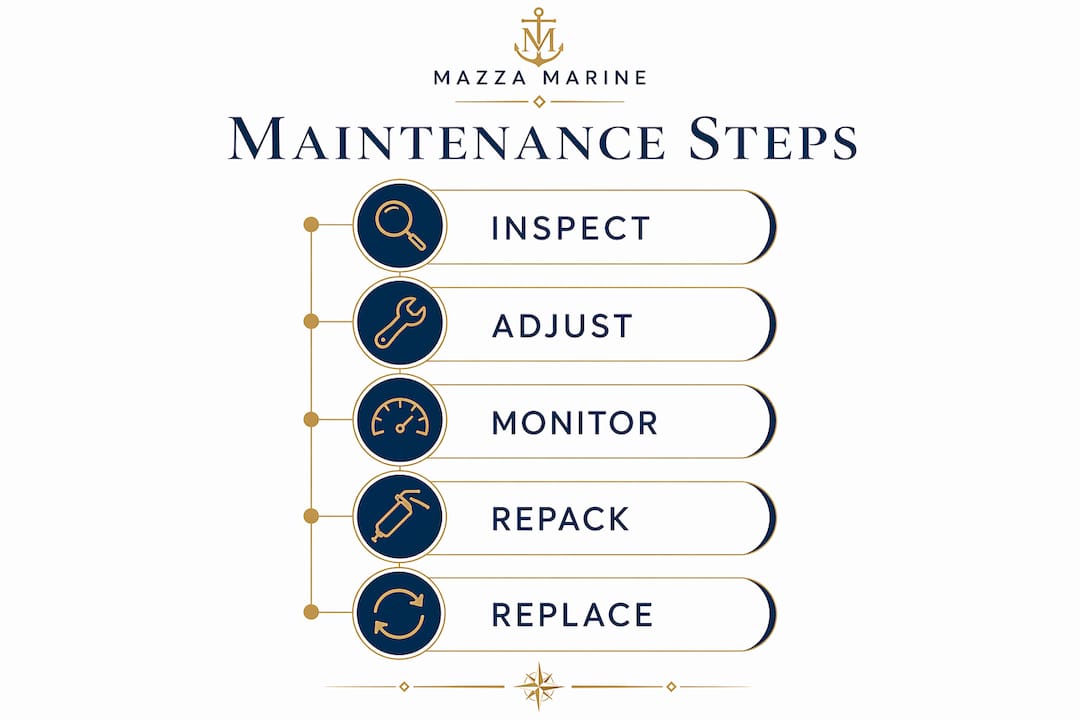
Stuffing box maintenance covers three distinct tasks: routine inspection, gland nut adjustment, and periodic repacking. Most yacht owners focus only on tightening the gland nut when they see a drip. That single habit, repeated without inspection, leads to overheating, shaft scoring, and packing that welds itself to the shaft.
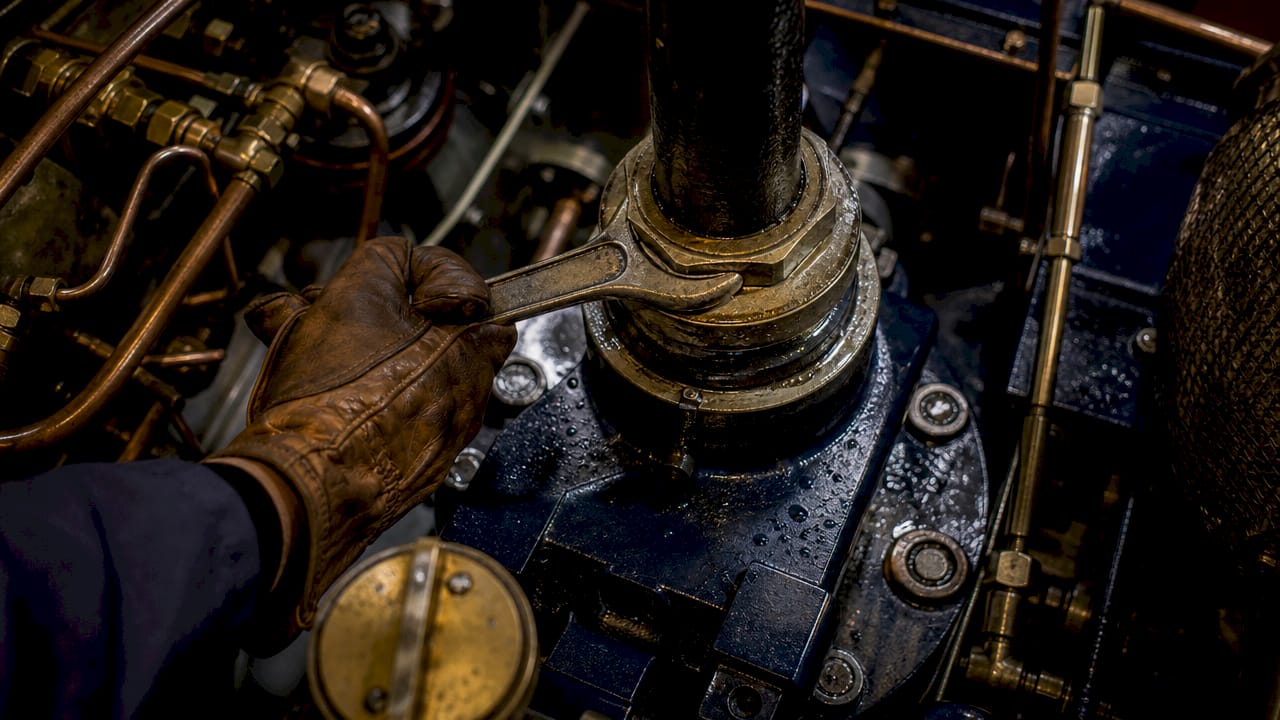
A well-maintained stuffing box on a 40-foot cruising yacht costs almost nothing to keep in good shape. Replacement flax packing runs about $12 per foot as of 2026. The labor, if you do it yourself, is roughly 45 minutes. That is a remarkably low price for protecting your shaft, your bearings, and your peace of mind on a long passage.
How to inspect and monitor your stuffing box
Checking the stuffing box every time you use the boat is the single most effective habit in marine stuffing box care. A quick look takes under two minutes and catches problems before they escalate.
What to check on every outing:
- Drip rate while underway. Count drops at the gland. Two to three drops per minute is correct. More than that signals worn packing or a loose gland nut. Zero drops while running signals overtightening.
- Drip rate at rest. The stuffing box should be dry when the shaft is not turning. Any drip at rest means the packing is worn through or the gland nut needs adjustment.
- Gland nut position. If the nut is already threaded nearly all the way down and still cannot control the drip, the packing is exhausted. Adding more thread tension at that point causes damage, not a fix.
- Packing condition. During haul-out, pull the old packing and look for glazing, extrusion, or a hard, brittle texture. Fresh flax packing is soft and slightly waxy. Old packing crumbles or feels like compressed cardboard.
- Shaft surface. Run your finger along the shaft where it contacts the packing. Grooves or scoring mean the packing ran too dry for too long.
Pro Tip: After any gland nut adjustment, run the engine in gear for five minutes, then reach down and feel the stuffing box housing with your bare hand. It should be warm, not hot. A hot stuffing box means the packing is too tight and you need to back off the gland nut immediately.
Keeping a maintenance log with drip rate observations from each outing gives you a trend line. When the drip rate starts climbing week over week, you know repacking is coming before it becomes urgent.
How to repack a traditional stuffing box step by step
Repacking a stuffing box is one of the most satisfying jobs a yacht owner can do. The tools are basic, the materials are cheap, and the result is a dry bilge. Most owners can complete the job in about 45 minutes with the boat still in the water.
Tools and materials you need:
- Flax packing cord sized to your shaft diameter
- A packing pick or dental pick tool
- Two wrenches sized for your gland nut and locknut
- A sharp knife or scissors
The repacking process:
- Loosen the gland nut. Back it off completely. If it is stuck, do not force it with a pipe extension. Apply penetrating oil and wait.
- Remove old packing. Use the pick tool to pull out every ring of old packing. Leaving even one ring behind causes uneven compression and early failure.
- Clean the stuffing box bore. Wipe out any debris or old grease with a clean rag.
- Cut new packing rings. Wrap the packing cord 3.5 times around the shaft, then cut along the shaft length. This gives you rings that fit the shaft diameter exactly. Rings cut too long overlap and bunch. Rings cut too short leave gaps.
- Stagger the joints. Install each ring with its joint rotated 90–120 degrees from the previous ring. Staggered joints prevent a straight leak path through the packing stack.
- Install the correct number of rings. Most stuffing boxes take three to four rings. Check your boat’s documentation or measure the bore depth to confirm.
- Finger-tighten the gland nut. Hand pressure only at first. Never use a wrench to seat new packing.
- Run the engine and adjust. Start the engine, put it in gear, and watch the drip rate. Tighten the gland nut in small increments until you reach 2–3 drops per minute. Lock the nut in place.
| Step | Action | Common mistake |
|---|---|---|
| Remove old packing | Extract all rings with a pick tool | Leaving one ring behind |
| Cut new rings | Wrap 3.5 times around shaft, cut along shaft | Cutting rings too long or too short |
| Stagger joints | Rotate each ring 90–120 degrees | Aligning all joints in one line |
| Tighten gland nut | Hand-tight first, then adjust underway | Using a wrench to seat new packing |
Pro Tip: Carry a spare length of flax packing and a pick tool on every offshore passage. If your drip rate climbs at sea, you can repack the stuffing box underway in calm conditions without returning to port.
Proactive repacking every two seasons is standard practice. Do not wait for the drip rate to become a stream.
Common mechanical factors that wreck stuffing box performance
Excessive stuffing box leaks often signal mechanical problems that no amount of gland nut tightening will fix. Treating the symptom without addressing the root cause means you will be repacking every few months instead of every two seasons.
The main mechanical culprits are:
- Engine misalignment. When the engine is not aligned with the shaft, the shaft wobbles slightly inside the stuffing box. That wobble chews through packing rapidly and causes uneven wear on the gland bore itself.
- Worn cutless bearings. The cutless bearing supports the shaft near the propeller. A worn bearing allows the shaft to deflect, which transfers vibration directly to the stuffing box. If you are repacking more than once a season, check the cutless bearing first.
- Unbalanced or damaged propeller. A bent blade or fouled prop creates vibration that travels up the shaft and into the packing gland.
- Overtightening the gland nut. Overtightening causes friction heat that damages both the shaft and the packing. In severe cases, the packing fuses to the shaft and must be cut free. The shaft surface then requires professional polishing or replacement.
The rule is simple. If you are tightening the gland nut more than once between repacking cycles, something mechanical is wrong. Diagnose the cause rather than chasing the drip. Mazzamarine’s engine maintenance guidance covers alignment checks and cutless bearing inspection in detail.
Traditional stuffing boxes vs. modern dripless shaft seals
Dripless mechanical shaft seals, such as the PSS (Packless Sealing System) by PYI Inc., use two polished mating faces held together by a bellows. They produce zero drip under normal operation. That sounds ideal until you consider the failure mode.
| Feature | Traditional stuffing box | Dripless mechanical seal |
|---|---|---|
| Normal drip | 2–3 drops/min underway | Zero |
| Failure mode | Gradual drip increase | Sudden seal face separation |
| DIY repair | Yes, with basic tools | Requires haul-out |
| Material cost | ~$12 per foot of flax | $90–$120 replacement kit |
| Inspection interval | Every use | Every haul-out |
| Replacement interval | Every 2 seasons | Every 3–5 years |
Traditional stuffing boxes fail gradually, giving you time to adjust or repack before water becomes a serious problem. A dripless seal can fail suddenly, flooding the bilge before you notice. For offshore passages, that distinction matters enormously.
Dripless seals require inspection at every haul-out, including checking the bellows for cracking and the mating faces for scoring. The replacement kit costs $90–$120 and the job requires the boat out of the water. Traditional packing can be replaced with the boat in the slip.
Both systems work well when maintained properly. The choice comes down to your tolerance for routine maintenance versus your tolerance for risk.
Best practices for extending stuffing box life
Predictive maintenance based on drip rate monitoring and temperature checks outperforms calendar-based replacement alone. The stuffing box tells you what it needs if you pay attention.
Habits that extend stuffing box life significantly:
- Monitor drip rate on every outing and log the observation. A rising trend over several weeks is your signal to repack before the season’s busiest stretch.
- Check the stuffing box temperature by hand after any gland nut adjustment. Warm is acceptable. Hot means back off immediately.
- Never force a stuck gland nut. Apply penetrating oil, wait, and try again. Forcing it strips threads or cracks the gland housing.
- Carry spare flax packing and a pick tool aboard at all times. Offshore, you cannot order parts.
- Schedule a full inspection at every haul-out, regardless of how the stuffing box felt during the season. Haul-out is the only time you can inspect the shaft surface and the gland bore properly.
Pro Tip: If the gland nut no longer controls the drip even when tightened fully, do not force it closed. Add one additional packing ring or do a full repack. Forcing a bottomed-out gland nut damages the threads and can crack the stuffing box body.
Aligning stuffing box inspections with your broader mechanical reliability schedule keeps the whole drivetrain in sync and prevents the kind of compounding failures that turn a $12 repair into a $1,200 one.
Key Takeaways
Proper stuffing box care requires monitoring drip rate every outing, repacking every two seasons with correctly cut flax rings, and diagnosing mechanical root causes before they destroy packing prematurely.
| Point | Details |
|---|---|
| Target drip rate | Maintain 2–3 drops per minute underway and zero at rest for correct lubrication. |
| Repacking frequency | Repack every two seasons or sooner when drip rate climbs despite gland nut adjustment. |
| Cutting packing rings | Wrap cord 3.5 times around the shaft and cut along the shaft for an exact fit. |
| Mechanical root causes | Check engine alignment and cutless bearings before assuming the stuffing box itself is the problem. |
| Dripless seal trade-off | Dripless seals cost more and fail suddenly; traditional packing fails gradually and is DIY-repairable. |
What I have learned from years of watching stuffing boxes fail
The stuffing box is one of the few components on a yacht that tells you exactly what it needs. The drip rate is a live readout of packing condition. Most owners ignore it until the bilge pump starts cycling.
What I find most reassuring about traditional flax packing is the failure mode. It does not give out all at once. On a passage from Miami to the Bahamas, I have watched a stuffing box go from two drops per minute to eight over the course of a day. That gave plenty of time to tighten the gland nut, monitor the temperature, and plan a proper repack at the next anchorage. A dripless seal that fails at night in the Gulf Stream does not offer that grace period.
The mistake I see most often is owners treating the gland nut as the only tool in the kit. They tighten, the drip slows, and they walk away satisfied. Six months later the packing is glazed, the shaft has a groove worn into it, and the repair bill has grown considerably. The stuffing box leakage often signals underlying mechanical issues, and fixing those root causes extends stuffing box life far more than any amount of gland nut adjustment.
My honest advice: learn to repack your own stuffing box. It takes 45 minutes, costs almost nothing, and gives you a level of confidence about your boat’s condition that no marina service can replicate. Once you have done it twice, it feels routine. And that confidence is worth more than any piece of gear you could buy.
— Jason
Mazzamarine’s approach to stuffing box and shaft seal service
When a stuffing box issue goes beyond a straightforward repack, or when you suspect engine misalignment or a worn cutless bearing is driving the problem, professional inspection pays for itself quickly.

Mazzamarine works with a network of Florida yacht experts covering everything from urgent stuffing box repairs in Miami to full mechanical system overhauls. Whether you need a second opinion on a drip rate that will not settle, a haul-out inspection of a dripless seal, or a complete marine repair service for your drivetrain, the team at Mazzamarine connects you with the right specialist. If you are unsure whether your stuffing box symptoms point to a deeper mechanical problem, the signs you need yacht repairs guide is a practical starting point. Reach out to Mazzamarine and get the right eyes on your boat before a small drip becomes a serious problem.
FAQ
What is the correct drip rate for a stuffing box?
The correct drip rate is 2–3 drops per minute while the engine is running in gear, and zero drops when the shaft is stationary. This controlled drip lubricates and cools the packing material.
How often should I repack my stuffing box?
Repack every two seasons as a standard interval, or sooner if the drip rate climbs and gland nut adjustment no longer brings it back to 2–3 drops per minute.
Can I repack a stuffing box with the boat in the water?
Yes. Repacking with the boat in the water is standard practice and takes about 45 minutes with basic tools and flax packing cord.
What causes a stuffing box to leak excessively?
Excessive leaking is often caused by worn packing, but engine misalignment and worn cutless bearings are common root causes that force the shaft to deflect inside the gland.
Are dripless shaft seals better than traditional stuffing boxes?
Dripless seals eliminate the drip but fail suddenly and require haul-out for repair. Traditional stuffing boxes fail gradually, giving you time to adjust or repack, which makes them more forgiving on offshore passages.
Recommended
Text or Call 954-330-9653 Schedule Appointment
Mazza Marine Yacht Services & Refit

Fiberglass Upgrades and Damage Repair

Premium Yacht Paint/ Faux Teak

Fishing: Custom Rods, Reels,Tackle

Electrical, Electronics and Navigation

Paint, Hull and Gelcoat

Teak Decks, Wood Cabinets, Carpentry

Canvas, Enclosures and Upholstery

Mechanical, Repower and Running Gear

Plumbing, Bilge and Thru-Hulls

Welding and Custom Fabrication

Interior Refit And Past Work
Get your yacht value Estimate
"*" indicates required fields