
View Our Recent Work:

A yacht tender is defined as a dedicated support vessel that transports guests, crew, and supplies between a mothership and shore. Proper operation of a yacht tender requires strict adherence to SOLAS regulations, certified crew training, and disciplined handling techniques. Get it wrong and you risk delayed departures, damaged reputations, or worse, a passenger overboard in open water. This yacht tender operation guide covers every stage of the process, from crew qualifications and davit launch procedures to night operations and maneuvering techniques, so you can run your tender with the confidence it deserves.
What qualifications does a yacht tender crew need?
Professional tender operation requires a tiered qualification structure, not just a general boating license. The baseline is STCW Basic Safety Training, which covers firefighting, personal survival, first aid, and security awareness. Beyond that, the RYA Powerboat Level 2 with a commercial endorsement is the recognized standard for operating a tender in a professional capacity. The RYA Tender Operator course adds advanced skills for night operations and guest transfers, which are the two scenarios where most incidents occur.
Medical fitness is non-negotiable. A valid ENG1 medical certificate is required every two years for professional tender crew. This certificate confirms that a crew member is physically fit to operate in a demanding maritime environment. Skipping this step is not just a safety risk. It is a liability exposure for the yacht owner.
Tender professionalism is measured by a crew’s ability to safely transfer guests in swell and at night, which demands far more than basic boat handling. Documented training records matter too. Insurers and flag state surveyors increasingly ask for evidence of drills and certifications during inspections.
- STCW Basic Safety Training: Mandatory baseline for all professional crew
- RYA Powerboat Level 2 with commercial endorsement: Required for paid tender operation
- RYA Tender Operator course: Covers night operations and guest transfer protocols
- ENG1 medical certificate: Valid for two years, confirms physical fitness for duty
- Documented drills: Written records of crew exercises support insurance claims and surveyor reviews
Pro Tip: Keep a dedicated crew training log onboard. Record every drill, certification renewal, and safety briefing. Surveyors and insurers treat this log as evidence of operational competence.
How to safely launch and recover a yacht tender using davit systems
Safe tender launch and recovery is a sequenced operation, not a casual task. Every step has a purpose, and skipping one creates risk for crew, guests, and equipment.
Pre-launch sequence
- Confirm the mothership is at rest or moving slowly enough for safe deployment.
- Check that the davit system’s Safe Working Load is rated for the tender’s weight plus crew and equipment.
- Inspect lifting falls, shackles, and hooks for wear or corrosion before each use.
- Verify the tender’s drain plug is seated and locked. A forgotten drain plug is one of the most common causes of tender sinking at docks.
- Assign crew roles: one operator on the davit controls, one in the tender, one managing lines.
- Lower the tender slowly, maintaining communication between all crew positions.
- Confirm the tender is waterborne and stable before releasing the lifting hooks.
Recovery sequence
- Bring the tender alongside the mothership and attach the lifting hooks securely.
- Confirm all passengers have disembarked before hoisting.
- Raise the tender clear of the water and swing it inboard.
- Secure the tender in its cradle and lock the davit before the mothership gets underway.
Industry best practice is to over-specify davit SWL by 30% to accommodate future upgrades and unexpected loads. A 4:1 factor on ultimate structural capacity versus Safe Working Load is the engineering standard, verified by the relevant classification society. SOLAS mandates that launch systems remain functional with the mothership listed up to 20 degrees and trimmed up to 10 degrees. That constraint shapes how davit systems are designed and positioned on the vessel.
| Scenario | Target completion time | Risk if exceeded |
|---|---|---|
| Trained crew, 7m tender | 3–5 minutes | Minimal |
| Untrained crew, 7m tender | Up to 20 minutes | Guest dissatisfaction, operational delay |
| Listed mothership (20°) | Must remain operable | SOLAS non-compliance |
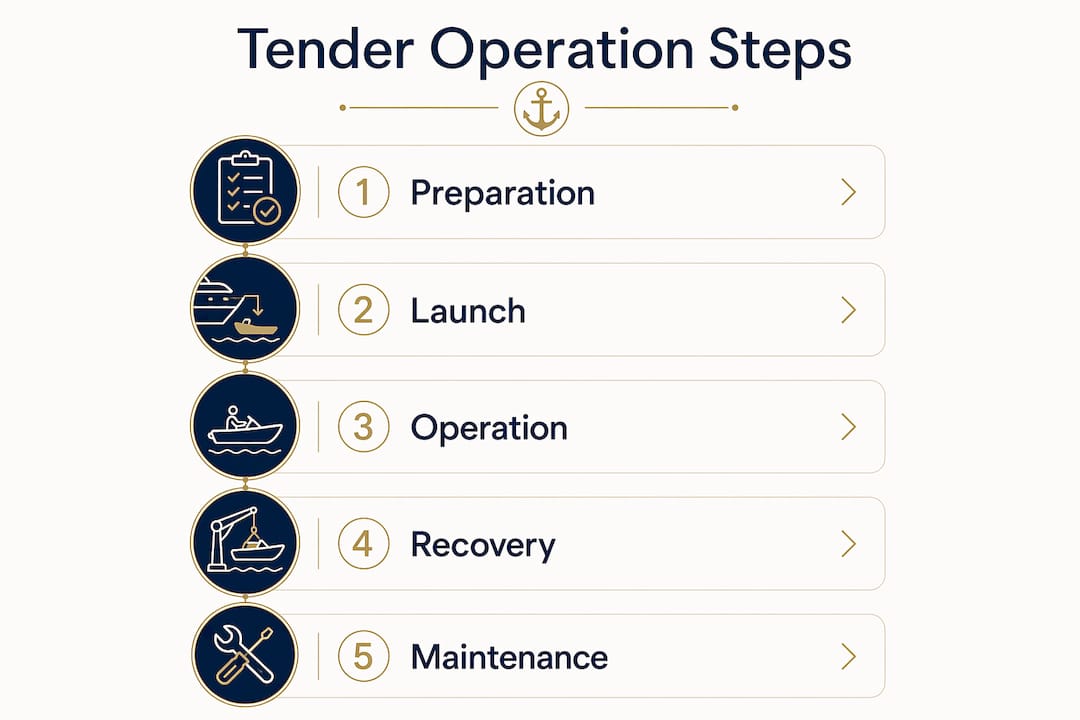
Well-trained crews complete tender launch and recovery in 3–5 minutes for a 7-meter tender. Untrained crews can take up to 20 minutes, creating operational delays and frustrated guests. The difference is not equipment. It is repetition and discipline.
Industry best practice schedules tender engine service at every 100 operational hours or annually, whichever comes first, and plans for periodic replacement of lifting falls every five years. Keep these intervals in your vessel’s maintenance log.
Pro Tip: Run a timed launch drill at the start of every season. If your crew cannot complete the sequence in under 10 minutes, schedule additional training before your first guest charter.
What are the essential safety procedures for tender operations?
Safety in tender operations starts before the engine starts. A pre-departure checklist is not optional. It is the difference between a smooth transfer and a rescue call.
Pre-departure checklist
- Drain plug: Verified seated and locked before every launch
- Painter line: Stowed inside the boat, never trailing in the water
- Kill cord: Attached to the helm operator at all times
- Life jackets: Worn by all passengers, not just stored onboard
- Communication gear: VHF radio charged and tested
- Sound signaling device: Horn or whistle accessible at the helm
- Navigation lights: Functional for any operation after sunset
A trailing painter line is a serious hazard. Modern high-RPM outboards can snag a painter line instantly, causing immediate engine failure and potential capsize. Stowing the painter inside the boat before departure is a non-negotiable rule on any professional vessel.
Night operations carry additional requirements. At least two crew members must be aboard for night and guest transfer operations. All-round white lighting is mandatory, and life jackets must be worn, not just carried. Reflective gear for crew adds another layer of visibility in low-light conditions. Review your yacht safety equipment list to confirm your tender is fully equipped before the sun goes down.
“Documented operating procedures in the vessel’s Safety Management System are not only vital for operational consistency. They significantly affect insurance claims processes when incidents occur.”
Crew training and clear sea-state limits for the davit system are the primary defense against tender collisions. Hardware matters, but procedure and documentation matter more. If an incident occurs and your SMS has no tender operating procedures, your insurer will notice.
Pro Tip: Laminate your pre-departure checklist and mount it at the helm of the tender. Crew turnover is common on yachts. A visible checklist removes the risk of a new crew member skipping a critical step.
How do you maneuver a yacht tender effectively?
Tender maneuvering is a skill that takes practice to master. The physics are different from driving a car or even a larger vessel. Outboard engines act predominantly as thrusters for precise maneuvering, demanding skilled throttle and steering management from the operator.
Expert skippers advise treating the outboard engine as a glorified thruster when maneuvering large yachts. Steering is most effective when the tender is placed inside a turn, using prop wash to generate directional force. Understanding the hydrodynamics of prop wash and engine orientation is critical. Practicing maneuvers in open water before attempting them in a tight marina or alongside a mothership is the professional standard.
- Slow speed control: Use short bursts of throttle rather than sustained power. Tenders respond quickly and overshoot easily at low speeds.
- Astern maneuvering: Most outboards lose steering authority in reverse. Use short, controlled bursts and compensate with the tiller.
- Docking approach: Approach at a shallow angle into the current or wind. Kill speed early and use the engine to hold position.
- Departure from a mooring: Back away slowly before turning. Avoid swinging the bow into the mothership or dock.
- Communication with the mothership: Use VHF or hand signals to coordinate with the bridge or hoist operator during launch and recovery.
- Guest transfers in swell: Position the tender parallel to the boarding platform. Time your approach to the wave cycle and hold station with the engine.
Mastering prop wash dynamics takes time. New tender operators should log practice hours in open water before handling guests. The goal is to make every transfer feel effortless to the passenger, even when conditions are demanding. That level of skill reflects directly on the yacht and its crew.
Key Takeaways
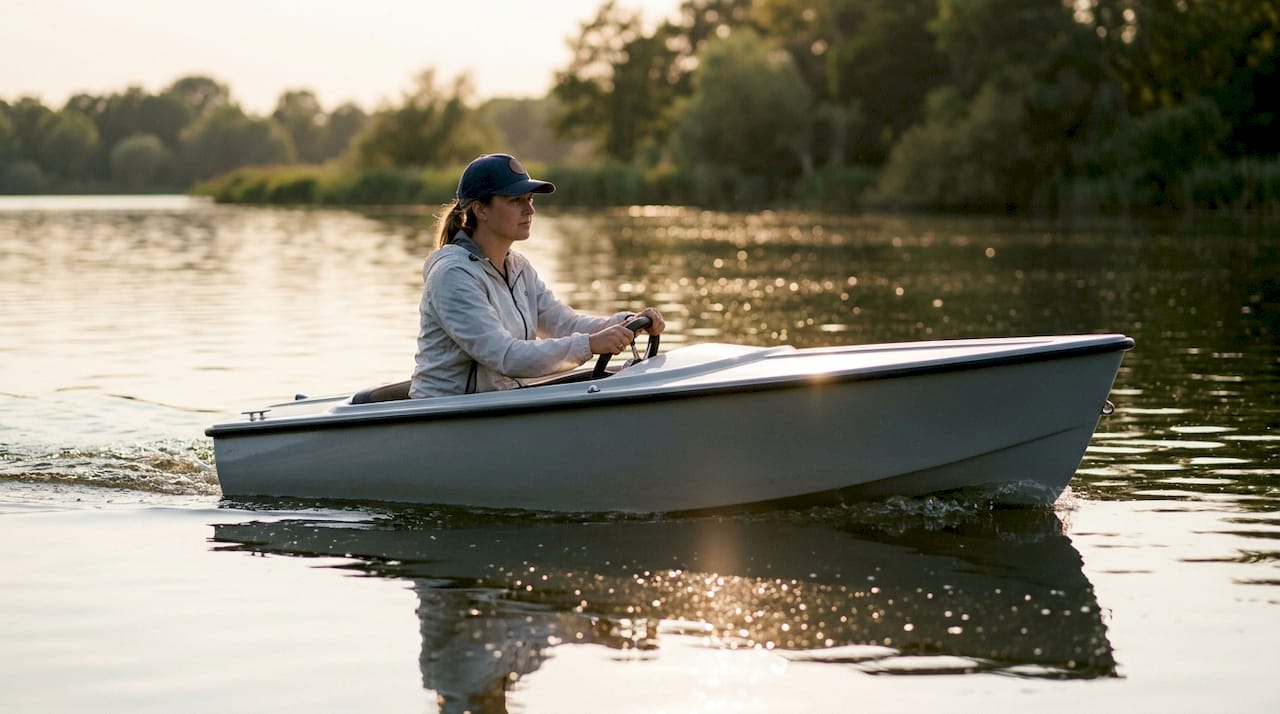
Safe, professional tender operation depends on certified crew, documented procedures, and disciplined pre-departure habits applied consistently on every run.
| Point | Details |
|---|---|
| Crew certification is mandatory | STCW, RYA Powerboat Level 2, and a valid ENG1 medical certificate are the professional baseline. |
| Davit over-specification protects the vessel | Specify Safe Working Load at 30% above current need to accommodate future loads and upgrades. |
| Pre-departure checklists prevent most incidents | Drain plug, painter stowage, and kill cord verification stop the most common causes of tender failure. |
| Training time directly affects guest experience | Trained crews launch a 7m tender in 3–5 minutes; untrained crews can take up to 20 minutes. |
| SMS documentation affects insurance outcomes | Written tender procedures in the Safety Management System are critical when claims are filed. |
What I’ve learned from watching tender operations go wrong
I have watched tender operations on yachts ranging from 40 feet to well over 100 feet, and the pattern is always the same. The boats with the best equipment and the worst procedures consistently underperform the boats with modest gear and disciplined crews.
The drain plug story never gets old because it keeps happening. I have personally seen a brand-new tender take on water at the dock within minutes of launch because the plug was not checked. The crew was embarrassed. The guests were delayed. The owner was furious. A laminated checklist would have cost nothing.
The qualification gap is the other issue that rarely gets discussed openly. Owners hire crew based on general seamanship experience, then assume tender operation is covered. It is not. The RYA Tender Operator course exists for a reason. Night guest transfers in a 2-foot chop are not the time to discover that your tender driver has never practiced the maneuver. Invest in the right crew training before the season starts, not after the first incident.
The SMS documentation point is the one that surprises owners most. They assume that having a good crew is enough. Insurers disagree. When a claim is filed, the first thing an adjuster looks for is written procedures. If your Safety Management System has no tender operating section, you are exposed. Write the procedures, date them, and make sure crew sign off on them annually.
Finally, I cannot stress enough the value of timed drills. Running a stopwatch on your crew during a launch drill feels awkward the first time. After three or four sessions, the sequence becomes muscle memory. That is exactly what you want when conditions deteriorate and guests are waiting on the swim platform.
— Jason
Mazzamarine keeps your tender mission-ready year-round
Keeping a tender in peak condition is not a once-a-year task. Florida’s heat, salt air, and storm seasons accelerate wear on engines, lifting gear, and hull components faster than most owners expect.

Mazzamarine works with yacht owners across Florida to build maintenance schedules that match real operating conditions. From outboard engine servicing and davit inspections to full mechanical reviews, the Mazzamarine network covers every aspect of keeping your tender and mothership ready for the water. If you are seeing signs of wear or want to get ahead of the next season, the Florida yacht repair guide is a practical starting point. Reach out to Mazzamarine and connect with experts who treat your vessel with the same care they would their own.
FAQ
What is a yacht tender used for?
A yacht tender is a smaller support vessel that transports guests, crew, and supplies between the mothership and shore or other locations. It also serves a safety role during emergencies.
What certifications does a tender operator need?
Professional tender operators require STCW Basic Safety Training, RYA Powerboat Level 2 with a commercial endorsement, and a valid ENG1 medical certificate renewed every two years.
How long does a tender launch take with a trained crew?
A well-trained crew can launch and recover a 7-meter tender in 3–5 minutes. Untrained crews may take up to 20 minutes, causing significant operational delays.
What are the most common tender safety mistakes?
The most common mistakes are failing to seat the drain plug, leaving the painter line trailing in the water, and not wearing life jackets during guest transfers. Each is preventable with a standard pre-departure checklist.
Does SOLAS apply to yacht tender operations?
SOLAS requires rescue tenders to be launchable by two crew in calm water within 5 minutes, and launch systems must remain operable with the mothership listed up to 20 degrees and trimmed up to 10 degrees.
Recommended
Text or Call 954-330-9653 Schedule Appointment
Mazza Marine Yacht Services & Refit

Fiberglass Upgrades and Damage Repair

Premium Yacht Paint/ Faux Teak

Fishing: Custom Rods, Reels,Tackle

Electrical, Electronics and Navigation

Paint, Hull and Gelcoat

Teak Decks, Wood Cabinets, Carpentry

Canvas, Enclosures and Upholstery

Mechanical, Repower and Running Gear

Plumbing, Bilge and Thru-Hulls

Welding and Custom Fabrication

Interior Refit And Past Work
Get your yacht value Estimate
"*" indicates required fields