
View Our Recent Work:

A yacht vendor network is a curated group of trusted service providers you rely on to keep your vessel maintained, upgraded, and seaworthy. Without a structured approach to building that network, you end up with a patchwork of unreliable contacts, surprise invoices, and gaps in coverage at the worst possible moments. This yacht vendor network setup guide walks you through every stage: what to prepare before you start, how to vet vendors properly, how to manage the network over time, and how to avoid the mistakes that cost owners real money. The standard industry term for this practice is yacht supply chain management, and getting it right is one of the most underrated skills in yacht ownership.
What prerequisites do you need before setting up your yacht vendor network?
Preparation separates owners who build lasting vendor relationships from those who scramble every time something breaks. Before you contact a single service provider, you need a clear picture of your vessel and its demands.
Start with three foundational questions: What is the size and type of your yacht? Where does it cruise or stay docked? What are its most frequent maintenance needs? A 45-foot sportfish based in Miami has completely different vendor requirements than an 80-foot motor yacht that winters in the Bahamas and summers in the Chesapeake. Your answers shape every category of vendor you will need.
Define your service categories first. A well-organized vendor list covers at minimum:
- Technical and mechanical: engine service, electrical systems, marine mechanical systems, and repowering
- Structural and cosmetic: hull work, custom paint, gel coat, canvas, and glass enclosures
- Specialty fabrication: custom welding and thru-hulls, heavy machinery installation
- Electronics and navigation: nav systems, lighting upgrades, and automation
- Interior and refit: upholstery, cabinetry, and full interior refits
- Urgent repairs: providers who can respond same day in your home port
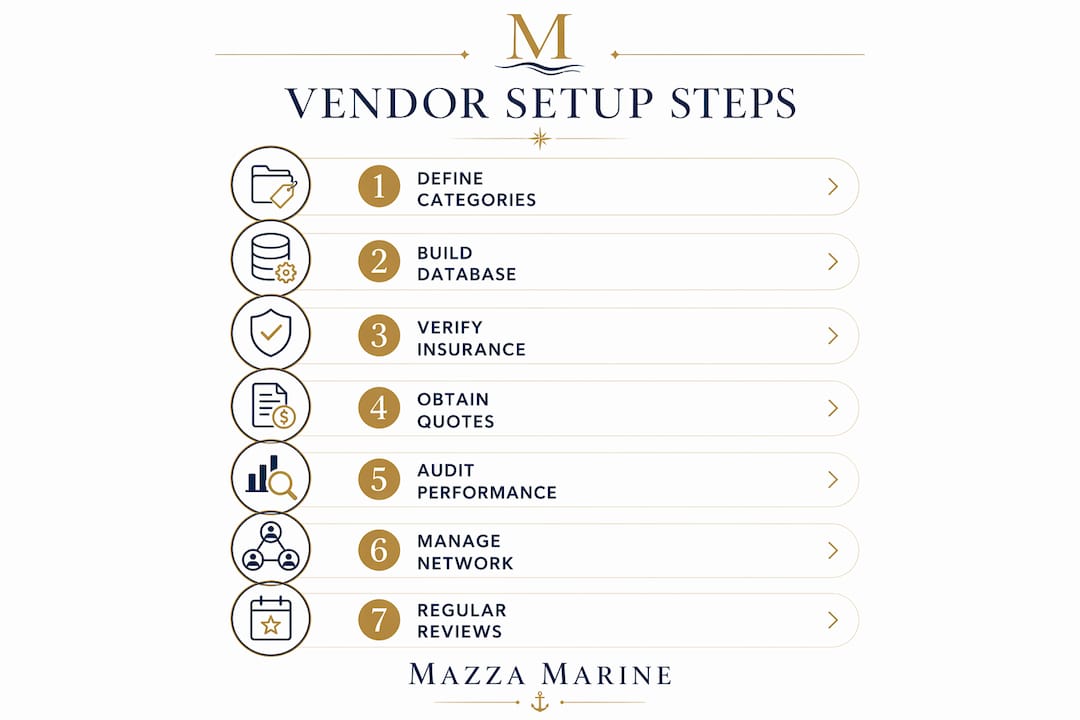
Once you have your categories, build a simple vendor database. A spreadsheet works fine at the start. Track vendor name, specialty, location, license number, insurance status, last audit date, and contact information. This becomes your living document, not a one-time list you file away.
Pro Tip: Add a “notes” column for every vendor interaction. A brief record of response time, quote accuracy, and work quality turns into a powerful reference when you need to make fast decisions under pressure.
Yacht management fees, which range from 60,000 to 350,000 EUR per year depending on vessel size, often include vendor coordination. Owners who manage their own networks can redirect those savings, but only if the network is organized from day one.
How do you vet and select vendors effectively?
Vetting vendors is where most yacht owners cut corners, and where the most expensive mistakes happen. A credible vetting process has four non-negotiable steps.
Step 1: Verify insurance with specifics
Never accept a vendor’s word that they are insured. Request the actual policy number and the insurer’s name directly. Confirm that subcontractor coverage is included. Many owners discover too late that a subcontractor working on their vessel had no liability coverage, leaving the owner exposed to injury or damage claims. This one step eliminates a significant category of risk.
Step 2: Require at least three comparable quotes
For any major maintenance or upgrade work, get a minimum of three quotes with documented rationale for the final selection. This is not just about price. Comparable quotes reveal the market rate, expose vendors who are padding estimates, and give you a paper trail if work quality is later disputed. Independent quality assurance review on major projects adds another layer of protection.
Step 3: Audit safety standards and past performance
Ask for references from other yacht owners, not just marina contacts. Call those references and ask specific questions: Did the vendor finish on time? Did the final invoice match the estimate? How did they handle a problem when one arose? Vendors who perform well under scrutiny welcome this process. Those who resist it tell you something important.
Step 4: Demand transparency on commissions
Trade discounts must pass directly to you, the owner, at cost. Any management company or coordinator who cannot confirm in writing that they receive no kickbacks from vendors is a liability. Hidden markups on parts and labor are one of the most common ways yacht owners overpay without realizing it. Radical transparency on commissions builds trust and keeps your procurement costs honest.
Pro Tip: Never accept verbal change orders. Every scope change, no matter how minor, must be written and signed before work begins. Written change orders are the single most effective tool for preventing inflated final invoices.
How do you manage your vendor network once it is established?
Building the network is the beginning. Managing it well is what protects your investment over years of ownership.
The core tool is a dynamic vendor matrix: a structured record of every active vendor, their performance history, insurance renewal dates, and last audit result. A static list goes stale fast. Vendors change ownership, let licenses lapse, or shift their specialty. Periodic audits and strict onboarding reviews keep your matrix current and your network reliable.
Segment your vendors by service type and regional availability. If your yacht spends winters in Fort Lauderdale and summers in the Carolinas, you need vetted providers in both regions, not just one home port. A vendor who does excellent gel coat work in Miami cannot help you when you need urgent hull repair in Beaufort. Geographic coverage is a structural requirement of any serious network.
Documentation is the backbone of long-term management. Require written QA outcomes after every significant job. Keep records of which vendor was selected for each project and why. This paper trail protects you in disputes, supports warranty claims, and gives the next owner or manager a clear picture of the vessel’s service history.
“Data portability clauses in vendor agreements ensure that all yacht maintenance records stay with the vessel, not with the provider. If you change managers or vendors, your complete service history travels with the yacht.”
Set clear communication protocols from the start. Define who contacts which vendor, what the escalation path looks like for urgent issues, and what response time you expect. Non-critical vendor attendance should be resolved within 24–48 hours. Safety-critical issues require same-day triage. Vendors who cannot meet those benchmarks do not belong in your network.
Pro Tip: Schedule a full vendor matrix review every six months. Check insurance renewals, confirm license status, and rate each vendor on their last three jobs. This habit takes two hours twice a year and prevents years of headaches.
What are the most common mistakes in yacht vendor network setup?
Even experienced owners make predictable errors when building or inheriting a vendor network. Knowing them in advance is the fastest way to avoid them.
-
Relying on an outdated vendor list. A list that was accurate two years ago may include vendors who have retired, changed specialty, or let their insurance lapse. Treat any inherited vendor list as a starting point for verification, not a finished resource.
-
Skipping subcontractor insurance checks. The primary vendor may be fully insured while their subcontractors are not. Subcontractor liability gaps expose you to claims you never anticipated. Always confirm coverage extends to every person working on your vessel.
-
Accepting verbal agreements. Verbal scope changes are the leading cause of invoice disputes in marine services. A vendor who resists putting changes in writing is signaling that the final number may not match the conversation.
-
Ignoring hidden commissions. If your management coordinator earns a percentage from vendors they recommend, their incentives do not align with yours. Confirm in writing that all discounts go directly to the owner and that no referral fees exist.
-
Failing to set response time expectations. Without defined benchmarks, vendors fill the vacuum with their own timelines. A non-critical repair that sits for two weeks becomes a critical one. Set expectations in writing at the start of every vendor relationship.
Pro Tip: When a vendor misses a response deadline for the first time, address it directly and document the conversation. A pattern of missed deadlines is grounds for removal from your network. One conversation early saves a much harder one later.
Key Takeaways
A well-managed yacht vendor network requires preparation, documented vetting, and regular audits to protect your vessel and your budget.
| Point | Details |
|---|---|
| Define service categories first | Map your vessel’s needs across mechanical, structural, electronics, and urgent repair before selecting any vendor. |
| Verify insurance with specifics | Request actual policy numbers and confirm subcontractor coverage to eliminate owner liability gaps. |
| Require three comparable quotes | Get at least three documented quotes for major work to establish market rate and create a paper trail. |
| Demand commission transparency | Confirm in writing that all trade discounts pass to you and no kickbacks exist between coordinators and vendors. |
| Keep the network dynamic | Audit your vendor matrix every six months and update insurance, license, and performance records continuously. |
What I have learned from years of watching vendor networks succeed and fail
The owners who build the best vendor networks share one trait: they treat vendors like long-term partners, not interchangeable contractors. That sounds obvious, but the practical difference is significant. A vendor who knows you, respects your standards, and values the relationship will answer your call on a Saturday morning. A vendor who sees you as a one-time job will not.
The biggest mistake I see is owners who build a network once and never revisit it. They hand the list to a new captain or manager and assume it is still valid three years later. It rarely is. Vendors retire. Shops change hands. Insurance lapses quietly. The owners who avoid expensive surprises are the ones who treat their vendor matrix as a living document, not an archive.
Technology helps more than most owners realize. Digital maintenance logs, automated insurance renewal reminders, and simple project tracking tools make it far easier to stay current without adding hours to your week. The automation tools available in 2026 for yacht systems management have made this genuinely accessible for individual owners, not just large management firms.
One more thing: transparency is not just an ethical standard. It is a practical one. When your vendors and coordinators know you verify everything, they perform better. The moment you stop checking is the moment standards quietly slip. Stay curious, stay involved, and your network will stay sharp.
— Jason
Mazzamarine’s vendor network for Florida yacht owners
Mazzamarine was built around exactly this kind of network. Brothers Mino and Luigi spent years cultivating relationships with the best specialists across Florida, from urgent repair crews in Miami to long-term engine and mechanical partners across South Florida’s waterways.

Whether you need a full marine repair assessment to identify what your vessel actually needs, or you want to connect with vetted specialists for sportfish upgrades, custom fabrication, or interior refits, Mazzamarine gives you direct access to a network that has already been built, audited, and proven. You get the relationships without the years of trial and error. Reach out to Mazzamarine today and put a trusted vendor network to work for your yacht.
FAQ
What is a yacht vendor network?
A yacht vendor network is a curated group of vetted service providers covering maintenance, repairs, upgrades, and emergency response for a specific vessel. It functions as the operational backbone of yacht ownership.
How many quotes should I get for major yacht work?
Industry best practice calls for at least three comparable quotes with documented rationale for the final selection on any major maintenance or upgrade project.
How often should I audit my vendor network?
A full vendor matrix review every six months is the standard for active vessels. Each review should confirm current insurance, license status, and performance ratings from recent jobs.
What response time should I expect from yacht vendors?
Non-critical repairs should be attended to within 24–48 hours in major maritime hubs. Safety-critical issues require same-day triage and should be a firm requirement in any vendor agreement.
Why do data portability clauses matter in vendor contracts?
Data portability clauses ensure your complete maintenance history stays with the vessel if you change managers or vendors. Without them, a provider can retain your records, leaving the next owner or manager without a full picture of the yacht’s service history.
Recommended
Text or Call 954-330-9653 Schedule Appointment
Mazza Marine Yacht Services & Refit

Fiberglass Upgrades and Damage Repair

Premium Yacht Paint/ Faux Teak

Fishing: Custom Rods, Reels,Tackle

Electrical, Electronics and Navigation

Paint, Hull and Gelcoat

Teak Decks, Wood Cabinets, Carpentry

Canvas, Enclosures and Upholstery

Mechanical, Repower and Running Gear

Plumbing, Bilge and Thru-Hulls

Welding and Custom Fabrication

Interior Refit And Past Work
Get your yacht value Estimate
"*" indicates required fields