
View Our Recent Work:

The difference between a yacht and a superyacht is defined by four factors: length, crew requirements, regulatory standards, and onboard luxury. A yacht is typically under 24 meters and can be owner-operated with modest amenities. A superyacht exceeds 24 meters, demands a professional crew, and must comply with international maritime codes that fundamentally change how the vessel is owned, insured, and operated. If you are weighing your options or simply want to understand what separates these two categories, the distinctions go far deeper than size alone.
What is the difference between a yacht and a superyacht?
The 24-meter threshold is the single most important boundary in luxury boating classification. Below it, a vessel is generally considered a yacht. At or above it, the vessel becomes a superyacht under international maritime law. That one measurement triggers an entirely different set of rules.
Vessels at 24 meters and above must comply with the Large Yacht Code (LY3), a framework developed by the Maritime and Coastguard Agency (MCA). This code governs safety equipment, fire suppression systems, life-saving appliances, and crew certification. Below 24 meters, owners face far lighter regulatory obligations and can often operate the vessel themselves with a recreational license.
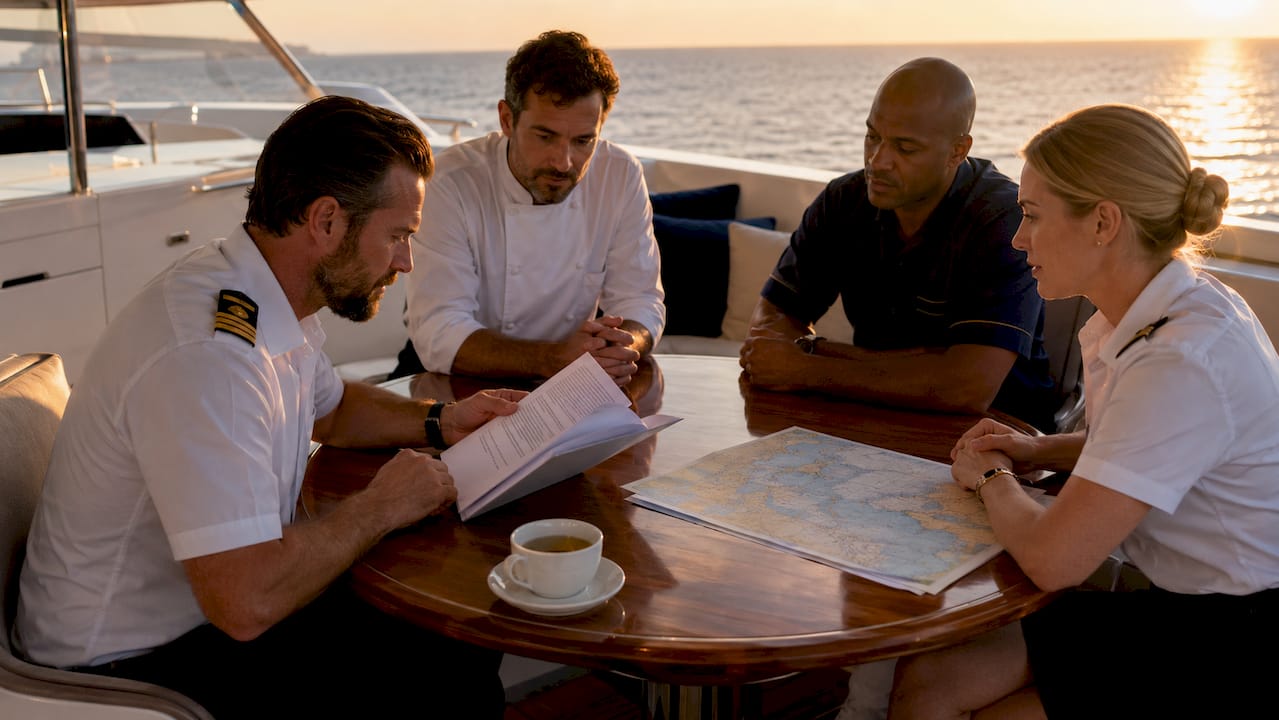
Crew requirements shift dramatically at this threshold too. Smaller yachts under 24 meters are routinely owner-operated or managed with one or two crew members. Superyachts require professional crews of 6 to 15 people, including a commercially certified captain, engineers, and hospitality staff. That crew obligation alone changes the financial and logistical picture of ownership entirely.
| Specification | Yacht | Superyacht |
|---|---|---|
| Length | Under 24 meters | 24 meters and above |
| Crew | Owner-operated or 1–2 crew | 6–15 professional crew |
| Regulatory code | Recreational standards | Large Yacht Code (LY3) |
| Insurance | Standard recreational | Expanded commercial liability |
| Typical use | Coastal, regional cruising | Global, extended voyages |
Pro Tip: If you are purchasing a vessel close to the 24-meter mark, get a maritime attorney to review your compliance obligations before closing. A few extra feet can mean a completely different insurance and crew structure.
How do features and luxury amenities differ?
Superyachts function as floating private resorts capable of extended ocean voyages, while standard yachts are better suited for coastal or regional trips. That distinction shapes every design decision from the keel up.
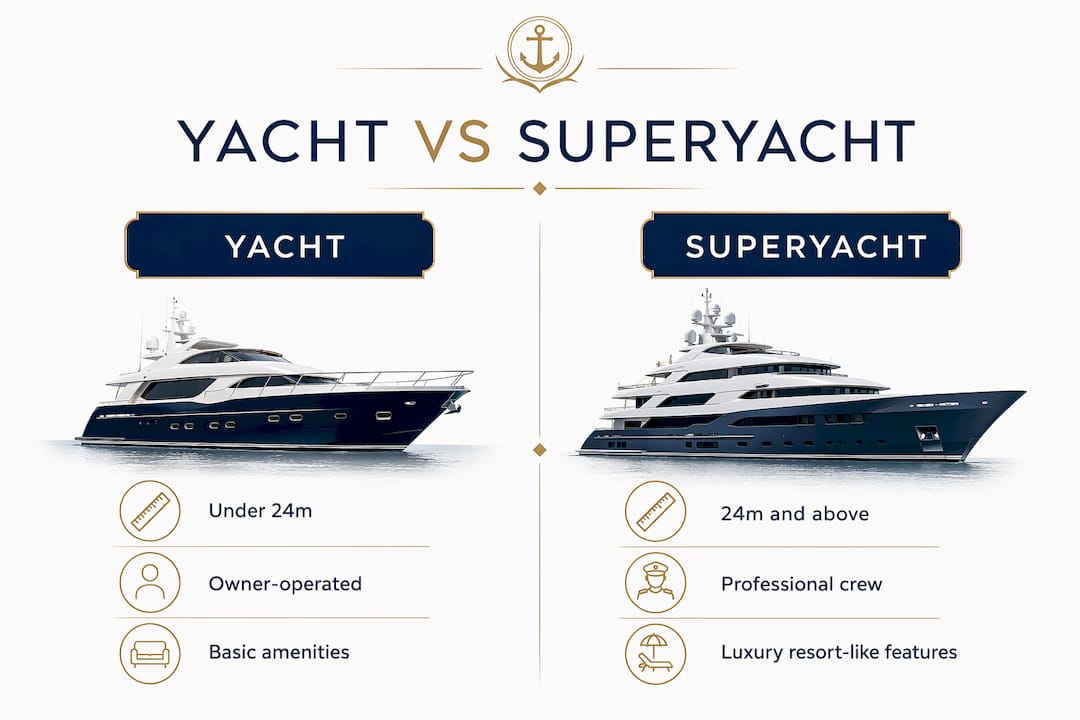
A standard yacht typically offers a single saloon, a galley, two to four guest cabins, and a modest cockpit. The experience is personal and intimate, often with the owner at the helm. A superyacht, by contrast, is engineered around guest privacy and hotel-grade hospitality, with dedicated crew quarters, multiple decks, and separate service corridors so guests never cross paths with working crew.
The amenity gap is significant. Superyachts routinely include:
- Infinity pools or Jacuzzis on the sundeck
- Full-service spas with treatment rooms
- On-board cinemas and entertainment suites
- Tender garages housing jet skis, dive equipment, and chase boats
- Beach clubs at the stern for direct water access
- Helipads on the largest vessels
Operationally, superyachts are built for global cruising range, carrying enough fuel, provisions, and technical redundancy to cross oceans without shore support. A 40-foot yacht is designed for weekend passages, not transatlantic crossings.
Pro Tip: Water toys and tenders add real resale value on superyachts. Buyers at this level expect a complete package, not just the vessel itself.
What is the difference between superyachts, megayachts, and gigayachts?
The terms megayacht and gigayacht appear constantly in the media and at boat shows, but they carry no formal regulatory status. Legally, every vessel above 24 meters falls under the superyacht classification. Megayacht and gigayacht are marketing labels that describe size tiers within that broader legal category.
The industry generally uses these informal designations to signal scale and complexity. A superyacht spans roughly 24 to 60 meters. A megayacht runs from 60 to 100 meters. A gigayacht exceeds 100 meters and represents the absolute pinnacle of private maritime engineering, with vessels like the 180-meter Azzam or the 127-meter Sailing Yacht A sitting in this tier.
| Category | Length | Typical crew | Character |
|---|---|---|---|
| Yacht | Under 24 m | 0–2 | Owner-operated, coastal |
| Superyacht | 24–60 m | 6–15 | Professional crew, global range |
| Megayacht | 60–100 m | 15–50+ | Resort-scale amenities |
| Gigayacht | 100 m+ | 50–100+ | Bespoke engineering, private fleet |
Understanding these informal tiers matters when you are chartering or buying. A broker who calls a 35-meter vessel a megayacht is using the term loosely. Knowing the actual size ranges protects you from inflated expectations and inflated pricing.
How do costs and investment considerations scale with size?
The financial gap between a yacht and a superyacht is not linear. It is exponential. Average new motor superyachts cost around $36 million, while new motor megayachts average $83 million. Those purchase prices are only the beginning.
Operational costs rise exponentially with vessel size due to greater crew, fuel, and maintenance demands. A 60-meter vessel can cost 5 to 8 times more to operate annually than a 30-meter vessel. That is not a typo. The complexity of systems, the size of the crew payroll, and the fuel burn at cruising speed compound rapidly as length increases.
Key cost drivers that scale with size include:
- Crew wages: A superyacht crew of 10 commands significant annual salaries plus benefits, training, and certification costs.
- Fuel: Larger hulls burn more fuel per nautical mile, and superyachts often run multiple generators continuously.
- Maintenance: Systems like stabilizers, bow thrusters, and watermakers require specialist technicians and scheduled haul-outs.
- Insurance: Expanded commercial liability under the Large Yacht Code means higher premiums across the board.
- Dockage: Marina fees scale with length. A 50-meter vessel pays multiples of what a 20-meter yacht pays at the same dock.
Resale value is also affected by classification. Superyachts that are well-maintained, properly documented, and crewed professionally hold their value better in the charter market. A yacht that crosses into superyacht territory without the right compliance paperwork becomes difficult to insure and nearly impossible to charter commercially.
What changes when you upgrade from a yacht to a superyacht?
Moving from a yacht to a superyacht is not just a size upgrade. It is a complete shift in how you relate to the vessel. Superyacht ownership requires professional crew management, logistics planning, and concierge-level guest services that simply do not exist at the smaller yacht level.
The lifestyle changes are real and worth thinking through before you commit:
- You stop being the captain. A commercially certified master takes command. Your role becomes that of a principal owner, not an operator.
- Logistics become a full-time operation. Provisioning, port clearances, crew scheduling, and maintenance windows require dedicated management, often through a yacht management company.
- Guest expectations rise. Friends and family who board a superyacht expect hotel-grade service. That means trained stewardesses, a professional chef, and a structured hospitality program.
- Charter becomes viable. Superyachts can generate charter income that offsets operating costs, but this requires MCA or flag state commercial certification and a licensed crew.
- Voyage duration expands. Superyachts are engineered for extended ocean voyages, giving owners the freedom to cruise the Mediterranean one season and the Caribbean the next without returning to a home port.
The yacht concierge services that feel optional on a smaller vessel become non-negotiable at superyacht scale. Owners who try to manage a 30-meter-plus vessel without professional support almost always regret it within the first season.
Key Takeaways
A superyacht is defined by the 24-meter threshold, which triggers the Large Yacht Code, professional crew requirements, and a fundamentally different ownership experience compared to a standard yacht.
| Point | Details |
|---|---|
| Size defines the category | The 24-meter mark separates yachts from superyachts under international maritime law. |
| Regulations change everything | The Large Yacht Code (LY3) applies at 24 meters, affecting insurance, crew, and safety standards. |
| Costs scale exponentially | A 60-meter vessel costs 5 to 8 times more to operate annually than a 30-meter vessel. |
| Mega and giga are informal labels | Megayacht and gigayacht have no regulatory basis; all vessels above 24 meters are legally superyachts. |
| Ownership model shifts | Superyacht owners transition from operator to principal, relying on professional crew and management teams. |
Why the terminology matters more than most buyers realize
Here is something I have seen trip up buyers more than once: they fall in love with a vessel, they hear the word “superyacht” from a broker, and they assume it is just a flattering label. It is not. The moment a vessel crosses 24 meters, you are in a different legal universe. Insurance underwriters know it. Flag state authorities know it. Marina operators know it. The buyer who does not know it ends up with compliance gaps that cost far more to fix than they would have cost to prevent.
The mega and gigayacht labels are where it gets genuinely interesting. Ultra-high-net-worth buyers use these terms to signal a certain level of discreet, fully crewed luxury. But those terms carry zero regulatory weight. A 65-meter vessel and a 35-meter vessel are both legally superyachts. The practical difference between them is enormous, but the law treats them under the same framework. That gap between marketing language and legal reality is where buyers need to pay close attention.
My honest advice: before you fixate on the category name, understand the operational obligations that come with the size. A well-run 28-meter superyacht with a tight crew of six delivers a more satisfying ownership experience than a poorly managed 50-meter vessel with compliance issues and a revolving crew. The number on the spec sheet matters less than the quality of the team and the systems behind it.
— Jason
Mazzamarine knows your vessel inside and out
Whether you own a 22-meter cruiser or a 45-meter superyacht, the maintenance demands are real and they grow with every season. Mazzamarine serves Florida yacht owners with a full network of specialists covering engine and mechanical work, interior refits, electronics, custom paint, and urgent repairs across Miami and South Florida.
Larger vessels need larger expertise. If your vessel is approaching or already past the superyacht threshold, the signs of deferred maintenance show up faster and cost more to ignore. Mazzamarine’s team works with owners at every level, from first-time yacht buyers to seasoned superyacht principals who need a trusted Florida partner for the long haul. Reach out to Mino, Luigi, and the Mazzamarine network today.
FAQ
What length makes a vessel a superyacht?
A vessel becomes a superyacht at 24 meters (79 feet) in length. This threshold triggers the Large Yacht Code and professional crew requirements under international maritime law.
Is a megayacht different from a superyacht legally?
No. Megayacht and gigayacht are informal marketing terms with no regulatory basis. All vessels above 24 meters fall legally under the superyacht classification.
How many crew does a superyacht need?
Superyachts typically require professional crews of 6 to 15 people, including a commercially certified captain, engineers, and hospitality staff. Megayachts can employ 15 to over 100 crew members depending on size.
How much does a superyacht cost to buy?
Average new motor superyachts cost around $36 million, while new motor megayachts average $83 million. Operating costs rise exponentially beyond the purchase price.
Can a superyacht owner operate the vessel themselves?
No. Vessels above 24 meters require a commercially certified captain under the Large Yacht Code. The owner transitions from operator to principal, with professional crew managing all navigation and vessel operations.
Recommended
Text or Call 954-330-9653 Schedule Appointment
Mazza Marine Yacht Services & Refit

Fiberglass Upgrades and Damage Repair

Premium Yacht Paint/ Faux Teak

Fishing: Custom Rods, Reels,Tackle

Electrical, Electronics and Navigation

Paint, Hull and Gelcoat

Teak Decks, Wood Cabinets, Carpentry

Canvas, Enclosures and Upholstery

Mechanical, Repower and Running Gear

Plumbing, Bilge and Thru-Hulls

Welding and Custom Fabrication

Interior Refit And Past Work
Get your yacht value Estimate
"*" indicates required fields