
View Our Recent Work:

Overview: For most yacht owners, FEQ vertical-grain teak remains the gold standard for exterior decking and high-wear trim, while lightweight engineered substrates finished with quality veneers are the smarter call for interior joinery where weight and performance matter. Before committing to any significant work, get a professional condition assessment and consider the refit-vs-sell calculation.
Here is the short version of what decades of marine woodworking practice has taught:
- Exterior decks and trim: FEQ vertical-grain teak or a Flexiteek-style synthetic where low maintenance is the priority
- Interior joinery: Lightweight cores (poplar plywood, balsa, Queenply) finished with high-grade veneers
- High-wear exterior trim: Teak or iroko for traditional builds; marine-grade plywood with a quality topcoat for budget-conscious refits
- First move: Commission a moisture-mapping inspection before budgeting anything
If your projected refit cost is approaching 30% of your yacht’s current market value, the honest conversation is whether to refit or sell. Build a contingency reserve into any major woodwork budget before you sign a contract.
Table of Contents
- What are the best woods and materials for yacht woodwork?
- How professionals restore and refinish yacht woodwork
- What custom woodwork projects do yacht owners actually commission?
- How do you maintain yacht woodwork year-round?
- What does yacht woodwork actually cost, and how long does it take?
- How do you find and hire a qualified yacht woodworker in the U.S.?
- A real refit project: what the work actually looks like
- Key Takeaways
- What owners often get wrong about wood on a boat
- Mazzamarine handles your Florida yacht woodwork from inspection to launch
- Useful sources and further reading
What are the best woods and materials for yacht woodwork?
The answer depends on where the wood lives on the boat and what you are asking it to do. Teak is the marine standard for exterior decking and high-wear trim because its natural oils and dimensional stability make it genuinely long-lasting in salt, sun, and humidity. Nothing else matches that combination of properties out of the box. That said, teak is not always the right answer, and it is certainly not the only one.
The table below maps each major material to its best application, durability profile, maintenance burden, finish potential, cost shape, and structural considerations.
| Material | Best for | Durability (salt/UV/humidity) | Maintenance burden | Aesthetic/finish potential | Cost shape | Structural notes |
|---|---|---|---|---|---|---|
| FEQ vertical-grain teak | Exterior decking, high-wear trim, cockpit soles | Excellent | Moderate (annual oiling or periodic varnish) | Rich warm grain, ages to silver-gray naturally | High material + high installation | Heavy; fastenings must be bedded carefully |
| Sapele / khaya / utile (mahogany variants) | Interior joinery, cabinetry, trim | Good (interior); fair (exterior with varnish) | Moderate (regular varnish maintenance) | Ribbon-grain figure; takes varnish beautifully | Mid material + mid installation | Stable; lighter than teak |
| Iroko | Exterior trim, rubbing strakes, deck furniture | Good; naturally oily but less so than teak | Moderate | Coarser grain; less refined than teak | Mid material + mid installation | Heavier than mahogany variants |
| Marine-grade plywood | Structural substrates, bulkheads, sole panels | Good when sealed; vulnerable if unsealed | Low (when properly encapsulated) | Finish with veneer or paint | Low-mid material + low installation | Lightweight; excellent core compatibility |
| Laminated veneers / engineered cores | Interior joinery, cabinetry, headliners | Good when properly bonded | Low | High with quality face veneer | Mid material + mid-high installation | Lightweight cores balance aesthetics and fuel efficiency |
| Faux/synthetic teak (Flexiteek-style) | Decking, cockpit soles, swim platforms | Excellent; UV-stable, no rot | Very low (periodic cleaning only) | Consistent teak appearance; no silvering | Mid-high material + mid installation | Bonds to fiberglass; no fastenings required |
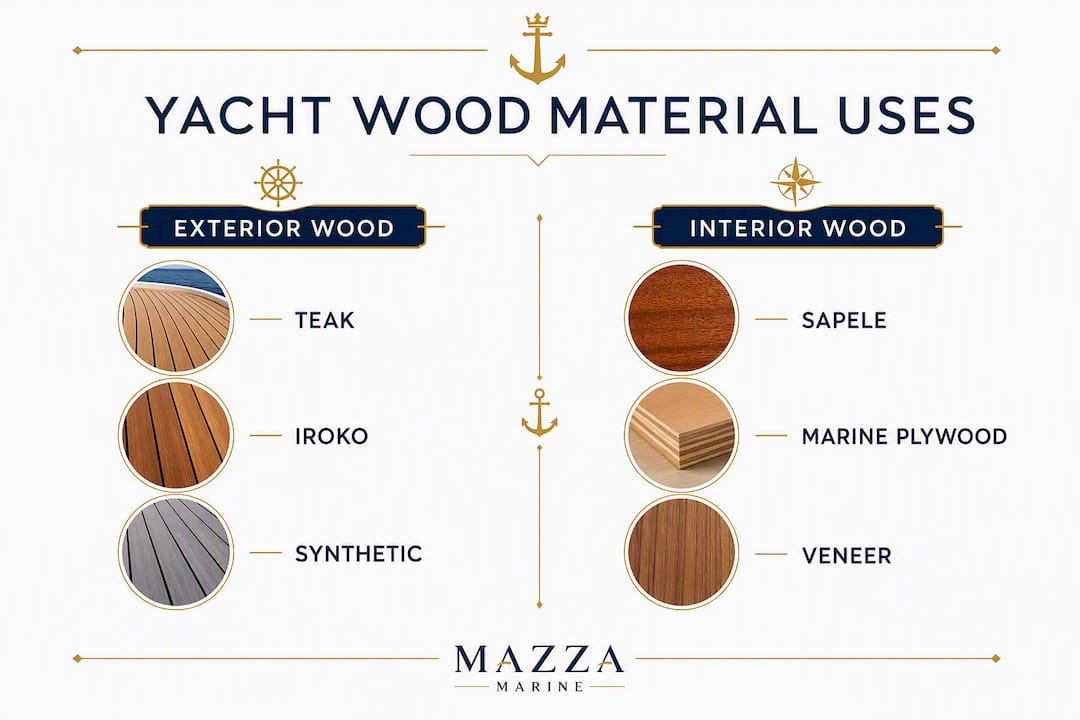
A closer look at each material
Teak is the one wood that needs no introduction on a yacht. Its high silica content and natural oils resist rot, repel moisture, and provide grip underfoot even when wet. The catch is that not all teak is equal. Verify FEQ vertical-grain teak for any critical exterior application, particularly in Florida’s intense UV and humidity. Lower-grade flat-sawn teak can warp, check, and shorten deck lifespan considerably.
Sapele, khaya, and utile are the practical mahogany family. Sapele’s ribbon figure is genuinely beautiful under varnish, making it a favorite for saloon joinery and helm surrounds. These alternatives are structurally suitable for interior use and can handle exterior applications with proper finishing, though they need consistent varnish maintenance to match teak’s weather resistance.
Iroko is the budget-conscious exterior trim choice. It machines well, holds fastenings reliably, and its natural oils give it reasonable weather resistance. The grain is less refined than teak, so it rarely appears in premium interior work.
Marine-grade plywood is the workhorse substrate. Properly encapsulated with epoxy, it forms the structural backbone of bulkheads, sole panels, and cabinetry carcasses. Its value is in structural performance and weight control, not aesthetics.
Laminated veneers over engineered cores represent where professional yacht carpentry has moved in recent decades. Poplar plywood, Queenply, and balsa-core panels finished with high-grade face veneers deliver the look of solid exotic timber at a fraction of the weight. For interior refits on performance-oriented yachts, this approach is now standard practice. Explore interior yacht materials for a deeper look at substrate and veneer combinations.
Synthetic teak (Flexiteek-style products) has earned a legitimate place on modern yachts. Modern composites provide a consistent teak look with lower upkeep, though owners trade authentic material properties for reduced maintenance. For owners who want the appearance without the annual oiling ritual, it is a rational choice. These products are widely available through U.S. marine distributors.
Pro Tip: When sourcing teak, ask your supplier for mill documentation and chain-of-custody certification. Grade labeling is inconsistent in the market, and the difference between FEQ and lower-grade material is not always visible until the wood is on the boat and exposed to a Florida summer.
How professionals restore and refinish yacht woodwork
A professional restoration follows a clear sequence: assess and moisture-map, stabilize and repair, fair and sand, apply finish, then cure and quality-check. Skipping or rushing any phase is where most failed refits begin.
Here is what a qualified shop actually does, phase by phase:
-
Assessment and moisture mapping (1–3 days). A professional uses a calibrated moisture meter and often infrared imaging to map wet areas in decking, coring, and substrate panels. Readings above 20% in teak or above 15% in plywood substrates typically indicate active moisture intrusion requiring structural repair, not just surface refinishing.
-
Selective removal and stripping (1–5 days depending on scope). Deck planks, varnished trim, or veneer panels are removed carefully to preserve fastener holes and substrate integrity. Chemical strippers, heat guns, and card scrapers are used in sequence; aggressive orbital sanding at this stage removes too much material and risks damaging the substrate.
-
Structural repairs: substrate and core work (2–10 days). Delaminated or saturated core material is cut out, dried, and replaced with compatible substrate. Epoxy consolidants are applied to soft or punky wood before any new material goes in. This phase is where hidden costs live. A deck that looks like a surface job often reveals core saturation once the planks come up.
-
Consolidation and epoxy/laminate work (1–4 days). Two-part marine epoxy systems (slow-cure formulations for Florida’s heat) are used to bond new substrate, fill voids, and encapsulate structural repairs. Ship carpenters work with a range of adhesives and modern laminates alongside timber, and the epoxy selection matters as much as the wood choice.
-
Fairing and surface preparation (1–3 days). Fairing compound is applied and block-sanded to achieve a flat, fair surface. This step is tedious and often underestimated in quotes. A poor fairing job shows through any finish.
-
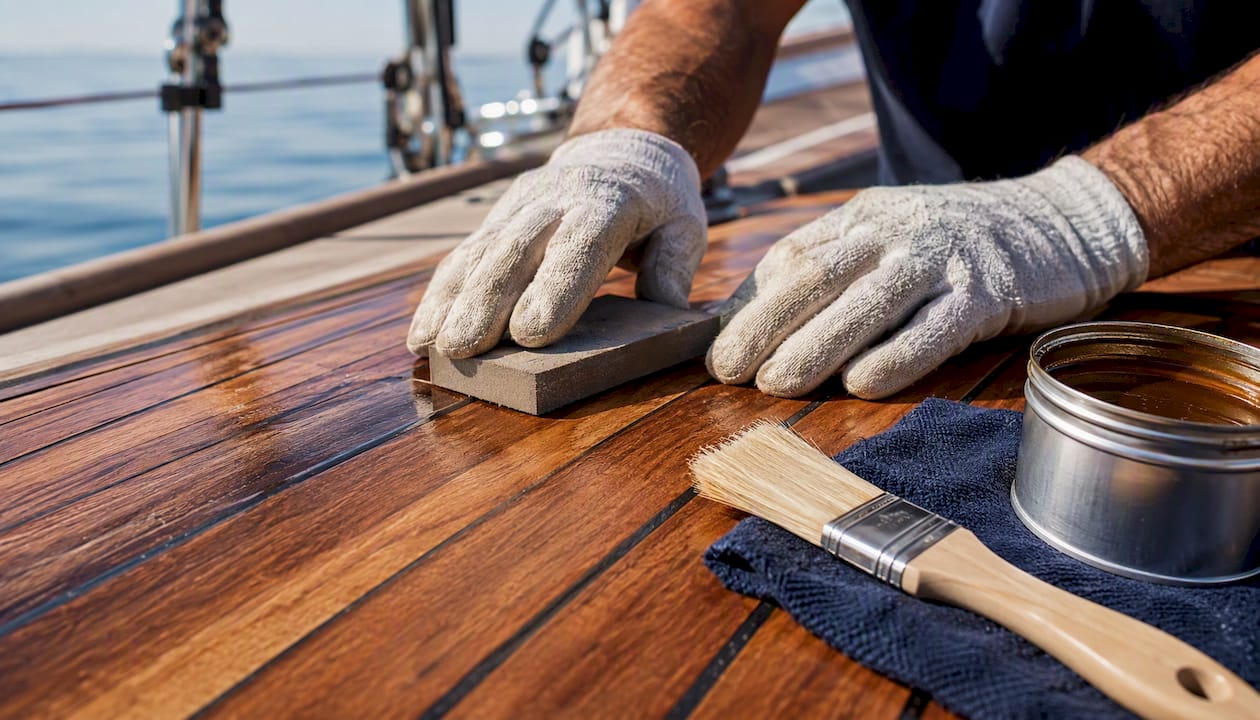
Priming and finishing: varnish, oil, or synthetic topcoat (2–5 days, multiple coats). Exterior teak typically receives penetrating oil or a spar varnish system (minimum six coats for durability). Interior veneers and joinery get two-part polyurethane or traditional spar varnish. Each coat requires proper cure time between applications, especially in Florida’s humidity.
-
Cure and quality checks (1–3 days). Final hardness testing, edge inspection, and caulking verification before the boat goes back in the water. A professional shop provides a written quality checklist and a maintenance schedule at handover.
Pro Tip: Before hauling the boat, walk the deck and tap every plank with a small mallet or coin. A hollow sound indicates delamination or core saturation below. Map those spots with tape before the yard visit so your inspector can target moisture-meter readings precisely. This targeted sounding pattern saves hours of diagnostic time and gives you a cleaner scope before the first estimate.
For a full refit workflow, the step-by-step custom refit guide covers staging and trade coordination in detail.
What custom woodwork projects do yacht owners actually commission?
Projects split naturally between exterior deck and trim work (driven by weather exposure and safety) and interior joinery (driven by aesthetics, comfort, and resale value). The business case for each is different.
Teak deck restoration or replacement
The most common and most expensive exterior project. A full teak deck replacement on a mid-size yacht involves removing all existing planks, inspecting and repairing the fiberglass substrate, re-caulking seams with polysulfide, and laying new FEQ teak planks with bunged fastenings or adhesive bonding. Complexity: high. Materials: FEQ teak, polysulfide caulk, marine epoxy adhesive, stainless or silicon-bronze fastenings. See the teak deck restoration vs replacement breakdown for a cost and durability comparison.
Interior cabinetry refit
Saloon cabinetry, galley units, and stateroom joinery are typically built on marine plywood or engineered core carcasses finished with face veneers or solid trim. A refit might involve replacing delaminated panels, refacing doors, or a full gut-and-rebuild. Adhesives here are typically two-part polyurethane construction adhesives or epoxy for structural elements, with mechanical fasteners (stainless screws, blind rivets) for removable panels. Complexity: medium to high depending on scope.
Dash and instrument panels
Helm pod surrounds and instrument panels in teak, sapele, or carbon-look HPL are popular upgrades on sportfish and motor yachts. The technical challenge is fitting around wiring looms and electronics cutouts while maintaining a watertight seal. Complexity: medium. Materials: solid teak or sapele, marine-grade HPL, two-part polyurethane adhesive.
Swim platforms and transom work
Swim platforms take constant abuse from UV, salt water, and foot traffic. Teak planking or synthetic teak over a fiberglass substrate is the standard approach. Adhesive bonding (two-part epoxy or polyurethane) is preferred over through-fastenings on modern fiberglass transoms to avoid stress cracking. Complexity: medium.
Veneered joinery and headliners
Lightweight veneer over balsa or poplar core is the weight-conscious choice for overhead panels, headliners, and decorative bulkheads. The technical challenge is achieving consistent veneer joints and preventing edge-lifting in humid conditions. Vacuum-bagging during bonding produces the flattest, most durable result. Complexity: medium.
Hatch and door repairs
Teak-framed hatches and companionway doors are high-wear items that often need re-caulking, re-varnishing, or full frame replacement. Complexity: low to medium. Materials: teak or mahogany, polysulfide sealant, spar varnish.
How do you maintain yacht woodwork year-round?
Consistent, scheduled maintenance is the single most effective way to avoid a step-cost refit. A deck or interior that receives regular attention every season rarely needs full replacement; one that is ignored for three years almost always does.
Recommended maintenance schedule
-
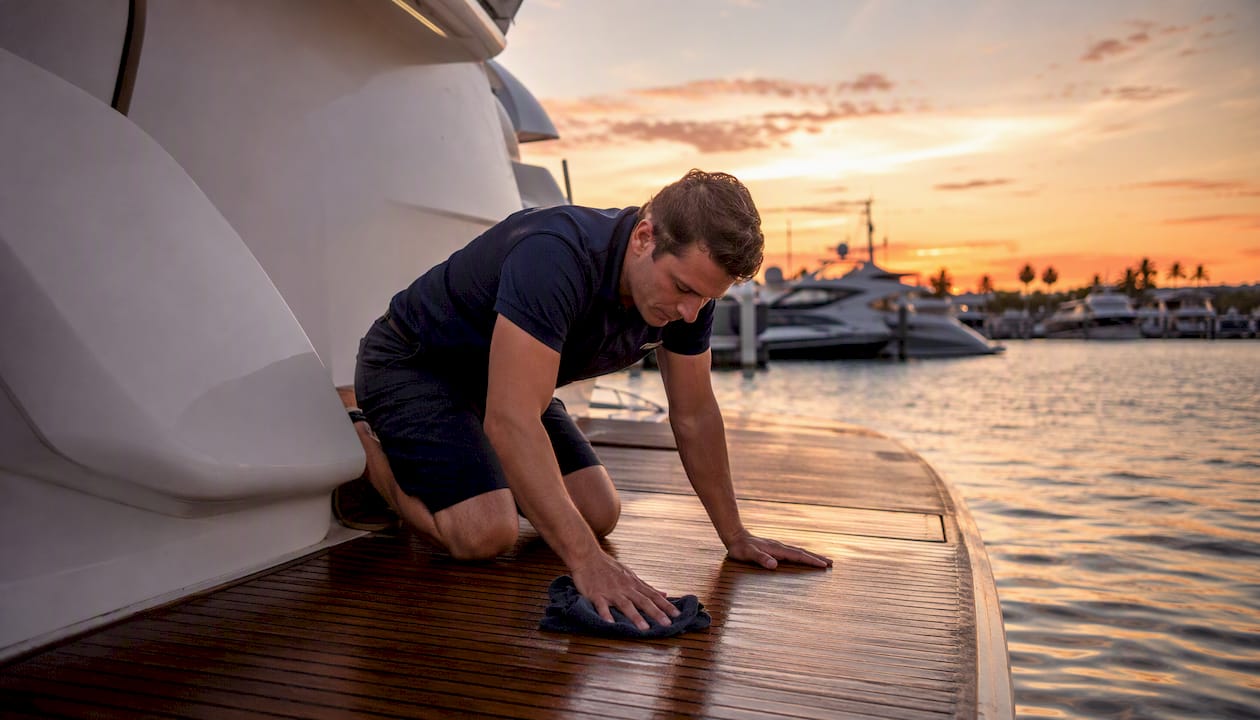
After each cruise (weekly during active season): Rinse all exterior teak and wood trim with fresh water. Remove salt deposits before they work into grain and caulking joints. Wipe down interior veneers with a damp cloth; never use abrasive cleaners on finished surfaces.
-
Monthly: Inspect caulking seams in teak decking for cracking or lifting. Check hatch seals and companionway frames for moisture intrusion. Look for any finish checking or peeling on varnished trim.
-
Seasonal (every 6 months in Florida’s climate): Apply a penetrating teak oil to exterior teak that is oiled rather than varnished. Clean synthetic teak surfaces with a dedicated synthetic teak cleaner and apply a UV-protective sealant. Inspect all fastener heads for corrosion and re-bung any that show rust staining.
-
Annual: Full inspection of all exterior woodwork with a moisture meter. Touch up varnish on interior joinery (typically one to two coats over a light sand). Re-caulk any seams showing movement. Document condition with photographs for insurance and resale purposes.
-
Every 5–10 years: Plan a full refit window for teak deck replacement or major interior joinery work. A sinking fund set aside annually keeps this from becoming a financial shock.
What to use and what to avoid
- Use: Penetrating teak oils for oiled finishes; spar varnish (six or more coats for exterior durability); polysulfide sealant for deck seams; marine-grade two-part polyurethane for interior topcoats; dedicated synthetic teak cleaners for composite decking.
- Avoid: Household bleach on teak (it strips natural oils and raises grain); pressure washers at close range (destroys caulking and lifts veneer edges); abrasive pads on varnished surfaces; petroleum-based solvents near polysulfide seams.
For UV protection and coating maintenance, the marine paint maintenance guide covers compatible coating systems and application schedules.
Safety and environmental notes: Always work with adequate ventilation when applying varnish, epoxy, or stripping compounds. Two-part polyurethane topcoats and epoxy hardeners carry significant VOC loads and require a properly fitted respirator, not just a dust mask. Stripped finish material and solvent-soaked rags must be disposed of per local hazardous waste regulations. In Florida, check with your county’s household hazardous waste program for drop-off locations.
Rot, fungus, and insect prevention: Keep wood dry. That sounds obvious, but the practical application is sealing all end grain with epoxy before installation, maintaining caulking integrity so water cannot pool under planks, and ensuring adequate ventilation in enclosed spaces like under-sole bilge areas. Tropical hardwoods like teak and iroko have natural resistance, but marine plywood substrates are vulnerable the moment their epoxy encapsulation is breached.
What does yacht woodwork actually cost, and how long does it take?
Cost depends on scope, material quality, and whether hidden structural damage surfaces during the job. Think of woodwork estimates in three tiers: surface refinishing, selective repair, and full replacement.
| Job | Low estimate | Typical estimate | High estimate | Typical timeline |
|---|---|---|---|---|
| Teak deck patch (single plank area) | — | — | — | 1–3 days |
| Full teak deck replacement | — | — | — | 2–6 weeks |
| Interior cabinetry refit (saloon) | — | — | — | 1–4 weeks |
| Veneer replacement (panels, headliners) | — | — | — | 1–3 weeks |
| Small structural repair (core replacement) | — | — | — | 3–7 days |
| Swim platform teak or synthetic teak | — | — | — | 3–7 days |
These ranges reflect U.S. market labor rates and material costs; Florida yards tend to sit in the mid-to-upper range due to demand and climate-related complexity.
The 30% refit-vs-sell rule
Professional guidance recommends applying a 30% threshold: if your projected refit cost approaches 30% of the yacht’s current pre-refit market value, selling and buying a better-condition vessel often makes more financial sense. Always build a 15%–25% contingency reserve into any major refit budget. Structural surprises are the norm, not the exception, once planks come up.
The annual running cost rule of thumb for yachts sits between 7%–15% of purchase price per year depending on age, size, and program. A major woodwork refit can represent one to two years of that operating budget, which is why the sell-vs-refit math matters.
Budgeting tips
- Stage the work. Splitting a large refit into two seasons spreads cash flow and lets you assess the first phase before committing to the second.
- Bundle related trades. If the deck is coming up, schedule any through-hull or plumbing work at the same time. Mobilization costs are shared, and the yard only needs to haul the boat once.
- Accept temporary repairs strategically. A well-executed temporary repair on a low-traffic area buys time to plan a proper fix without rushing into a full replacement under pressure.
For owners weighing refit triggers, seven signs your yacht needs a refit is a useful diagnostic starting point.
How do you find and hire a qualified yacht woodworker in the U.S.?
A qualified yard or independent carpenter should offer a written inspection report, a moisture-mapping summary, a detailed scope of work, material samples, and a warranty before you sign anything. If they cannot provide all of those, keep looking.
Questions to ask on first contact
- How many years have you worked specifically on yacht woodwork, and what classes of vessel?
- Can you show before-and-after photos of a teak deck replacement and an interior joinery refit?
- What moisture-testing method do you use, and what threshold triggers a core repair recommendation?
- Will you provide a written finish schedule (coat counts, cure times, product specifications)?
- Do you carry marine contractor liability insurance and workers’ compensation?
- How do you handle change orders when hidden damage is found mid-project?
- What does your warranty cover, and for how long?
Red flags
- A verbal scope with no written breakdown of labor and materials
- No moisture testing before quoting a deck job
- Unwillingness to provide references from similar projects
- No marine contractor insurance
- A quote that seems unusually low with no contingency line item (hidden costs will surface later)
- Pressure to start immediately without a proper inspection
What a solid estimate looks like
Expect itemized labor and materials, clearly separated. Fixed-price items (material supply, surface prep) should be distinguished from allowance items (structural repairs pending inspection). A professional estimate includes contingency planning and a clear change-order process. The marine craftsmanship guide explains what yard workflows and quality standards look like in practice.
A real refit project: what the work actually looks like
A mid-size sportfish came into the yard with a teak cockpit sole that had been leaking for at least two seasons. The owner had been applying fresh oil annually and assumed the darkening around the seams was normal weathering. It was not.
Once the planks were lifted, moisture-meter readings across the fiberglass substrate averaged well above acceptable thresholds in the aft section. The core beneath two plank runs had delaminated entirely. The scope expanded from a surface refinish to a partial substrate replacement, core repair, and full re-lay of FEQ teak with new polysulfide caulking throughout.
Timeline: 18 working days from haul-out to splash. Materials: FEQ vertical-grain teak, two-part epoxy for core consolidation, polysulfide deck caulk, stainless bunged fastenings. Cost band: mid-range for a job of this size, with roughly 20% of the final invoice attributable to the structural repair that was not visible in the initial quote.
What the owner should look for in before-and-after photos of any comparable job: clean, consistent caulking lines with no voids; fastener heads properly bunged and flush; no visible edge lifting at plank ends; uniform color across the new deck surface.
The lesson from this project is straightforward: annual oiling masks deterioration but does not stop it. A moisture meter reading taken earlier would have caught the core saturation before it required structural repair, reducing the final cost significantly.
Lessons from this project:
- Procurement: Order teak with some overage. Grain matching across a full cockpit sole requires material to select from.
- Staging: Scheduling the through-hull inspection during the same haul-out saved a separate mobilization cost.
- Contingency: The owner had budgeted an appropriate contingency, which covered the structural repair without a difficult conversation.
At handover, the owner received a written maintenance schedule, a finish specification sheet, and a photographic record of the substrate condition before and after repair. That documentation is worth keeping with the vessel’s service records.
Key Takeaways
Quality yacht woodwork decisions come down to matching the right material to the right location, maintaining a consistent schedule, and applying the 30% refit-vs-sell rule before committing to major work.
| Point | Details |
|---|---|
| Match material to location | Use FEQ teak or synthetic teak on deck; lightweight engineered cores with veneers for interior joinery. |
| Moisture-map before budgeting | A calibrated moisture meter inspection before any quote prevents scope surprises and hidden cost overruns. |
| Apply the 30% rule | If refit cost approaches 30% of pre-refit market value, evaluate selling before committing to the work. |
| Maintain a sinking fund | Set aside 1.5%–3% of vessel value annually to cover periodic refits without financial disruption. |
| Mazzamarine for Florida work | Mazzamarine provides inspection, teak deck restoration, interior joinery refits, and full refit project management across Florida. |
What owners often get wrong about wood on a boat
Most owners think about yacht woodwork as a cosmetic issue until the day it becomes a structural one. That shift, from “the deck looks a little tired” to “the core is saturated and needs replacing,” happens gradually and invisibly, which is exactly why it catches people off guard.
The conventional wisdom is to oil teak annually and varnish interior joinery every couple of years. That advice is not wrong, but it misses the more important point: surface maintenance does not tell you what is happening underneath. A deck can look presentable and still be holding moisture in the substrate. Interior veneer can look flawless while the plywood behind it is delaminating at the edges.
The owners who avoid expensive surprises are the ones who treat a moisture-meter inspection as a routine item, not a reaction to visible damage. They also tend to think about woodwork in the context of the whole vessel’s maintenance budget, applying a sinking-fund approach rather than reacting to each failure as it appears. Florida’s climate accelerates everything: UV degrades finishes faster, humidity works into any unsealed joint, and the combination of salt air and heat is genuinely punishing on wood that is not properly protected.
One more thing worth saying plainly: the 30% refit-vs-sell rule is not pessimistic. It is a financial reality check that protects owners from pouring money into a vessel whose market value will not recover the investment. Running that calculation before signing a refit contract is one of the most useful things an owner can do.
Mazzamarine handles your Florida yacht woodwork from inspection to launch
Mazzamarine’s Florida network covers every phase of yacht woodwork, from the initial moisture-mapping inspection through full teak deck replacement, interior joinery refits, and synthetic teak installations. The difference from a general yard is that Mazzamarine coordinates all related trades under one project plan, so a deck refit does not become three separate haul-outs.
Services relevant to woodwork owners:
- Moisture mapping and structural condition reporting
- Teak deck restoration and full replacement (FEQ teak and synthetic teak options)
- Interior joinery and cabinetry refits
- Veneer replacement and headliner work
- Swim platform and transom woodwork
- Faux teak installations for low-maintenance decking
- Full refit project management, including trade coordination
When you reach out, have your most recent survey, a rough sense of your budget, and photos of the areas of concern ready. That information lets Mazzamarine give you a faster, more accurate initial assessment. To understand what a full refit engagement looks like, visit the refit services page or review the marine repair service guide for a complete picture of available services. Contact the team directly to schedule an inspection and get a written scope before any work begins.
Useful sources and further reading
Authoritative resources for owners doing their own research before engaging a yard:
- BoatUS: Your Guide to Marine Woods — practical overview of marine timber properties and maintenance expectations
- Practical Boat Owner: Boat Wood Complete Guide — covers teak alternatives including khaya, sapele, utile, iroko, and marine plywood
- Mazzamarine: Teak Deck Restoration vs Replacement — Florida-specific cost and durability comparison for teak deck decisions
- Mazzamarine: Interior Yacht Materials — substrate and veneer selection guidance for interior refits
When reviewing manufacturer datasheets for finishes, check recommended coat counts, minimum cure temperatures (critical in Florida’s summer heat), recoat windows, and core compatibility before specifying a product. ABYC standards and NMMA guidelines are the relevant U.S. industry references for structural and safety specifications.
Recommended
Text or Call 954-330-9653 Schedule Appointment
Mazza Marine Yacht Services & Refit

Fiberglass Upgrades and Damage Repair

Premium Yacht Paint/ Faux Teak

Fishing: Custom Rods, Reels,Tackle

Electrical, Electronics and Navigation

Paint, Hull and Gelcoat

Teak Decks, Wood Cabinets, Carpentry

Canvas, Enclosures and Upholstery

Mechanical, Repower and Running Gear

Plumbing, Bilge and Thru-Hulls

Welding and Custom Fabrication

Interior Refit And Past Work
Get your yacht value Estimate
"*" indicates required fields